Category
page 1Christology

Resurrection of Jesus
event in the Christian faith, Gospel episode represented in the cycle of the Passion of Christ Central teaching of Christianity; Luke 24:1-11

Christology
thumb|right|Paolo Veronese, The Resurrection of Jesus Christ ()
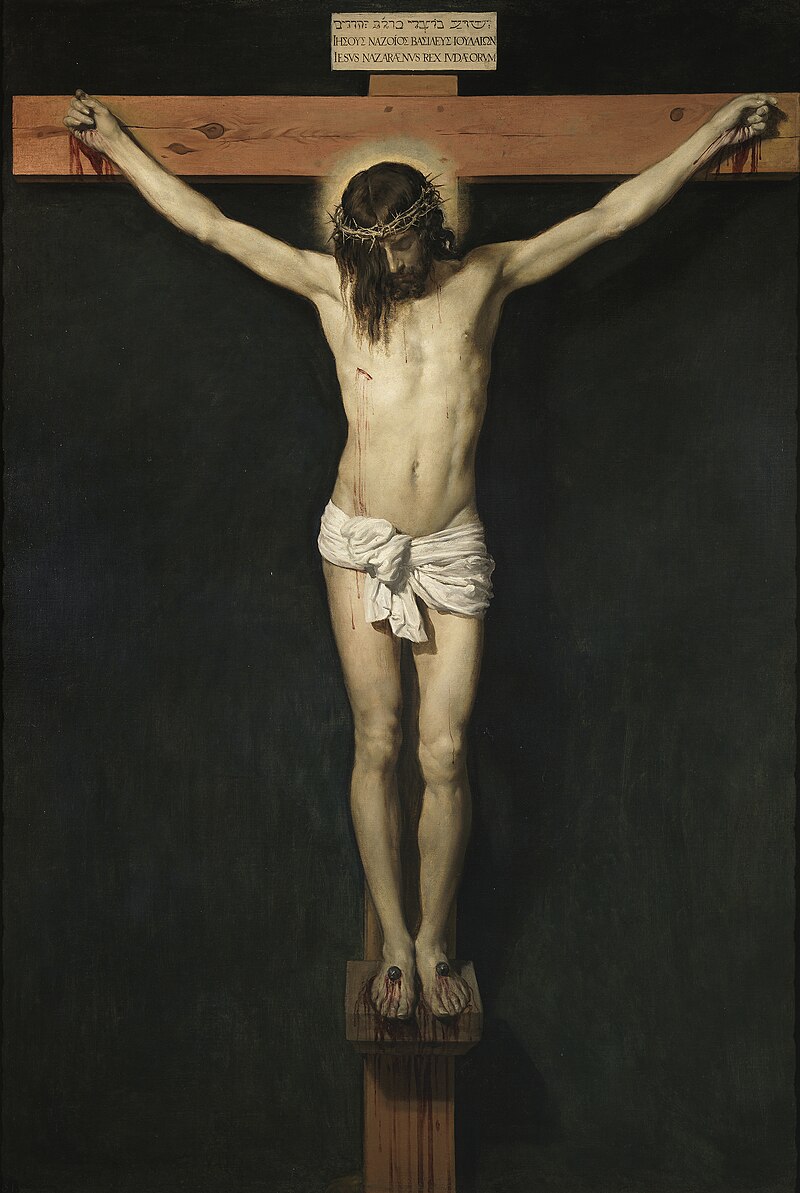
crucifixion of Jesus
Jesus' crucifixion as described in the four canonical gospels

First Council of Ephesus
ecumenical council in Ephesus in June–July 431, convened by Emperor Theodosius II

Christ
messianic dimension of Jesus, biblical figure and title

transubstantiation
thumb|The Eucharist, which the Catholic Church teaches to be the Real presence of Christ in the Eucharist|real presence of [[Christ, exposed for adoration at Saint Thomas Aquinas Cathedral in Reno, Nevada]]
Transubstantiation (, ) is, according to the teaching of the Catholic Church, "the change of the whole substance of bread into the substance of the Body of Christ and of the whole substance of wine into the substance of the Blood of Christ". This change is brought about in the eucharistic prayer through the efficacy of the word of Christ and by the action of the Holy Spirit. However, "the o

Theotokos
thumb|An icon of the Our Lady of Kazan|Theotokos of Kazan.
Theotokos () is a title of Mary, mother of Jesus, used especially in Eastern Christianity. The usual Latin translations are or (approximately "parent [] of God"). Common English translations are "Mother of God" or "God-bearer" – but these both have different literal equivalents in , and respectively.

Christ Pantocrator
depiction of Christ

Jesus, King of the Jews
a title of Jesus Christ

incarnation
belief that Jesus was made flesh by being conceived in the womb of a woman
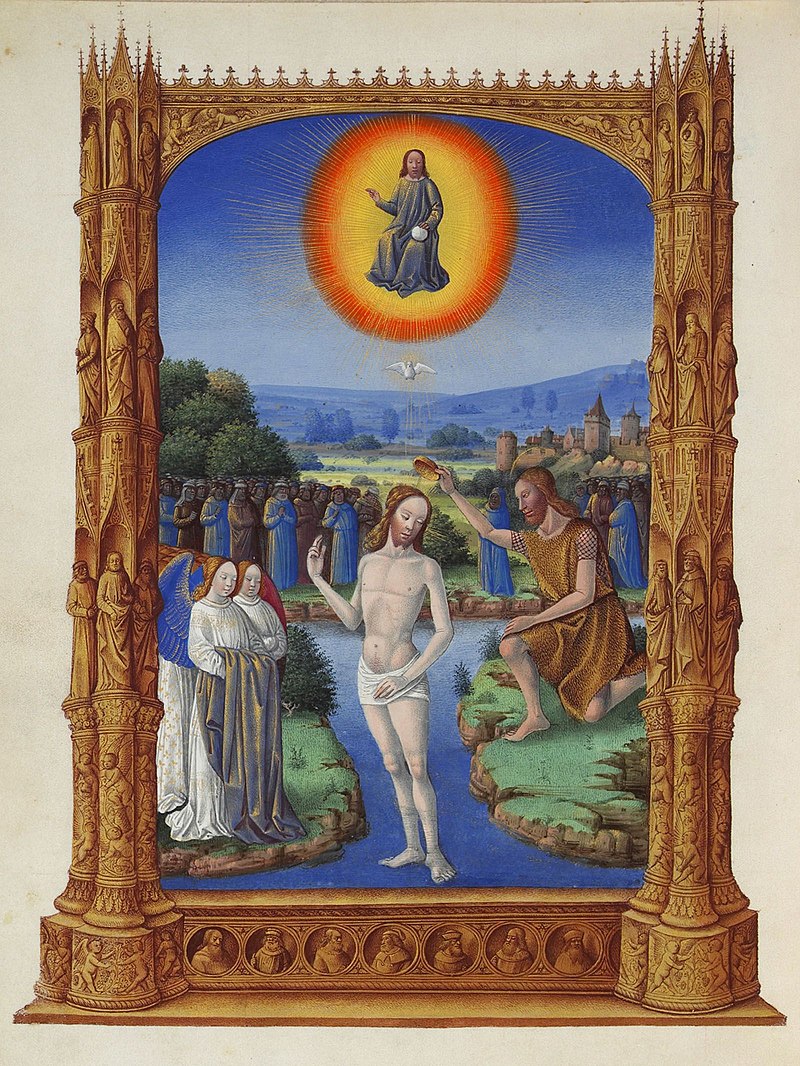
Son of God
religious title, designating a monarch, messiah, demigod, or deity

virgin birth of Jesus
belief that Jesus was conceived in the womb of his mother Mary through the Holy Spirit without the agency of a human father and born while Mary was still a virgin
God in Christianity
Christian conception of God
dyophysite
Dyophysitism (; from Greek δύο dyo, "two" and φύσις physis, "nature") is the Christological position that Jesus Christ is in two distinct, inseparable natures: divine and human. It is accepted by the majority of Christian denominations, including the Catholic Church, Eastern Orthodox Church, Church of the East, Anglicanism, Methodism, Reformed Christianity and Lutheranism. It is rejected by the Oriental Orthodox churches, who hold to Miaphysitism—that Jesus Christ is of two natures united into one composite nature—while rejecting Monophysitism as heresy along with other extant denominations.
hypostasis
shared existence of spiritual or corporal entities
Harrowing of Hell
In Christianity, the period of time between Christ’s crucifixion and resurrection, during which he saved souls held captive in the underworld
hypostatic union
in Christianity, the union of Christ's humanity and divinity in one hypostasis
Chalcedonian Definition
Christian statement of faith, dividing some dissenting Eastern churches (Oriental Orthodoxy) from Roman Catholicism (and Protestantism) and Eastern Orthodoxy

subordinationism
thumb|The "Heavenly Trinity" joined to the "Holy Family|Earthly Trinity" through the Incarnation of the Son – [[The Heavenly and Earthly Trinities by Murillo ()]]
Subordinationism is a Trinitarian doctrine wherein the Son (and sometimes also the Holy Spirit) is subordinate to the Father, not only in submission and role, but with actual ontological subordination to varying degrees. It posits a hierarchical ranking of the persons of the Social Trinity, implying ontological subordination of the persons of the Son and the Holy Spirit. It was condemned as heretical in the Second Council of Constant
Sophia
personification of wisdom in Hellenistic philosophy
real presence of Christ in the Eucharist
belief that Jesus Christ is present in the Eucharist not merely symbolically or metaphorically
Kenosis
In Christian theology, kenosis () is the "self-emptying" of Jesus. The word () is used in the Epistle to the Philippians: " made himself nothing" (NIV), or "[he] emptied himself" (NRSV) (Philippians 2:7), using the verb form (), meaning "to empty".
Anastasius Sinaita
abbot and theologian (died after 700)
New Covenant
biblical interpretation
Good News
religious message of salvation or thanks
Christ the King
title of Jesus
pre-existence of Christ
existence of Christ before his incarnation as Jesus
Logos
name or title of Jesus Christ
Modalistic Monarchianism
The belief in One Divine Being manifesting in Three Forms.
Nicene Christianity
set of Christian doctrinal traditions reflecting the Nicene Creed
heresy in Christianity
formal denial or doubt of a core doctrine of the Christian faith
John 1:1
verse of the Bible
Threefold office
Christian doctrine, described by Eusebius and developed by Calvin, that Jesus Christ performed three functions: prophet, priest, and king
Monoenergism
Monoenergism () was a notion in early medieval Christian theology, representing the belief that Christ had only one "energy" (energeia). The teaching of one energy was propagated during the first half of the seventh century by Patriarch Sergius I of Constantinople. Opposition to dyoenergism, its counterpart, would persist until Dyoenergism was espoused as Orthodoxy at the Sixth Ecumenical Council and monoenergism was rejected as heresy.
Dyothelitism
Dyothelitism or dithelitism (from Greek δυοθελητισμός "doctrine of two wills") is the Christological doctrine that teaches the existence of two wills (divine and human) in the person of Jesus Christ. Specifically, dyothelitism correlates the distinctiveness of two wills with the existence of two specific natures (divine and human) in the person of Jesus Christ, in a dyophysite context.
Redeemer
title of Jesus
Christocentrism
Christocentrism is a doctrinal term within Christianity, describing theological positions that focus on Jesus Christ, the second person of the Christian Trinity, in relation to the Godhead/God the Father (theocentric) or the Holy Spirit (pneumocentric). Christocentric theologies make Christ the central theme about which all other theological positions/doctrines are oriented.
Areopagus sermon
sermon pronounced by Paul the Apostle in Athens

Last Adam
Pauline title for Jesus (e.g. 1 Cor. 15:45)

Christotokos
thumb|"Mary, Mother of Christ" from Visoki Dečani Monastery, Serbia
Lateran Council of 649
Christian synod
communicatio idiomatum
Christological concept that Jesus Christ's human and divine attributes and experiences may be referred to his other nature; e.g. “the suffering of God”
Eutychianism
right|thumb|The Eutychianist view of Christ's nature
Psilanthropism
Fourteenth Council of Toledo
synod
Jesus of Nazareth: From the Baptism in the Jordan to the Transfiguration
first volume in Pope Benedict XVI's three-volume meditation
Son of man
expression in the sayings of Jesus in Christian writings
God-man
religious term
Ecthesis
The Ecthesis () is a letter published in 638 CE by the Byzantine emperor Heraclius which defined monotheletism as the official imperial form of Christianity.
John's vision of the Son of Man
Episode of the Book of Revelation
Vida de Jesucrist
work by Francesc Eiximenis
Prosopon
Prosopon is a theological term used in Christian theology as designation for the concept of a divine person. The term has a particular significance in Christian triadology (study of the Trinity), and also in Christology.
Jesus is Lord
creed or statement of faith popular in Christianity
Jesus of Nazareth: The Infancy Narratives
book the my

session of Christ
doctrine that says that Jesus Christ is seated at the right hand of God the Father in Heaven
Son of God
Christian term
intercession of Christ
continuing intercession of Jesus after leaving the Earth
Perfection of Christ
Assertion that Christ's human attributes exemplified perfection in every possible sense
Eutherios of Tyana
5th-century bishop of Tyana
Masih
title of Jesus in the Quran