Category
page 1City founders

Alexander the Great
Alexander III of Macedon, most commonly known as Alexander the Great, was king of the ancient Greek kingdom of Macedon. He succeeded his father Philip II to the throne in 336 BC at the age of 20, and spent most of his reign conducting a lengthy military campaign throughout Asia and Egypt. By the age of 30, he had created one of the largest empires in history, stretching from Greece to northwestern India. He was undefeated in battle and is widely considered to be one of history's greatest and most successful military commanders.

Constantine the Great
Roman emperor from 306 to 337 and first to convert to Christianity (272–337)

Cyrus the Great
founder of the Achaemenid Empire (559–529 BC)

Vespasian
Vespasian (; ; 17 November 9 AD – 23 June 79) was Roman emperor from 69 to 79. The last emperor to reign in the Year of the Four Emperors, he founded the Flavian dynasty, which ruled the empire for 27 years. His fiscal reforms and consolidation of the empire brought political stability and an extensive building program.

Darius I
The fourth and greatest Achaemenid emperor (522–486 BC)

Akhenaten
Akhenaten (pronounced ), also spelled Akhenaton, Echnaton, and Khuenaten ( ʾŪḫə-nə-yātəy, , meaning 'Effective for the Aten'), was an ancient Egyptian pharaoh reigning or 1351–1334 BC, the tenth ruler of the Eighteenth Dynasty. Originally named Amenhotep IV (, meaning "Amun is satisfied", Hellenized as Amenophis IV), in the fifth year of his reign he adopted the name "Akhenaten".

Nader Shah
Shah of Iran (r. 1736–47) and founder of the Afsharid dynasty

Seleucus I Nicator
general of Alexander and founder of the Seleucid dynasty
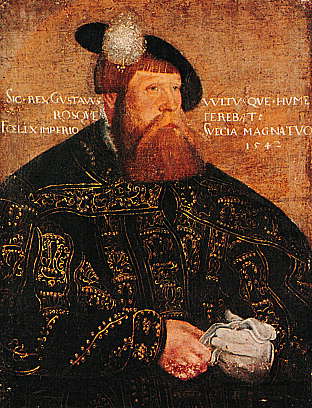
Gustav I of Sweden
King of Sweden from 1523 to 1560

Ardashir I
founder of the Sassanid Empire (224–242)

Pharnavaz I of Iberia
king of Iberia and Colchis

Khosrow I
Shahanshah of the Sasanian Empire from 531 to 579

Shapur I
second Sassanid emperor (241–272)

Shapur II
The tenth Sasanian emperor (309–379)

Thomas Stamford Raffles
British statesman who founded Singapore (1781-1826)

Harald III of Norway
King of Norway from 1046 to 1066

Abd-ar-Rahman III
final Emir of Córdoba (r. 912–929); founder and 1st Caliph of Córdoba (r. 929–961)

Menilek II
Emperor of Ethiopia and King of Shewa (1844-1913)

'Amr ibn al-'As
Arab military commander and governor (c.573–664)

Phutthayotfa Chulalok
King of Siam (1737–1809)
.JPG)
Al-Mansur
Abū Jaʿfar ʿAbd Allāh ibn Muḥammad al-Manṣūr (; ‎; 714 – 6 October 775) usually known simply as by his laqab al-Manṣūr () was the second Abbasid caliph, reigning from 754 to 775 succeeding his brother al-Saffah (). He founded the 'Round City' of Madinat al-Salam, which was to become the core of imperial Baghdad.

Sulayman ibn Abd al-Malik
Umayyad caliph

Sher Shah Suri
Founder of the Suri Empire in India (1472-1545)

Gediminas
Gediminas ( – December 1341) was Grand Duke of Lithuania from 1315 or 1316 until his death in 1341. Gediminas is traditionally considered to have been the founder of Vilnius, the capital city of Lithuania (see: Iron Wolf legend). During his reign, he brought under his rule lands streching from the Baltic Sea to the Black Sea. The Gediminids dynasty he founded and which is named after him came to rule over Poland, Hungary and Bohemia.

Minamoto no Yoritomo
1st shogun of the Kamakura shogunate (1147–1199)

Al-Mu'tasim
Abū Isḥāq Muḥammad ibn Hārūn al-Rashīd (; October 796 – 5 January 842), better known by his regnal name al-Muʿtaṣim biʾllāh (, ), was the eighth Abbasid caliph, ruling from 833 until his death in 842. When al-Ma'mun died unexpectedly on campaign in August 833, al-Mu'tasim was thus well placed to succeed him, with the support of the powerful chief , Ahmad ibn Abi Duwad, he continued to implement the rationalist Islamic doctrine of Mu'tazilism and implementing policy.

Sa'd ibn Abi Waqqas
Muslim general (c. 595 – 674)

Hormizd I
The third Sasanian emperor (270–271)

Peroz I
The 18th Sasanian Emperor (459–484)

Kavad I
Sasanian King of Kings (488–531)
Jan van Riebeeck
Dutch colonial governor (1619–1677)
Al-Hajjaj ibn Yusuf
Umayyad governor and viceroy (c.661-714)

Manfred, King of Sicily
King of Sicily from 1258 to 1266

Hans Egede
missionary to Greenland, Lutheran pastor (1686-1758)

Youssef ibn Tashfin
Leader of the Almoravid dynasty (r. 1061–1106), founder of Marrakech and a key figure in consolidating power in southern Morocco before expanding into Al-Andalus.

Yazdegerd II
The 16th Sassanid Emperor (438–457)

Muhammad bin Qasim
Umayyad Hijazi general and governor (695–715)

Argishti I of Urartu
King of Urartu

Emperor Kanmu
Emperor of Japan

Hasdrubal the Fair
Carthaginian military leader and politician (c. 270–221 BC)

Enmerkar
Enmerkar () was an ancient Sumerian ruler to whom the construction of the city of Uruk and a 420-year reign was attributed. According to literary sources, he led various campaigns against the land of Aratta.
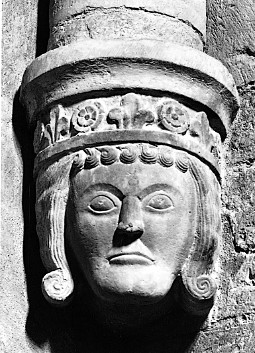
Birger Jarl
Jarl and ruler of Sweden (c.1210–1266)

Daniel of Galicia
Prince of Galicia (1201-1264)

Abdullah al-Mahdi Billah
Isma'ili Imam and Fatimid Caliph from 909 to 934

Muhammad I of Córdoba
Emir of Córdoba from 852 to 886

Vakhtang I of Iberia
King of Iberia (440-502)

Attalus II Philadelphus
King of Pergamon
Al-Mu'izz li-Din Allah
4th Caliph of the Fatimid dynasty (r. 953–975)

Uqba ibn Nafi
Arab Muslim general (died 683)

Ebenezer Howard
British writer, founder of the garden city movement (1850–1928)

Ahmad ibn Tulun
Emir of Egypt and Syria from 868 to 884
Idris Ibn Abdallah
Idrisid ruler (r. 788–791)
Rupert of Salzburg
Frankish bishop
Al-Mansur Billah
Fatimid ruler from 946 to 953 and 13th Ismaili Imam
John Sutter
pioneer of California known for his association with the California Gold Rush (1803–1880)
Marthinus Wessel Pretorius
South African politician (1819–1901)
Idris II
Sultan of Morocco from 803 to 828
Jawhar al-Siqilli
10th-century Fatimid military officer
Francisco Hernández de Córdoba Brito del Socorro y Nazareno
Spanish conquistador

Mohammed ben Abdallah
Sultan of Morocco (1710–1790)