Category
page 1Classical ethnography
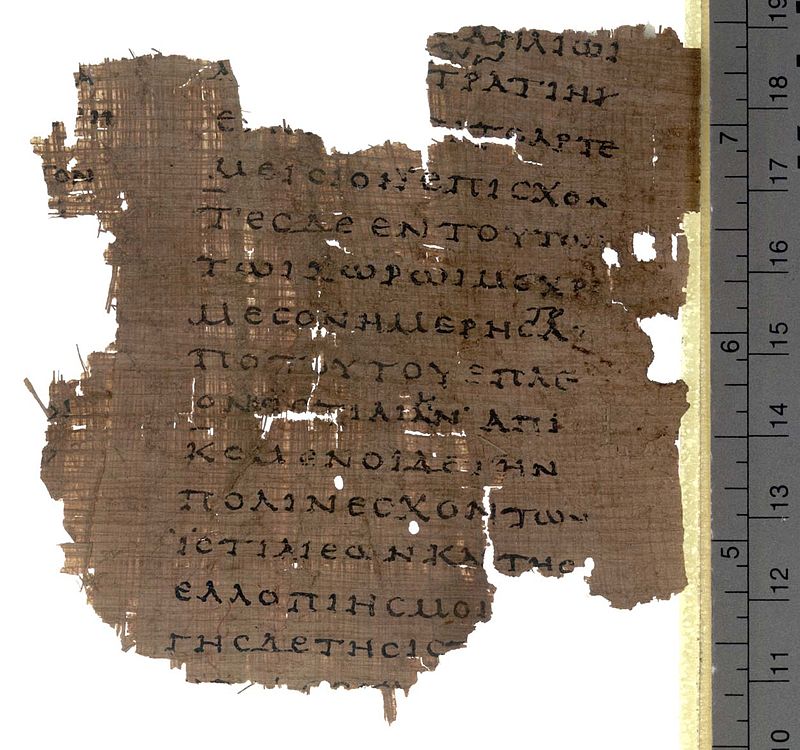
Histories
work by Herodotus

Germania
historical and ethnographic work by Publius Cornelius Tacitus

Hyperborea
thumb|upright=1.25|An arctic continent on the Gerardus Mercator map of 1595.In Greek mythology, the Hyperboreans (, ; ) were a mythical people who lived in the far northern part of the known world. Their name appears to derive from the Greek , "beyond Boreas" (the god of the north wind). Some scholars prefer a derivation from (hyperpherō, "to carry over").

Geography
thumb|200px|Title page of the 1620 edition of Isaac Casaubon's Geographica, whose 840 page numbers prefixed by "C" are now used as a standard text reference.
The Geographica (, Geōgraphiká; or , "Strabo's 17 Books on Geographical Topics") or Geography, is an encyclopedia of geographical knowledge, consisting of 17 'books', written in Greek in the late first century BC, or early first century AD, and attributed to Strabo, an educated citizen of the Roman Empire of Greek descent. There is a fragmentary palimpsest dating to the fifth century. The earliest manuscripts of books 1–9 date to the tent

Aethiopia
thumb|1747 map with all the oceans surrounding the African continent

Getica
thumb|upright=2|The title of the Getica as it appears in a 9th-century manuscript of Lorsch Abbey now in the [[Vatican Library]]
De origine actibusque Getarum (The Origin and Deeds of the Getae), commonly abbreviated Getica (), written in Late Latin by Jordanes in or shortly after 551 AD, claims to be a summary of a voluminous account by Cassiodorus of the origin and history of the Gothic people, which is now lost. However, the extent to which Jordanes actually used the work of Cassiodorus is unknown. It is significant as the only remaining contemporaneous resource that gives an extended accou
Sulpicius Alexander
Roman historian
Frankish Table of Nations
early medieval genealogical text in Latin