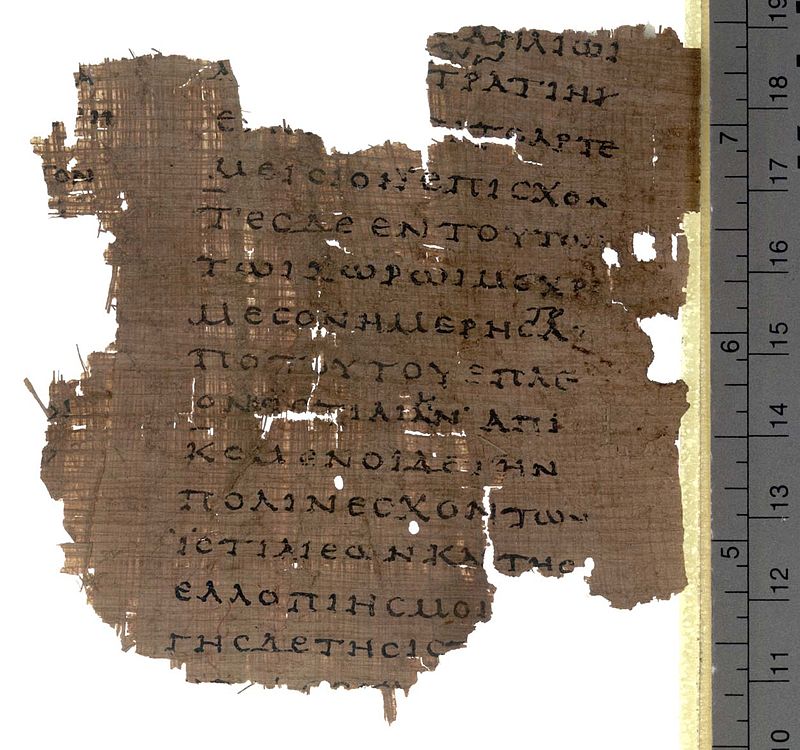
File:POxy_v0017_n2099_a_01_hires.jpg · Wikimedia Commons · See Wikimedia Commons
"Histories" is an ancient Greek work by Herodotus that recounts the conflicts between Greece and Persia, along with descriptions of the peoples and lands involved in those struggles. It matters because it is one of the earliest surviving detailed accounts of historical events and is considered foundational to the Western historical tradition, though modern scholars recognize that Herodotus mixed factual reporting with legends and stories he couldn't verify.
AI-generated from the Wikipedia summary — may contain errors.
Wikidata facts
- Author
- Herodotus
- Genre
- travel book
- Depicts
- Greco-Persian Wars
- Narrative location
- Scythia
- Image
- POxy v0017 n2099 a 01 hires.jpg
Show 8 more facts
- title
- Ἱστορίαι
- language of work or name
- Ancient Greek
- inception
- 0440-00-00
- entry in abbreviations table
- Hdt.
- copyright status
- public domain
- Commons category
- Histories (Herodotus)
- first line
- Ἡροδότου Ἁλικαρνησσέος ἱστορίης ἀπόδεξις ἥδε, ὡς μήτε τὰ γενόμενα ἐξ ἀνθρώπων τῷ χρόνῳ ἐξίτηλα γένηται, μήτε ἔργα μεγάλα τε καὶ θωμαστά, τὰ μὲν Ἕλλησι τὰ δὲ βαρβάροισι ἀποδεχθέντα, ἀκλεᾶ γένηται, τά τε ἄλλα καὶ δι᾽ ἣν αἰτίην ἐπολέμησαν ἀλλήλοισι.
- P8168
- Ryn Desert
via Wikidata · CC0
~40 min read
Encyclopedic overview
The Histories (Greek: Ἱστορίαι, Historíai; also known as The History) of Herodotus is considered the founding work of history in Western literature. Although not a fully impartial record, it remains one of the West's most important sources regarding these affairs. Moreover, it established the genre and study of history in the Western world (though historical records and chronicles did exist beforehand).
The Histories also stands as one of the earliest accounts of the rise of the Persian Empire, as well as the events and causes of the Greco-Persian Wars between the Persian Empire and the Greek city-states in the 5th century BC. Herodotus portrays the conflict as one between the forces of slavery (the Persians) on the one hand, and freedom (the Athenians and the confederacy of Greek city-states which united against the invaders) on the other. The Histories was at some point divided into the nine books that appear in modern editions, conventionally named after the nine Muses.
Excerpted from Wikipedia’s “Histories” article, available under the CC BY-SA 4.0 licence.