Category
page 1Combinatorics

factorial
{| class="wikitable" style="margin:0 0 0 1em; text-align:right; float:right;"
|+ Selected factorials; values in scientific notation are rounded
|-
! n
! n!
|-
| 0 || 1
|-
| 1 || 1
|-
| 2 || 2
|-
| 3 || 6
|-
| 4 || 24
|-
| 5 || 120
|-
| 6 || 720
|-
| 7 ||
|-
| 8 ||
|-
| 9 ||
|-
| 10 ||
|-
| 11 ||
|-
| 12 ||
|-
| 13 ||
|-
| 14 ||
|-
| 15 ||
|-
| 16 ||
|-
| 17 ||
|-
| 18 ||
|-
| 19 ||
|-
| 20 ||
|-
| 25
| style="text-align:left" |
|-
| 50
| style="text-align:left" |
|-
| 52
| style="text-align:left" |
|-
| 70
| style="text-align:left" |
|-
| 100
| style="text-align:left" |

combinatorics
Combinatorics is an area of mathematics primarily concerned with counting, both as a means and as an end to obtaining results, and certain properties of finite structures. It is closely related to many other areas of mathematics and has many applications ranging from logic to statistical physics and from evolutionary biology to computer science.

combination
In mathematics, a combination is a selection of items from a set that has distinct members, such that the order of selection does not matter (unlike permutations). For example, given three fruits, say an apple, an orange and a pear, there are three combinations of two that can be drawn from this set: an apple and a pear; an apple and an orange; or a pear and an orange. More formally, a k-combination of a set S is a subset of k distinct elements of S. So, two combinations are identical if and only if each combination has the same members. (The arrangement of the members in each set does not mat

Athanasius Kircher
German Jesuit scholar (1601 or 1602-1680)
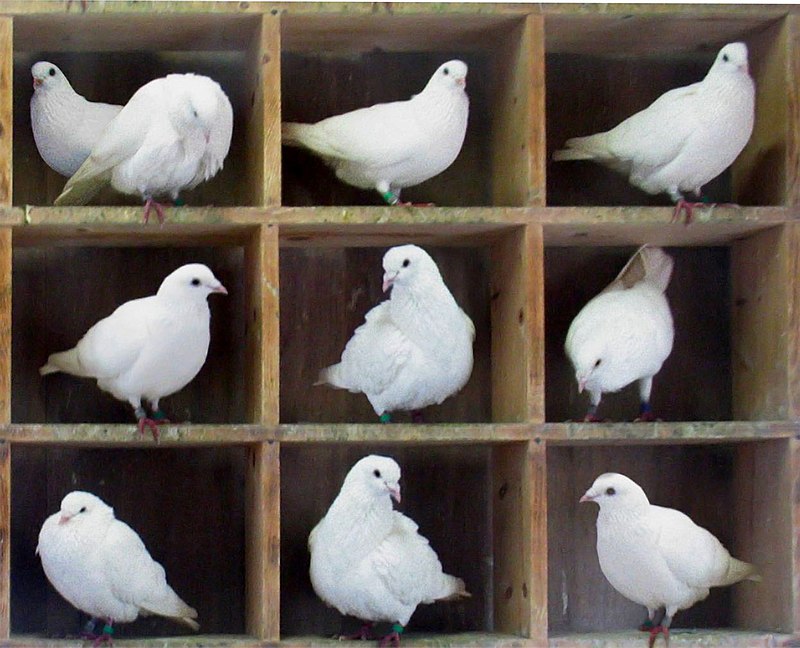
pigeonhole principle
mathematical lemma that, if 𝑛 items are put into 𝑚 containers, with 𝑛>𝑚, then at least one container must contain more than one item

binomial coefficient
family of positive integers that occur as coefficients in the binomial theorem

partition of a set
mathematical ways to group elements of a set
recurrence relation
sequence or array in which each further term is defined as a function of the preceding terms

percolation
thumb|In coffee percolation, soluble compounds leave the coffee grounds and join the water to form coffee. Insoluble compounds (and granulates) remain within the [[coffee filter.]]
thumb|Percolation in a square lattice.
combinatorial chemistry
chemical methods designed to rapidly synthesize large numbers of chemical compounds
Catalan's constant
value of the Dirichlet beta function with two as the argument
multinomial theorem
theorem about how to expand a power of a sum in terms of powers of the terms in that sum. It is the generalization of the binomial theorem to polynomials
incidence matrix
matrix that shows the relationship between two classes of objects
k-permutation
selection of some objects in a particular order
symmetric function
function that is invariant under all permutations of its variables
rule of product
combinatorial principle to determine possible ways to match disjoint sets.
Borsuk–Ulam theorem
theorem
stable marriage problem
mathematical problem of finding a stable matching between two equally sized sets of elements given an ordering of preferences for each element
finite geometry
area of mathematics
longest common subsequence problem
the problem of finding a sequence that is a subsequence of each of a given set of sequences and is as long as possible
Josephus problem
mathematical counting-out question
rule of sum
counting principle in combinatorics
multi-index notation
mathematical notation
Pascal's rule
combinatorial identity about binomial coefficients
natural density
mathematical method to measure sets of natural numbers
longest increasing subsequence
algorithm to find the longest increasing subsequence in an array of numbers
Stars and bars
graphical aid for deriving certain combinatorial theorems
combinatorial explosion
rapid growth of the complexity of a problem due to how the combinatorics of the problem is affected by the input, constraints, and bounds of the problem
Erdős conjecture on arithmetic progressions
Characterization of large sets
q-analog
In mathematics, a '''q-analog' of a theorem, identity or expression is a generalization involving a new parameter q that returns the original theorem, identity or expression in the limit as . Typically, mathematicians are interested in q-analogs that arise naturally, rather than in arbitrarily contriving q-analogs of known results. The earliest q''-analog studied in detail is the basic hypergeometric series, which was introduced in the 19th century.
umbral calculus
historical term in mathematics
Baker–Campbell–Hausdorff formula
formula in Lie theory

Delannoy number
number of paths between grid corners, allowing diagonal steps

factorial number system
mixed radix numeral system adapted to numbering permutations; represents a number as a×0! + b×1! + c×2! + ⋯
inversion
in discrete mathematics, a pair of positions in a sequence where two elements are out of sorted order
finite topological space
topological space with a finite number of points
block design
set together with a family of subsets in math
combinatorial principle
combinatorial methods used in combinatorics, a branch of mathematics
Sperner's lemma
lemma that every Sperner coloring of a triangulated simplex contains a properly colored simplex
Singmaster's conjecture
conjecture in combinatorial number theory
incidence structure
an abstract mathematical object generalizing the properties of points and lines in the Euclidean plane
Lovász local lemma
lemma proving that a set of events with limited dependence has positive probability of all happening together
Erdős–Graham problem
Theorem on the existence of finite sets of positive integers >1 whose inverses sum to 1
Sicherman dice
a pair of six-sided dice with nonstandard labels whose sums have the same probability distribution as standard dice
sunflower
collection of sets in which every two sets have the same intersection
Musikalisches Würfelspiel
musical dice game used to randomly generate music
history of combinatorics
aspect of history
Road coloring problem
theorem that every aperiodic strongly-connected out-regular directed graph can be labeled to give a synchronizable deterministic finite automaton
probabilistic method
nonconstructive method for mathematical proofs
domino tiling
Geometric construct
set packing
classic computing problem
cycle index
Polynomial in combinatorial mathematics
cyclic order
ternary relation that is cyclic (if [𝑥,𝑦,𝑧] then [𝑧,𝑥,𝑦]), asymmetric (if [𝑥,𝑦,𝑧] then not [𝑧,𝑦,𝑥]), transitive (if [𝑤,𝑥,𝑦] and [𝑤,𝑦,𝑧] then [𝑤,𝑥,𝑧]) and connected (for distinct 𝑥,𝑦,𝑧, either [𝑥,𝑦,𝑧] or [𝑧,𝑥,𝑦])
combinatorial topology
mathematical subject
meander
self-avoiding closed curve which intersects a line a number of times
generalized arithmetic progression
a sequence of integers constructed as an arithmetic progression
Sidon sequence
class of sequences of natural numbers
3-dimensional matching
Concept in mathematical graph theory
linear difference equation
relation in algebra
Langford pairing
Sequence of integers