pigeonhole principle
Also known as Dirichlet's box principle, Dirichlet’s principle
mathematical lemma that, if 𝑛 items are put into 𝑚 containers, with 𝑛>𝑚, then at least one container must contain more than one item
Article
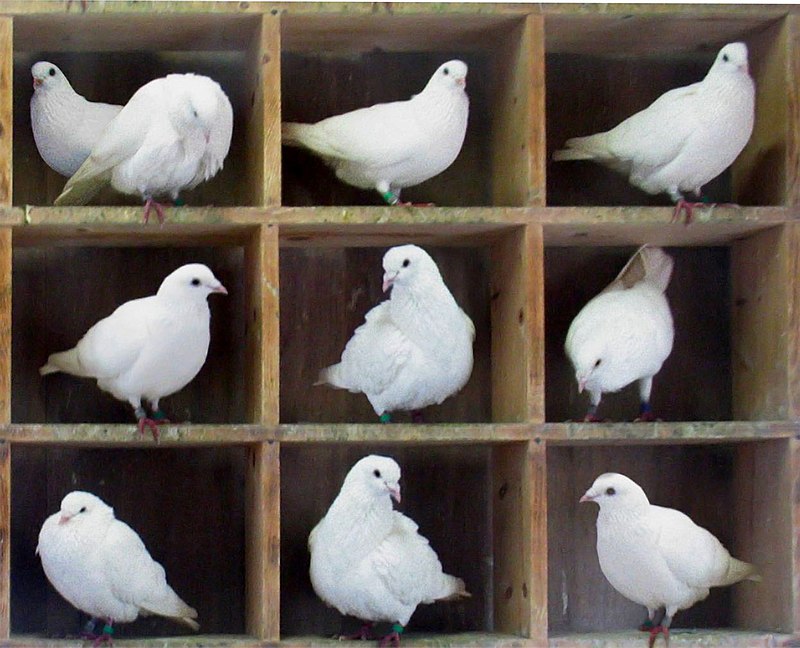
Pigeons in holes. Here there are n = 10 pigeons in m = 9 holes. Since 10 is greater than 9, the pigeonhole principle says that at least one hole has more than one pigeon. (The top left hole has 2 pigeons.)
In mathematics, the pigeonhole principle states that if n items are put into m containers, with n > m, then at least one container must contain more than one item. For example, of three gloves, at least two must be right-handed or at least two must be left-handed, because there are three objects but only two categories of handedness to put them into. This seemingly obvious statement, a type of counting argument, can be used to demonstrate possibly unexpected results. For example, given that the population of London is more than one unit greater than the maximum number of hairs that can be on a human head, the principle requires that there must be at least two people in London who have the same number of hairs on their heads.