Category
page 1Commelinaceae

Commelinaceae
Commelinaceae is a family of flowering plants. In less formal contexts, the group is referred to as the dayflower family or spiderwort family. It is one of five families in the order Commelinales and by far the largest of these with about 731 known species in 41 genera. Well known genera include Commelina (dayflowers) and Tradescantia (spiderworts). The family is diverse in both the Old World tropics and the New World tropics, with some genera present in both. The variation in morphology, especially that of the flower and inflorescence, is considered to be exceptionally high amongst the angios
Murdannia
Murdannia is a genus of annual or perennial monocotyledonous flowering plants in the family Commelinaceae.
Amischotolype
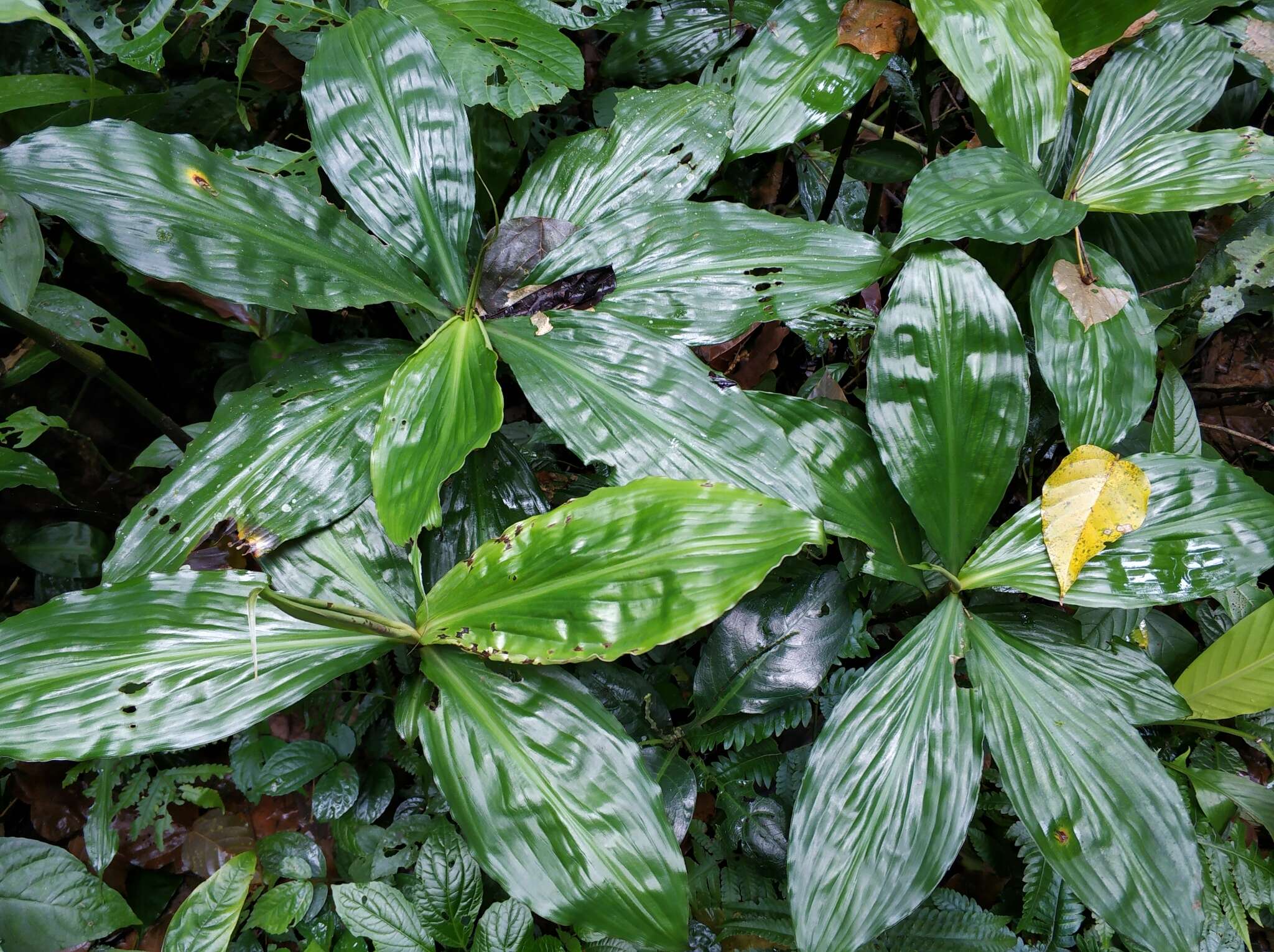
Amischotolype is a genus of perennial monocotyledonous flowering plants in the Commelinaceae. It is found in Central Africa and from India through Southeast Asia to New Guinea, with the great majority or species found in Asia.

Pollia condensata
species of plant
Dichorisandra
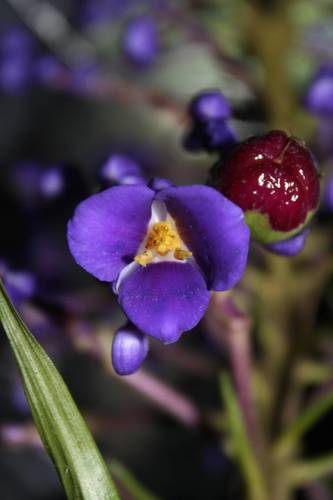
Dichorisandra is a genus of perennial monocotyledonous flowering plants in the dayflower family (Commelinaceae). It is found in the Neotropics. The genus is characterised by its slightly zygomorphic flowers with large anthers usually releasing pollen by means of pores at the apex, as well as by its seeds that are embedded in a red or sometimes white aril, and tubers that often form at the tips of the roots. Both morphology and an analysis of DNA sequences indicate it is very closely related to the genus Siderasis.

Pollia
genus of plants
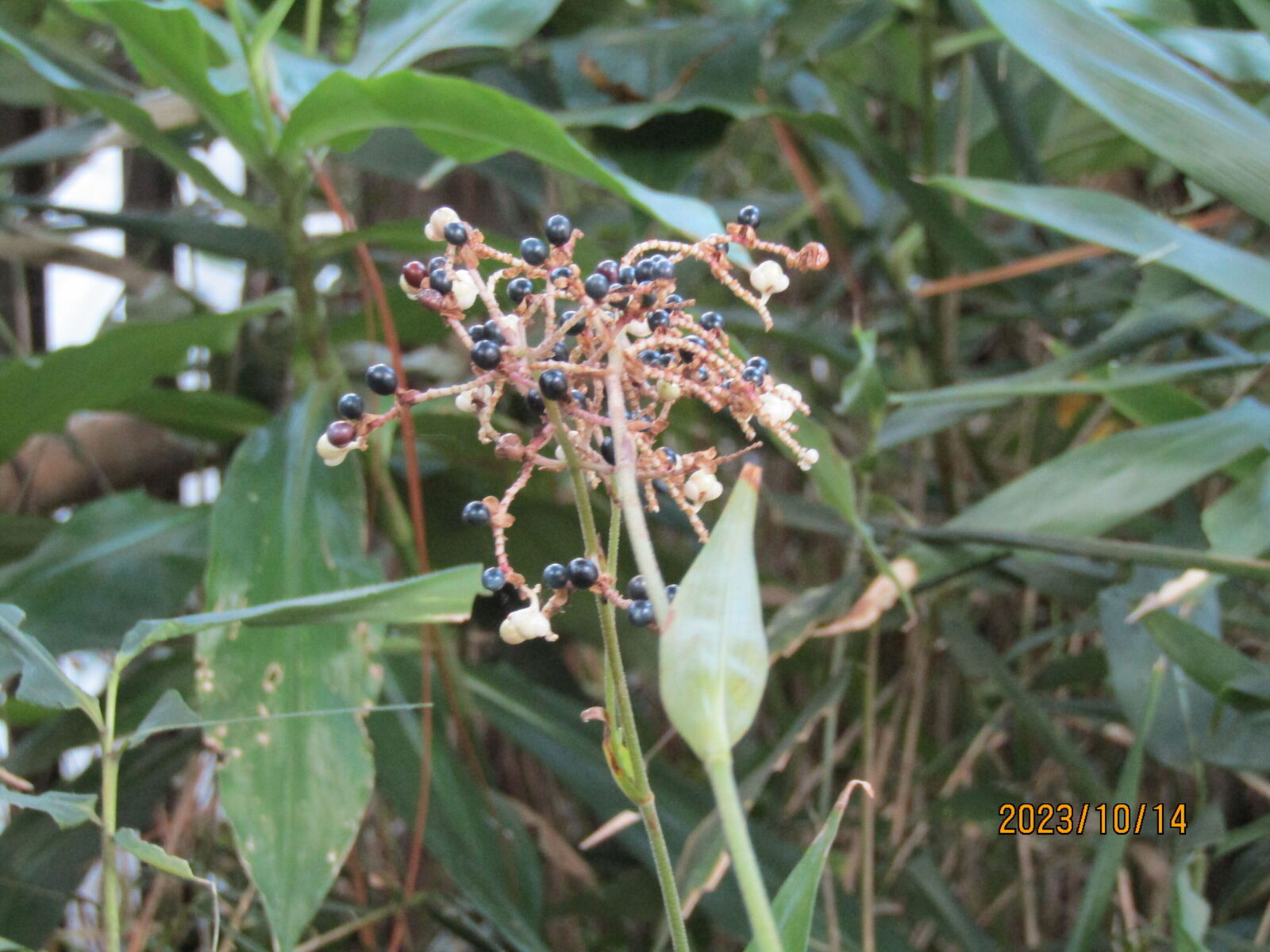
Pollia japonica
species of plant

Dichorisandra thyrsiflora
species of plant

Murdannia keisak
species of plant

Streptolirion volubile
species of plant
Tinantia
Tinantia is a genus of plants in the Commelinaceae, first described in 1839. They are commonly called '''widow's tears or false dayflowers' due to their resemblance of the closely related true dayflowers of the genus Commelina. Tinantia is native to North and South America from Texas + Hispaniola to Argentina, with a center of diversity from Mexico to Nicaragua. Tinantia pringlei'', an alpine native of Mexico, is grown as an ornamental in temperate areas and is also a common greenhouse weed.
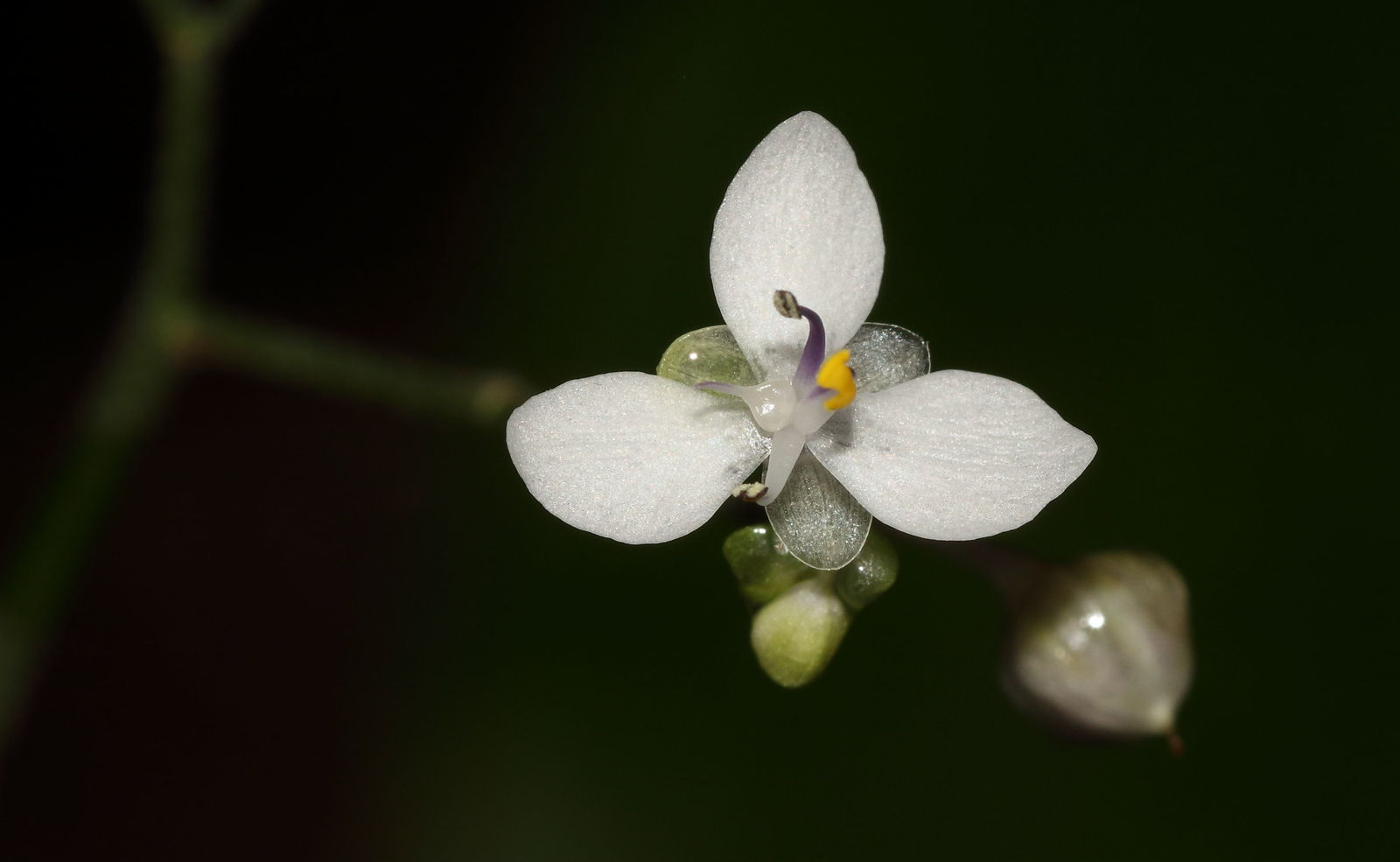
Dictyospermum
Dictyospermum is a genus of monocotyledonous flowering plants in the family Commelinaceae, first described in 1853. It is native to Tropical Asia. They have only three fertile stamens, middle one inserted opposite petal.

Thyrsanthemum
Thyrsanthemum is a genus of plants in the Commelinaceae, first described in 1946. The entire genus is endemic to Mexico.
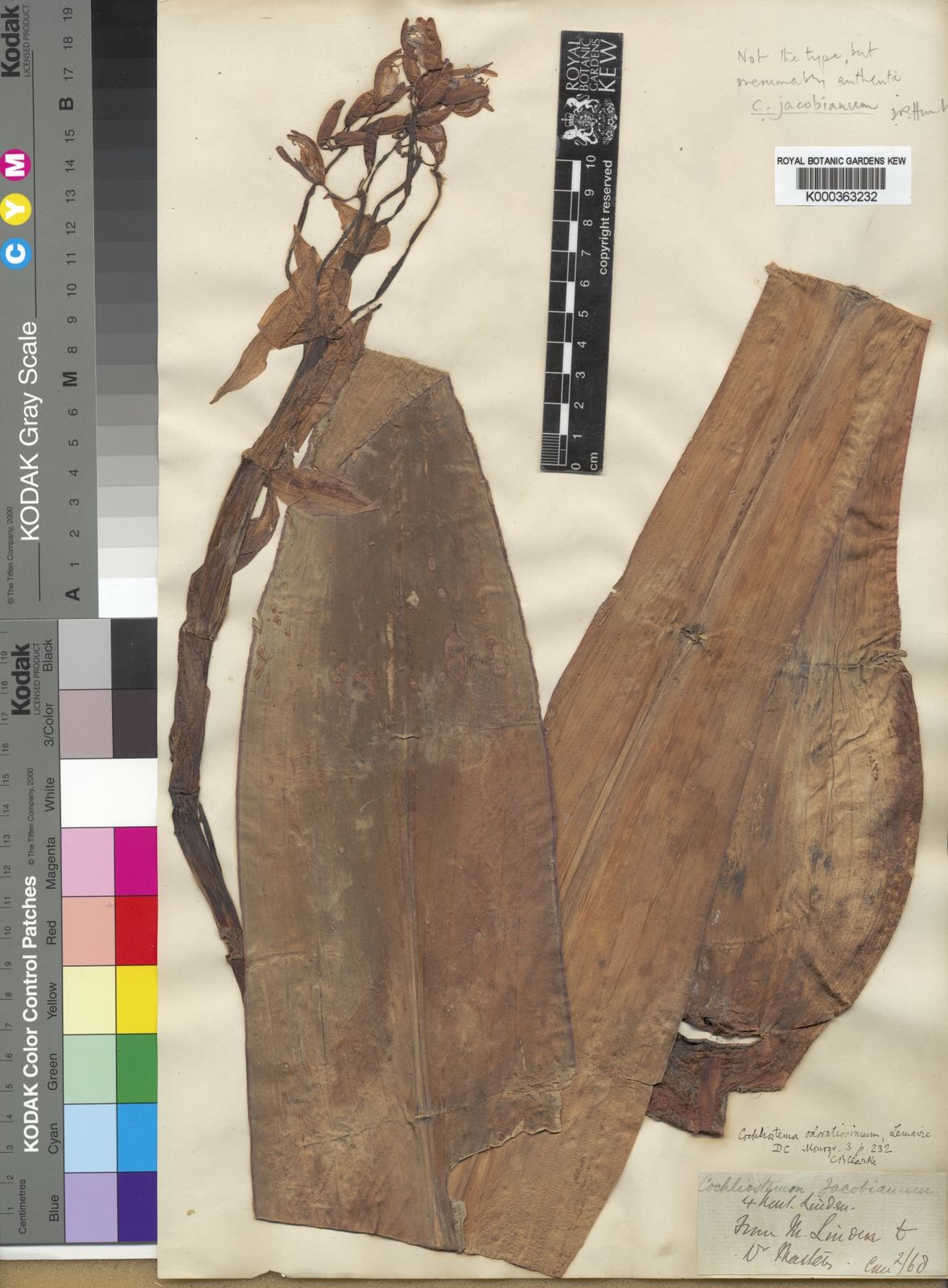
Cochliostema
Cochliostema is a genus of plants with two species in the family Commelinaceae (the spiderwort and dayflower family). The genus occurs from southern Nicaragua to southern Ecuador.
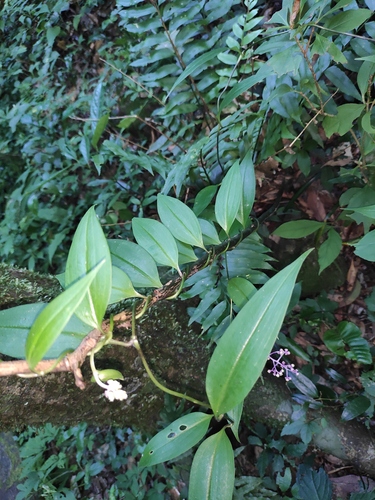
Spatholirion
Spatholirion is a genus of climbing or rosette monocotyledonous flowering plants in the dayflower family. It is distributed from China in the north, south to Thailand, Vietnam, and northern Peninsular Malaysia. It has four to eight seeds per carpel, unlike the closely related Streptolirion, which has only two, and white or purple petals. The inflorescence axis of Spatholirion longifolium and all of its branches are a bright purple, probably aiding in visual pollinator attraction. The genus was first described in 1896 by Henry Nicholas Ridley, the father of the commercial rubber industry, from

Geogenanthus
Geogenanthus is a genus of plants with 3 species in the family Commelinaceae (the spiderwort and dayflower family). The genus is distributed from Colombia to Amazonian Peru and Brazil. Two of its species (Geogenanthus ciliatus and Geogenanthus poeppigii) are occasionally found in the horticultural trade as house plants.
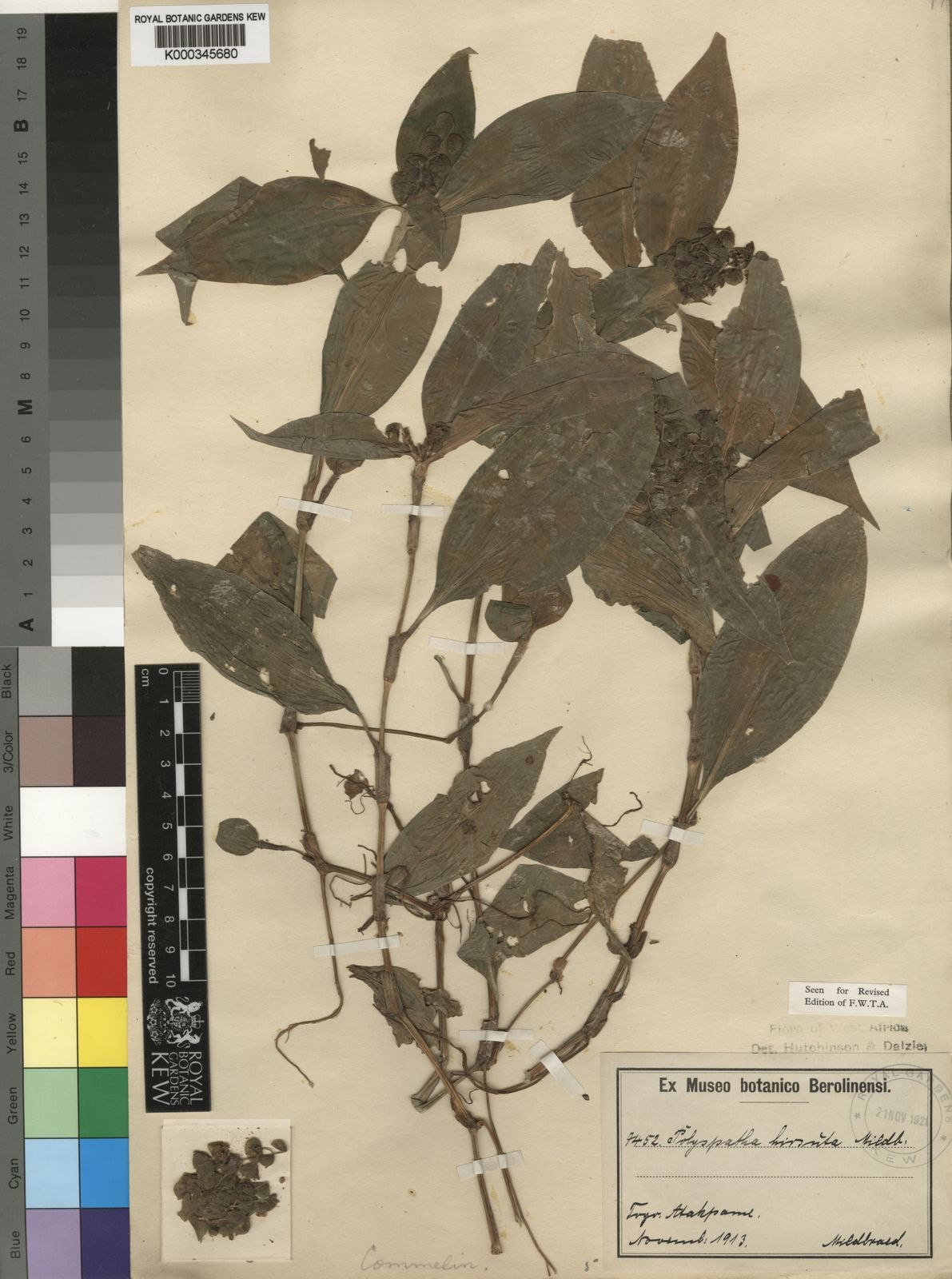
Polyspatha
Polyspatha is a genus of perennial monocotyledonous flowering plants in the family Commelinaceae. It is restricted to tropical Africa consists of three recognized species.
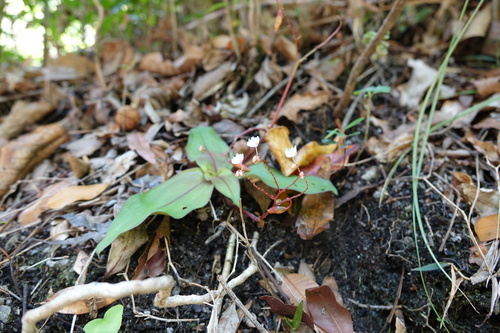
Pseudoparis
Pseudoparis is a genus of perennial monocotyledonous flowering plants in the family Commelinaceae, first described in 1936. The genus contains three known species, all endemic to Madagascar.
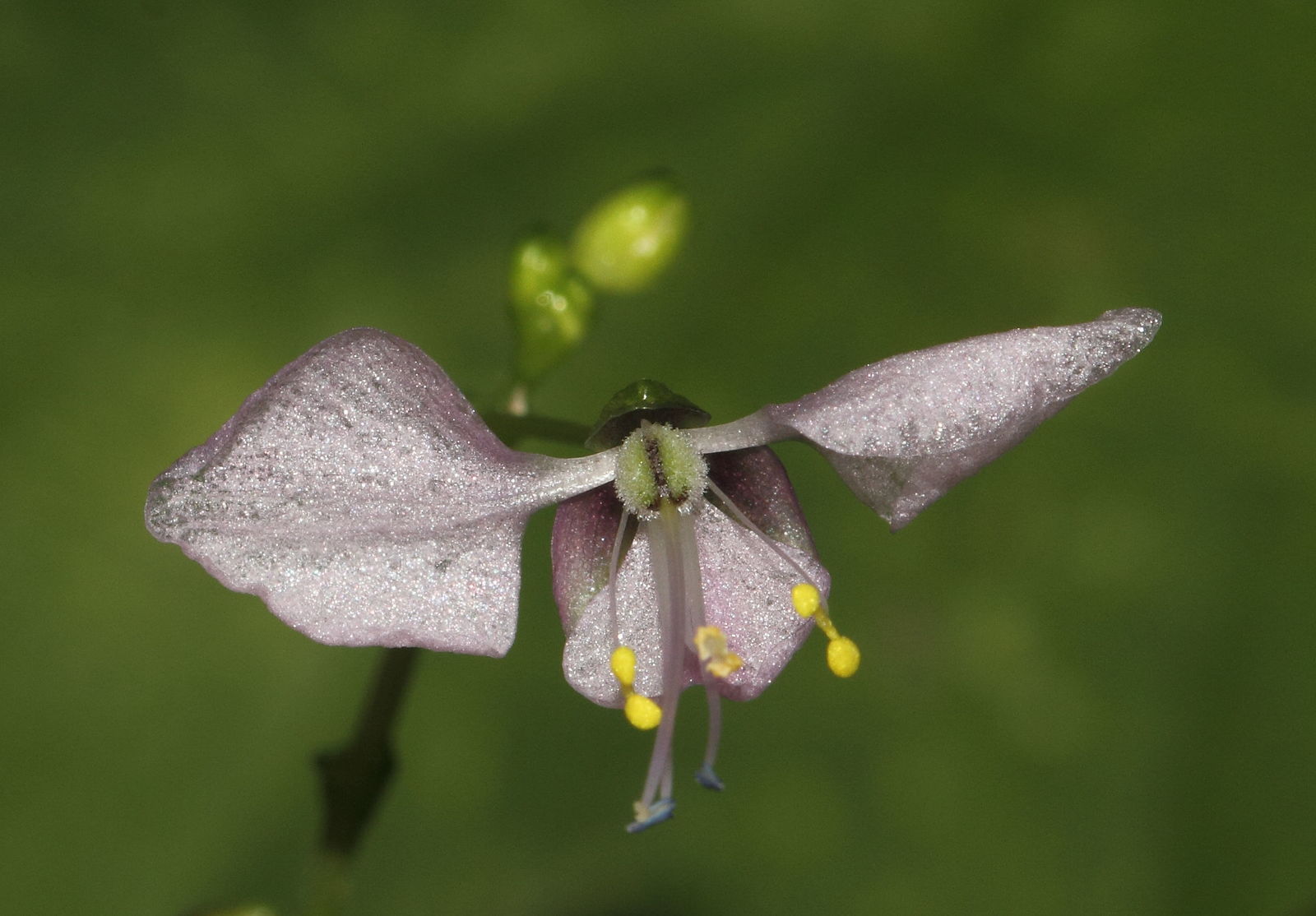
Rhopalephora
Rhopalephora is a genus of monocotyledonous flowering plants in the family Commelinaceae, first described in 1864. It is native to Asia, Madagascar, and a few islands in the Pacific.

Coleotrype
Coleotrype is a genus of perennial monocotyledonous flowering plants in the dayflower family. It is found in Africa and Madagascar.
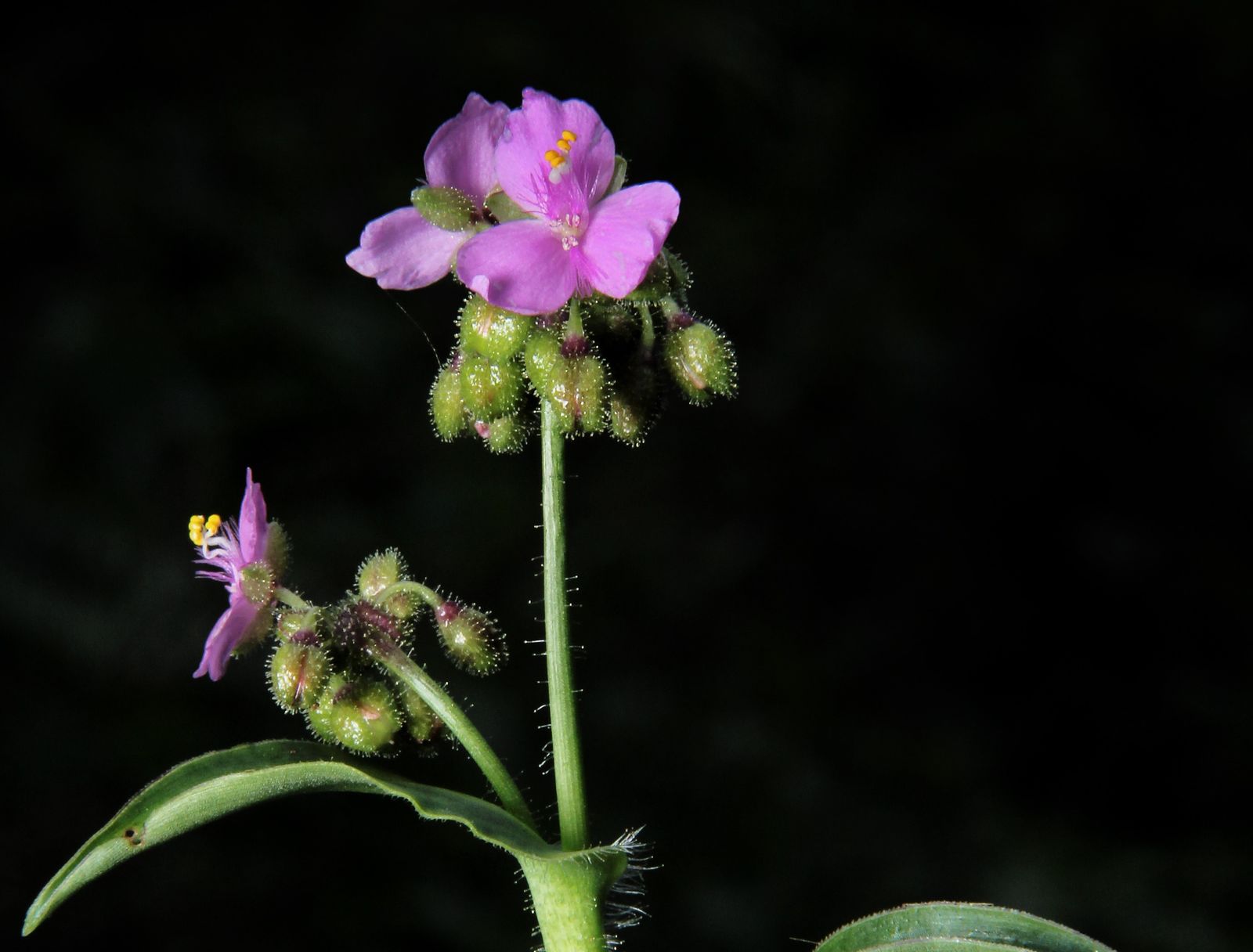
Tripogandra
Tripogandra is a genus of flowering plants in the spiderwort family, Commelinaceae. It is native to the Western Hemisphere from central Mexico and the West Indies south to Argentina.
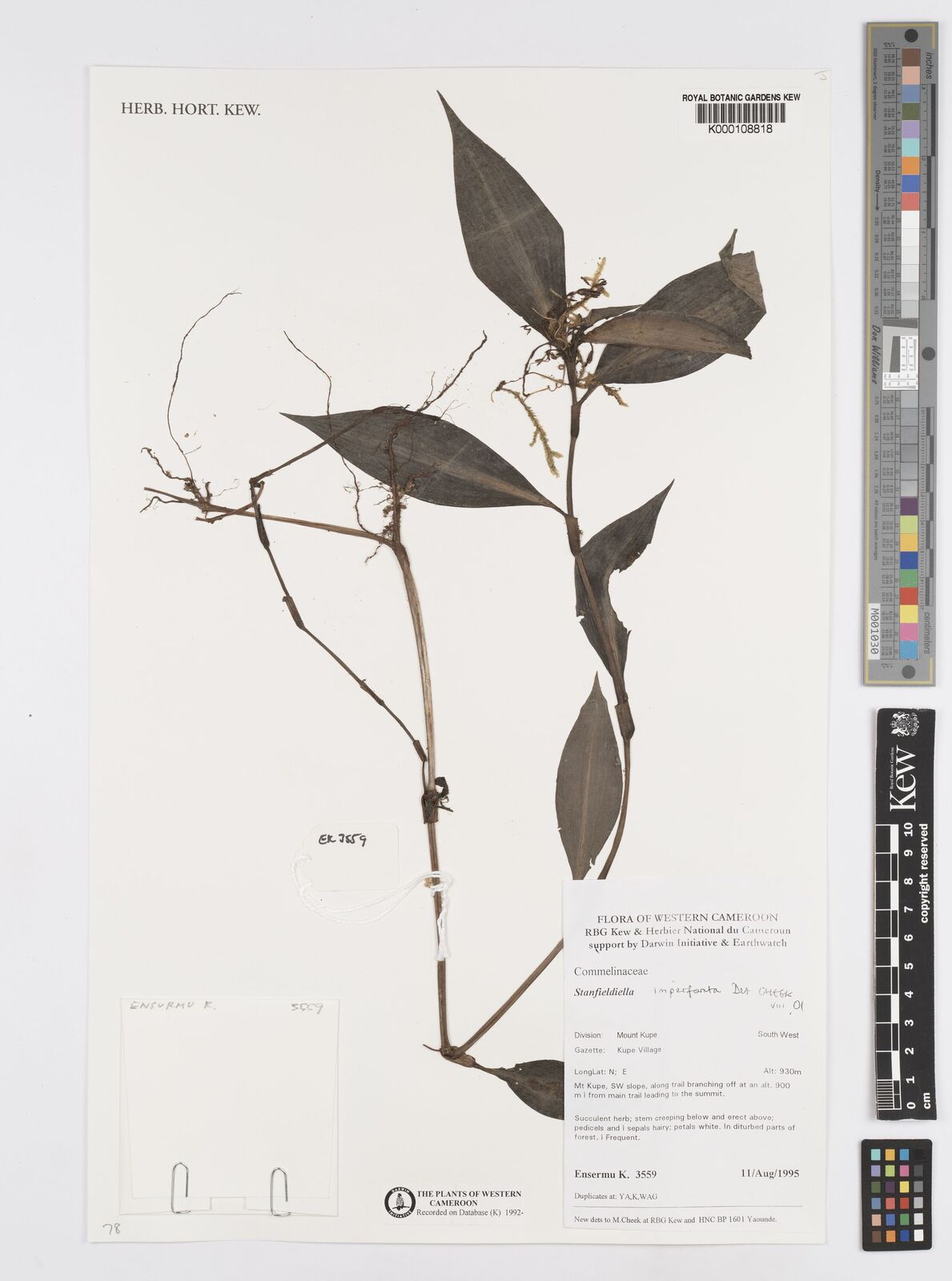
Stanfieldiella
Stanfieldiella is genus of flowering plants within the family Commelinaceae, first described in 1960. It is native to sub-Saharan Africa.
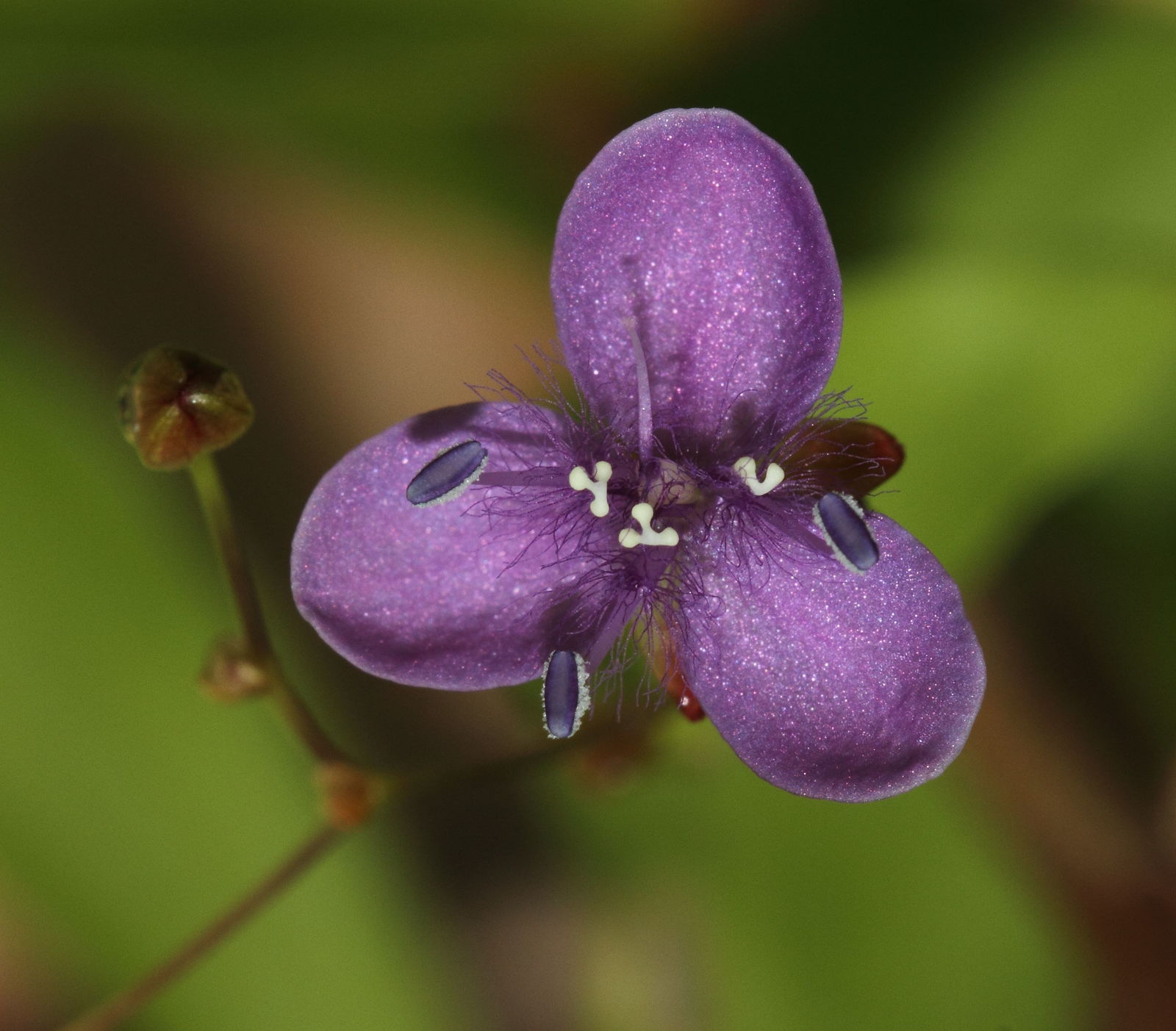
Murdannia spirata
species of plant
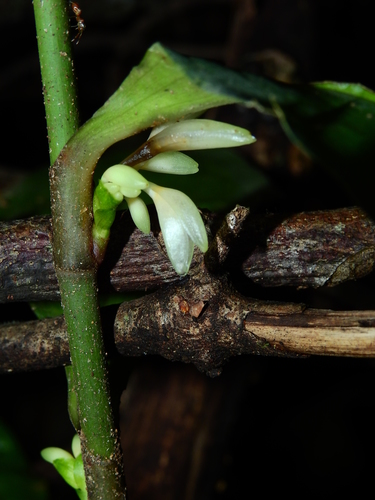
Buforrestia
Buforrestia is a genus of perennial monocotyledonous flowering plants in the dayflower family. The genus contains three known species, with two found in West and Central Africa and one in northeastern South America.
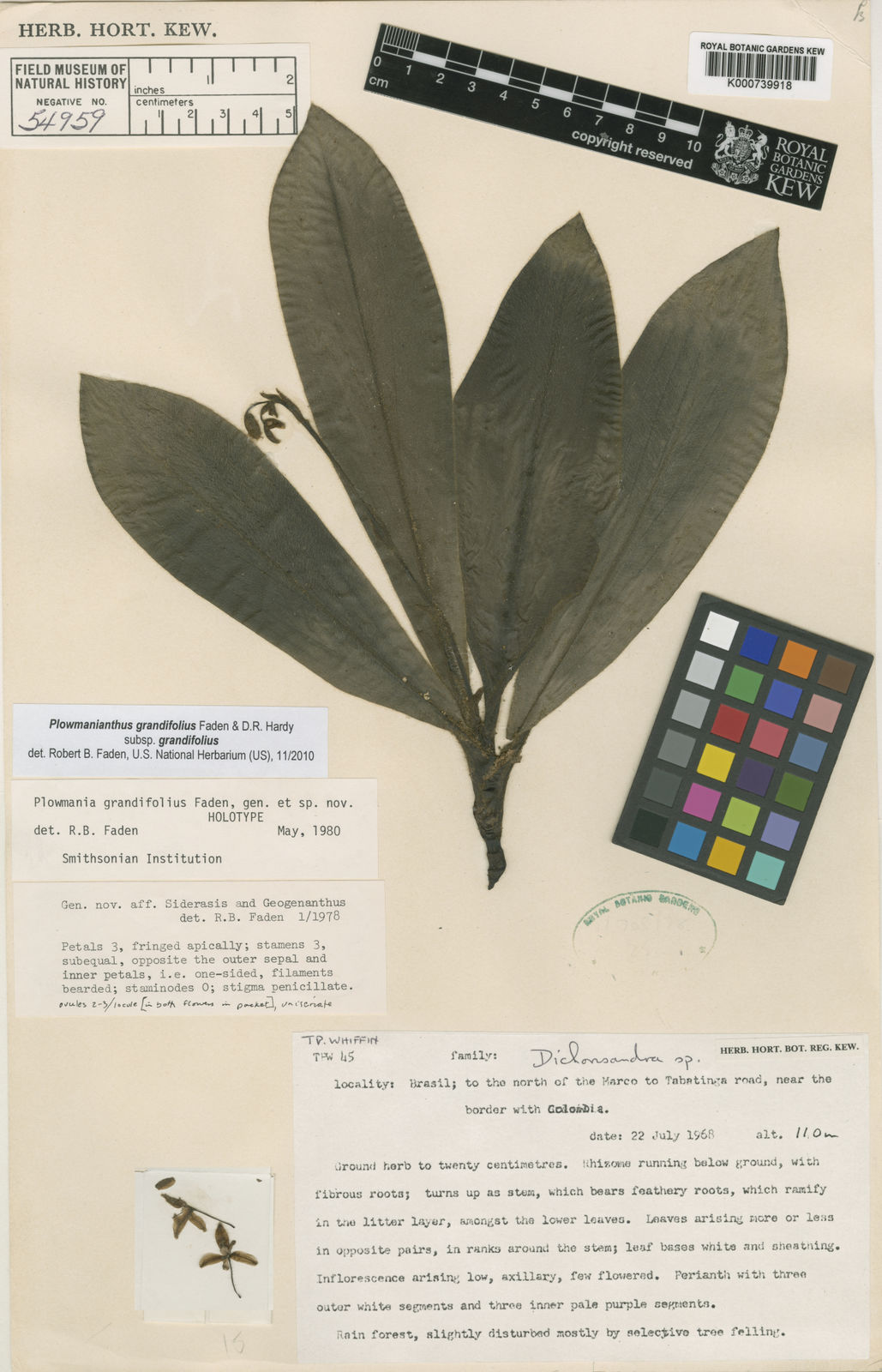
Plowmanianthus
Plowmanianthus Faden & C.R.Hardy is a genus of plants with 5 species and 2 subspecies in the family Commelinaceae (the spiderwort and dayflower family). The genus is distributed from Panama to Amazonian Peru and Brazil.
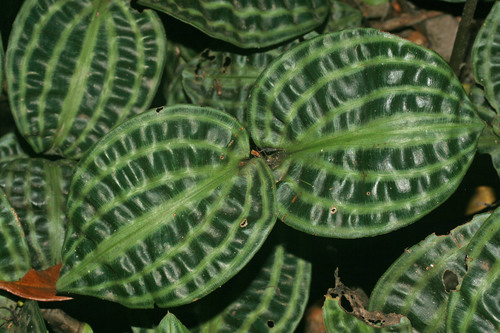
Geogenanthus poeppigii
species of plant
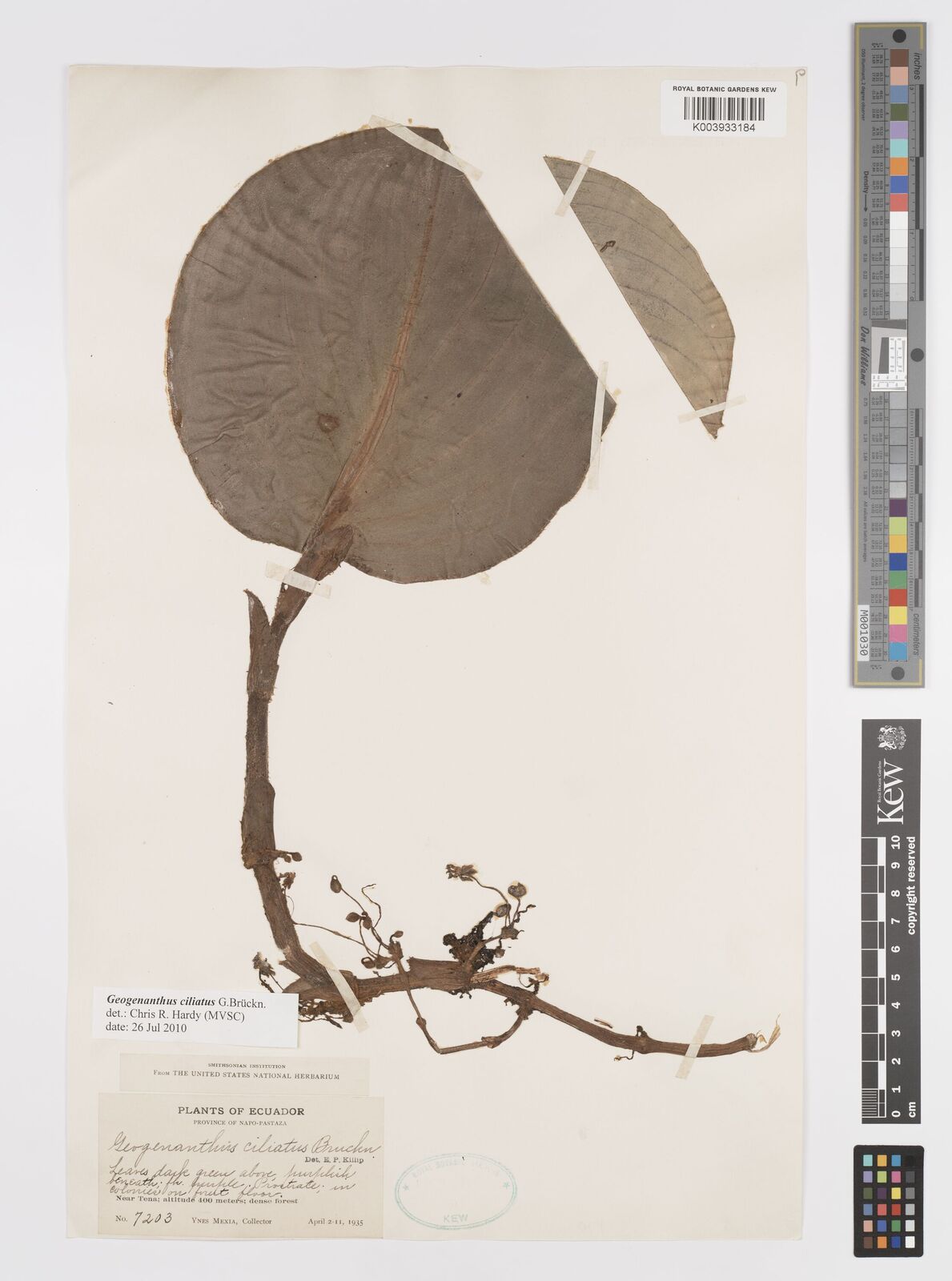
Geogenanthus ciliatus
species of plant

Tinantia pringlei
species of plant

Weldenia candida
species of plant
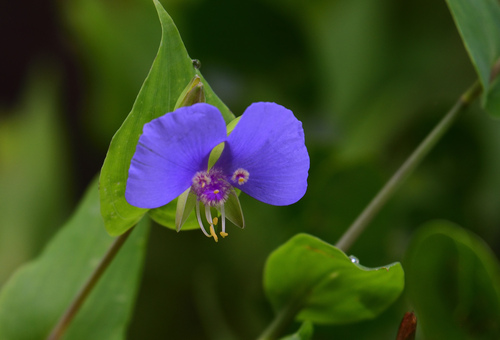
Tinantia anomala
species of plant

Weldenia
Weldenia is a genus of flowering plants in the family Commelinaceae. It includes two species of tuberous geophytes native to Mexico and Guatemala.
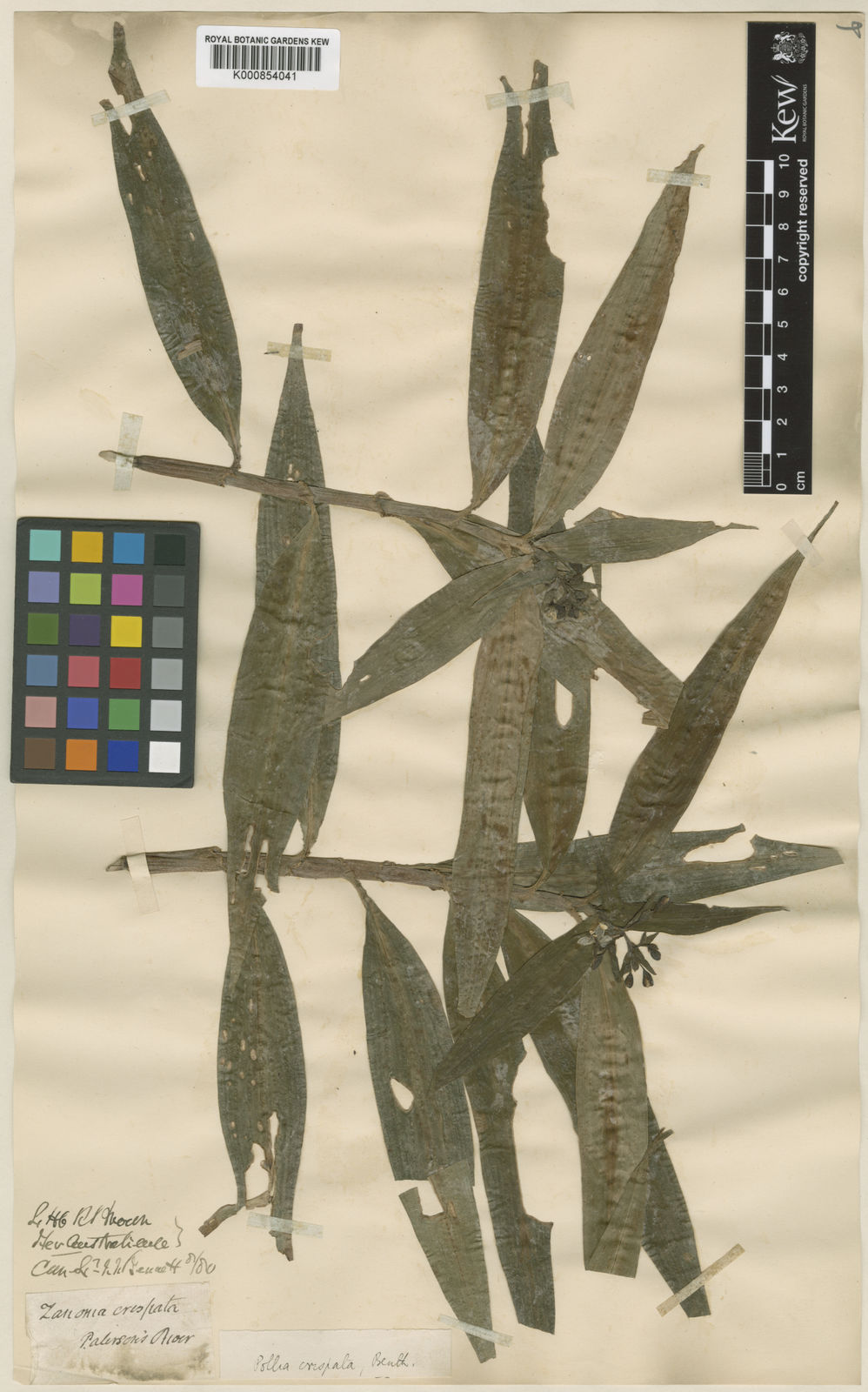
Pollia crispata
species of flowering plant
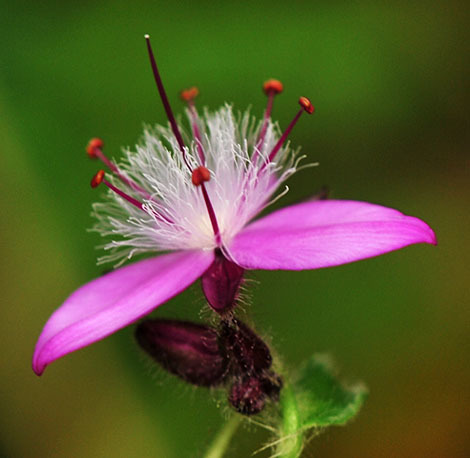
Elasis hirsuta
species of plant

Streptolirion
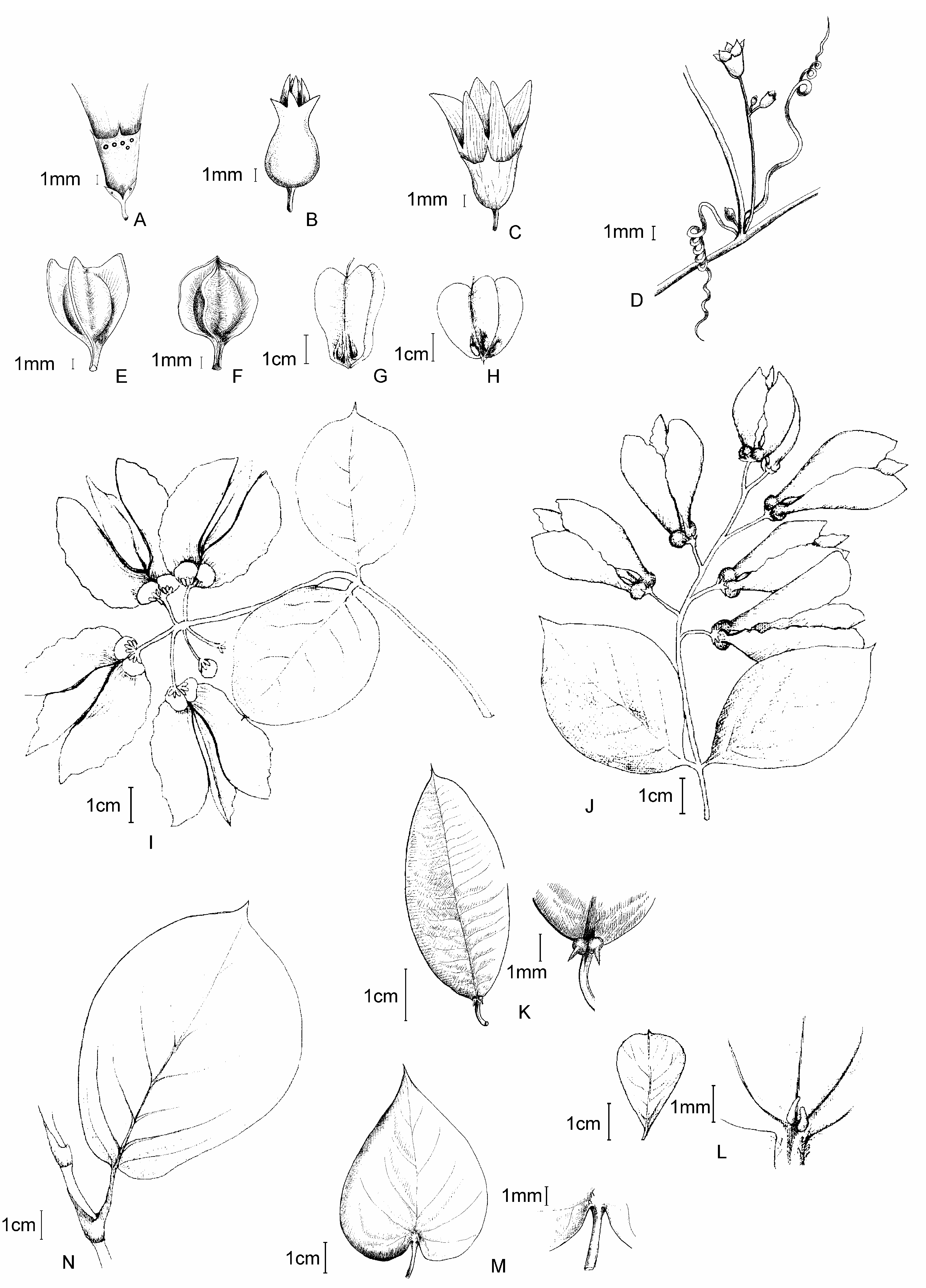
thumb | right | Botanical illustration of Streptolirion volubile
Streptolirion is a genus of flowering plants in the family Commelinaceae. It includes two species native to Asia, ranging from Japan and Manchuria to Indochina and the Himalayas.
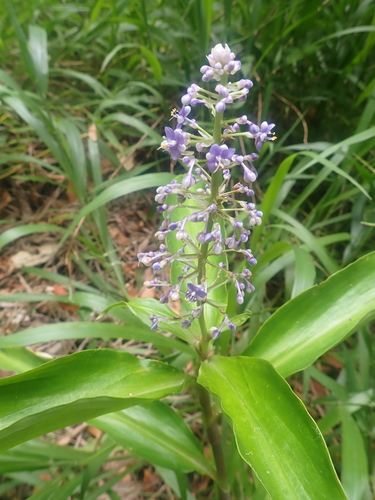
Pollia macrophylla
species of flowering plant
Commelinoideae
Commelinoideae is a subfamily of monocotyledonous plants in the dayflower family (Commelinaceae). It is one of two subfamilies within the Commelinaceae and includes 39 genera (out of 41 in the family) and all but 12 of the family's several hundred known species. The subfamily is further broken down into two tribes, the Tradescantieae, which includes 26 genera and about 300 species, and the Commelineae, which contains 13 genera and about 350 species.
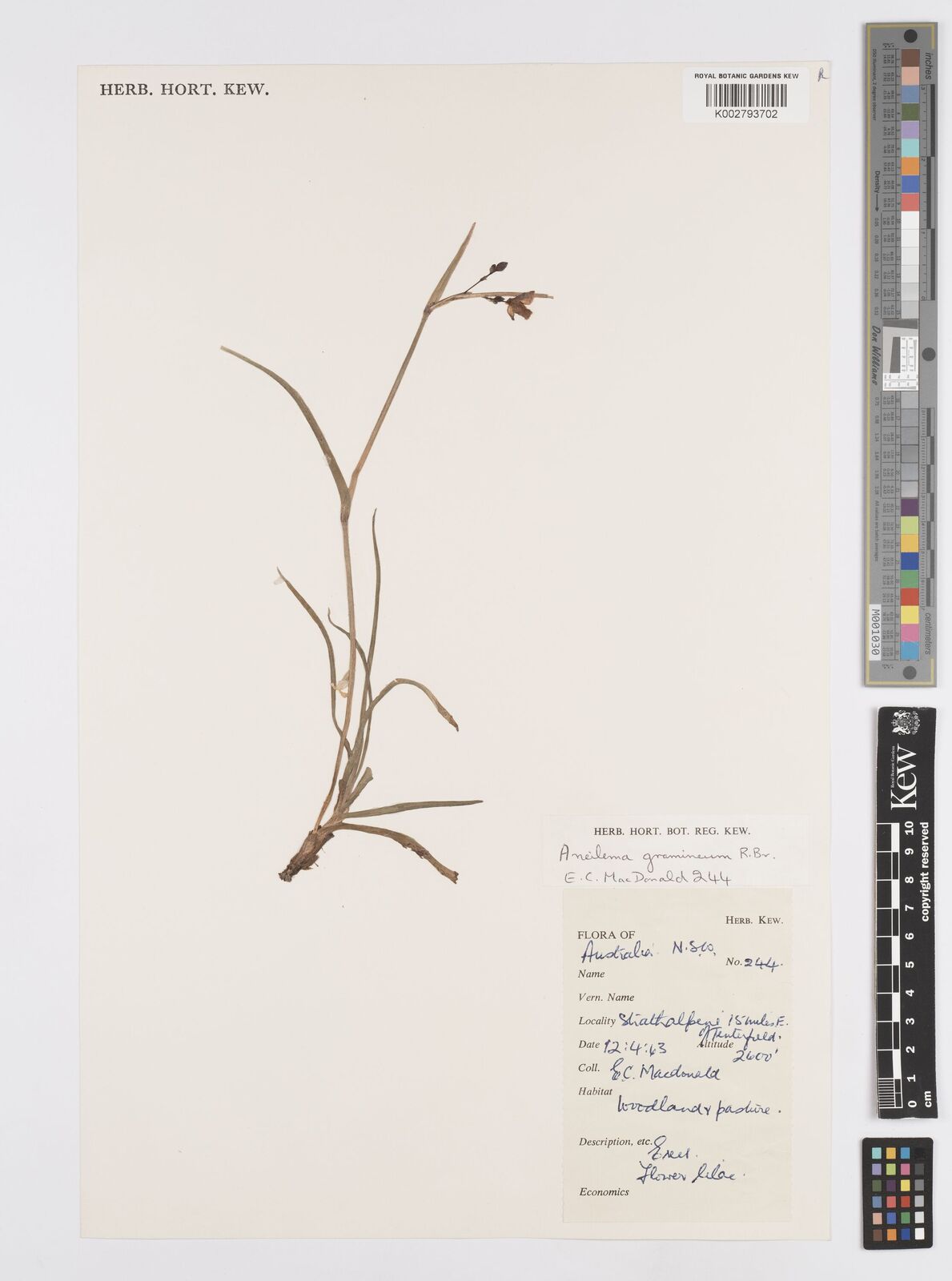
Murdannia graminea
species of plant

Murdannia semiteres
species of plant

Murdannia triquetra
species of plant
Sauvallia
Sauvallia is a monotypic genus of monocotyledonous flowering plants in the family Commelinaceae, first described as a genus in 1871. The genus consists of a single species, Sauvallia blainii, which was endemic to Cuba.
Elasis
Elasis is a genus of flowering plants in the family Commelinaceae. It includes two species of subshrubs native to southern Mexico, Central America, and Ecuador.
Elasis guatemalensis – southern Mexico to Nicaragua
Elasis hirsuta – Ecuador
Commelineae
Commelineae is a tribe of monocotyledonous flowering plants in the dayflower family (Commelinaceae). The tribe consists of 13 genera and about 350 species. It is one of two tribes in the subfamily Commelinoideae, the other being the Tradescantieae, which is made up of 26 genera and about 300 species. The remaining two genera in the family are in a separate subfamily, the Cartonematoideae.
Murdannia crocea
species of plant

Coleotrype baronii
species of plant
Siderasis
Siderasis is a genus of monocotyledonous flowering plants in the dayflower family, first described in 1837. It consists of a single known species, Siderasis fuscata, endemic to the State of Rio de Janeiro in southeastern Brazil, though it is also naturalized on the Island of Java in Indonesia.
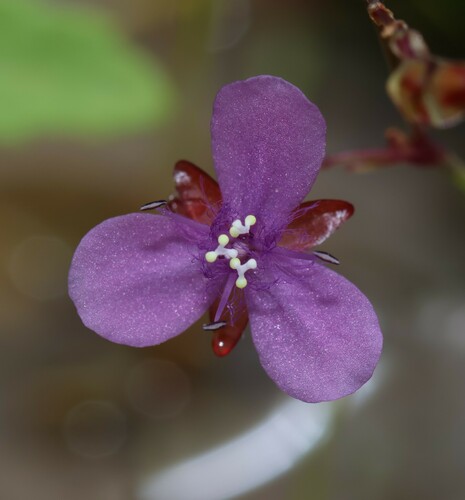
Murdannia dimorphoides
species of plant
Dichorisandrinae
Dichorisandrinae is a subtribe within the tribe Tradescantieae of the flowering plant family Commelinaceae. It consists of 5 genera and around 51 species.
Triceratella
Triceratella is a genus of annual monocotyledonous flowering plants in the dayflower family. The genus consists of a single species, Triceratella drummondii. It is known to occur in Zimbabwe and Mozambique, but has only been collected twice. Because of its rarity, DNA sequences have never been used to determine its relatives, but it is believed to be closely related to the early diverging genus Cartonema, with which it shares a number of characters unique for the dayflower family, such as a yellow flowers, glandular hairs, and a lack of glandular microhairs. It differs from Cartonema, however,