Category
page 1Commelinales genera

Eichhornia
Eichhornia, commonly called water hyacinths, was a polyphyletic genus of the aquatic flowering plants family Pontederiaceae. Since it was consistently recovered in three independent lineages, it has been sunk into Pontederia, together with Monochoria. Each of the three lineages is currently recognized as subgenera in Pontederia:
Pontederia subg. Cabanisia, which includes P. meyeri, P. paniculata (the Brazilian water hyacinth), and P. paradoxa
Pontederia subg. Oshunae, which includes the common water hyacinth, P. crassipes
Pontederia subg. Eichhornia, which includes P. azurea, P. diversifoli

Anigozanthos
Anigozanthos is a genus of plant found naturally in the Southwestern Australia biogeographic region, belonging to the bloodwort family Haemodoraceae. The 11 species and their subspecies are commonly known as kangaroo paw or wallaby paw (formerly catspaw), depending on their size, and the shape and colour of their flowers. A further species, previously identified as Anigozanthos fuliginosus (black kangaroo paw), was separated to a monotypic genus as Macropidia fuliginosa. All 11 species of Anigozanthos are endemic to the south west of Western Australia, Noongar Boodjar.

Pontederia
Pontederia is a genus of tristylous aquatic plants, members of which are commonly known as pickerel weeds. Pontederia is endemic to the Americas, distributed from Canada to Argentina, where it is found in shallow water or on mud. The genus was named by Linnaeus in honour of the Italian botanist Giulio Pontedera.

Hanguana
Hanguana is a genus of flowering plants with a dozen known species. It is the only genus in the family Hanguanaceae.

Heteranthera
Heteranthera is a genus of aquatic plants in the water hyacinth family, Pontederiaceae, known generally as mud plantains. Species of this genus are native to tropical and subtropical America and Africa. They live in the water or in wet soils. They produce leaves on long petioles and some are cultivated for their attractive flowers. Leaves are of two types - linear and submerged or orbicular and floating. Some species have cleistogamic flowers.
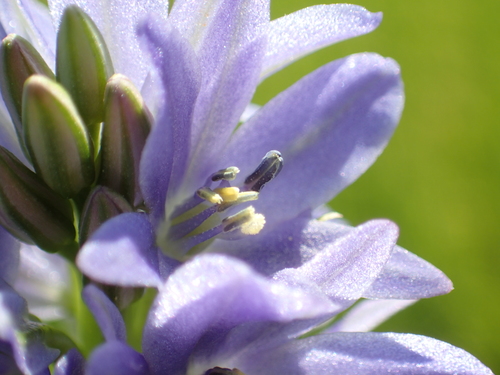
Monochoria
Monochoria was originally a genus of aquatic plants in the water hyacinth family, Pontederiaceae. Currently, it has been reduced to a subgenus of Pontederia, Pontederia subg. Monochoria, represented by ten species (listed below). Its species are native to tropical and subtropical Africa, Asia, and Oceania. They live in the water or in wet soils. They produce leaves on long petioles and some are cultivated for their attractive flowers. Plants from this species have been utilized in the creation of traditional herbal treatments, food, and cosmetics for a very long time.

Wachendorfia
Wachendorfia is a genus of perennial herbaceous plants that is assigned to the bloodroot family. The plants have a perennial rootstock with red sap. From the rootstock emerge lance- or line-shaped, sometime sickle-shaped, pleated, simple leaves set in a fan, that are flattened to create a left and right surface rather than an upper and lower surface. The leaves die when the seeds are shed in three of the species, and are perennial in one species.

Conostylis
thumb|Conostylis aculeata

Dilatris
Dilatris is a genus of four species of evergreen perennial herbaceous plants of up to high, that are assigned to the bloodroot family. The plants have hairless, line- to lance-shaped leaves set in a fan that emerges from a red or orange coloured rootstock. Six free tepals with some gland dots near their tips are present on the mauve or dirty yellow flowers' six free petals. The other two stamens are longer and spreading with smaller scarlet anthers, while the one stamen is short, upright, and has a large, yellow anther. The style is diverted from the centre opposite both longer stamens. The sp

Xiphidium
Xiphidium is a genus of herbs in the family Haemodoraceae first described as a genus in 1775. It is native to tropical Americas, from southern Mexico through the Caribbean, Central America, and northern South America to Bolivia and central Brazil.
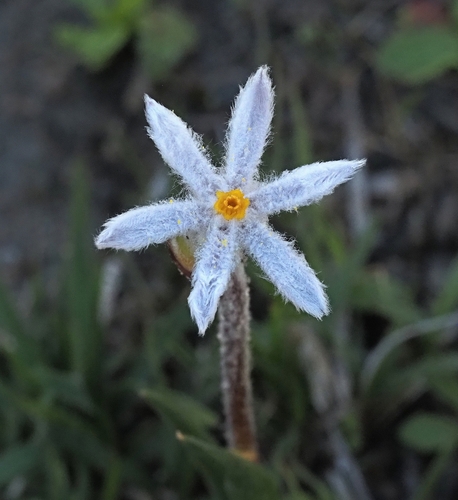
Tribonanthes
Tribonanthes a genus of Australian plants endemic to Western Australia in the bloodwort family, Haemodoraceae.
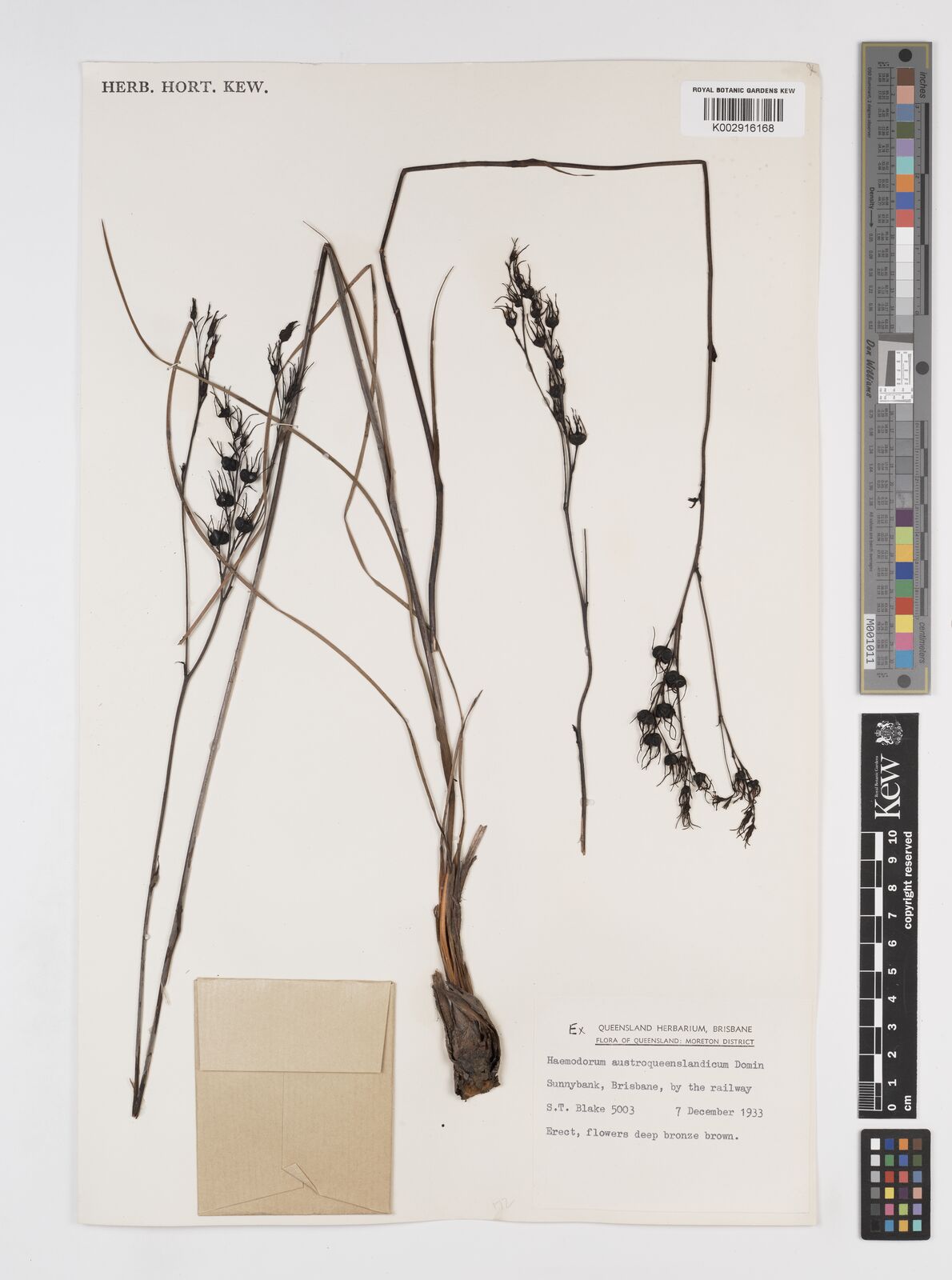
Haemodorum
Haemodorum is a genus of herbs in the family Haemodoraceae, first described as a genus in 1798 by James Edward Smith. The genus is native to New Guinea and Australia. The type species is Haemodorum corymbosum Vahl, first described by Martin Vahl in 1805.
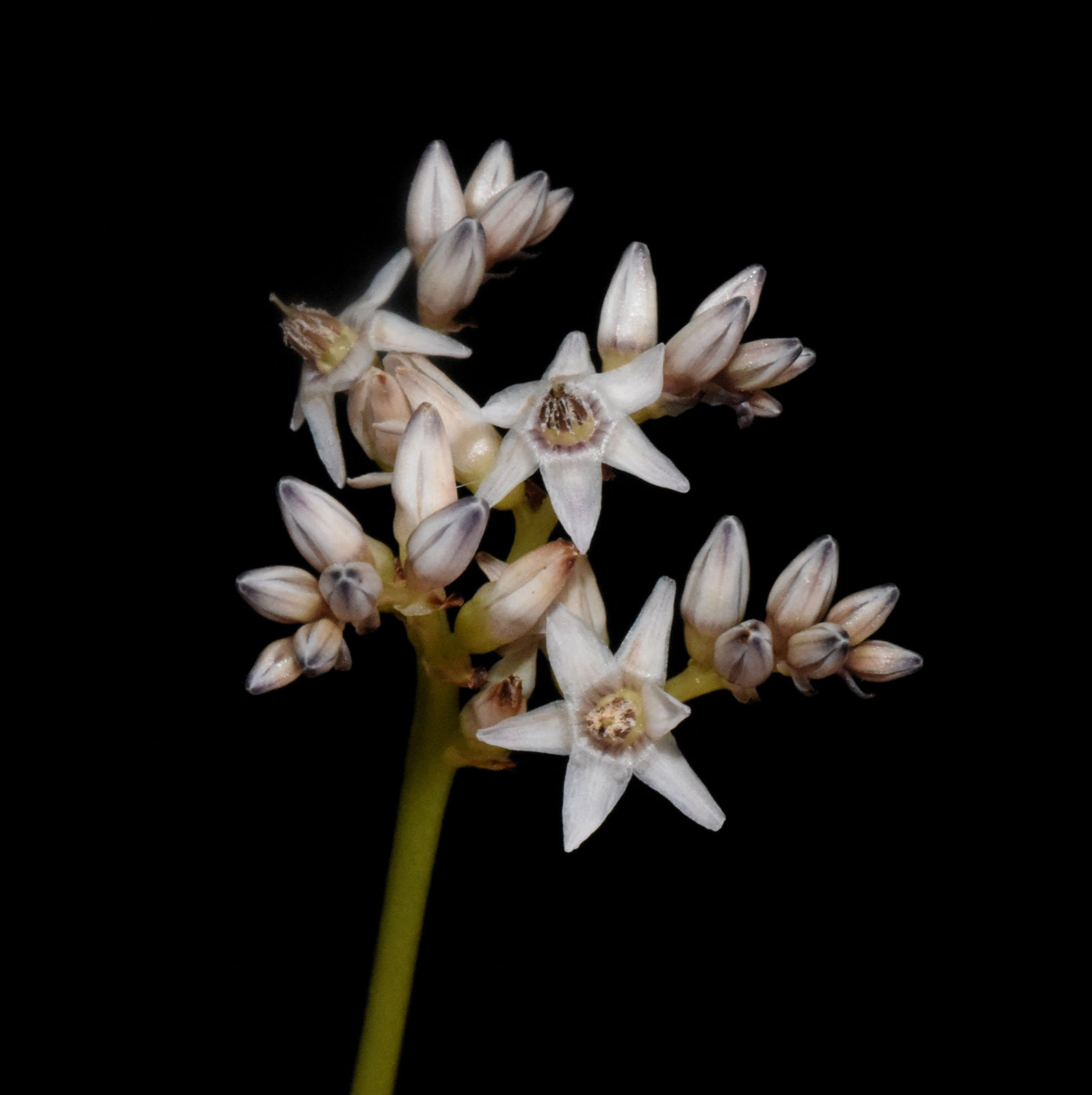
Phlebocarya
Phlebocarya is a genus of herbs in the family Haemodoraceae, first described as a genus in 1810. The entire genus is endemic to the southwestern part of Western Australia.

Helmholtzia
Helmholtzia is a small genus of flowering plants described in 1866. It includes species native to Australia (New South Wales and Queensland), Indonesia (Maluku Province), and New Guinea.
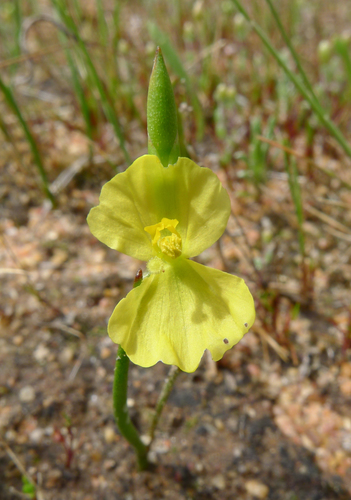
Philydrella
Philydrella is a small genus of flowering plants described as a genus with this name in 1878.