Category
page 1Comparative biology
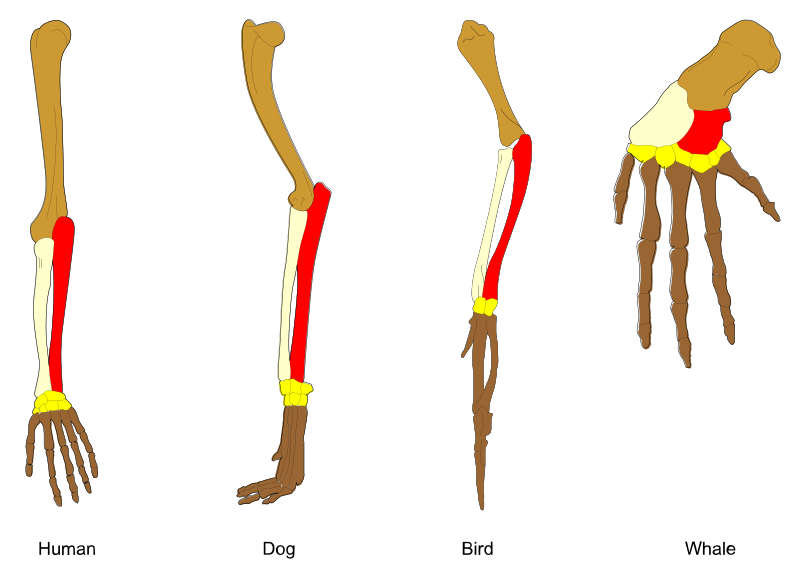
homology
existence of shared ancestry between a pair of structures, or genes, in different taxa
comparative psychology
discipline of psychology dedicated to the study of non-human animal behavior

homoplasy
Homoplasy, in biology and phylogenetics, is the term used to describe a feature that has been gained or lost independently in separate lineages over the course of evolution. This is different from homology, which is the term used to characterize the similarity of features that can be parsimoniously explained by common ancestry. Homoplasy can arise from both similar selection pressures acting on adapting species, and the effects of genetic drift. thumb|Homoplasy is the similarity in a feature that is not parsimoniously explained by descent from a common ancestor.
sequence homology
biological homology between protein or DNA sequences resulting from shared evolutionary ancestry
comparative genomics
branch of science
conserved sequence
similar DNA, RNA or protein sequences within genomes or among species
comparative genomic hybridization
method to evaluate biological samples
comparative physiology
subdiscipline of physiology that studies and exploits the diversity of functional characteristics of various kinds of organisms
Phylogenetic comparative methods
use of information on the historical relationships of lineages to test evolutionary hypotheses