Category
page 1Computer-related introductions in 1977
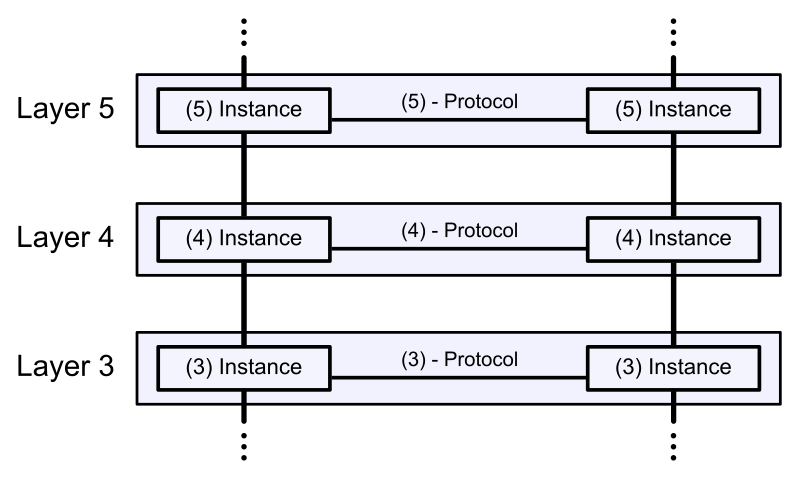
OSI model
model with 7 layers to describe communication systems

Data Encryption Standard
Early unclassified symmetric-key block cipher

Atari 2600
home video game console by Atari

home computer
class of microcomputers of the 1980s, designed for private use at home; first type of computer ever which gained broad popularity amongst consumers, was replaced in the 1990s by personal computers with MS-DOS and later Microsoft Windows

Apple II series
computer series by Apple, 1977–1993
Intel 8085
8-bit microprocessor invented in 1976
Color TV-Game
series of five dedicated home video game consoles created by Nintendo and released in Japan only
Commodore PET
home computer
Apple II
first computer model in the Apple II series

VAX
VAX (an acronym for virtual address extension) is a series of computers featuring a 32-bit instruction set architecture (ISA) and virtual memory that was developed and sold by Digital Equipment Corporation (DEC) in the late 20th century. The VAX-11/780, introduced October 25, 1977, was the first of a range of popular and influential computers implementing the VAX ISA. The VAX family was a huge success for DEC, with the last members arriving in the early 1990s. The VAX was succeeded by the DEC Alpha, which included several features from VAX machines to make porting from the VAX easier.

TRS-80 Model I
The TRS-80 Micro Computer System (TRS-80, colloquially known as the "Trash-80", later renamed the TRS-80 Model I to distinguish it from its successors) is a desktop microcomputer developed by American company Tandy Corporation and sold through their Radio Shack stores. Launched in 1977, it is one of the earliest mass-produced and mass-marketed retail home computers. The name is derived from Tandy Radio Shack Z80, referring to its Zilog Z80 8-bit microprocessor.
RCA Studio II
home video game console made by RCA
interactive kiosk
computer terminal that provides access to information, communication, commerce etc.
Boyer–Moore string search algorithm
string searching algorithm
Metafont
Metafont is a description language used to define raster fonts. It is also the name of the interpreter that executes Metafont code, generating the bitmap fonts that can be embedded into e.g. PostScript. Metafont was devised by Donald Knuth as a companion to his TeX typesetting system.
Z notation
formal specification language used for describing and modelling computing systems
linear temporal logic
field of mathematical logic
TI-59
programmable calculator with magnetic card reader produced by Texas Instruments from 1977

MK14
The MK14 (Microcomputer Kit 14) was a computer kit sold by Science of Cambridge of the United Kingdom, first introduced in 1977 for £39.95. The price was very low for a complete computer system at the time, and Science of Cambridge eventually sold over fifteen thousand kits.
XMODEM
XMODEM is a simple file transfer protocol developed as a quick hack by Ward Christensen for use in his 1977 MODEM.ASM terminal program. It allowed users to transmit files between their computers when both sides used MODEM. Keith Petersen made a minor update to always turn on "quiet mode", and called the result XMODEM.
NorthStar Horizon
early microcomputer from NorthStar Computers
IBM System/34
type of mini computer
PETSCII
PETSCII (PET Standard Code of Information Interchange), also known as CBM ASCII, is the character set used in Commodore Business Machines' 8-bit home computers.
DECSYSTEM-20
thumb|DECSYSTEM-2020 front panel
thumb|2 DECSYSTEM-2020 KS-10s (1979) at the Living Computer Museum
TI-57
thumb|upright|TI-57 with LED display
thumb|upright|TI-57 with LCD technology for display
thumb|upright|TI-57-II (LCD)
DECmate
thumb|right|Digital Equipment Corporation|DEC VT78 Video Data Processor: a PDP-8 built into a VT52 body
DECmate was the name of a series of PDP-8-compatible computers produced by the Digital Equipment Corporation in the late 1970s and early 1980s. All of the models used an Intersil 6100 (later known as the Harris 6100) or Harris 6120 (an improved Intersil 6100) microprocessor which emulated the 12-bit DEC PDP-8 CPU. They were text-only and used the OS/78 or OS/278 operating systems, which were extensions of OS/8 for the PDP-8. Aimed at the word processing market, they typically ran the WPS-8 w
IBM 5250
family of block-oriented terminals used with IBM midrange computer systems (System/34, System/36, System/38, AS/400)
Nascom
The Nascom 1 and 2 were single-board computer kits issued in the United Kingdom in 1977 and 1979, respectively, based on the Zilog Z80 and including a keyboard and video interface, a serial port that could be used to store data on a tape cassette using the Kansas City standard, and two 8-bit parallel ports. At that time, including a full keyboard and video display interface was uncommon, as most microcomputer kits were then delivered with only a hexadecimal keypad and seven-segment display. To minimize cost, the buyer had to assemble a Nascom by hand-soldering about 3,000 joints on the single
HP-01
thumb|right|Hewlett-Packard HP-01 watch displaying the time
VAX-11
thumb|A VAX-11/780
West Coast Computer Faire
annual computer industry conference and exposition