Category
page 1Computer-related introductions in 1990

HTML
Hypertext Markup Language (HTML) is the standard markup language for documents designed to be displayed in a web browser. It defines the content and structure of web content. It is often assisted by technologies such as Cascading Style Sheets (CSS) and scripting languages such as JavaScript.

.lk
.lk is the Internet country code top-level domain (ccTLD) for Sri Lanka. Foreign companies who do not have a local presence can only reserve their top-level and corresponding open second-level domains (either through the LK Domain Registry or agents). In order to register and use a name they must have a contact address in Sri Lanka (which may be obtained through an agent or law firm).
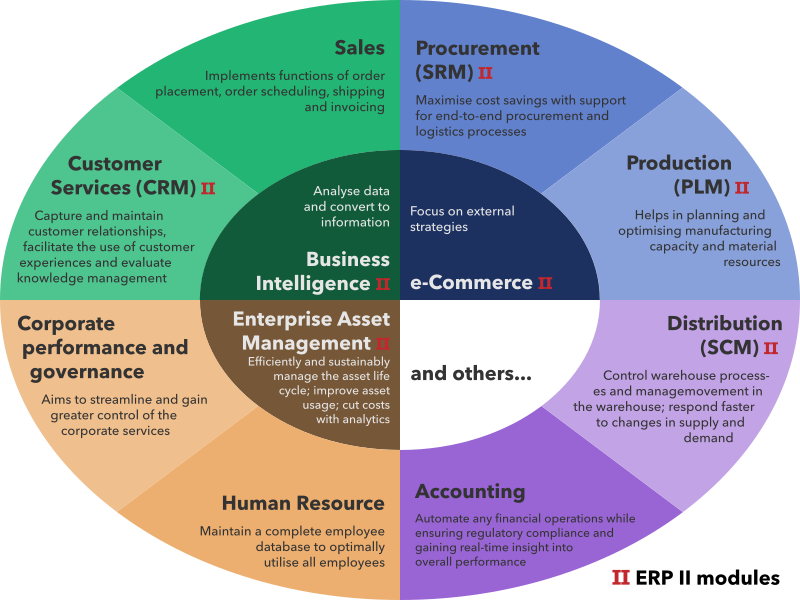
enterprise resource planning
corporate task of optimizing the existing resources in a company
Macintosh Classic
personal computer by Apple, Inc.
Neo Geo
cartridge-based arcade system board and home video game console developed by SNK

Philips CD-i
The Compact Disc-Interactive (CD-I, later CD-i) is a digital optical disc data storage format as well as a hardware platform, co-developed and marketed by Dutch company Philips and Japanese company Sony. It was created as an extension of CDDA and CD-ROM and specified in the Green Book specifications, co-developed by Philips and Sony, to combine audio, text and graphics. The two companies initially expected to impact the education/training, point of sale, and home entertainment industries, but the CD-i is largely remembered today for its video games.
Miscellaneous Symbols
Unicode block (U+2600-26FF)
PC Card
expansion card standard for laptop computers
Extended Graphics Array
graphics display standard
Amiga 3000
home computer by Commodore
PCMCIA
The Personal Computer Memory Card International Association (PCMCIA) was an industry consortium of computer hardware manufacturers from 1989 to 2009. Starting with the PCMCIA card in 1990 (the name later simplified to PC Card), it created various standards for peripheral interfaces designed for laptop computers.
Motorola 68040
32-bit microprocessor model
IBM PS/1
IBM home computer models, 1990-1994
RS/6000
1990s line of RISC servers and workstations from IBM
ATI Mach
series of video cards
Macintosh LC
personal computer by Apple
ACiD Productions
demogroup

Amiga 3000UX
Macintosh LC
family of personal computers by Apple
Macintosh IIsi
Apple personal computer of early 1990s
IBM POWER
instruction set
NES Four Score
Multitap
Macintosh IIfx
personal computer by Apple
Hartung Game Master
handheld video game console
TI-81
The TI-81 was the first graphing calculator made by Texas Instruments. It was designed in 1990 for use in algebra and pre-calculus courses. Since its release, it has been superseded by a series of newer calculators; most of these are functionally similar to the TI-81, with the exception of the TI-Nspire series.
ITSEC
The Information Technology Security Evaluation Criteria (ITSEC) is a structured set of criteria for evaluating computer security within products and systems. The ITSEC was first published in May 1990 in France, Germany, the Netherlands, and the United Kingdom based on existing work in their respective countries. Following extensive international review, Version 1.2 was subsequently published in June 1991 by the Commission of the European Communities for operational use within evaluation and certification schemes.
Hobbit
computer
JIS X 0212
Japanese standard character set
VT420
The VT420 is an ANSI standard computer terminal introduced in 1990 by Digital Equipment Corporation (DEC). The 420 is the only model in the 400 series, replacing the VT320. There are no color or graphics-capable 400 series terminals; the VT340 remained in production for those requiring ReGIS and Sixel graphics and color support. The entire lineup of VT300s and VT420 was eventually replaced by the relatively unknown VT500 series starting in 1993.