File:ERP_modules.svg · Wikimedia Commons · See Wikimedia Commons
enterprise resource planning
Sign in to saveAlso known as ERP
corporate task of optimizing the existing resources in a company
Enterprise resource planning is a corporate task focused on optimizing the resources a company already has, such as equipment, materials, and staff. It matters because better use of existing resources can improve efficiency and reduce waste without requiring major new investments.
AI-generated from the Wikipedia summary — may contain errors.
Wikidata facts
- Instance of
- subject heading
- Subclass of
- business software
- Part of
- business administration
Show 3 more facts
- Commons category
- Enterprise resource planning
- ACM Classification Code (2012)
- 10003232
- short name
- ERP
via Wikidata · CC0
~28 min read
Encyclopedic overview
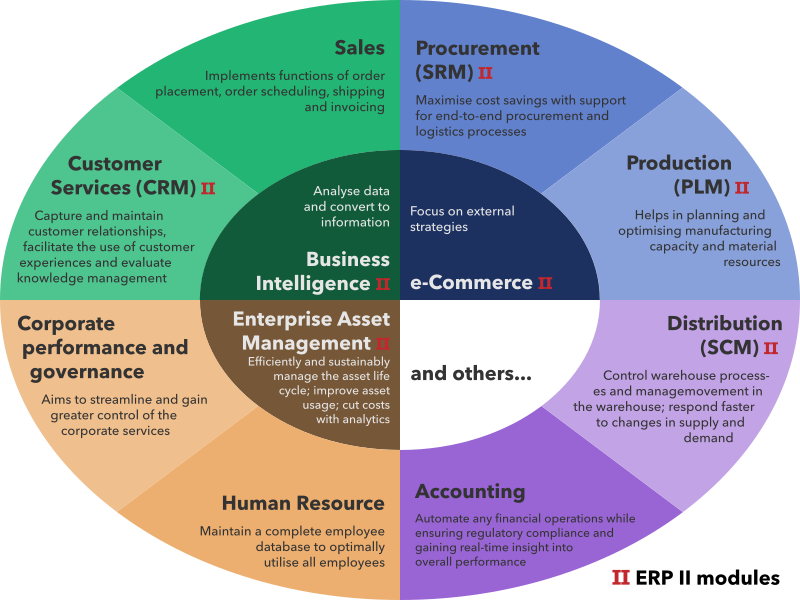
Diagram showing some typical ERP modules Enterprise resource planning (ERP) is the integrated management of main business processes, often in real time and mediated by software and technology. ERP is usually referred to as a category of business management software—typically a suite of integrated applications—that an organization can use to collect, store, manage and interpret data from many business activities.
The finance module in particular is essential to a suite of applications meeting the definition of an ERP system. The finance module provides the system of record for the organisation; recording the commercial impact of the business operations in the General Ledger.
Excerpted from Wikipedia’s “enterprise resource planning” article, available under the CC BY-SA 4.0 licence.