Category
page 1Concepts in ethics

happiness
thumb|upright=1.2|A 93-year-old man from Pichilemu, Chile. His smile and facial expression indicates his happiness.
%2C_by_Romualdo_Locatelli.jpg)
friendship
thumb|Best Friends by Romualdo Locatelli (1934)

justice
thumb|upright=1.5|Evidence about the Nazi Ernst Kaltenbrunner's war crimes is presented at the [[Nuremberg trials.]]

liberty
thumb|Liberty Enlightening the World (known as the Statue of Liberty), by sculptor [[Frédéric Auguste Bartholdi, was donated to the US by France in 1886 as an artistic personification of liberty.]]
Liberty is the state of being free within society from restrictions imposed by authority on one's way of life, behavior, or political views. The concept of liberty can vary depending on perspective and context. In the constitutional law of the United States, ordered liberty means creating a balanced society where individuals have the freedom to act without unnecessary interference (negative liberty)

corruption
Corruption is a form of dishonesty or a criminal offense that is undertaken by a person or an organization that is entrusted in a position of authority to acquire illicit benefits or abuse power for one's gain. Corruption may involve activities like bribery, influence peddling, embezzlement, and fraud as well as practices that are legal in many countries, such as lobbying. Political corruption occurs when an office-holder or other governmental employee acts in an official capacity for personal gain.

free will
ability of agents to be the ultimate source or originator of their choices, free from external determination

morality
thumb|Allegory with a portrait of a Venetian senator (Allegory of the morality of earthly things), attributed to Tintoretto, 1585

violence
Violence is characterized as the use of physical force by humans to cause harm to other living beings, such as pain, injury, disablement, death, damage and destruction. The World Health Organization (WHO) defines violence as "the intentional use of physical force or power, threatened or actual, against oneself, another person, or against a group or community, which either results in or has a high likelihood of resulting in injury, death, psychological harm, maldevelopment, or deprivation"; it recognizes the need to include violence not resulting in injury or death.

virtue
thumb|Cardinal and Theological Virtues, a 1511 portrait by Raphael
A virtue () is a trait of excellence, including traits that may be moral, social, or intellectual. The cultivation and refinement of virtue is held to be the "good of humanity" and thus is valued as an end purpose of life or a foundational principle of being. In human practical ethics, a virtue is a disposition to choose actions that succeed in showing high moral standards: doing what is said to be right and avoiding what is wrong in a given field of endeavour, even when doing so may be unnecessary from a utilitarian perspectiv

conscience
thumb|Vincent van Gogh, 1890. [[Kröller-Müller Museum. The Good Samaritan (after Delacroix).]]
A conscience is a cognitive process that elicits emotion and rational associations based on an individual's moral philosophy or value system. Conscience is not an elicited emotion or thought produced by associations based on immediate sensory perceptions and reflexive responses, as in sympathetic central nervous system responses. In common terms, conscience is often described as leading to feelings of remorse when a person commits an act that conflicts with their moral values. The extent to which con

evil
thumb|In many Abrahamic religions, demons are considered to be evil beings and are contrasted with angels, who are their good contemporaries.|354x354px
Evil, as a concept, is usually defined as profoundly immoral behavior, and it is related to acts that cause unnecessary pain and suffering to others.
pleasure
Pleasure is an experience that feels good, that involves the enjoyment of something. It contrasts with pain or suffering, which are forms of feeling bad. It is closely related to value, desire and action: humans and other conscious animals find pleasure enjoyable, positive or worthy of seeking. A great variety of activities may be experienced as pleasurable, such as eating, having sex, listening to music or playing games. Pleasure is part of various other mental states such as ecstasy, euphoria and flow. Happiness and well-being are closely related to pleasure but not identical with it. There

good
457x457px|thumb|In many Abrahamic religions, [[angels are considered to be good beings and are contrasted with demons, who are their evil counterparts.]]
In most contexts, the concept of good denotes the conduct that should be preferred when posed with a choice between possible actions. Good is generally considered to be the opposite of evil. The specific meaning and etymology of the term and its associated translations among ancient and contemporary languages show substantial variation in its inflection and meaning, depending on circumstances of place and history, or of philosophical or relig

respect
thumb|right|A sign entreating "silence and respect" at Arlington National Cemetery
Respect, also called esteem, is a positive feeling or deferential action shown towards someone or something considered important or held in high esteem or regard. It conveys a sense of admiration for good or valuable qualities. It is also the process of honoring someone by exhibiting care, concern, or consideration for their needs or feelings.
%202.jpg)
empathy
alt=A small child hugs an older, injured child|thumb|Hugging is a common display of empathy
.jpg)
dignity
Dignity is the right of a person to be valued and respected for their own sake, and to be treated ethically. In this context, it is of significance in morality, ethics, law and politics as an extension of the Enlightenment-era concepts of inherent, inalienable rights. The term may also be used to describe personal conduct, as in "behaving with dignity".

trust
assumption of and reliance on the honesty of another party

duty
right|thumb|"Duty" by Edmund Leighton
A duty (from "due" meaning "that which is owing"; , past participle of ; , whence "debt") is a commitment or expectation to perform some action in general or if certain circumstances arise. A duty may arise from a system of ethics or morality, especially in an honor culture. Many duties are created by law, sometimes including a codified punishment or liability for non-performance. Performing one's duty may require some sacrifice of self-interest.

value
personal value, basis for ethical action
compassion
alt=|thumb|Hugging is a common display of compassion
Compassion is a social emotion that motivates people to go out of their way to relieve the physical, mental, or emotional pains of others and themselves. Compassion is sensitivity to the emotional aspects of the suffering of others. When based on notions such as fairness, justice, and interdependence, it may be considered partially rational in nature.

rights
Rights are legal, social, or ethical principles of freedom or entitlement; that is, rights are the fundamental normative rules about what is allowed of people or owed to people according to some legal system, social convention, or ethical theory. Rights are an important concept in law and ethics, especially theories of justice and deontology.

Ahimsa
thumb|Lord Mahavira, the twenty-fourth tirthankara of Jainism, and "torch-bearer" of ahimsa

mercy
thumb|The Seven Works of Mercy, by [[Frans II Francken, 1605.]]

principle
thumb|170px|The Blind justice (concept)|concept of blind justice is a moral principle.

charity
voluntary act of giving help (short-term, emotional, immediate response, focused primarily on rescue and relief)

kindness
thumb|Placard for kindness, at the People's Climate March (2017)
Kindness is a type of behavior marked by acts of generosity, consideration, or concern for others, without expecting praise or reward in return. It is a subject of interest in philosophy, religion, and psychology.
ideal
principle or value that one actively pursues as an ethical goal
%2C%201806-1807%20-%20Johann%20Heinrich%20F%C3%BCssli.jpg)
vice
thumb|upright|Henry Fuseli, [[Virtue reclaiming Youth from the arms of Vice, 1806–1807]]

promise
A promise is a commitment by someone to do or not do something. As a noun promise means a declaration assuring that one will or will not do something. As a verb it means to commit oneself by a promise to do or give. It can also mean a capacity for good, similar to a value that is to be realized in the near future.

utility
In economics, utility is a measure of a certain person's satisfaction from a certain state of the world. Over time, the term has been used with at least two meanings.

schadenfreude
thumb|upright=1.4|alt=painting|Return to the Convent, by Eduardo Zamacois y Zabala, 1868. The painting depicts a group of [[monks laughing while a lone monk struggles with a donkey. ]]

perfection
thumb|upright|A black (color)|perfectly black body; and a perfect circle
Perfection is a state, variously, of completeness, flawlessness, or supreme excellence.

corporate social responsibility
form of corporate self-regulation integrated into a business model

cruelty
thumb|right |220 px |An old poster depicting cruelty, including selling slaves in Algiers, execution, burning, and other cruelties.
Cruelty is the intentional infliction of suffering or the inaction towards another's suffering when a clear remedy is readily available. Sadism can also be related to this form of action or concept.

loyalty
thumb|Schoolchildren reciting the Pledge of Allegiance to the United States flag

decadence
thumb|An orgy in Imperial Rome, by Henryk Siemiradzki
thumb|Romans during the Decadence, by [[Thomas Couture]]

rationality
Rationality is the quality of being guided by or based on reason. In this regard, a person acts rationally if they have a good reason for what they do, or a belief is rational if it is based on strong evidence. This quality can apply to an ability, as in a rational animal, to a psychological process, like reasoning, to mental states, such as beliefs and intentions, or to persons who possess these other forms of rationality. A thing that lacks rationality is either arational, if it is outside the domain of rational evaluation, or irrational, if it belongs to this domain but does not fulfill its

injustice
thumb|Injustice is in a series of allegory|allegorical capitals depicting vices and virtues at the Ducal Palace in Venice.
.jpg)
Kama
Kama (Sanskrit: काम, ) is the concept of pleasure, enjoyment and desire in Hinduism, Buddhism, Jainism, and Sikhism. It can also refer to "desire, wish, longing" in Hindu, Buddhist, Jain, and Sikh literature. However, the term is also used in a technical sense to refer to any sensory enjoyment, emotional attraction or aesthetic pleasure experienced in connection with the arts, dance, music, painting, sculpture, and nature.
integrity
Integrity is the quality of being honest and having a consistent and uncompromising adherence to strong moral and ethical principles and values.
In ethics, integrity is regarded as the honesty and truthfulness or of one's actions. Integrity can stand in opposition to hypocrisy. It regards internal consistency as a virtue, and suggests that people who hold apparently conflicting values should account for the discrepancy or alter those values.
convention
set of agreed, stipulated, or generally accepted standards
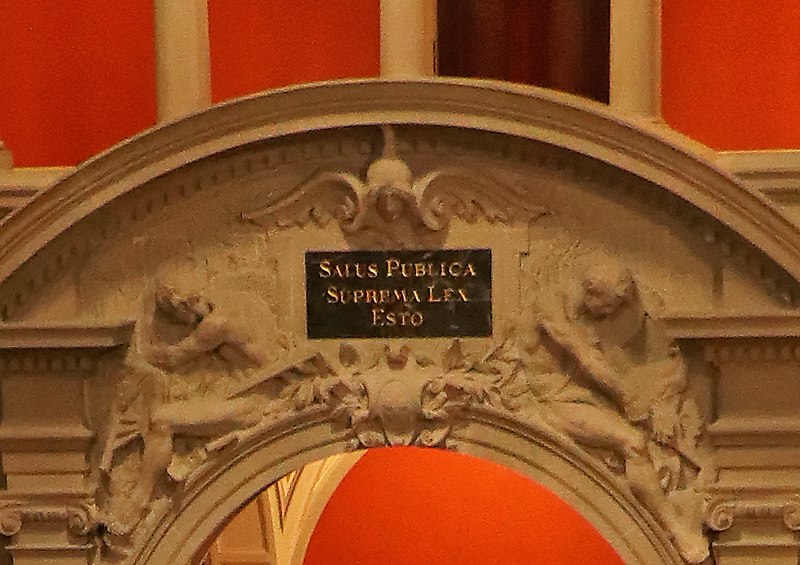
common good
what is shared and beneficial for all or most members of a given community

good and evil
dichotomy in religion, ethics, and philosophy

fidelity
thumb|right|220px|Doge's Palace, Venice|Palazzo Ducale in Venice: capital # 28 in the porch, featuring Virtues and vices — In fidelitate nulli gero (Fidelity)

greed
thumb|1909 painting The Worship of Mammon, the New Testament representation and personification of material greed, by [[Evelyn De Morgan|268x268px]]
quality
distinguishing feature
obligation
An obligation is a course of action which someone is required to take, be it a legal obligation or a moral obligation. Obligations are constraints; they limit freedom. People who are under obligations may choose to freely act under obligations. Obligation exists when there is a choice to do what is morally good and what is morally unacceptable. There are also obligations in other normative contexts, such as obligations of etiquette, social obligations, religious, and possibly in terms of politics, where obligations are requirements which must be fulfilled. These are generally legal obligations
consent
Consent occurs when one person voluntarily agrees to the proposal or desires of another. It is a term of common speech, with specific definitions used in such fields as law, medicine, research, and sexual consent. Consent, as understood in specific contexts, may differ from its everyday meaning. For example, a person with a mental disorder, a low mental age, or under the legal age of sexual consent may willingly engage in a sexual act that still cannot meet the legal threshold for consent as defined by applicable law.
amorality
Amorality (also known as amoralism) is an absence of, indifference towards, disregard for, or incapacity for morality. Some simply refer to it as a case of being neither moral nor immoral. The word amoral can be conflated with immoral, which refers to an agent doing or thinking something they know or believe to be wrong.

righteousness
Righteousness is the quality or state of being morally right or justifiable. The concept is rooted in religious or divine law and broadly encompasses moral correctness, justice, and virtuous living as dictated by a higher authority or set of spiritual beliefs. It is found in many religions and traditions, including Buddhism, Christianity, Confucianism, Hinduism, Islam, Jainism, Judaism, Taoism, and Zoroastrianism. It is an attribute that implies that a person's actions are justified and can have the connotation that the person has been "judged" as living a moral life, relative to religious doc
informed consent
process by means of which a research participant agrees to be the subject of research
is–ought problem
philosophical problem articulated by David Hume in 1739 about how one can deduce prescriptive statements (what ought to be) from descriptive statements (what is)

preference
In psychology, economics and philosophy, preference is a technical term usually used in relation to choosing between alternatives. For example, someone prefers A over B if they would rather choose A than B. Preferences are central to decision theory because of this relation to behavior. Some methods such as Ordinal Priority Approach use preference relation for decision-making. As connative states, they are closely related to desires. The difference between the two is that desires are directed at one object while preferences concern a comparison between two alternatives, of which one is preferr
bellum omnium contra omnes
Latin phrase coined by Thomas Hobbes
self-deception
Self-deception or self-delusion is a process of denying or rationalizing away the relevance, significance, or importance of opposing evidence and logical argument. Self-deception involves convincing oneself of a truth (or lack of truth) so that one does not reveal any self-knowledge of the deception.
wrongdoing
A wrong, or wrength (from Old English – 'crooked'), is an act that is illegal, incorrect, or immoral. Legal wrongs are usually quite clearly defined in the law of a state or jurisdiction. They can be divided into civil wrongs and crimes (or criminal offenses) in common law countries, while civil law countries tend to have some additional categories, such as contraventions. Moral wrong is an underlying concept for legal wrong. Some moral wrongs are punishable by law, for example rape or murder. Other moral wrongs have nothing to do with law but are related to unethical behaviours. On the other
selfishness
Selfishness is being concerned excessively or exclusively for oneself or one's own advantage, pleasure, or welfare, regardless of others.
Selfishness is the opposite of altruism or selflessness, and has also been contrasted (as by C. S. Lewis) with self-centeredness.
immorality
Immorality is the violation of moral laws, norms or standards. It refers to an agent doing or thinking something they know or believe to be wrong. Immorality is normally applied to people or actions, or in a broader sense, it can be applied to groups or corporate bodies, and works of art.
social responsibility
ethical theory that an entity, be it an organization or individual, has an obligation to act to benefit society at large
naturalistic fallacy
ethical argument asserting that it is fallacious to explain something good reductively