Category
page 1Conservation laws

electric charge
physical property that quantifies an object's interaction with electric fields

conservation of energy
law of physics and chemistry

momentum
In Newtonian mechanics, momentum (: momenta or momentums; more specifically linear momentum or translational momentum) is the product of the mass and velocity of an object. It is a vector quantity, possessing a magnitude and a direction. If is an object's mass and is its velocity (also a vector quantity), then the object's momentum (from Latin pellere "push, drive") is: \mathbf{p} = m \mathbf{v}.
In the International System of Units (SI), the unit of measurement of momentum is the kilogram metre per second (kg⋅m/s), which is dimensionally equivalent to the newton-second.
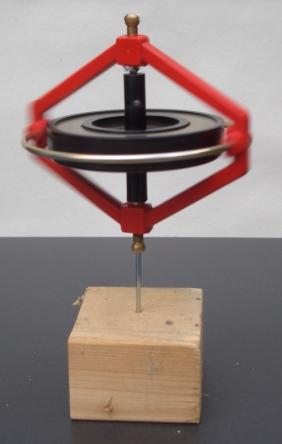
angular momentum
measure of the extent to which an object will continue to rotate in the absence of an applied torque

conservation of mass
scientific law that a closed system's mass remains constant
conservation law
scientific law regarding conservation of a physical property
baryon number
one third of the difference between the number of quarks and antiquarks in a system
Noether's theorem
physical law that differentiable symmetries correspond to conservation laws
parity
flip in the sign of one spatial coordinate, in classical and quantum physics
charge conservation
conservation law
flavour
type of elementary particles occurring in the Standard Model
lepton number
conserved quantum number representing the number of leptons minus the number of antileptons in an elementary particle reaction
gravitational energy
type of potential energy
symmetry
feature of a system that is preserved under some transformation
CP violation
violation of CP (charge-parity) symmetry in particle physics and cosmology
inversion
mathematical operation on Euclidian spaces which reverses distances with respect to a given point
invariant
in mathematics and theoretical physics, property of a system which remains unchanged under some transformation
B − L
quantum number (difference between the baryon number and the lepton number), conserved in some grand unified theories even when baryon and lepton numbers are not separately conserved
translational symmetry
invariance with respect to addition of a constant vector to a coordinate system
vis-viva equation
physical law that describes the motion of objects in a Keplerian orbit around a body
R-parity
R-parity is a concept in particle physics. In the Minimal Supersymmetric Standard Model, baryon number and lepton number are no longer conserved by all of the renormalizable couplings in the theory. Since baryon number and lepton number conservation have been tested very precisely, these couplings need to be very small in order not to be in conflict with experimental data. R-parity is a \mathbb{Z}_2 symmetry acting on the Minimal Supersymmetric Standard Model (MSSM) fields that forbids these couplings and can be defined as
P_\mathrm{R} = (-1)^{3B+L+2s}
Noether's second theorem
Physics theorem for symmetries of action
time translation symmetry
mathematical transformation in physics that moves the times of events through a common interval
rotational invariance
function defined on an inner product space is said to have rotational invariance if its value does not change when arbitrary rotations are applied to its argument