Category
page 1Corporal punishments
.jpg)
castration
thumb|270px|A 15th century Ottoman Empire|Ottoman medical illustration by [[Sabuncuoğlu Şerafeddin depicting an operation for castration]]

lynching
Lynching is an extrajudicial killing by a group. It is most often used to characterize informal public executions by a mob in order to punish an alleged or convicted transgressor or to intimidate others. It can also be an extreme form of informal group social control, and it is often conducted with the display of a public spectacle (often in the form of a hanging) for maximum intimidation. Instances of lynchings and similar mob violence can be found in all societies.

electrical injury
physiological reaction or injury caused by electric current
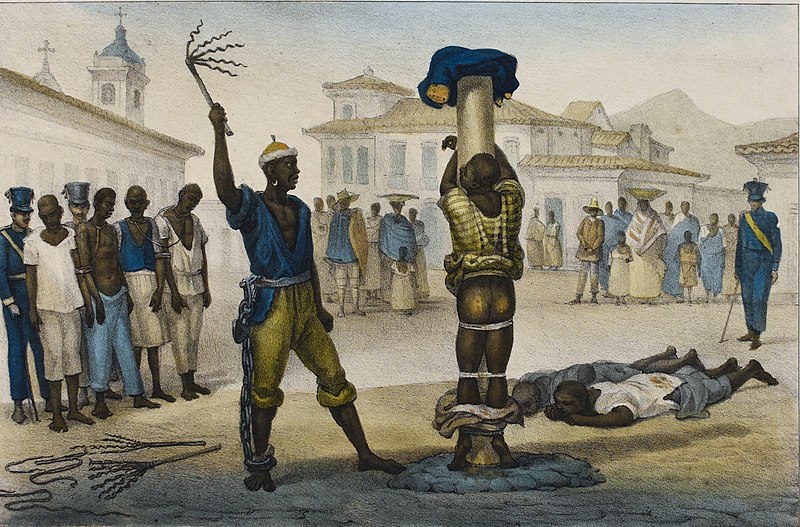
corporal punishment
punishment which is intended to cause physical pain to a person

cilice
thumb|Mary Magdalene in cilice. Polychrome wood carving by [[Pedro de Mena, Church of San Miguel and San Julian, Valladolid]]
A cilice , also known as a sackcloth, was originally a garment or undergarment made of coarse cloth or animal hair (a hairshirt) worn close to the skin. It is used by members of various Christian traditions (including the Catholic, Lutheran, Anglican, Methodist, and Scottish Presbyterian churches) as a self-imposed means of repentance and mortification of the flesh; as an instrument of penance, it is often worn during the Christian penitential season of Lent, especially

flagellation
thumb|Prisoners at a whipping post in a Delaware prison,

spanking
thumb|Cropped portrait of a mother spanking her child from a 1937 parenting book
LGBT rights in Saudi Arabia
LGBT conditions in the Kingdom of Saudi Arabia
gauntlet
form of physical punishment
LGBT rights in Iran
rights of lesbian, gay, bisexual and transgender people in Iran

dedovshchina
Dedovshchina (, ) is the informal practice of hazing and abuse of junior conscripts historically in the Soviet Armed Forces and today in the Russian Armed Forces, internal troops, and to a lesser extent FSB, Border Guards, as well as in other armed forces and special services of former Soviet Republics. It consists of brutalization by more senior conscripts, NCOs, and officers. It is a form of non-statutory dominant-status relations between military personnel; the most common form of non-statutory relations, which is a violation of the statutory rules of relations between conscripts, based on

flaying
thumb|225px|Michelangelo's The Last Judgment - [[St Bartholomew holding the knife of his martyrdom and his flayed skin; it is conjectured that Michelangelo included a self-portrait depicting himself as St Bartholomew after he had been flayed alive.]]

keelhauling
thumb|Woodcut illustrating keelhauling, from the Tudor period (1485–1603)
Keelhauling (Dutch kielhalen; "to drag along the keel") is a form of punishment and potential execution once meted out to sailors at sea. The sailor was tied to a line looped beneath the vessel, thrown overboard on one side of the ship, and dragged under the ship's keel, either from one side of the ship to the other, or the length of the ship (from bow to stern).
.png)
stocks
thumb|Stocks, unlike the pillory or pranger, restrain only the feet.
school corporal punishment
physical punishing of pupil at school
public humiliation
form of punishment whose main feature is dishonoring or disgracing a person

mutilation
thumb|Forensic pathology|Police surgeon's drawing showing the mutilated body of [[Catherine Eddowes, Jack the Ripper's fourth canonical victim, as discovered on September 30, 1888]]
foot whipping
method of corporal punishment which consists of hitting the soles of a person's bare feet

caning
Caning is a form of corporal punishment that consists of administering strikes (known as "strokes") to the body with what is typically a rattan cane. Generally, this is applied to the recipient's bare or clothed buttocks (see spanking); however, caning may also be applied to the soles of the feet (see bastinado), the palms of the hand, or the back of the thighs. Caning on the knuckles is considerably less common, and in rare instances it may be administered on the back, shoulders, or front of the body.
cat o' nine tails
type of whip
human branding
process of burning a mark, usually a symbol or ornamental pattern, into the skin of a living person
tarring and feathering
form of public torture and humiliation

cangue
thumb|upright|Salle des Martyrs at the Paris Foreign Missions Society. The ladder-like apparatus in the middle is the cangue that was worn by [[Pierre Borie in captivity.]]
LGBT rights in Chechnya
Human rights in Russian territory

birching
thumb|Birching of a prison inmate during interrogation; The Netherlands, 17th century

figging
thumb|Pared finger of ginger root
Five Punishments
series of physical penalties in dynastic China
LGBT rights in Yemen
blinding
type of physical punishment which results in complete or nearly complete loss of vision
cucking stool
chair or commode where offenders are strapped as a form of punishment
chain gang
group of prisoners chained together to perform menial or physically challenging work as a form of punishment

self-flagellation
thumb|upright=1.22|Muslims mourning Battle of Karbala|the martyrdom of [[Husayn ibn Ali in Hyderabad, India]]
Self-flagellation is the disciplinary and devotional practice of flogging oneself with whips or other instruments that inflict pain. In Christianity, self-flagellation is practiced in the context of the doctrine of the mortification of the flesh and is seen as a spiritual discipline. It is often used as a form of penance and is intended to allow the flagellant to share in the sufferings of Jesus, bringing their focus to God.

lynching in the United States
extrajudicial killings in the United States by mobs or vigilante groups

corporal punishment in the home
form of punishment used by parents to discourage bad behaviour
political mutilation in Byzantine culture
criminal punishment used against rivals
Fustuarium
In the military of ancient Rome, fustuarium (Greek ξυλοκοπία, xylokopia) or fustuarium supplicium ("the punishment of cudgeling") was a severe form of military discipline in which a soldier was cudgeled to death.
judicial corporal punishment
corporal punishment applied as a court sentence

Eastbourne manslaughter
1860 legal case in Eastbourne, England, UK
Caning in Malaysia
corporal punishment
Rhinotomy
thumb|Man without nose and hands, 1910
Rhinotomy is mutilation, usually amputation, of the nose. It was a means of judicial punishment throughout the world, particularly for sexual transgressions, but in the case of adultery often applied only to women.
rhaphanidosis
Rhaphanidosis is the act of inserting the root of a radish into the anus. It is mentioned by Aristophanes as a punishment for adultery in Classical Athens in the fifth and fourth century BC. It was also a punishment for other sex-related crimes, such as promiscuity and sodomy.
Later classical references to the punishment include Catullus 15, where percurrent raphanique mugilesque (both radishes and mullets will run you through) is threatened against those who cast lascivious eyes on a boy (puer) the poet cares for.
==Historicity==
There is some doubt as to whether the punishment was ever enfo
list of torture methods
Wikimedia list article
Strapping
use of a strap as an implement of corporal punishment