Category
page 1Coryphoideae
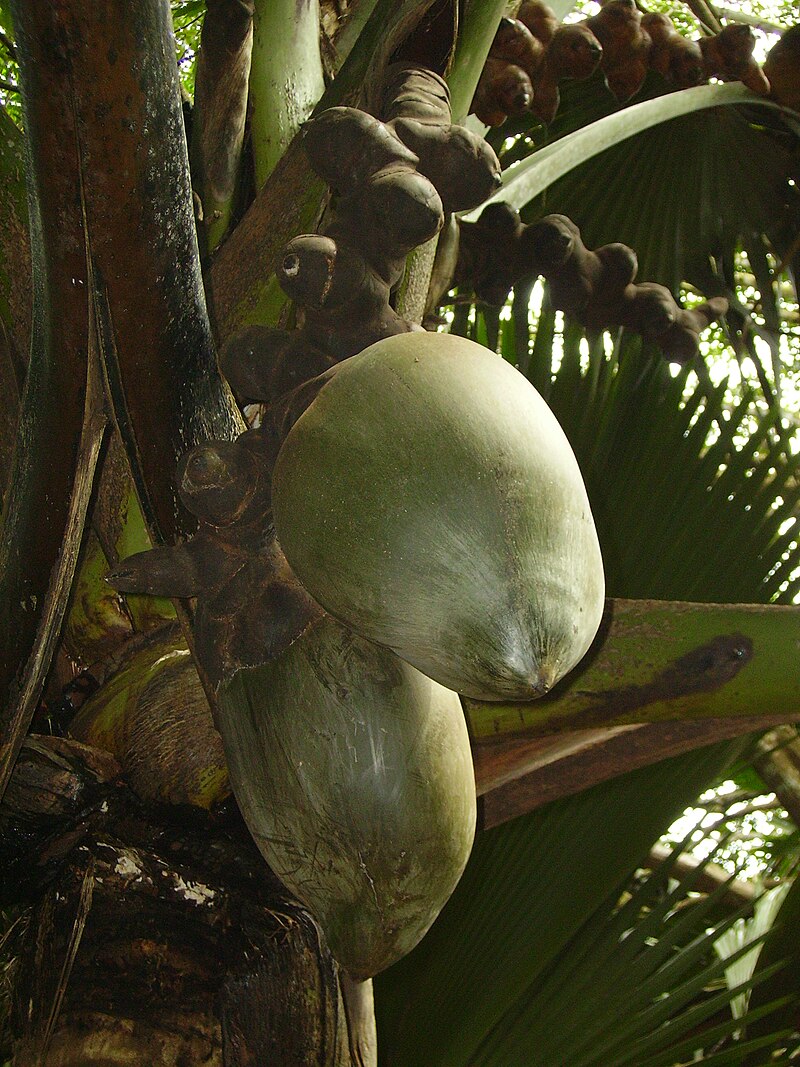
Lodoicea maldivica
species of plant, Coco de Mer

Serenoa repens
Serenoa repens, commonly known as saw palmetto, is a small palm, growing to a maximum height around .

Coryphoideae
The Coryphoideae is one of five subfamilies in the palm family, Arecaceae. It contains all of the genera with palmate leaves, excepting Mauritia, Mauritiella and Lepidocaryum, all of subfamily Calamoideae, tribe Lepidocaryeae, subtribe Mauritiinae. The subfamily comprises approximately 46 genera and more than 400 species, with members occurring across tropical, subtropical, and warm temperate regions worldwide, best known for their palmateor costapalmate (“fan”) leaves. Historically, this leaf form played a disproportionate role in palm classification, leading to the long-standing assumption t

Nannorrhops ritchiana
Nannorrhops ritchiana, the Mazari palm, is the sole species in the genus Nannorrhops in the palm family Arecaceae.

Tahina spectabilis
species of plant
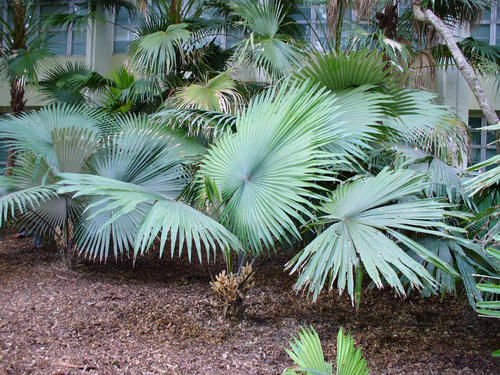
Kerriodoxa elegans
Kerriodoxa elegans, the white backed palm, is the only species of palm tree in the genus Kerriodoxa, in the family Arecaceae.

Guihaia
Guihaia is a genus of three species of dioecious palms found in China and Vietnam. Perhaps its most distinctive characteristic is that it is the only palm with palmate leaves that has reduplicate (A-shaped) leaf folds. All other palmate leaves have induplicate (V-shaped) leaf folds. Guihaia lancifolia has undivided leaves.

Bismarckia
thumb|Bismarckia nobilis – MHNT

Itaya amicorum
Itaya amicorum is a medium-size fan palm that is native to Brazil, Colombia and Peru. It is the only species in the genus Itaya. It was unknown to science until 1972, when it was discovered on the bank of the Itaya River in the Peruvian Amazon.
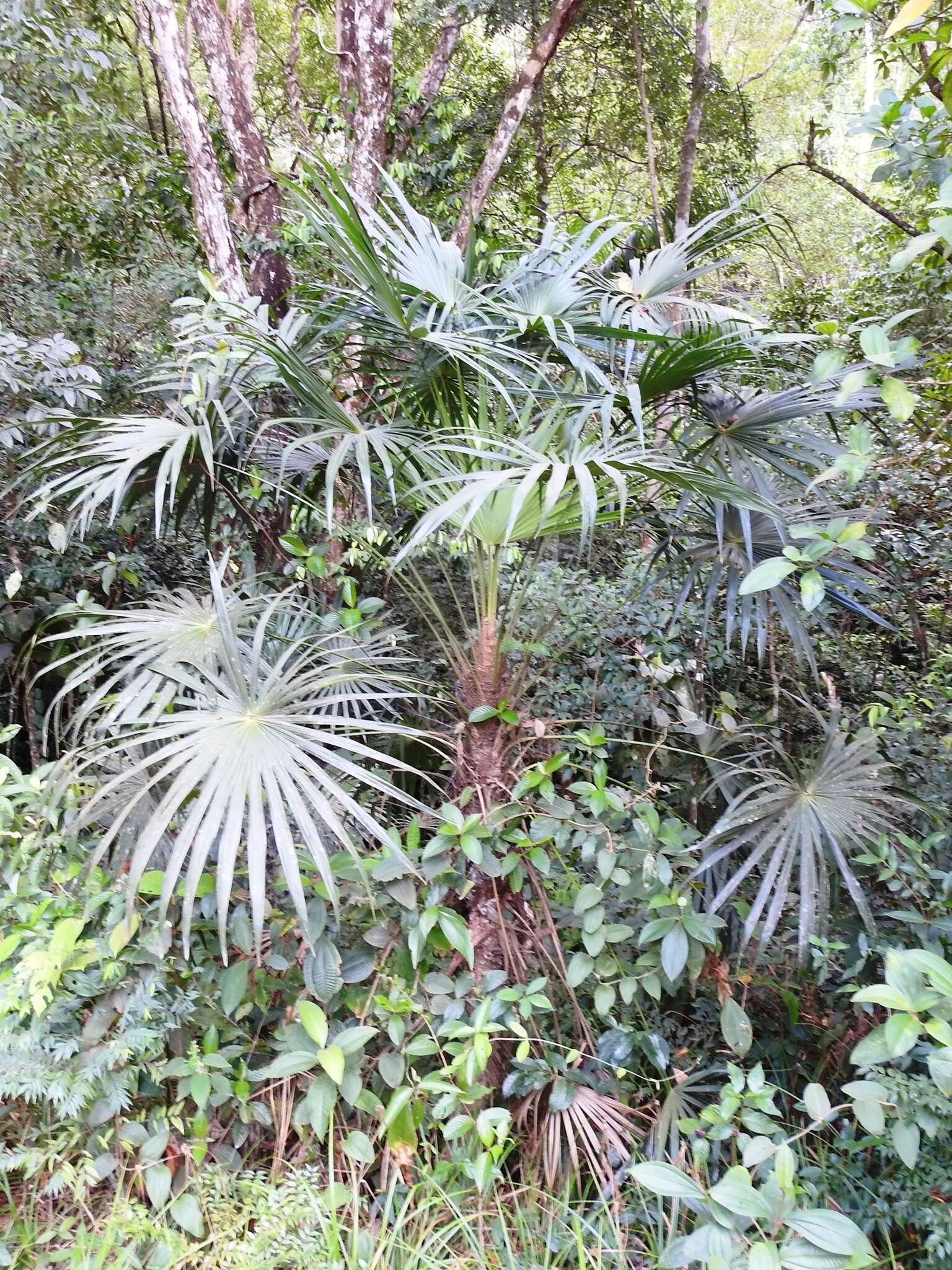
Schippia concolor
Schippia concolor, the mountain pimento or silver pimento, is a medium-sized palm species that is native to Belize and Guatemala. Named for its discoverer, Australian botanist William A. Schipp, the species is threatened by habitat loss. It is the sole species in the genus Schippia.
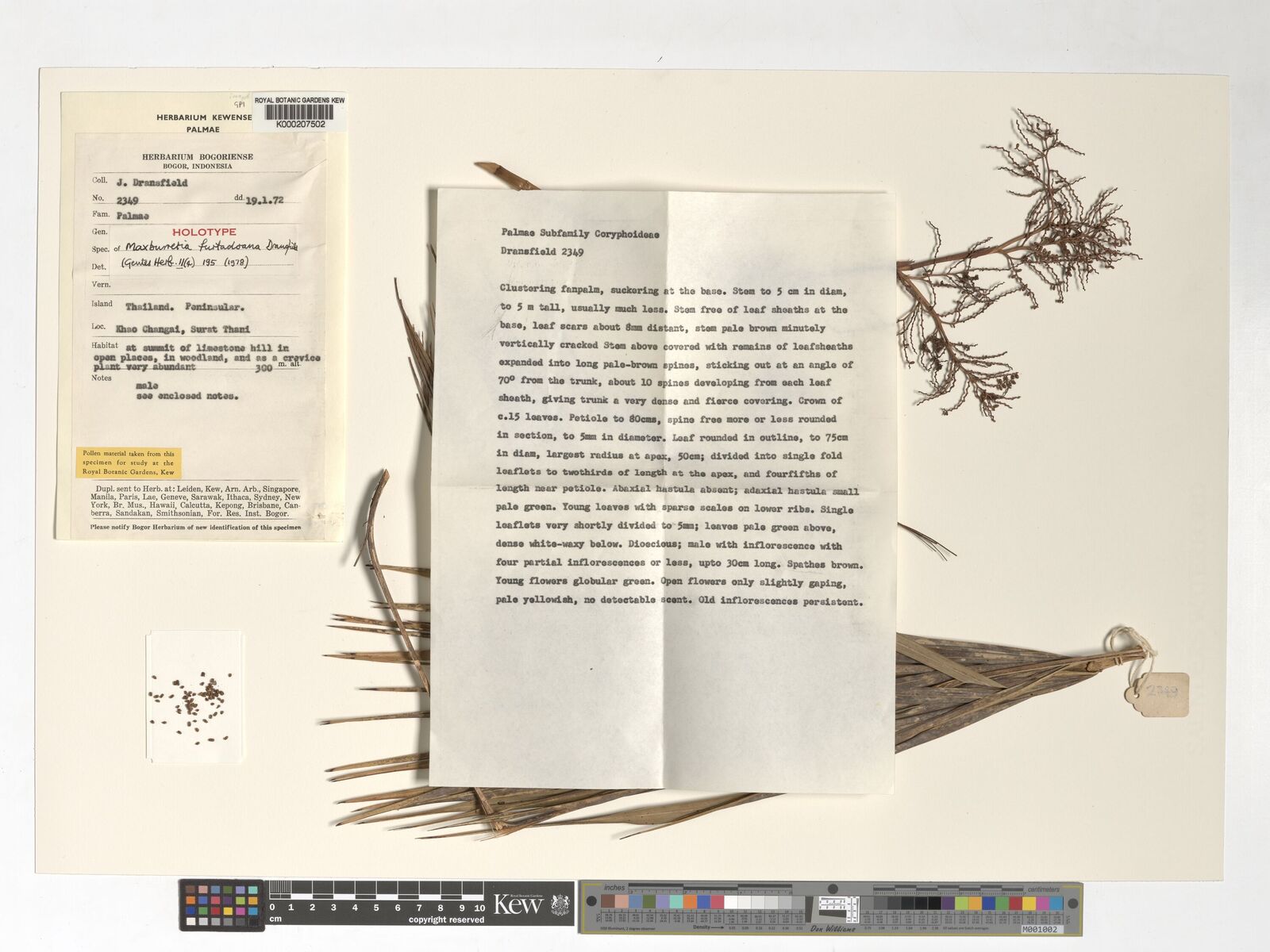
Maxburretia
Maxburretia is a genus of three rare species of palms found in southern Thailand and Peninsular Malaysia. The genus is named in honor of Max Burret, (1883–1964) a German botanist.

Chamaerops
thumb|right|Transactions of the Linnean Society of London, vol. 10: t. 8 (1815)
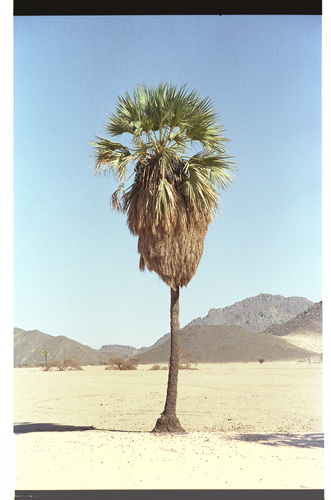
Medemia
Medemia argun is a rare species of the palm tree family (Arecaceae) native to Egypt and Sudan. It is the only species in the genus Medemia.
The palm's dried dates have been found in ancient Egyptian tombs.

Zombia
Zombia antillarum, commonly known as the zombie palm, is a species of palm tree and the only member of the genus Zombia. It is endemic to the island of Hispaniola (both the Dominican Republic and Haiti) in the Greater Antilles. Usually found in dry, hilly areas of northern and southern Haiti and the northwest of the Dominican Republic, Z. antillarum is a relatively short fan palm with clustered stems and a very distinctive appearance caused by its persistent spiny leaf sheaths. Threatened by habitat destruction in Haiti, Z. antillarum is a popular ornamental species due to its distin
Palaeoraphe
Palaeoraphe is an extinct genus of palms, represented by one species, Palaeoraphe dominicana from early Miocene Burdigalian stage Dominican amber deposits on the island of Hispaniola, in the modern-day Dominican Republic.
==Discovery and naming==
The genus is known from a single, diameter, full flower. The holotype is currently deposited in the collections of the Oregon State University in Corvallis, Oregon, as number "Sd–9–158", where it was studied and described by Dr George Poinar. Dr Poinar published his 2002 type description for Palaeoraphe in the Botanical Journal of the Linnean Society
Cryosophileae
Cryosophileae is a tribe of palms in the subfamily Coryphoideae. The tribe ranges from southern South America, through Central America, into Mexico and the Caribbean. It includes New World genera formerly included in the tribe Thrinacinae, which was split after molecular phylogenetic studies showed that Old World and New World members of the tribe were not closely related.
Palmoxylon
Palmoxylon, also called petrified palmwood, is an extinct genus of palm named from petrified wood found around the world.
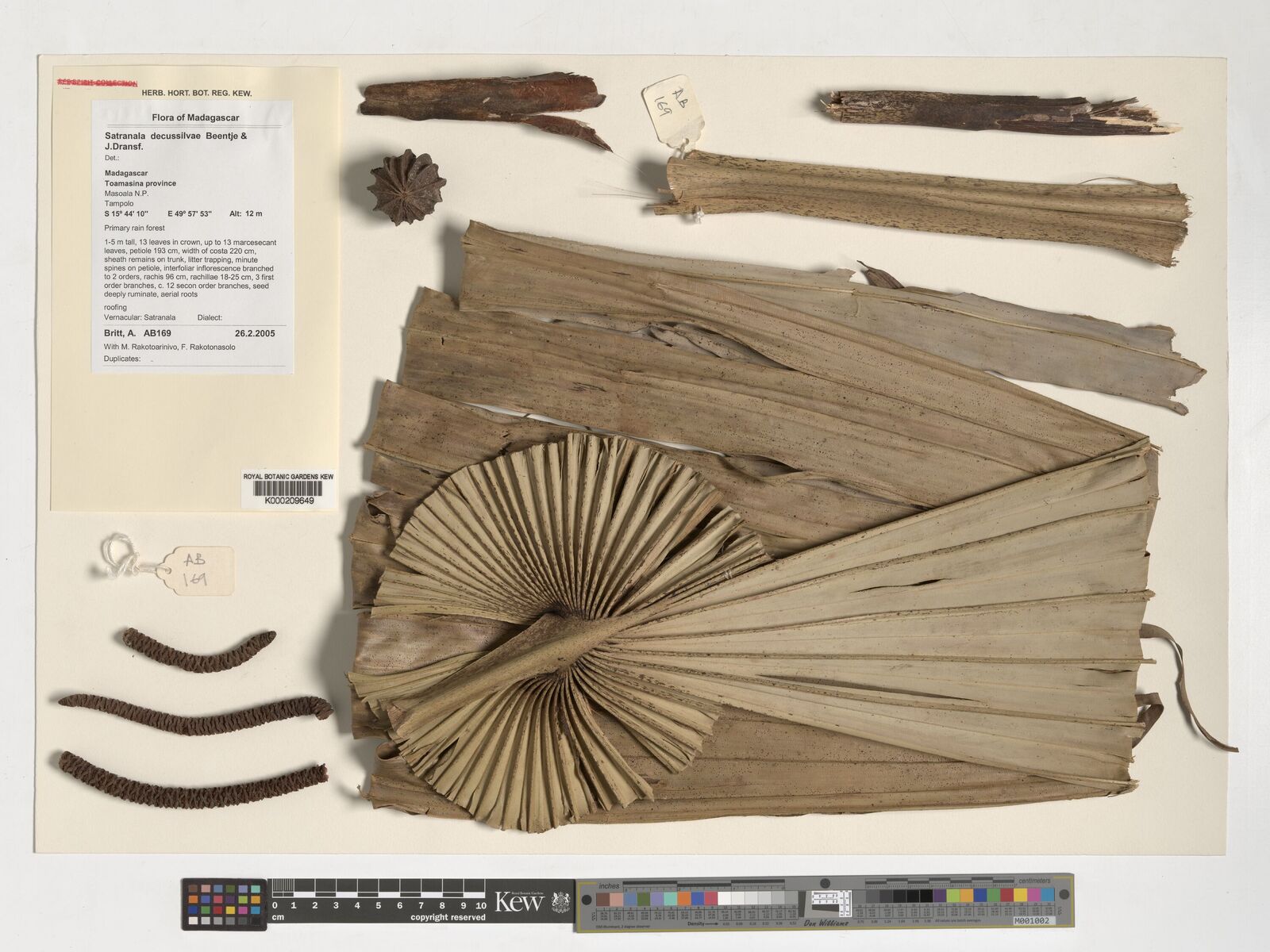
Satranala
Satranala decussilvae is a species of flowering plant in the Arecaceae family. It is a palm endemic to Madagascar. It is the only species in the genus Satranala, and is threatened by habitat loss. There are perhaps 200 mature individuals remaining.
Chuniophoeniceae
Chuniophoeniceae is a tribe of palms in subfamily Coryphoideae of plant family Arecaceae. The four genera within the tribe are morphologically dissimilar and do not have overlapping distributions. Three of the genera are monotypic, while the fourth genus (Chuniophoenix) has three species.
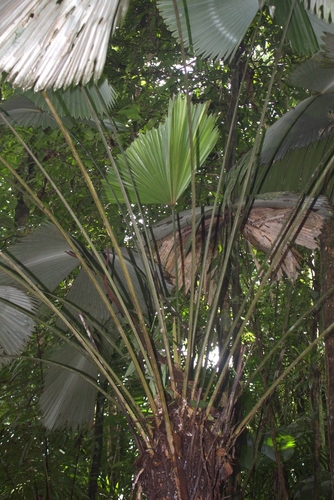
Sabinaria
Sabinaria magnifica is a species of palm tree and the only member of the genus Sabinaria. Native to the Darién Gap on the border between Colombia and Panama, it grows from tall with large, deeply-divided leaf blades. It has been described as "striking", "spectacular" and "beautiful" by taxonomists.
Leucothrinax
Leucothrinax morrisii, the Key thatch palm, is a small palm which is native to the Greater Antilles (except Jamaica), northern Lesser Antilles, The Bahamas and Florida and the Florida Keys in the United States.

Lodoicea
Lodoicea, commonly known as the sea coconut, coco de mer, or double coconut, is a monotypic genus in the palm family. The sole species, Lodoicea maldivica, is endemic to the islands of Praslin and Curieuse in the Seychelles, and was historically found on the neighboring small islets of St Pierre, Chauve-Souris, and Ile Ronde. The species has the largest seed in the plant kingdom.