Category
page 1Cotton
%20READY%20FOR%20HARVEST.jpg)
cotton
Cotton (from Arabic qutn) is a soft, fluffy staple fiber that grows in a boll, or protective case, around the seeds of the cotton plants of the genus Gossypium in the mallow family Malvaceae. The fiber is almost pure cellulose and may contain minor percentages of waxes, fats, pectins, and water. Under natural conditions, cotton bolls facilitate the dispersal of the seeds.

Gossypium
Gossypium () is a genus of flowering plants in the tribe Gossypieae of the mallow family, Malvaceae, from which cotton is harvested. It is native to tropical and subtropical regions of the Old and New Worlds. There are about 50 Gossypium species, making it the largest genus in the tribe Gossypieae, and new species continue to be discovered. The name of the genus is derived from the Arabic word goz, which refers to a soft substance.

nitrocellulose
Nitrocellulose (also known as cellulose nitrate, flash paper, flash cotton, guncotton, pyroxylin and flash string, depending on form) is a highly flammable compound formed by nitrating cellulose through exposure to a mixture of nitric acid and sulfuric acid.
Karakum Canal
canal

denim
thumb|upright=1.2|Denim fabric dyed with indigo
thumb|right|upright=1.2|Denim fabric dyed with indigo and black dyes and made into a shirt
cotton swab
small wad of cotton wrapped around one or both ends of a short rod
cotton wool
cotton fibres refined into a fluffy absorbant
cottonseed oil
cooking oil extracted from the seeds of cotton plants of various species, mainly Gossypium hirsutum and Gossypium herbaceum

Gossypium herbaceum
species of plant

Gossypium hirsutum
species of plant

mercerization
thumb|right|Mercerized cotton yarn reels
thumb|right|Spool of a two-ply mercerized cotton thread with a polyester core.
flame retardant
material applied to fabrics, bedding, furniture, plastics, etc. to reduce their flammability

Gossypium barbadense
species of plant

gossypol
Gossypol () is a natural phenol derived from the cotton plant (genus Gossypium). Gossypol is a phenolic aldehyde that permeates cells and acts as an inhibitor for several dehydrogenase enzymes. It is a yellow pigment. The structure exhibits atropisomerism, with the two enantiomers having different biochemical properties.

Gossypium arboreum
species of plant
duroplast
Duroplast is a composite thermosetting resin plastic developed by engineer Wolfgang Barthel in 1953 in the German Democratic Republic. Its production method places it in a similar family as Formica and Bakelite. It is reinforced with fibers (typically waste fabrics from the garment industry) making it a fiber-reinforced plastic similar to fiberglass.
cotton pad
pads of cotton used for sanitary applications
Cotton Belt
cultural region of the United States

madapolam
right|thumb|150px|Madapollam's linen weave pattern.
malvalic acid
chemical compound
organic cotton
cotton from non-genetically modified plants, and without the use of any synthetic agricultural chemicals such as fertilizers or pesticides
Bt cotton
Genetically modified variety of cotton
Sanforization
thumb|right|180px|A 1948 advertisement for sanforized cotton fabric
Sanforization is a treatment for fabrics to reduce shrinkage from washing. The process was patented by Sanford Lockwood Cluett (1874–1968) in 1930. It works by stretching, shrinking, and fixing the woven cloth in both length and width before cutting and producing, to reduce the shrinkage which would otherwise occur after washing. The original patent mentioned "goods of cotton, linen, woolen, silk, rayon, and combinations thereof".
cottonseed
thumb|Cottonseed: brown seeds are wikt:en:gin#Verb|ginned from the fiber boll; white seeds are still wrapped in [[cotton linters]]
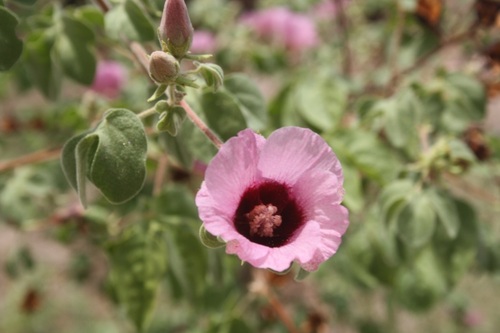
Gossypium anomalum
species of plant
Bavovna
Bavovna (, , ) is a Ukrainian word and internet meme that originated during the Russian invasion of Ukraine, humorously used to refer to explosions, both those in Russian-occupied Ukraine and those in Russia itself.
history of cotton
aspect of history
Kelsch d'Alsace
linen and cotton textile from France
cotton lisle
fine, 2-ply yarn of combed long-staple mercerized cotton