Category
page 1Creation myths

Book of Genesis
the first book of the Bible

Uranus
primordial Greek deity, god of the Sky; one of the Greek primordial deities

Adam and Eve
first man and woman in Abrahamic creation myth

Metamorphoses
thumb|Title page of 1556 edition published by Joannes Gryphius (decorative border added subsequently). Hayden White Rare Book Collection, University of California, Santa Cruz.

cosmogony
thumb|The Big Bang theory of modern cosmology postulates the universe evolved from a hot dense state.
Cosmogony, also spelled as cosmogeny, or cosmogenesis, is any model concerning the origin of the cosmos or the universe.

Theogony
The Theogony () is a poem by Hesiod (8th–7th century BC) describing the origins and genealogies of the Greek gods, composed . It is written in the epic dialect of Ancient Greek and contains 1,022 lines. It is one of the most important sources for the understanding of early Greek cosmology.

creation myth
symbolic narrative of how the world began and how people first came to inhabit it
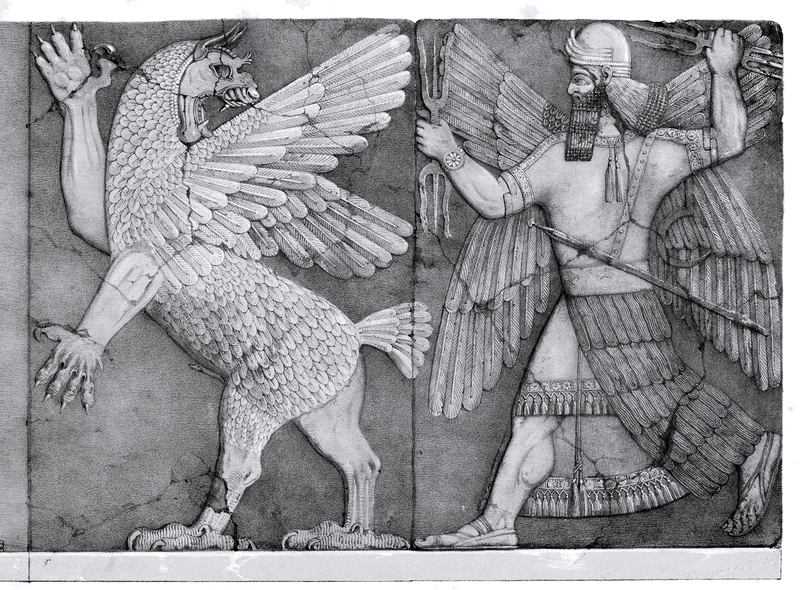
Enûma Eliš
Babylonian creation myth
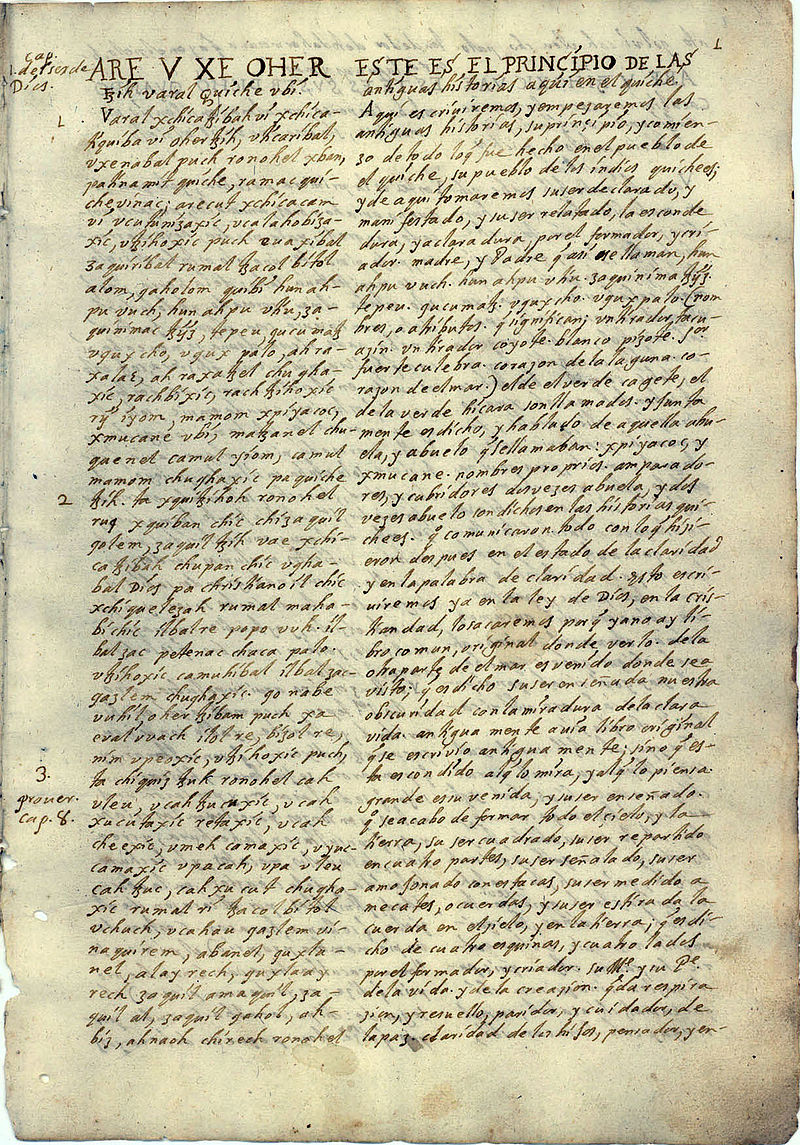
Popol Vuh
sacred text of the Maya

creator deity
deity responsible for the creation of the universe
.svg)
Ennead
The Ennead or Great Ennead was a group of nine deities in Egyptian mythology worshipped at Heliopolis: the sun god Atum; his children Shu and Tefnut; their children Geb and Nut; and their children Osiris, Isis, Set, and Nephthys. The Ennead sometimes includes Horus the Elder; an ancient form of the falcon god, not the son of Osiris and Isis.

Izanagi
Izanagi (イザナギ/伊邪那岐/伊弉諾), formally referred to with a divine honorific as
, is the creator deity (kami) of both creation and life in Japanese mythology. He and his sister-wife Izanami are the last of the seven generations of primordial deities that manifested after the formation of heaven and earth. Izanagi and Izanami are held to be the creators of the Japanese archipelago and the progenitors of many deities, which include the sun goddess Amaterasu, the moon deity Tsukuyomi, and the storm god Susanoo. He is a god that can be said to be the beginning of the current Japanese imperial family.

Nüwa
Nüwa, also read Nügua, is a mother goddess, culture hero, and/or member of the Three Sovereigns of Chinese mythology. She is a goddess in Chinese folk religion, Chinese Buddhism, Confucianism and Taoism. She is credited with creating humanity and repairing the Pillar of Heaven.

Völuspá
Völuspá (also Vǫluspá, Vǫlospá, or Vǫluspǫ́; Old Norse: 'Prophecy of the völva, a seeress') is the best known poem of the Poetic Edda. It dates back to the tenth century and tells the story from Norse Mythology of the creation of the world, its coming end, and its subsequent rebirth that is related to the audience by a völva addressing Odin. Her name is given twice as Heiðr. The poem is one of the most important primary sources for the study of Norse mythology. Parts of the poem appear in the Prose Edda, but the earliest known wholly preserved version of the poem is in the Codex Regius and Hau

Viracocha
Viracocha (also Wiraqocha, Huiracocha; Quechua Wiraqucha) is the creator and supreme deity in the pre-Inca and Inca mythology in the Andes region of South America. According to the myth Viracocha had human appearance and was generally considered as bearded. According to the myth he ordered the construction of Tiwanaku. It is also said that he was accompanied by men also referred to as Viracochas.
Genesis creation narrative
creation myth of both Judaism and Christianity
Ogdoad
group of 8 deities in Ancient Egyptian religion
Dreamtime
sacred era in Australian Aboriginal mythology

Väinämöinen
'''' () is a demigod, hero and the central character in Finnish folklore and the main character in the national epic Kalevala'' by Elias Lönnrot. Väinämöinen was described as an old and wise man, and he possessed a potent, magical singing voice.

Xenu
Xenu ( ), also called Xemu, is a figure in the Church of Scientology's secret "Advanced Technology", an esoteric teaching held sacred by adherents. According to the "Technology", Xenu was the extraterrestrial ruler of a "Galactic Confederacy" who brought billions of his people to Earth (then known as "Teegeeack") in a DC-8-like spacecraft 75 million years ago, stacked them around volcanoes, and killed them with hydrogen bombs. Official Scientology scriptures hold that the thetans (immortal spirits) of these aliens adhere to humans, causing spiritual harm.
ex nihilo
Latin phrase meaning "out of nothing"

Hiranyagarbha
thumb|Pahari painting of golden cosmic egg Hiranyagarbha by Manaku, c. 1740
world egg
concept found in the creation myths of many cultures and civilizations
Hu
Egyptian deity
Rangi and Papa
primordial parents in Māori mythology
Purusha sukta
hymn
Ancient Egyptian creation myths
ancient Egyptian accounts of the creation of the world

Ngai
Ngai (also known as Múrungu or Enkai) is the central deity in the traditional spiritualities of the Gĩkũyũ, as well as the related Embu, Meru, Kamba, and Maasai peoples of Kenya and Tanzania. Within these belief systems, Ngai is recognized as the creator of the universe and all existing things. Traditional worship often involves facing Mount Kenya, a location of central spiritual significance to these communities. Rituals, including prayers and sacrifices, are historically performed under the Mugumo (fig tree). These ceremonies are typically conducted during significant environmental or social

Atra-Hasis
Atra-Hasis () is an 18th-century BC Akkadian epic, recorded in various versions on clay tablets and named for one of its protagonists, the priest Atra-Hasis ('exceedingly wise'). The narrative has four focal points: An organisation of allied upper and lower gods shaping Mesopotamia agriculturally; a political conflict between them, pacified by creating the first human couples; the mass reproduction of these; and a great deluge linked to the intention of the upper gods to destroy their imperfect artificial creatures, as handed down in a remarkably similar manner in various other flood myths of

Book of Abraham
religious text of some Latter Day Saint churches
Shabaka Stone
ancient Egyptian stela
Wessobrunn Prayer
literary work
protoplast
first organized body of progenitors of mankind in a religious story

Poimandres
Poimandres (; also known as Poemandres, Poemander or Pimander) is the first tractate in the Corpus Hermeticum, named after its main character Poimandres, the nous of a supreme deity.
Kotoamatsukami
frame
In Shinto, is the collective name for the first gods which came into existence at the time of the creation of the universe. They were born in Takamagahara, the world of Heaven at the time of the creation. Unlike the later gods, these deities were born without any procreation.
Book of Giants
apocryphal Jewish book expanding a narrative in the Hebrew Bible, discovered at Qumran
Five Suns
Aztec creation myth

Hundun
thumb|The faceless Sovereign Jiang () described in the Classic of Mountains and Seas|Shanhaijing
Cave of Treasures
6th–7th century Syriac Christian text providing a theological history from the creation of Adam to the coming of Christ, presenting Adam and the patriarchs as prefigurations of Christ and incorporating local Mesopotamian traditions
cosmic ocean
mythological motif representing the world or cosmos as enveloped by primordial waters
Sureq Galigo
creation myth of the Bugis from South Sulawesi
Chaos
in cosmogony, the primordial state of the universe or cosmos
Nasadiya Sukta
Hymn from Rig Veda that talks about creation of everything.
Mashya and Mashyana
the first man and woman in Zoroastrian cosmogony
Chinese creation myth
narratives about the origins of the world from Chinese folklore
Japanese creation myth
Japanese mythology about the creation of the world and of Japan

Kamiumi
In Japanese mythology, the story of the occurs after the creation of Japan (Kuniumi). It concerns the birth of the divine (kami) descendants of Izanagi and Izanami.

Kuniumi
In Japanese mythology, is the traditional and legendary history of the emergence of the Japanese archipelago, of islands, as narrated in the Kojiki and Nihon Shoki. According to this legend, after the creation of Heaven and Earth (Tenchi-kaibyaku), the gods Izanagi and Izanami were given the task of forming a series of islands that would become what is now Japan. In Japanese mythology, these islands make up the known world. The creation of Japan is followed by the creation of the gods (Kamiumi).
On the Origin of the World
gnostic work dealing with creation and the end time
Sumerian creation myth
creation myth
Kamiyonanayo
frame
In Japanese mythology, the are the seven generations of kami that emerged after the formation of heaven and earth(Tenchi-kaibyaku).
Kesh temple hymn
oldest surviving literary text in the world
.jpg)
Hwanung
Hwanung (Korean for the "Supreme Divine Regent") is an important figure in the mythological origins of Korea. He plays a central role in the story of Dangun Wanggeom (단군왕검/), the legendary founder of Gojoseon, the first kingdom of Korea. Hwanung is the son of Hwanin (환인; ), the "Lord of Heaven". Along with his ministers of clouds, rain, and wind, he instituted laws and moral codes and taught the humans various arts, medicine, and agriculture.
Kumulipo
In Hawaiian religion, the Kumulipo is the creation chant, first recorded in the 18th century. It also includes a genealogy of the members of Hawaiian royalty and was created in honor of Kalaninuiamamao and passed down orally to his daughter Alapaʻiwahine.
Book of Moses
part of the scriptural canon of the LDS movement; originally Genesis 1–6 of the Joseph Smith Translation of the Bible; today published as part of the Pearl of Great Price

Q'uq'umatz
thumb|right|Ballcourt marker at Mixco Viejo, depicting Qʼuqʼumatz carrying Tohil across the sky in his jaws
Qʼuqʼumatz (; alternatively Gukumatz) was a god of wind and rain of the Postclassic Kʼicheʼ Maya. It was the Feathered Serpent that according to the Popol Vuh created the world and humanity, together with the god Tepeu. It carried the sun across the sky and down into the underworld and acted as a mediator between the various powers in the Maya cosmos. It is considered to be the equivalent of the Aztec god Quetzalcoatl and of Kukulkan, of the Yucatec Maya.
Surat Shabd Yoga
spiritual meditation
Mongol mythology
mythology of the Mongols
Gudea cylinders
lagash cylinders
Age of the Gods
period of Japanese mythology before the first emperor Jimmu