Category
page 1Cyclopoida genera

Cyclops
genus of copepods
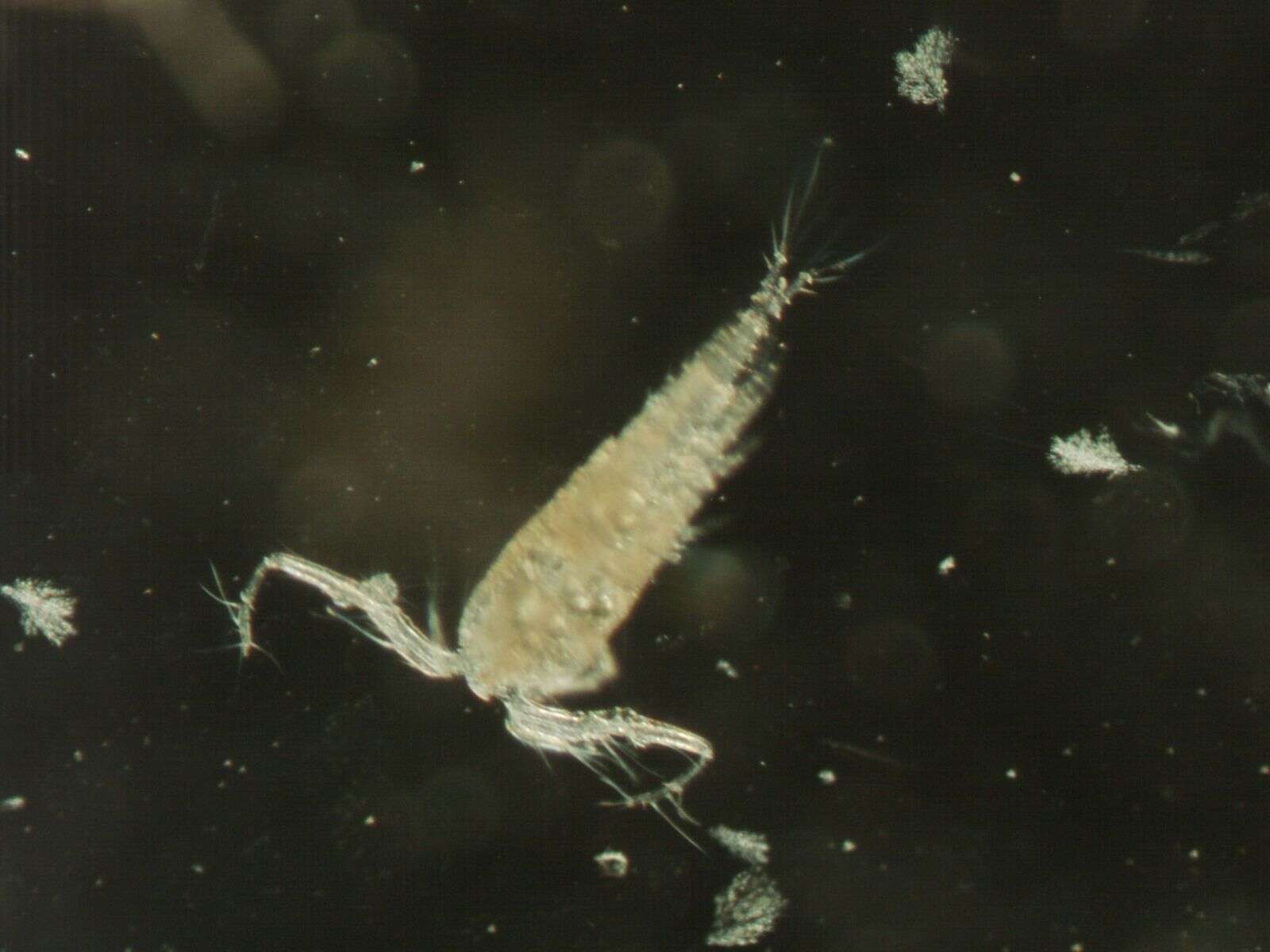
Mesocyclops
Mesocyclops is a genus of copepod crustaceans in the family Cyclopidae. Because the various species of Mesocyclops are known to prey on mosquito larvae, it is used as a nontoxic and inexpensive form of biological mosquito control.

Acanthocyclops
Acanthocyclops is a genus of copepod crustaceans in the family Cyclopidae. It was originally described by Friedrich Kiefer as a subgenus of Cyclops, and contains the following species:
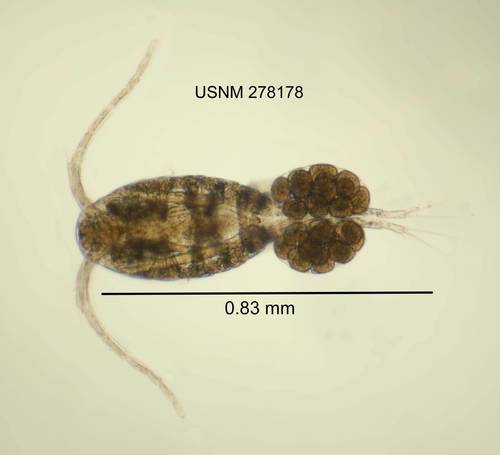
Tropocyclops
Tropocyclops is a genus of copepod crustaceans in the family Cyclopidae. It contains the following species:
Thermocyclops
Thermocyclops is a genus of crustacean in family Cyclopidae. It was first described and later extensively researched by Friedrich Kiefer, who discovered some 20 species. The species and subspecies of the genus inhabit fresh and brackish waters alike (rarely ground waters) all around the world, although most are from tropical areas.
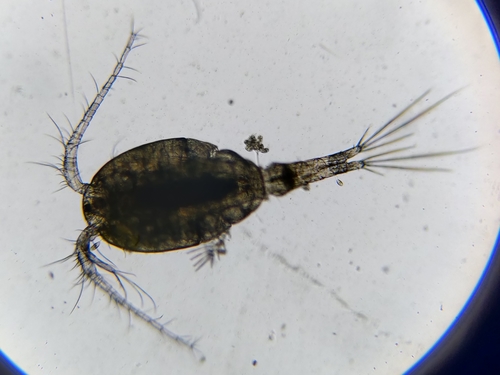
Macrocyclops
Macrocyclops is a genus of copepods belonging to the family Cyclopidae. There are currently 13 described species found in fresh water habitats throughout the world:
Microcyclops
Microcyclops is a genus of copepods, containing the following species:
Halicyclops
Halicyclops is a genus of copepods belonging to the family Cyclopidae. There are currently 94 described species found in brackish habitats throughout the world:

Chondracanthus
genus of crustaceans
Afrocyclops
Afrocyclops is a genus of copepod crustaceans in the family Cyclopidae, containing the following species:
Afrocyclops alter Kiefer, 1935
Afrocyclops curticornis (Kiefer, 1932)
Afrocyclops doryphorus Kiefer, 1935
Afrocyclops gibsoni (Brady, 1904)
Afrocyclops herringi Alekseev & Sanoamuang, 2006
Afrocyclops ikennus Onabamiro, 1957
Afrocyclops lanceolatus Kiefer, 1935
Afrocyclops nubicus (Chappuis, 1922)
Afrocyclops pauliani Lindberg, 1951
Afrocyclops propinquus (Kiefer, 1932)
Afrocyclops sparus Dussart, 1974
Metacyclops
Metacyclops is a genus of copepod crustaceans in the family Cyclopidae containing 61 species, of which three are listed on the IUCN Red List – M. campestris from Brazil (conservation dependent), M. gasparoi from Italy (vulnerable), and M. postojnae from Slovenia (vulnerable).
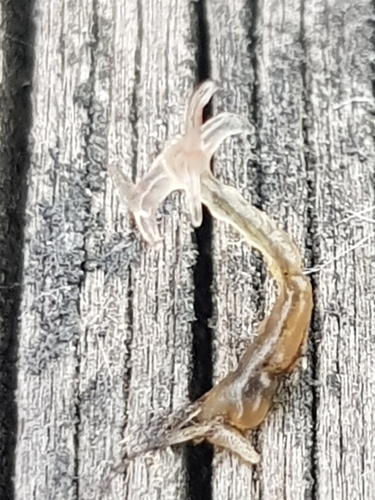
Lernaea
Lernaea is a genus of copepod crustaceans whose members are commonly called anchor worms and are parasitic on freshwater fishes.
Bryocyclops
Bryocyclops is a genus of freshwater-dwelling cyclopoid copepods. The prefix Bryo- for Bryophyta (Mosses) refers to the fact that the first few species were described from mosses.
Cyclopinodes
Cyclopinodes is a genus of marine copepods in the family Hemicyclopinidae.
Acantholochus
Acantholochus is a genus of parasitic copepods belonging to the family Bomolochidae. Its members can only be distinguished from the closely related genus Hamaticolax by the absence of an accessory process on the claw of the maxillipeds.

Acanthochondria
Acanthochondria is a genus of copepods, containing the following species:

Oncaeidae
Oncaeidae is a family of copepods, containing the following genera:
Archioncaea Böttger-Schnack & Huys, 1997
Conaea Giesbrecht, 1891
Epicalymma Heron, 1977
Monothula Böttger-Schnack & Huys, 2001
Oncaea Philippi, 1843
Spinoncaea Böttger-Schnack, 2003
Triconia Böttger-Schnack, 1999

Megacyclops
thumb | 220x124px | right | Copepod Megacyclops
Megacyclops is a genus of copepods, containing the following species:
Ergasilus
Ergasilus is a genus of copepod crustaceans occurring in both the ocean and fresh water, often called gill lice. The females are parasitic upon the gills of fishes. Being copepods, gill lice have a single median eye on their head. The second antennae are modified into prehensile pincers. Male gill lice are free-living.
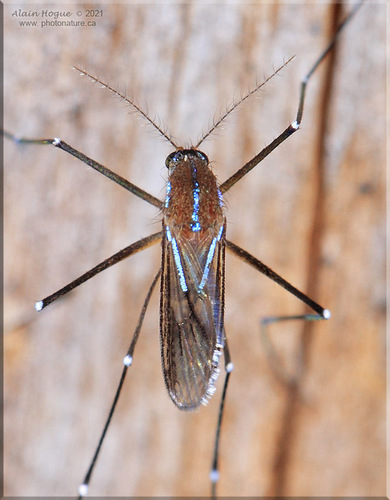
Sapphirina
Sapphirina, whose members are commonly known as sea sapphires, is a genus of parasitic copepods in the family Sapphirinidae.
Oithona
Oithona is a planktonic crustacean genus found in marine, brackish, fresh water environments. Oithona has been described as the most ubiquitous and abundant copepod in the world's oceans. It was first described by Baird in 1843 using the species Oithona plumifera as taxon type.

Clausidium
Clausidium is a genus of copepods that have been found in subtopical to temperate coastal areas along the Pacific, Atlantic and Gulf coasts of North America, the Pacific and Atlantic Coasts of South America, the Atlantic and Mediterranean coasts of Europe, the Atlantic coast of Africa, and the coast of India.
Cyclopina
Cyclopina is a genus of copepods belonging to the order Cyclopoida, and the family, Cyclopinidae. The genus was first described in 1863 by zoologist, Carl Friedrich Wilhelm Claus.
Muscocyclops
Muscocyclops is a genus of copepod crustaceans in the family Cyclopidae, comprising three species found only in South America. Two of the species – Muscocyclops bidentatus and Muscocyclops therasiae – are endemic to the Distrito Federal in Brazil, and are listed as conservation dependent on the IUCN Red List. The third species is Muscocyclops operculatus.
Oncaea
Oncaea is a genus of copepods. The genus contains bioluminescent species. Unlike other bioluminescent copepods, Oncaea have an internal (non-secreted) bioluminescence. Oncaea contains the following species:

Abergasilus amplexus
Abergasilus amplexus is a species of parasitic copepod endemic to euryhaline habitats in New Zealand. It is the only known species in the genus Abergasilus.
Ponticyclops boscoi
Ponticyclops is a genus of copepods in the family Cyclopidae. It is monotypic, being represented by the single species Ponticyclops boscoi. It is endemic to Brazil, where its natural habitat is swamps.
Kelleria
genus of crustaceans