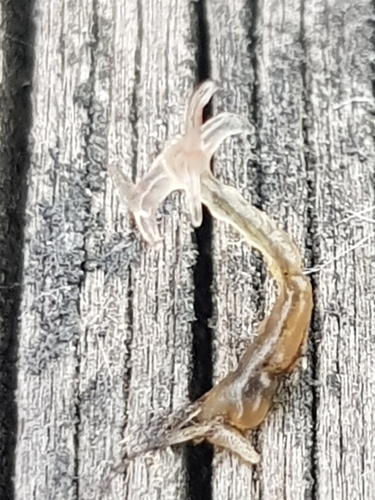
(c) Charcos Companhia, some rights reserved (CC BY-NC), uploaded by Charcos Companhia · cc-by-nc
Lernaea
Sign in to saveLernaea is a genus of copepod crustaceans whose members are commonly called anchor worms and are parasitic on freshwater fishes.
Species
GENUS
- KingdomAnimalia
- PhylumArthropoda
- ClassCopepoda
- OrderCyclopoida
- FamilyLernaeidae
via GBIF
Museum specimens
- Specimen records
- 129
- With media
- 14
- Family
- Lernaeidae
- Collections
- MSB, YPM, USNM, RBINS-SCIENTIFIC HERITAGE, MCZ
- Recorded in
- United States, Dr Congo
Wikidata facts
- Instance of
- taxon
- Parent taxon
- Lernaeidae
- Image
- Anchor worm.jpg
Show 5 more facts
- taxon name
- Lernaea
- taxon rank
- genus
- Commons category
- Lernaea
- taxon common name
- イカリムシ属
- taxon author citation
- Linnaeus, 1758
Sources (1)
via Wikidata · CC0
~2 min read
Encyclopedic overview
4 sectionsContents
- Life cycle
- Diagnosis
- Treatment
- References
Lernaea is a genus of copepod crustaceans whose members are commonly called anchor worms and are parasitic on freshwater fishes.
==Life cycle== Anchor worms mate during the last free-swimming (copepodid) stage of development. After mating, the female burrows into the flesh of a fish and transforms into an unsegmented, wormlike form, usually with a portion hanging from the fish's body. Eggs are released from the posterior "tails" (egg sacs) into the water, where they hatch within 24 to 36 hours. The nauplii will go through three stages before molting into copepodids, which associate with fish gills. After a further five stages and mating, the male leaves the host and dies, while the female transitions into the anchored stage (may move to different fish host). ==Diagnosis== Symptoms of anchor worm can be as follows: Anchor worms (Lernaea sp.) can be seen with the naked eye Frequent rubbing or "flashing" Localised redness Inflammation on the body of the fish Tiny white-green or red worms in wounds Breathing difficulties General lethargy
Excerpted from Wikipedia’s “Lernaea” article, available under the CC BY-SA 4.0 licence.