Category
page 1Dasypogonaceae
Dasypogonaceae
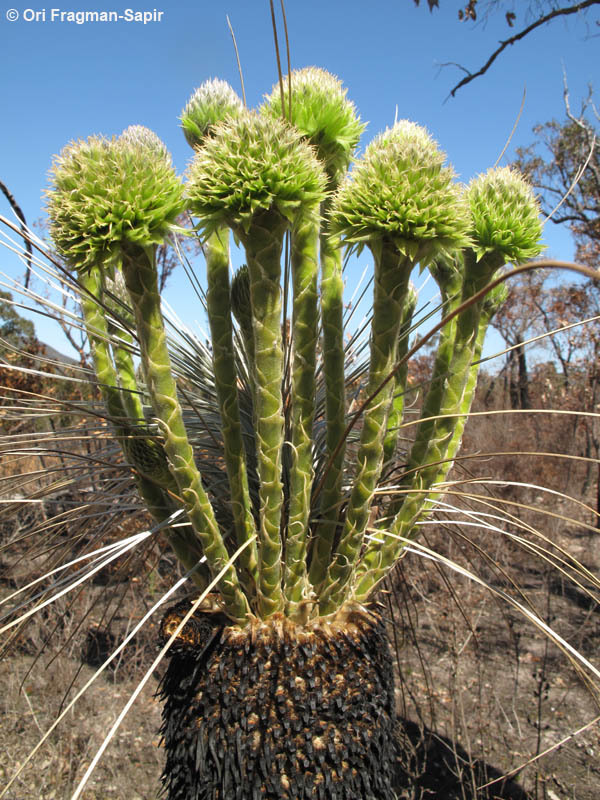
Dasypogonaceae is a family of flowering plants based on the type genus Dasypogon, one that has traditionally not been commonly recognized by taxonomists; the plants it contains were usually included in the family Xanthorrhoeaceae. If valid, Dasypogonaceae includes four genera with 16 species. The family is endemic to Australia. The best known representative is Kingia australis.
Dasypogon
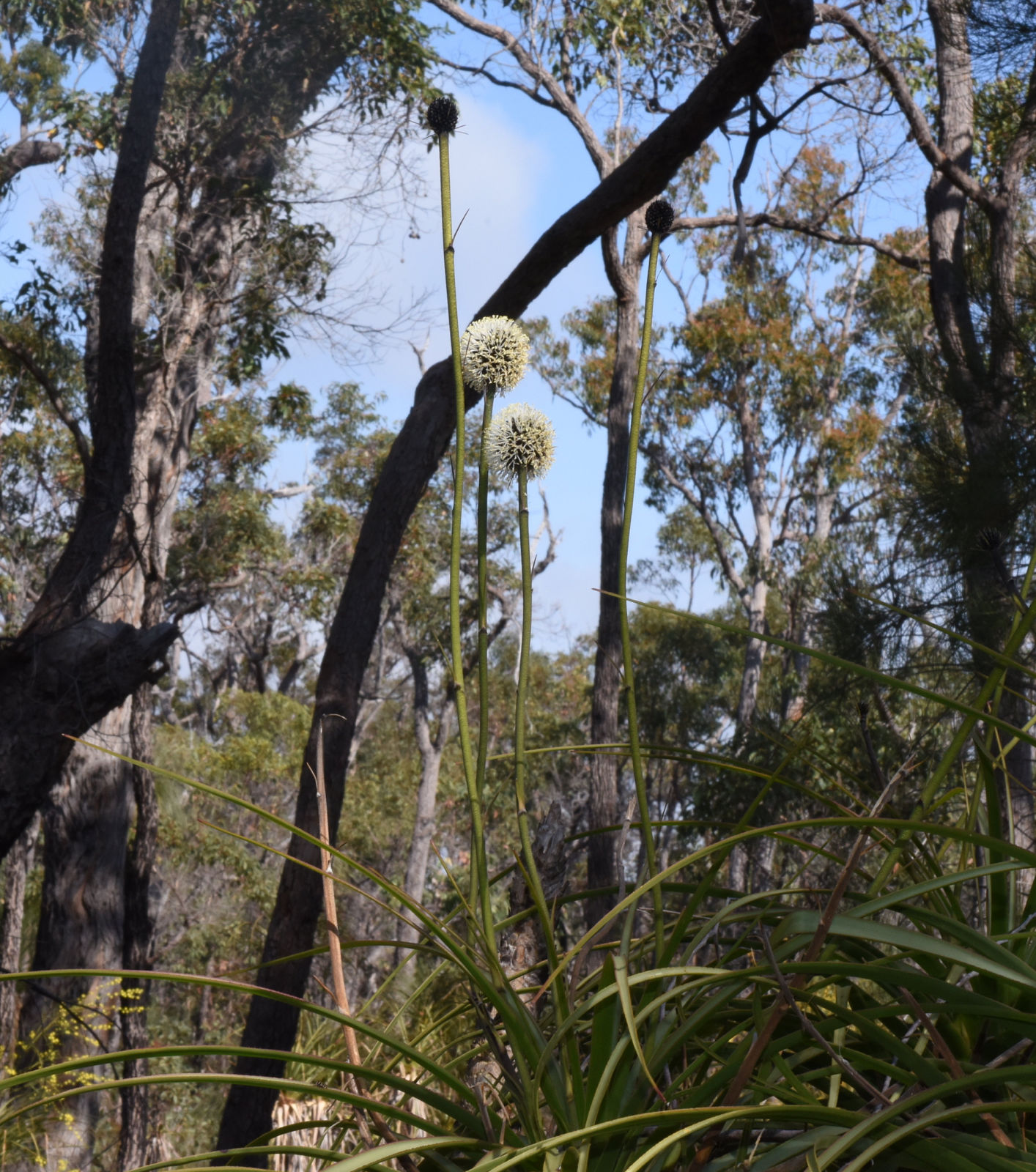
Dasypogon is a genus of flowering plants in the family Dasypogonaceae. It includes three species, all endemic to Western Australia.

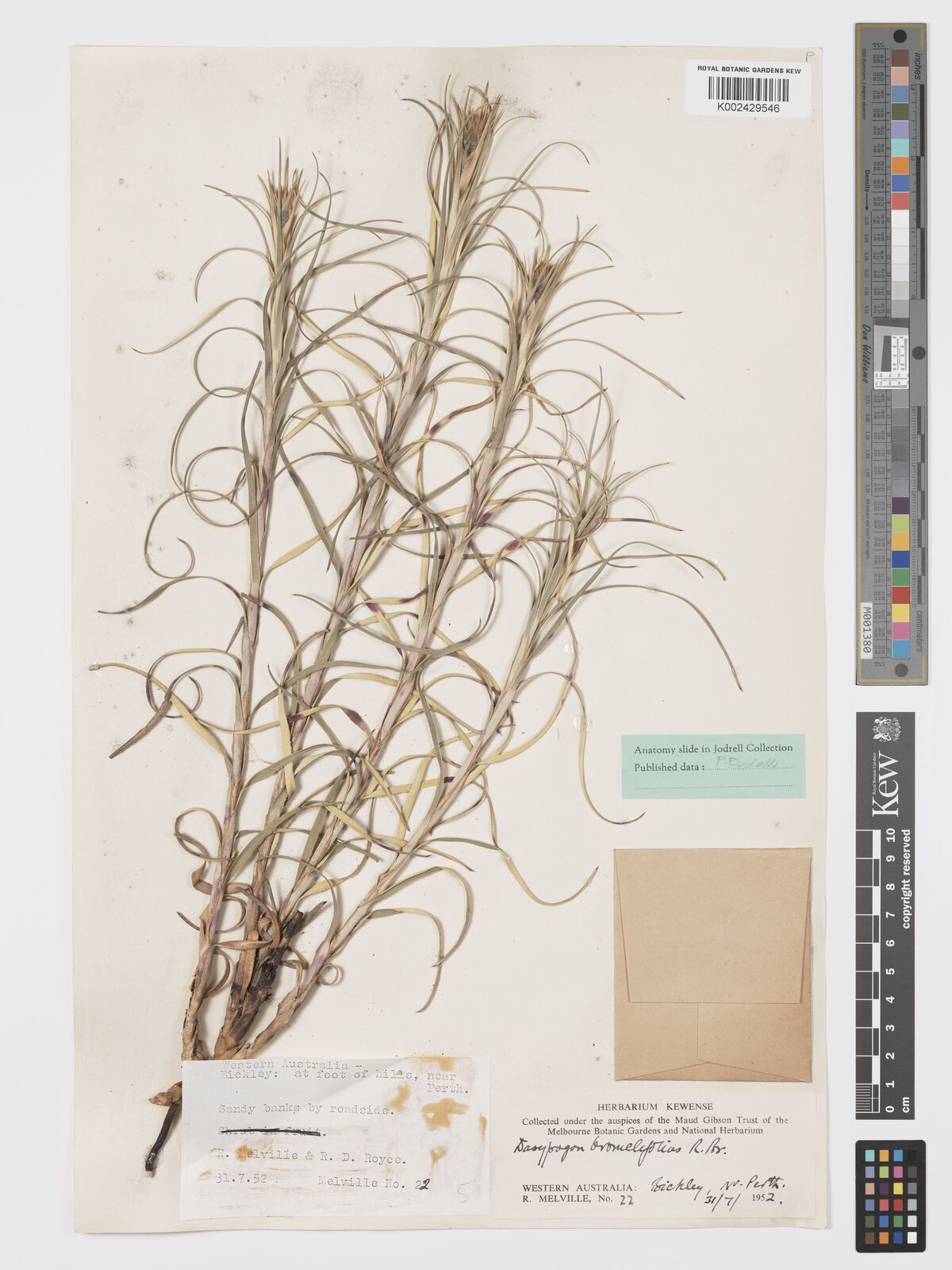
Dasypogon bromeliifolius
species of plant
Dasypogon obliquifolius
species of plant
Dasypogon hookeri
species of plant
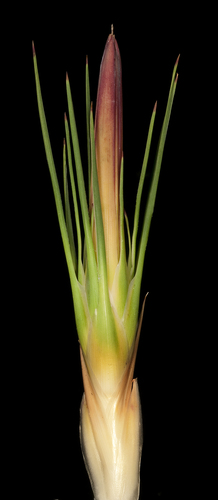
Baxteria
Baxteria is a genus of flowering plant in the Dasypogonaceae described as a genus in 1843. There is only one known species, Baxteria australis, found only in the southwestern part of Western Australia.
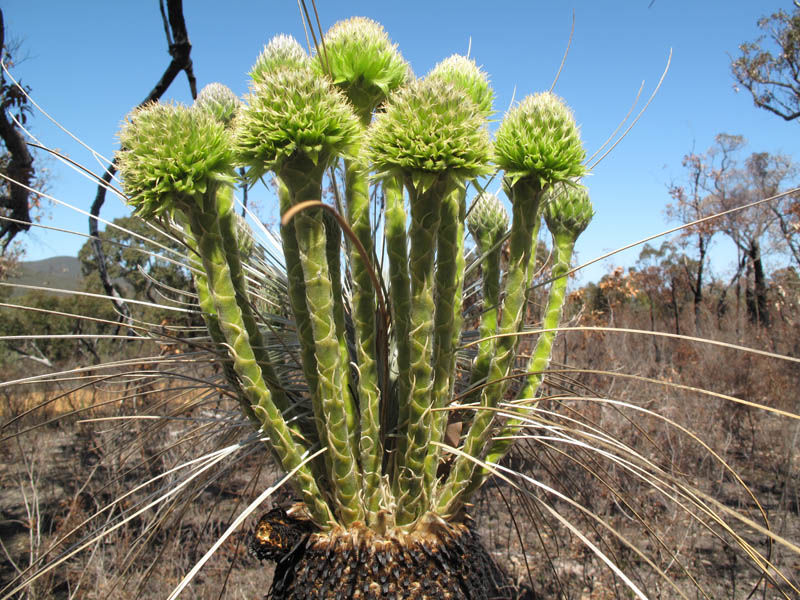
Kingia
Kingia is a genus consisting of a single species, Kingia australis, and belongs to the plant family Dasypogonaceae. The Aboriginal name bullanock is used as a common name for the plant. It has a thick pseudo-trunk consisting of accumulated leaf-bases, with a cluster of long, slender leaves on top. The trunk is usually unbranched, but can branch if the growing tip is damaged. Flowers occur in egg-shaped clusters on the ends of up to 100 long curved stems. Kingia grows extremely slowly, the trunk increasing in height by about 1½ centimetres per year. It can live for centuries, however, so can at