Category
page 1Death customs

cemetery
300px|thumb|Fiume Road Graveyard|Kerepesi Cemetery, Budapest, Hungary
thumb|Cemetery in China
thumb|Cemetery in Kavala, Greece
A cemetery, burial ground, gravesite, graveyard, or a green space called a memorial park or memorial garden, is a place where the remains of many dead people are buried or otherwise entombed. The word cemetery (from Greek ) implies that the land is specifically designated as a burial ground and originally applied to the Roman catacombs. The term graveyard is often used interchangeably with cemetery, but a graveyard primarily refers to a burial ground within a churchyar

coffin
thumb|right|A display of coffins in the office of a funeral director in [[Poland]]
thumb|A casket showroom in Billings, Montana, depicting split lid coffins

burial
thumb|Unearthed grave from the medieval Poulton Chapel

dolmen
thumb|Poulnabrone dolmen, [[the Burren, County Clare, Ireland]]
thumb|Dolmens in Amudalavalasa|Amadalavalasa, [[Andhra Pradesh, India]]

Antigone
ancient Greek tragedy by Sophocles

cremation
thumb|upright=1.3|An electric cremator in Austria
Cremation is a method of final disposition of a corpse through burning.

sati
funerary women sacrifice

hallelujah
thumb|900px|Hallelujah written in Modern Hebrew
Hallelujah (; , Modern ) is an interjection from the Hebrew language, used as an expression of gratitude to God. The term is used 24 times in the Tanakh (in the book of Psalms), twice in deuterocanonical books, and four times in the Christian Book of Revelation.

mass for the dead
thumb|Requiem for Cirilo Almario|Bishop Cirilo Almario, in the [[Mass of Paul VI at Minor Basilica and Cathedral of the Immaculate Conception, Malolos, Bulacan, 2016]]
thumb|The Requiem, in the Tridentine Mass, celebrated annually for [[Louis XVI and victims of the French Revolution, in the crypt of Strasbourg Cathedral, 2013]]
thumb|270px|Requiem Mass for Archduke Franz Ferdinand of Austria at St. Catherine's Cathedral, [[St. Petersburg, published in a Russian newspaper, 1914]]

cryonics
thumb|Technicians preparing a body for cryopreservation in 1985

taxidermy
thumb|right|250px|Primate and pachyderm taxidermy at the [[Rahmat International Wildlife Museum & Gallery, Medan, Sumatra, Indonesia]]

ancestor worship
religious behaviour

danse macabre
artistic motif on the universality of death

embalming
thumb|Embalming was popularized in the United States during the American Civil War.|alt=Embalming surgeon at work on soldier's body

cairn
thumb|upright=1.2|A cairn a mile east of Nine Standards Rigg in the Yorkshire Dales.
.jpg)
crematorium
thumb|Maitland, Cape Town|Maitland Crematorium, [[South Africa.]]

shroud
thumb|Portion of the death shroud of Charlemagne. It represents a [[quadriga and was manufactured in Constantinople.]]
thumb|350px|Detail showing body in a burial shroud, grave of William Carstares, [[Greyfriars Kirkyard, Edinburgh (1720)]]
A shroud is an item, such as a cloth, that covers or protects some other object. The term is most often used in reference to burial sheets, mound shroud, grave clothes, winding-cloths or winding-sheets, such as the Jewish tachrichim or Muslim kaffan, that the body is wrapped in for burial. A famous example of this is the Shroud of Turin.

ushabti
thumb|300px|right|Memphis, Egypt|Memphis, 500 BC – Troop of funerary servant figures ushabtis in the name of Neferibreheb, [[Louvre-Lens]]
thumb|260px|Four ushabtis of Khabekhnet and their box; 1279–1213 BC; painted limestone; height of the ushabtis: 16.7 cm; Metropolitan Museum of Art
thumb|Ushabti Figurine, Albert Hall Museum
The ushabti (also called shabti or shawabti, with a number of variant spellings) was an ancient Egyptian funerary figurine. The Egyptological term is derived from , which replaced earlier , perhaps the nisba of "Persea tree".
national day of mourning
type of public holiday

columbarium
thumb|300px|The San Francisco Columbarium & Funeral Home|San Francisco Columbarium
A columbarium (; pl. columbaria), also called a cinerarium, is a structure for the reverential and usually public storage of funerary urns holding cremated remains of the dead. The term comes from the Latin columba (dove) and originally solely referred to compartmentalized housing for doves and pigeons, also called dovecotes.

funeral prayer
Islamic prayer in congregation during a funeral
Tower of Silence
structure used by Zoroastrians to dispose of their dead
death mask
wax or plaster cast made of a person’s face following death
moment of silence
period of silent contemplation, prayer, reflection, or meditation at a gathering, often as a gesture of respect in mourning
mask of Tutankhamun
gold mask of the Egyptian pharaoh Tutankhamun
rest in peace
short epitaph or idiomatic expression wishing eternal rest and peace to someone who has died
wake
vigil held over the dead before burial
grave good
objects placed intentionally in a grave

catafalque
thumb|375px|Catafalque of nobleman Krzysztof Opaliński, 17th century [[Poland]]
state funeral
public funeral ceremony held to honour people of national significance
post-mortem photography
photography genre
crêpe
any of various fabrics with twisted threads, often crinkled surface

lament
thumb|right|Jan Kochanowski with dead daughter in painting inspired by the poet's Laments
professional mourning
mourning in exchange for money
sky burial
Tibetan funeral practice

gravedigger
right|thumb|200px|Grave-digger, by Viktor Vasnetsov, 1871
%2C%200-50%20dc%20ca..JPG)
urn
thumb|Ancient Roman urn made of [[alabaster]]
The Suppliants
ancient Greek tragedy by Euripides
alkaline hydrolysis
method of body disposal
ghost bike (memorial)
roadside memorial for a person killed while cycling consisting of a bicycle painted white
Joss paper
sheets of paper burnt as offerings in various Asian religious practices

Famadihana
thumbFamadihana is a funerary tradition of the Malagasy peoples of Madagascar. During this ceremony, known as the turning of the bones, people bring forth the bodies of their ancestors from the family crypts, rewrap the corpses in fresh cloth, and rewrite their names on the cloth so they will always be remembered. Then they dance to live music while carrying the corpses over their heads and go around the tomb before returning the corpses to the family tomb. They believe in celebrating the life lived by the dead person.
awareness ribbon
symbols meant to show support or raise consciousness for a cause
funerary art
grave art
last meal
meal preceding one's execution

larnax
alt=|thumb|Late Minoan III larnax from Kavrochori, Archaeological Museum of Heraklion
death poem
genre of poetry

koliva
Koliva, also spelled, depending on the language, kollyva, kollyba, kolyvo, or colivă, is a dish based on boiled wheat that is used liturgically in the Eastern Orthodox Church for commemorations of the dead.
posthumous execution
ritual or ceremonial mutilation of an already dead body as a punishment
ablution
both 'baptism' and 'footwashing' are forms of ablution
Charon's obol
allusive term for a coin placed in the mouth of the dead to pay Charon to ferry them to the underworld
Shiva
week-long mourning period in Judaism for first-degree relatives
chaperon
medieval head cover

Trunyan
thumb|right|The isolated Bali Aga village of Trunyan on the eastern shore of Lake Batur at the foot of Mount Abang.
Trunyan (Balinese: ᬢ᭄ᬭᬸᬜᬦ᭄) or Terunyan is a Balinese village (banjar) located on the eastern shore of Lake Batur, a caldera lake in Bangli Regency, central Bali, Indonesia. The village is one of the most notable homes of the Bali Aga people, the others being the villages of Tenganan and Sambiran. Trunyan is notable for its peculiar treatment of dead bodies, in which they are placed openly on the ground, simply covered with cloth and bamboo canopies, and left to decompose. The in
promession
Promession is an idea of how to dispose human remains by way of freeze drying. The concept of promession was developed by Swedish biologist Susanne Wiigh-Mäsak, who derived the name from the Italian word for "promise" (promessa). She founded Promessa Organic AB in 1997 to commercially pursue her idea. The company went bankrupt in 2015 without being able to produce a functioning facility. Critics questioned the technical feasibility of the process.
.jpg)
macabre
upright=1.4|thumb|Danse Macabre|Totentanz ("Dance of the Dead"), illustration from the [[Nuremberg Chronicle, by Hartmann Schedel (1440–1514)]]
thumb|A death head wearing the Imperial Crown of the Holy Roman Empire, on the sarcophagus of Habsburg emperor Charles VI in the [[crypt of the Capuchin]] thumb|Upper section of the Cadaver Tomb of René of Chalon|Transi of René de Chalon. Sculpture by [[Ligier Richier, ]]
jar burial
burial in a ceramic vessel
lying in repose
public funerary custom
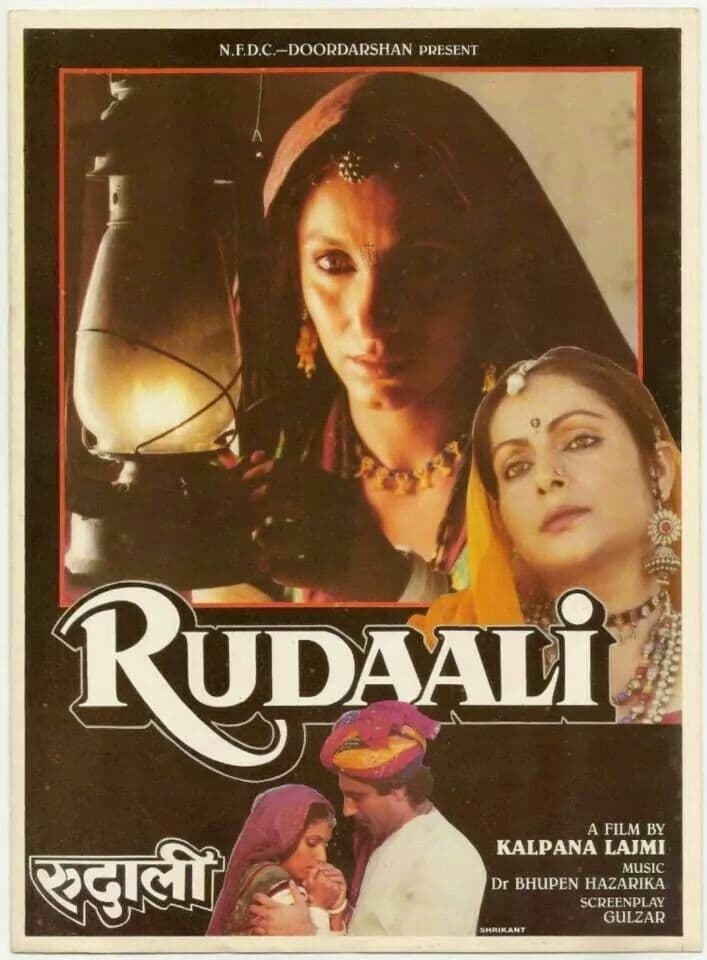
Rudaali
Rudaali (pronounced "roo-dah-lee"; ) is a 1993 Indian Hindi-language drama film directed by Kalpana Lajmi, written by Lajmi and Gulzar and based on a 1979 short story of the same name by Bengali author Mahasweta Devi. Set in a small village in Rajasthan, the film stars Dimple Kapadia as Shanichari, a lonely and hardened woman who, despite a lifetime of misfortune and abandonment, is unable to express grief through crying and is challenged with a new job as a professional mourner. Raakhee, Raj Babbar, and Amjad Khan appear in supporting roles. Produced by the National Film Development Corporati

unguentarium
thumb|350px|Roman marbled glass piriform unguentarium (front and back)
thumb|upright|Unguentarium carved from a 2860-carat Colombian emerald, Habsburg-Lorraine Household Treasure, [[Imperial Treasury, Vienna.]]
An unguentarium (: unguentaria), also referred to as balsamarium (: balsamaria), lacrimarium (: lacrimaria) or tears vessel, is a small ceramic or glass bottle found frequently by archaeologists at Hellenistic and Roman sites, especially in cemeteries. Its most common use was probably as a container for oil, though it is also suited for storing and dispensing liquid and powdered substan