Category
page 1Decapod families
Astacidae
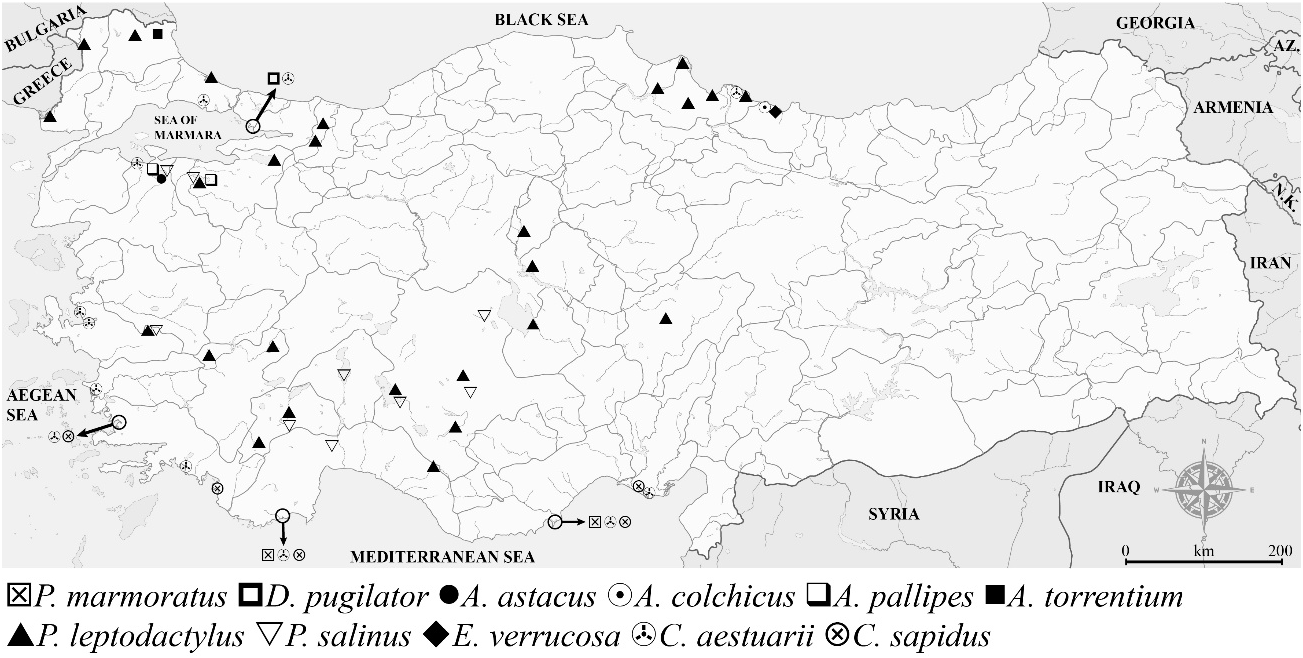
Astacidae is a family of freshwater crayfish native to Europe, western Asia and western North America. The family is made up of four extant (living) genera: The genera Astacus (which includes the European crayfish), Pontastacus (which includes the Turkish crayfish), and Austropotamobius are all found throughout Europe and parts of western Asia, while Pacifastacus (which includes the signal crayfish) is native to western United States and British Columbia, but has also been introduced elsewhere.
%2004.jpeg)
Alpheidae
Alpheidae (also known as the snapping shrimp, pistol shrimp, or cracker shrimp) is a family of the shrimp infraorder Caridea that is characterized by having an enlarged and highly modified chelae ("claws") on one leg of their first pair, which is used for various purposes. Around half of the species, such as those in the genus Potamalpheops, lack this trait and have been dubbed "non-snapping shrimp".
Portunidae
Portunidae is a family of crabs which contains the swimming crabs. Its members include well-known shoreline crabs such as the blue crab (Callinectes sapidus) and velvet crab (Necora puber).

Palaemonidae
thumb|Harlequin shrimp, Hymenocera picta
Palaemonidae is a family of shrimp in the order Decapoda. Many species are carnivores that eat small invertebrates, and can be found in any aquatic habitat except the deep sea. One significant genus is Macrobrachium, which contains commercially fished species. Others inhabit coral reefs, where they associate with certain invertebrates, such as sponges, cnidarians, mollusks, and echinoderms, as cleaner shrimps, parasites, or commensals. They generally feed on detritus, though some are carnivores and hunt tiny animals.

Parastacidae
The Parastacidae are the family of freshwater crayfish found in the Southern Hemisphere. The family is a classic Gondwana-distributed taxon, with extant members in South America, Madagascar, Australia, New Zealand, and New Guinea, and extinct taxa also in Antarctica.
Ocypodidae
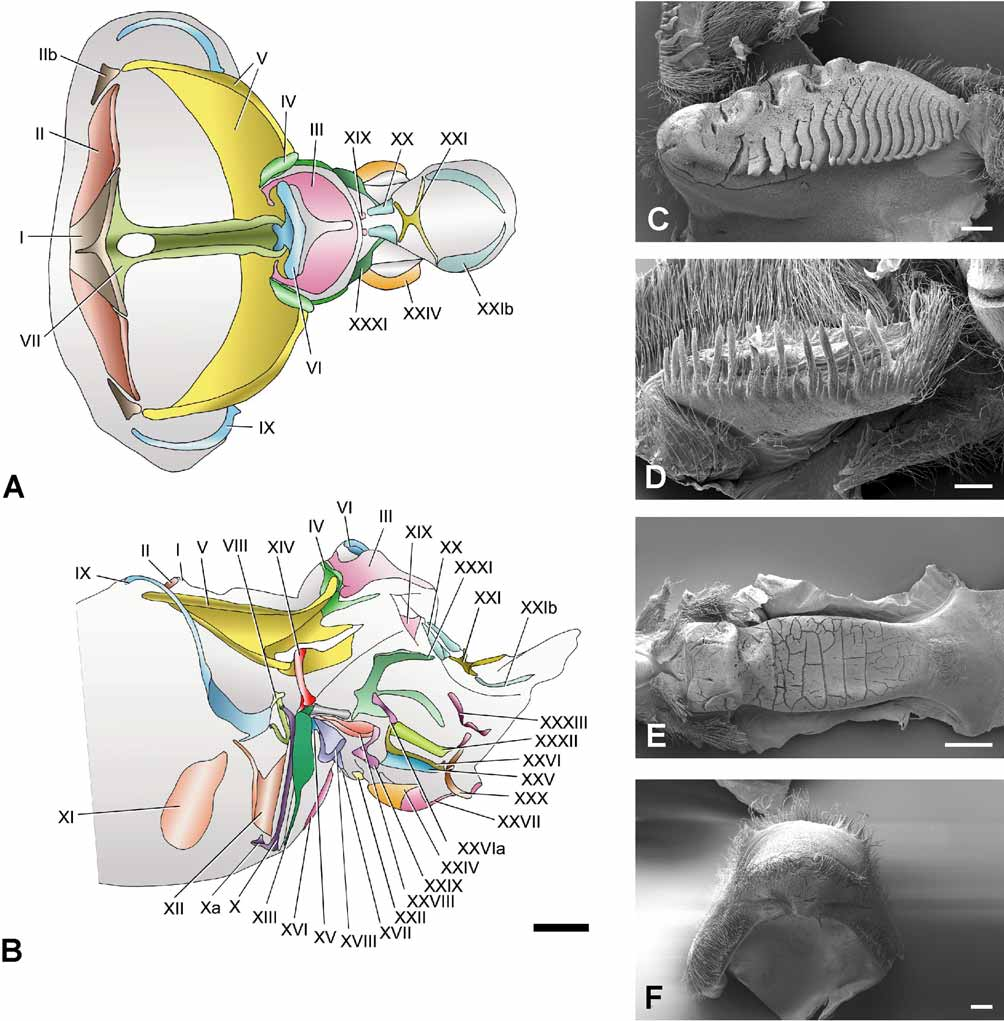
The Ocypodidae (from Ancient Greek ὠκύς (okús), meaning "swift", and πούς (poús), meaning "foot") is a family of semiterrestrial crabs that includes ghost crabs and fiddler crabs. These crabs are found along tropical and temperate shorelines worldwide.

Paguridae
The Paguridae are a family of hermit crabs of the order Decapoda. The king crabs, Lithodidae, are now widely understood to be derived from deep within the Paguridae, with some authors placing their ancestors within the genus Pagurus.

Atyidae
Atyidae is a family of shrimp, present in all tropical and most temperate waters of the world. Adults of this family are almost always confined to fresh water. This is the only family in the superfamily Atyoidea.
Gecarcinidae
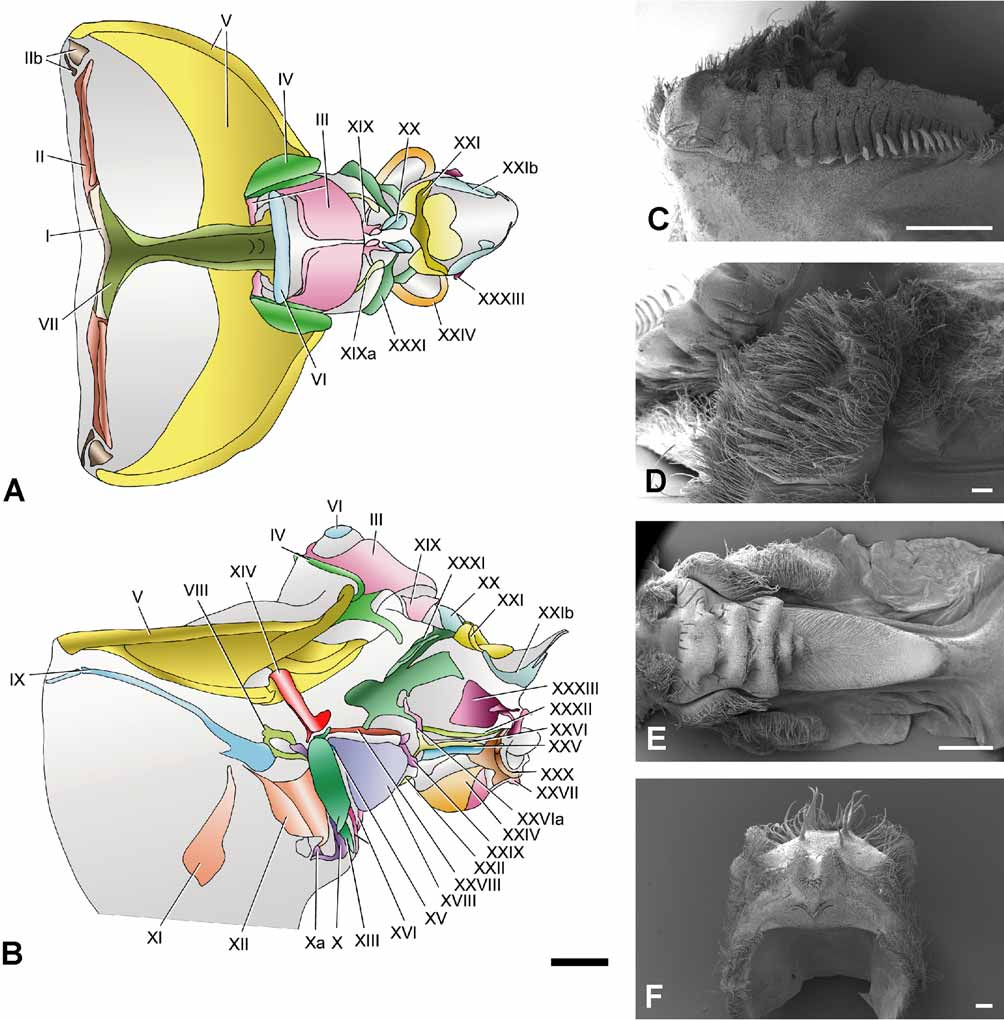
Gecarcinidae, or land crabs, are a family of true crabs that are adapted for terrestrial existence. Similar to all other crabs, land crabs possess a series of gills. In addition, the area of the carapace covering the gills is inflated and equipped with extra blood vessels. These organs extract oxygen from the air, analogous to the vertebrate lungs. These are called branchiostegal lungs. Adult land crabs are terrestrial, but visit the sea periodically, where they breed and their larvae develop. Land crabs are tropical omnivores which sometimes cause considerable damage to crops. Most land crabs

Penaeidae
Penaeidae is a family of marine crustaceans in the suborder Dendrobranchiata, which are often referred to as penaeid shrimp or penaeid prawns. The Penaeidae contain many species of economic importance, such as the tiger prawn, whiteleg shrimp, Atlantic white shrimp, and Indian prawn. Many prawns are the subject of commercial fishery, and farming, both in marine settings, and in freshwater farms. Lateral line–like sense organs on the antennae have been reported in some species of Penaeidae. At , the myelinated giant interneurons of pelagic penaeid shrimp have the world record for impulse conduc

Grapsidae
The Grapsidae are a family of crabs known variously as marsh crabs, shore crabs, or talon crabs. The family has not been confirmed to form a monophyletic group and some taxa may belong in other families. They are found along the shore among rocks, in estuaries, marshes, and in some cases pelagic among drifting seaweeds and flotsam.

Cambaridae
The Cambaridae are the largest of the four families of freshwater crayfish, with over 400 species. Most of the species in the family are native to the United States east of the Great Divide and Mexico, but fewer range north to Canada, and south to Guatemala and Honduras. Three live on the island of Cuba. The species in the genus Cambaroides are only found outside North America, as they are restricted to eastern Asia.
Majidae
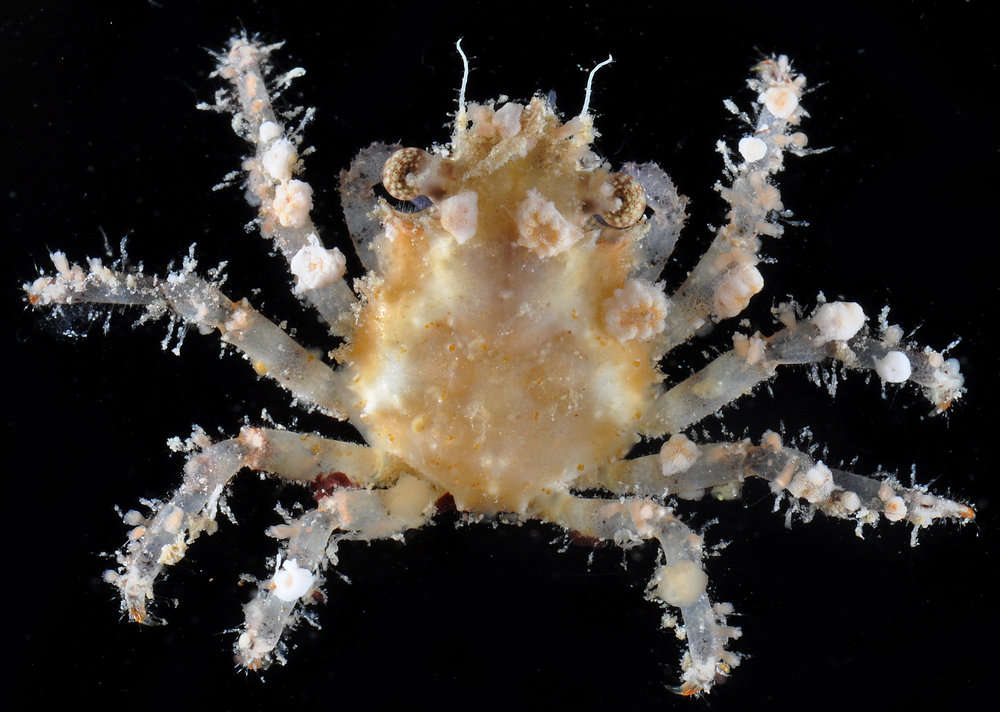
Majidae is a family of crabs, comprising around 200 marine species inside 52 genera, with a carapace that is longer than it is broad, and which forms a point at the front. The legs can be very long in some species, leading to the name "spider crab". The exoskeleton is covered with bristles to which the crab attaches algae and other items to act as camouflage.
Xanthidae
Xanthidae is a family of crabs known as gorilla crabs, mud crabs, pebble crabs or rubble crabs. Xanthid crabs are often brightly coloured and are highly poisonous, containing toxins which are not destroyed by cooking and for which no antidote is known. The toxins are similar to the tetrodotoxin and saxitoxin produced by puffer fish, and may be produced by bacteria in the genus Vibrio living in symbiosis with the crabs, mostly V. alginolyticus and V. parahaemolyticus.
Diogenidae
The Diogenidae are a family of hermit crabs, sometimes known as "left-handed hermit crabs" because in contrast to most other hermit crabs, its left chela (claw) is enlarged instead of the right. It comprises 429 extant species, and a further 47 extinct species, making it the second-largest family of marine hermit crabs, after the Paguridae.

Pandalidae
The family Pandalidae is a taxon of caridean shrimp. These species are commonly called pandalid shrimp. They are edible and have high economic value. They are characterised by the subdivided carpus of the second pereiopod and, mainly, by the lack of the chelae (claws) on the first pereiopod. This is a cold-water family, and their representation in tropical areas is made by deep-sea shrimp. The genus Physetocaris, sometimes placed in this family, is now considered to be in its own family, Physetocarididae.
Cancridae
Cancridae is a family of crabs. It comprises six extant genera, and ten exclusively fossil genera, in two subfamilies:

Coenobitidae
The Coenobitidae are the family of terrestrial hermit crabs, widely known for their land-living habits as adults. They are found in coastal tropical regions around the world and require access to the ocean to breed.
Crangonidae
Crangonidae is a family of shrimp, of the superfamily Crangonoidea, including the commercially important species Crangon crangon. Its type genus is Crangon. Crangonid shrimps' first pair of pereiopods have partially chelate claws that they use to capture their prey. They burrow shallowly into sediment on the sea floor, and feed on bivalves, crustaceans, polychaetes, and some small fish.
%20above%20the%20plate%20of%20mussels%20it%20was%20found%20in.jpg)
Pinnotheridae
thumb|A pea crab (exact genus and species unknown) above the plate of mussels it was found in
thumb|A yellow pea crab (exact genus and species unknown) has fallen out of the clam this sea otter is eating, and has landed on the sea otter's neck (in [[Moss Landing, California)]]
Hippolytidae
Hippolytidae is a family of cleaner shrimp, also known as broken-back shrimp or anemone shrimp. The term "broken-back shrimp" also applies to the genus Hippolyte in particular and "cleaner shrimp" is sometimes applied exclusively to Lysmata amboinensis.
Geryonidae
Geryonidae is a family of crabs, including the following subfamilies and genera:

Leucosiidae
Leucosiidae is a family of crabs containing three subfamilies and a number of genera incertae sedis:

Hippidae
Hippidae is a family of decapod crustaceans, currently known by the English name as either mole crab or sand crab, and by an earlier English name as sand bug. They are closely related to the family Albuneidae, with which they are usually joined in the superfamily Hippoidea. The family Hippidae comprises the three genera Emerita, Hippa and Mastigochirus. They burrow into sand, and are found throughout the world, except the Arctic and Antarctic.
Epialtidae
Epialtidae is a family of crabs, containing the subfamilies:
Solenoceridae
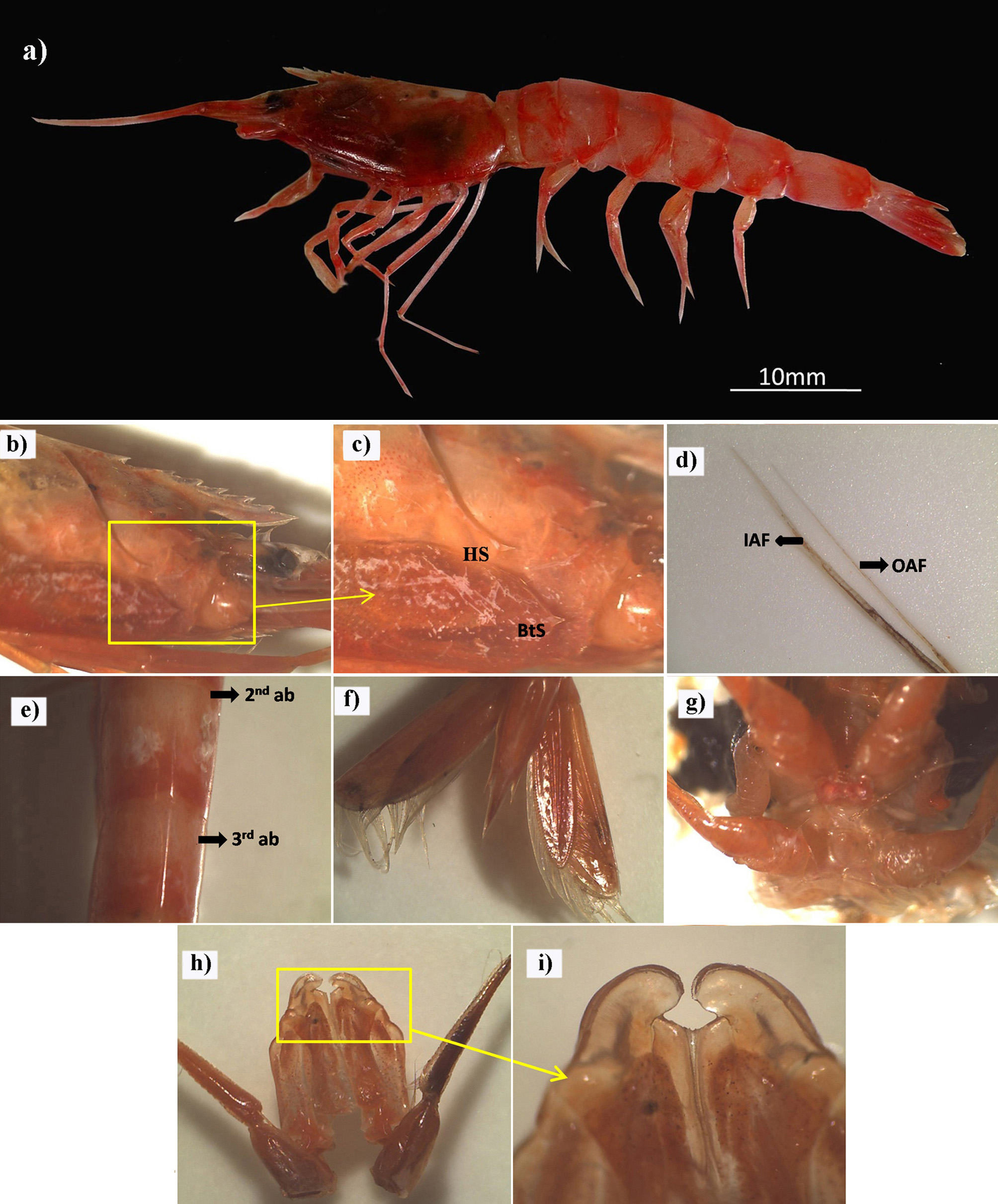
Solenoceridae is a family of decapods, containing 10 genera. Members of this family are marine, inhabiting shallow and offshore waters from the mid-continental shelf, ranging from depths to 1000 meters deep. Members of this family are also sometimes confused with other commercial shrimp species.

Trichodactylidae
Trichodactylidae is a family of crabs, in its own superfamily, Trichodactyloidea. They are all freshwater animals from Central and South America, including some offshore islands, such as Ilhabela, São Paulo. Only one of the 50 species is known from the fossil record, Sylviocarcinus piriformis from the Miocene of Colombia. The family contains 15 genera in two subfamilies:
Subfamily Dilocarcininae Pretzmann, 1978
Bottiella Magalhães & Türkay, 1996
Dilocarcinus H. Milne-Edwards, 1853
Forsteria Bott, 1969
Fredilocarcinus Pretzmann, 1978
Goyazana Bott, 1969
Melocarcinus Magalhães & Türkay, 1996
Mor
Potamidae
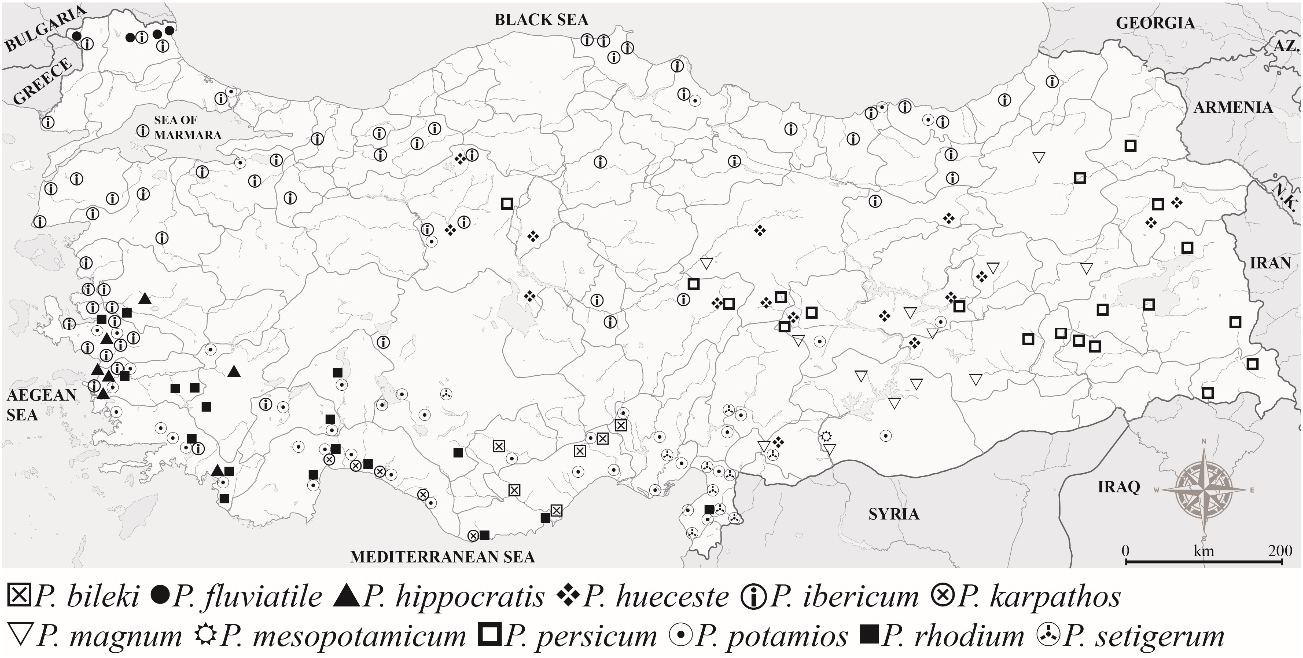
Potamidae is a family of freshwater crabs. It includes more than 650 species and nearly 100 genera, which are placed into two subfamilies: Potaminae and Potamiscinae.
Inachidae
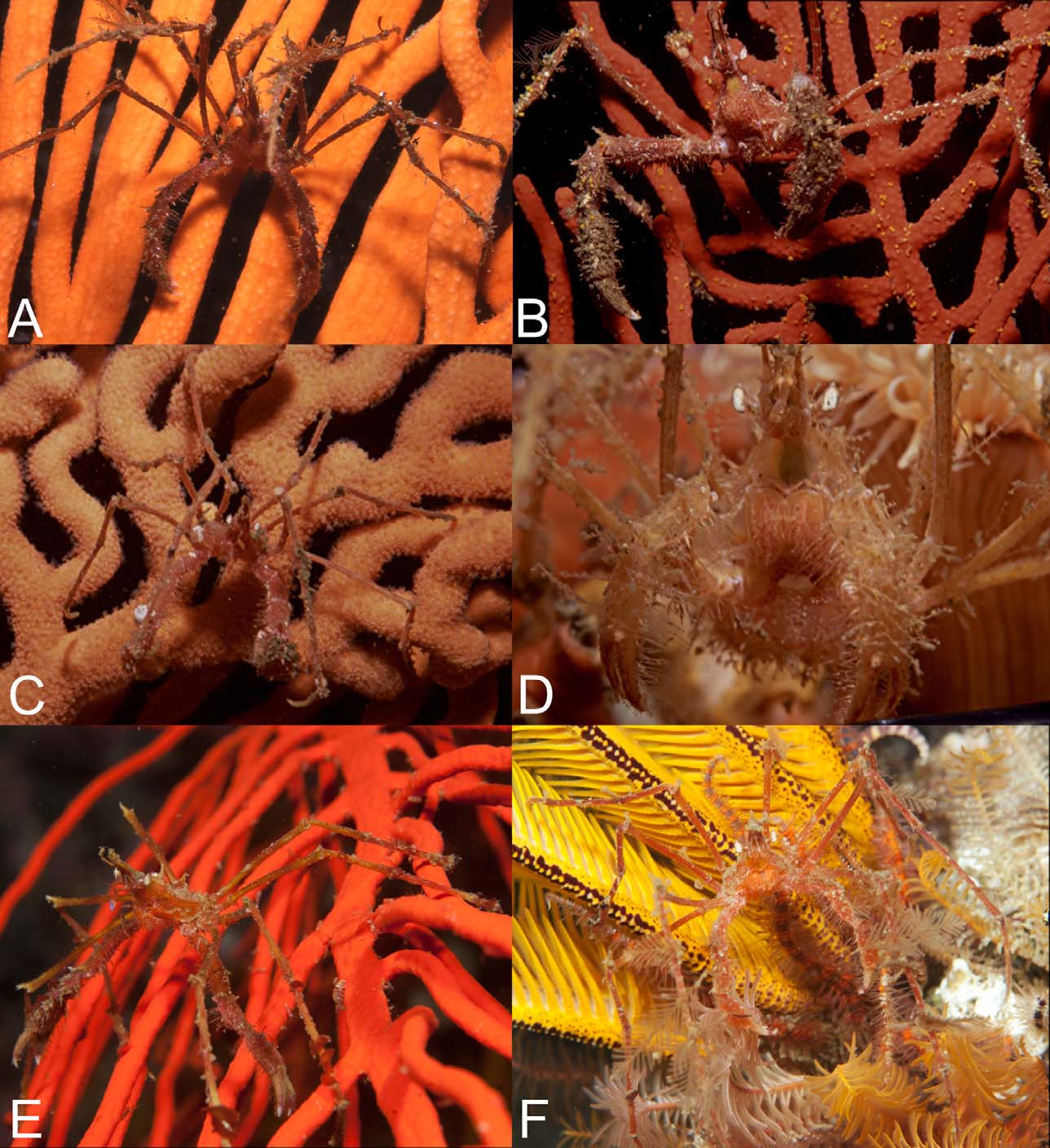
Inachidae is a family of crabs, containing the following genera:

Dromiidae
Dromiidae is a family of crabs, often referred to as sponge crabs. They are small or medium-sized crabs which get their name from the ability to shape a living sponge into a portable shelter for themselves. A sponge crab cuts out a fragment from a sponge and trims it to its own shape using its claws. The last two pairs of legs are shorter than other legs and bend upward over the crab's carapace, to hold the sponge in place. The sponge grows along with the crab, providing a consistent shelter.

Menippidae
Menippidae is a family of crabs of the order Decapoda.

Galatheidae
The Galatheidae are a family of squat lobsters.
Varunidae
The Varunidae are a family of thoracotrematan crabs. The delimitation of this family, part of the taxonomically confusing Grapsoidea, is undergoing revision. For a long time, they were placed at the rank of subfamily in the Grapsidae, but they appear to be closest to Macropthalmus and the Mictyridae, which are usually placed in the Ocypodoidea. It may thus be better to merge the latter superfamily with the Grapsoidea, retaining the latter name as it is older.
Oregoniidae
Oregoniidae is a family of crabs, with members ranging across the world.
Calappidae
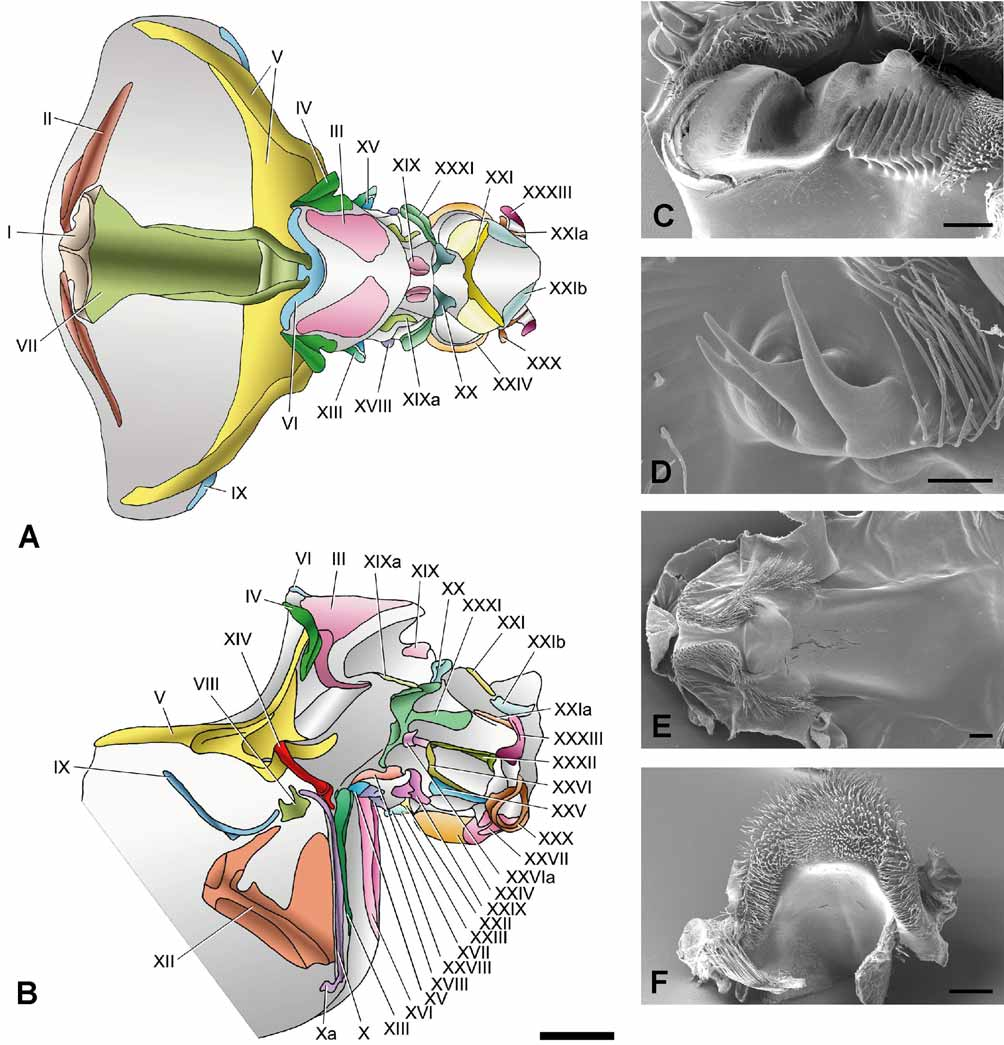
Calappidae is a family of crabs containing the following genera:
Plagusiidae
The Plagusiidae are a family of crabs, formerly treated as a subfamily of the family Grapsidae, but have since been considered sufficiently distinct to be a family in their own right. The family Plagusiidae used to include a subfamily Plagusiinae, comprising the genera Percnon and Plagusia, which constitute a widespread group of litophilic, intertidal and subtidal crabs that are notorious for their speed and their agility.
Cryptochiridae
Cryptochiridae is a family of crabs known commonly as gall crabs or coral gall crabs. They live inside dwellings in corals and cause the formation of galls in the coral structure. The family is currently placed in its own superfamily, Cryptochiroidea.

Sesarmidae
The Sesarmidae are a family of crabs, previously included in the Grapsidae by many authors. Several species, namely in Geosesarma, Metopaulias, and Sesarma, are true terrestrial crabs. They do not need to return to the sea even for breeding.

Axiidae
Axiidae is a family of crustaceans belonging to the infraorder Axiidea, within the order Decapoda.
Dorippidae
Dorippidae is a small family of crabs, commonly found in the shallow sand and mud substrate in coastal waters. Though common, they don't contribute any economic value and are often discarded as bycatch.

Parthenopidae
Parthenopidae is a family of crabs, placed in its own superfamily, Parthenopoidea. It comprises nearly 40 genera, divided into two subfamilies, with three genera incertae sedis:
Aethridae
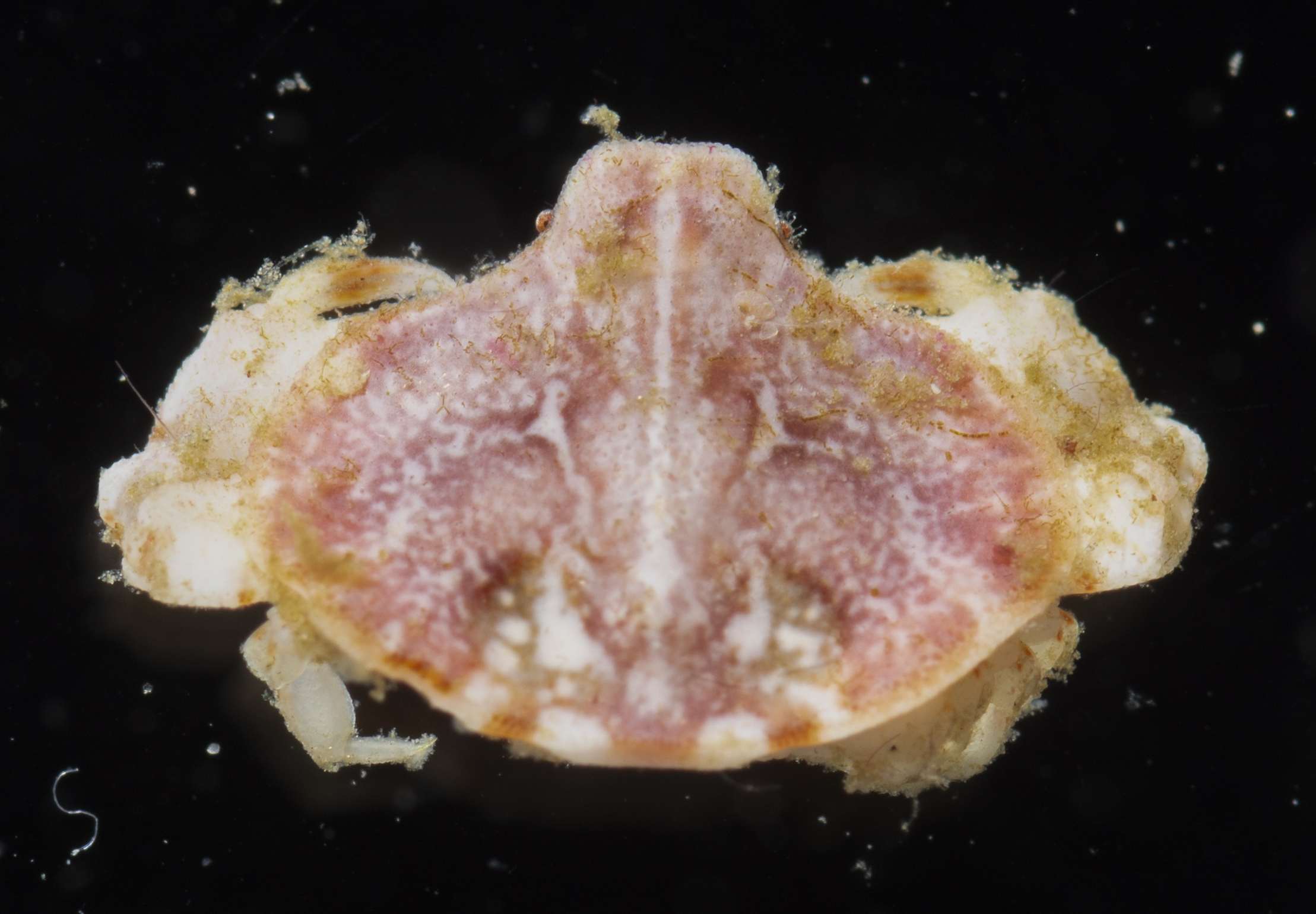
The Aethridae are a family of crabs in their own superfamily, Aethroidea. It contains these genera (extinct genera marked †):

Benthesicymidae
Benthesicymidae is a family of pelagic and bathypelagic shrimps in the suborder Dendrobranchiata. Because they live in the deep ocean, these shrimp are difficult to collect, and much is still unknown about their ecology and evolution. Recent work by Vereshchaka & Lunina has clarified evolutionary relationships within the family. Evidence for fossil Benthesicymidae have been collected from the Late Santonian of Lebanon.

Pasiphaeidae
Pasiphaeidae is a family of shrimp. It is the only family in the superfamily Pasiphaeoidea and contains seven extant genera:
Alainopasiphaea Hayashi, 1999
Eupasiphae Wood-Mason, 1893
Glyphus Filhol, 1884
Leptochela Stimpson, 1860
Parapasiphae Smith, 1884
Pasiphaea Savigny, 1816
Psathyrocaris Wood-Mason, 1893

Sergestidae
Sergestidae is a family of prawns which have lived since at least the Middle Jurassic (Bajocian/Bathonian of Monte Fallano Plattenkalk). It contains the following genera:
Acetes H. Milne-Edwards, 1830
Allosergestes Judkins & Kensley, 2008
Casertanus Bravi et al., 2014 †
Cretasergestes Garassino & Schweigert, 2006 †
Deosergestes Judkins & Kensley, 2008
Eusergestes Judkins & Kensley, 2008
Neosergestes Judkins & Kensley, 2008
Paleomattea Maisey & G. P. de Carvalho, 1995 †
Parasergestes Judkins & Kensley, 2008
Sergestes H. Milne-Edwards, 1830
Sergia Stimpson, 1860
Sicyonella Borradaile, 1910
Oplophoridae
The family Oplophoridae is a taxon of pelagic shrimp and the only subtaxon of the superfamily Oplophoroidea. It contains the following genera:
Acanthephyra A. Milne-Edwards, 1881
Ephyrina Smith, 1885
Heterogenys Chace, 1986
Hymenodora Sars, 1877
Janicella Chace, 1986
Kemphyra Chace, 1986
Meningodora Smith, 1882
Notostomus A. Milne-Edwards, 1881
† Odontochelion Garassino, 1994
Oplophorus H. Milne-Edwards, 1837
Systellaspis Bate, 1888
† Tonellocaris Garassino, 1998

Hymenosomatidae
Hymenosomatidae is a family of crabs with some 110 described species in 24 genera. The following genera are placed in the Hymenosomatidae:

Matutidae
Matutidae is a family of crabs, sometimes called moon crabs, adapted for swimming or digging. They differ from the swimming crabs of the family Portunidae in that all five pairs of legs are flattened, rather than just the last pair, as in Portunidae. Crabs in the Matutidae are aggressive predators.

Panopeidae
thumb|Lophopanopeus bellus, Black-clawed crab, San Luis Obispo County, California

Aristeidae
Aristeidae is a family of Dendrobranchiata decapod crustaceans known as deep-sea shrimps, gamba prawns or gamba shrimps. Some species are subject to commercial fisheries.
Gecarcinucidae
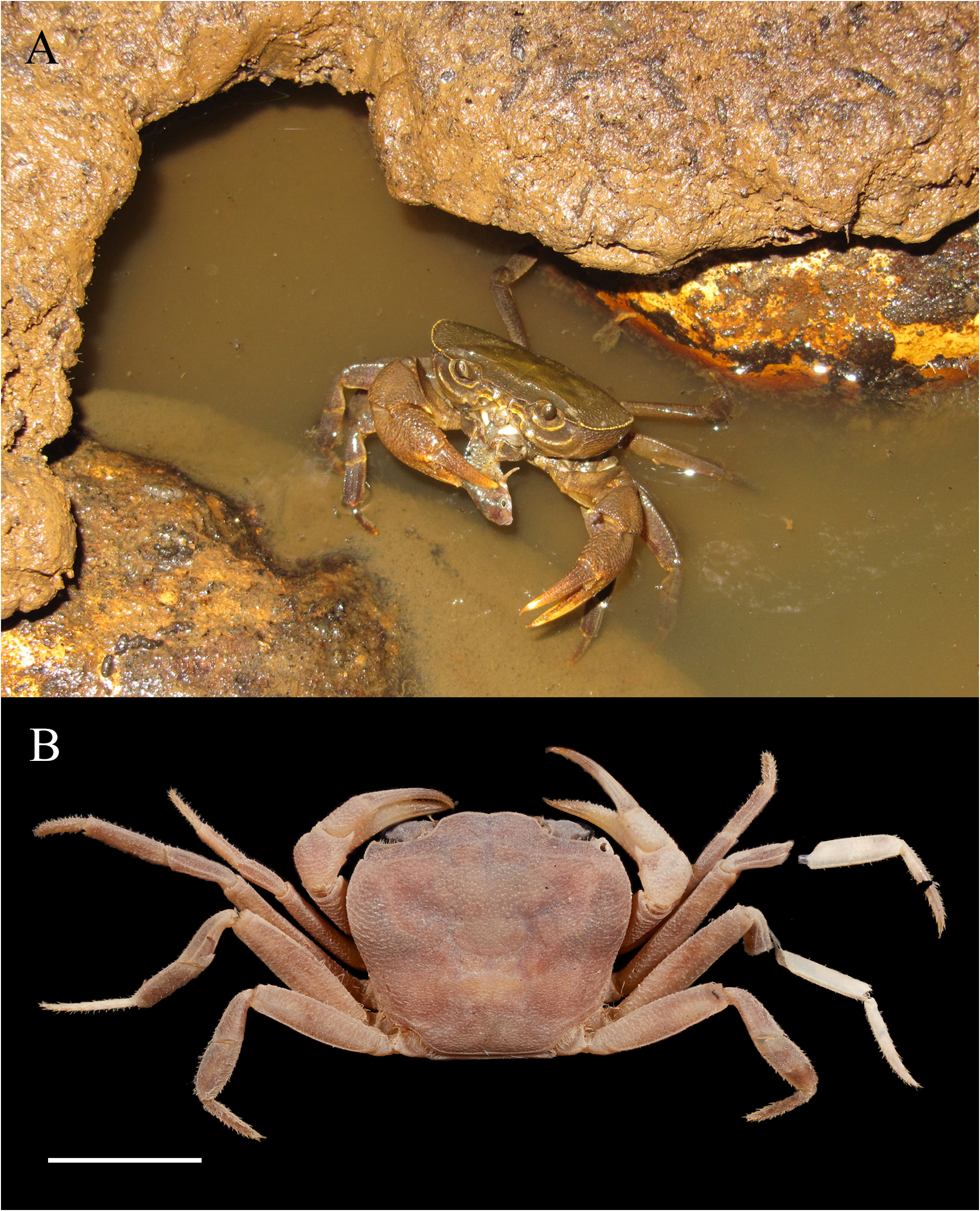
The Gecarcinucidae are a family of true freshwater crabs. They are found throughout South Asia, Southeast Asia and New Guinea, with a single genus found in Australia.

Atelecyclidae
Atelecyclidae is a family of crabs belonging to the superfamily Cancroidea, and currently contains eight genera of which two are extinct. However, the genera other than Atelecyclus and Pseudocorystes do not belong in the Cancroidea, and are to be removed from the family.
Atelecyclus
† Levicyclus
† Palaeotrichia
Peltarion
Podocatactes
Pseudocorystes
Protopeltarion
Trichopeltarion

Corystidae
Corystidae is a family of crabs, in its own superfamily, Corystoidea. It includes what was once thought to be the oldest Eubrachyuran fossil, Hebertides jurassica, thought to be dating from the Bathonian (Middle Jurassic); the species was subsequently reinterpreted as being Cenozoic in age. Corystidae contains ten extant and five extinct species in eight genera:
Corystes Bosc, 1802
Corystites Lőrenthey, in Lőrenthey & Beurlen, 1929
Gomeza Gray, 1831
Gomezinus † Collins, Lee & Noad, 2003
Harenacorystes † Van Bakel, Jagt, Artal & Fraaije, 2009
Hebertides † Guinot, De Angeli & Garassino, 2007
Jon
Callianassidae
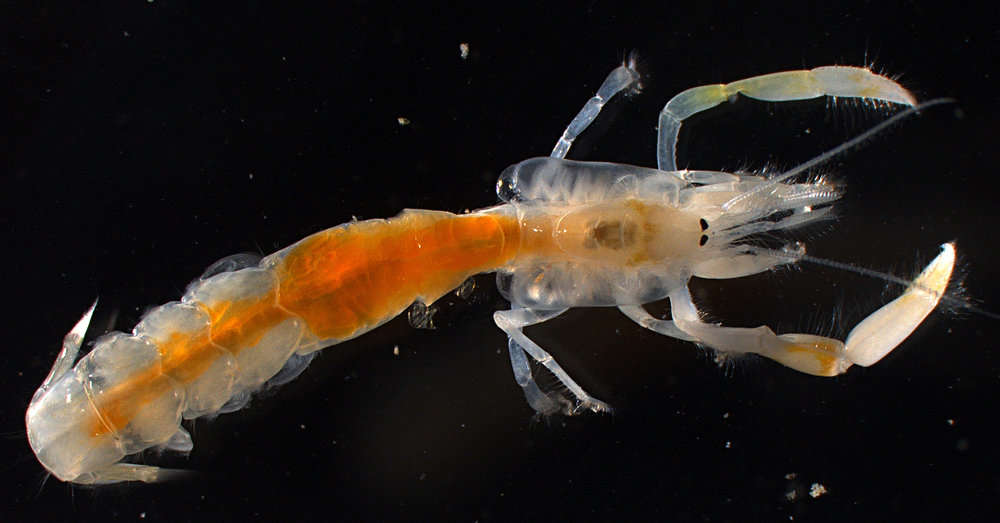
Callianassidae is a family of ghost shrimp crustaceans belonging to the infraorder Axiidea, within the order Decapoda.

Upogebiidae
Upogebiidae is a family of mud shrimp crustaceans belonging to the infraorder Gebiidea, within the order Decapoda. They are infauna, living their entire adult lives in seafloor burrows. Over 100 species have been identified, with different species often highly specialized for different types of substrate, even including sea sponges or coral. They are filter feeders, although some species also deposit feed.

Mithracidae
Mithracidae is a family of crustaceans belonging to the order Decapoda.

Bythograeidae
The Bythograeidae are a small family of blind crabs which live around hydrothermal vents. The family contains 16 species in six genera. Their relationships to other crabs are unclear. They are believed to eat bacteria and other vent organisms. Bythograeidae are a monophyletic, sister taxon of the superfamily Xanthoidea which split to inhabit hydrothermal vents around the Eocene.

Trapeziidae
Trapeziidae is a family of crabs, commonly known as coral crabs. All the species in the family are found in a close symbiosis with cnidarians. They are found across the Indo-Pacific, and can best be identified to the species level by the colour patterns they display. Members of the family Tetraliidae were previously included in the Trapeziidae, but the similarities between the taxa is the result of convergent evolution.
Cheiragonidae
Cheiragonidae is a small family of crabs, sometimes called helmet crabs, placed in its own superfamily, Cheriagonoidea. It comprises three extant species, Erimacrus isenbeckii, Telmessus acutidens and Telmessus cheiragonus; there are no yet evidences of Cheiragonidae in the fossil record. Many of these crabs were formerly treated as members of the Atelecyclidae.

Homolodromiidae
Homolodromiidae is a family of crabs, the only family in the superfamily Homolodromioidea. In contrast to other crabs, including the closely related Homolidae, there is no strong linea homolica along which the exoskeleton breaks open during ecdysis. The family comprises two genera, Dicranodromia, which has 18 species, and Homolodromia, with five species.