Category
page 1Deconstruction
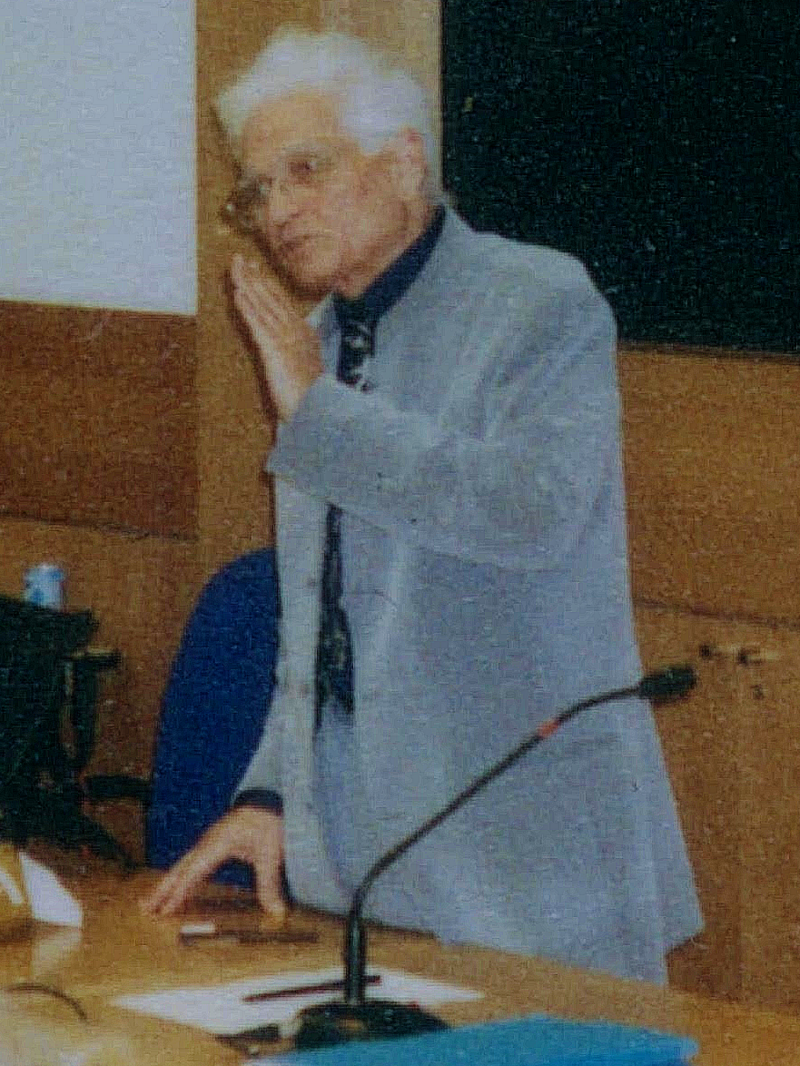
Jacques Derrida
French philosopher (1930–2004)

Jean-François Lyotard
French philosopher (1924–1998)

deconstruction
In philosophy, deconstruction is a loosely defined set of approaches to understanding the relationship between text and meaning. The concept of deconstruction was introduced by the philosopher Jacques Derrida, who described it as a turn away from Platonism's ideas of "true" forms and essences which are valued above appearances. American literary critic and major proponent of deconstruction Barbara Johnson describes the approach in this way:

Gayatri Chakravorty Spivak
Indian scholar, literary theorist, and feminist critic
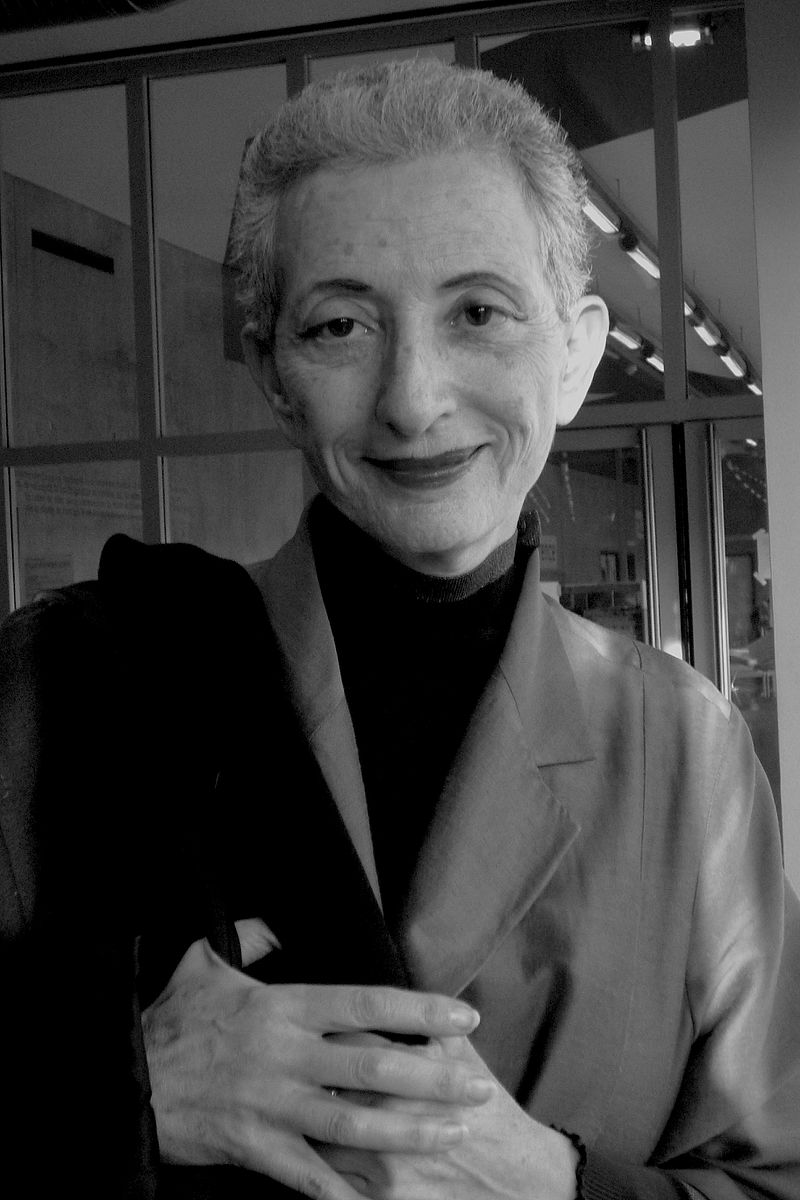
Hélène Cixous
French philosopher and writer

Being and Time
Philosophy book by Martin Heidegger

Terry Eagleton
British writer, academic and educator

Byung-Chul Han
German philosopher of South Korean origin
Paul de Man
Belgian literary theorist (1919–1983)
Bernard Stiegler
French philosopher (1952–2020)

The Death of the Author
1967 essay by Roland Barthes
logocentrism
Logocentrism is a term coined by the German philosopher Ludwig Klages in the early 1900s. It refers to the tradition of Western science and philosophy that regards words and language as a fundamental expression of an external reality. It holds the logos as epistemologically superior and that there is an original, irreducible object which the logos represent. According to logocentrism, the logos is the ideal representation of the Platonic ideal.
Philippe Lacoue-Labarthe
French philosopher, literary critic, and translator (1940-2007)
Subaltern
colonial populations who are socially, politically, and geographically excluded from the hierarchy of power of an imperial colony and from the metropolitan homeland of an empire
Avital Ronell
American philosopher
J. Hillis Miller
American literary critic, university professor (1928–2021)
Werner Hamacher
German literary critic and theorist influenced by deconstruction (1948-2017)
Donatella Di Cesare
Italian philosopher (born 1956)
Kojin Karatani
Japanese philosopher
Phallogocentrism
In critical theory and deconstruction, phallogocentrism is a neologism coined by Jacques Derrida to refer to the privileging of the masculine (phallus) in the construction of meaning. The term is a blend word of the older terms phallocentrism (focusing on the masculine point of view) and logocentrism (focusing on language in assigning meaning to the world).
différance
'''' is a French term coined by Jacques Derrida. Roughly speaking, the method of différance'' is a way to analyze how signs (words, symbols, metaphors, etc) come to have meanings. It suggests that meaning is not inherent in a sign but arises from its relationships with other signs, a continual process of contrasting with what comes before and later. That is, a sign acquires meaning by being different from other signs. The meaning of a sign changes over time, as new signs keep appearing and old signs keep disappearing. It is central to Derrida's concept of deconstruction, a critical outlook con
Rein Raud
Estonian writer, academic (born 1961)

John D. Caputo
American philosopher

binary opposition
pair of related terms or concepts that are opposite in meaning

Geoffrey Hartman
American academic (1929-2016)
Martin Hägglund
Philosopher, literary theorist and scholar
Drucilla Cornell
American philosopher and feminist theorist
Parergon
In semiotics, a parergon (paˈrərˌgän; plural: parerga) is a supplementary issue or embellishment. The term's usage has broadened to mean anything that is additional to the main body of a creative work.
Christopher Norris
British philosopher (born 1947)
Yale school
group of literary critics, theorists, and philosophers of literature
Barbara Johnson
American literary critic (1947-2009)
Agata Bielik-Robson
Polish philosopher
John Sallis
American philosopher (1938-2025)
Anselm Haverkamp
German philosopher
Mohammed Chaouki Zine
Algerian writer