Category
page 1Digital divide

International Telecommunication Union
specialized agency of the United Nations for information and communication technologies
information society
form of society

Information Age
historical period

digital divide
inequality of access to information and communication technologies
One Laptop per Child
non-profit initiative
digital literacy
an individual's ability to find, evaluate, and compose clear information from a digital source
information literacy
set of abilities to recognize when information is needed and have the ability to locate, evaluate, and use effectively the needed information
digital native
person who has grown up in the digital age
knowledge society
social formation in which individual and collective knowledge and its organization are increasingly becoming the basis of social, economic and media coexistence
World Summit on the Information Society
two-phase United Nations-sponsored summit on information, communication and, in broad terms, the information society that took place in 2003 in Geneva and in 2005 in Tunis
digital citizen
person using IT to engage in society, politics, and government
e-service
Electronic services or e-services are services that make use of information and communication technologies (ICTs). The three main components of e-services are:
service provider;
service receiver; and
the channels of service delivery (i.e., technology)
knowledge gap hypothesis
hypothesis
Web Accessibility Initiative
effort to improve the accessibility of the World Wide Web (WWW or Web) for people with disabilities

telecentre
thumb|Telecentre building in Senegal
A telecentre is a public place where people can access computers, the Internet, and other digital technologies that enable them to gather information, create, learn, and communicate with others while they develop essential digital skills. Telecentres exist in almost every country, although they sometimes go by a different names including public internet access center (PIAP), village knowledge center, infocenter, Telecottage, Electronic Village Hall, community technology center (CTC), community multimedia center (CMC), multipurpose community telecentre (MCT)
participatory culture
cultural production made through social interactions of different communities and groups
digital inclusion
accessibility of digital technologies, skills, and communication to individuals and communities
E-readiness
ability to use information and communications
United Nations Information and Communication Technologies Task Force
multi-stakeholder initiative associated with the United Nations
Geochicas
Geochicas is a collective of feminists linked to OpenStreetMap, originally Spanish-speaking, who work for female empowerment and reducing the gender gap in the OpenStreetMap communities and communities associated with the world of free software and open data. Geochicas today has users on at least 3 continents.
Geekcorps
thumb|A Geekcorps volunteer setting up a [[Wi-Fi antenna in Mali]]
thumb|right|A Malian man writes :ff:Ndimaagu|an article ("Wisdom") for the Fula language Wikipedia in the Geekcorps Mali headquarters.
Knowledge divide
Code Club
organization
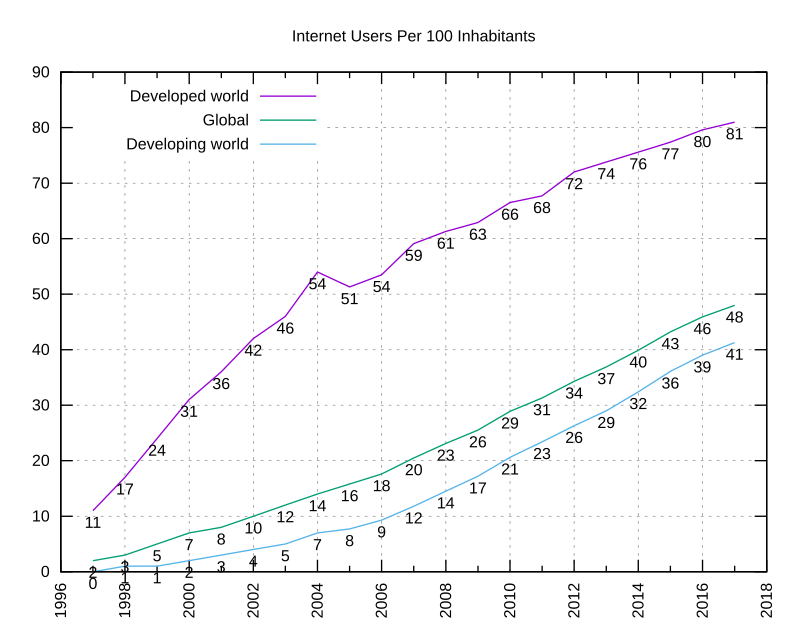
global Internet usage
estimates of how many people use the Internet