Category
page 1Dinoflagellate genera
%20(Ifremer%2000689-80077).jpg)
Noctiluca scintillans
Noctiluca is a genus of dinoflagellates in the family Noctilucaceae. Its only species is Noctiluca scintillans, a marine species that can exist in a green or red form, depending on the pigmentation in its vacuoles. It can be found worldwide, but its geographical distribution varies depending on whether it is green or red. This unicellular microorganism is known for its ability to bioluminesce, giving the water a bright blue glow seen at night. However, blooms of this species can be responsible for environmental hazards, such as toxic red tides. They may also be an indicator of anthropogenic eu

Ceratium
The genus Ceratium is restricted to a small number (about 7) of freshwater dinoflagellate species. Previously the genus contained also a large number of marine dinoflagellate species. However, these marine species have now been assigned to a new genus called Tripos. Ceratium dinoflagellates are characterized by their armored plates, two flagella, and horns. They are found worldwide and are of concern due to their blooms.

Symbiodinium
Symbiodinium is a genus of dinoflagellates that encompasses the largest and most prevalent group of endosymbiotic dinoflagellates known and have photosymbiotic relationships with many species. These unicellular microalgae commonly reside in the endoderm of tropical cnidarians such as corals, sea anemones, and jellyfish, where the products of their photosynthetic processing are exchanged in the host for inorganic molecules. They are also harbored by various species of demosponges, flatworms, mollusks such as the giant clams, foraminifera (soritids), and some ciliates. Generally, these dinoflage
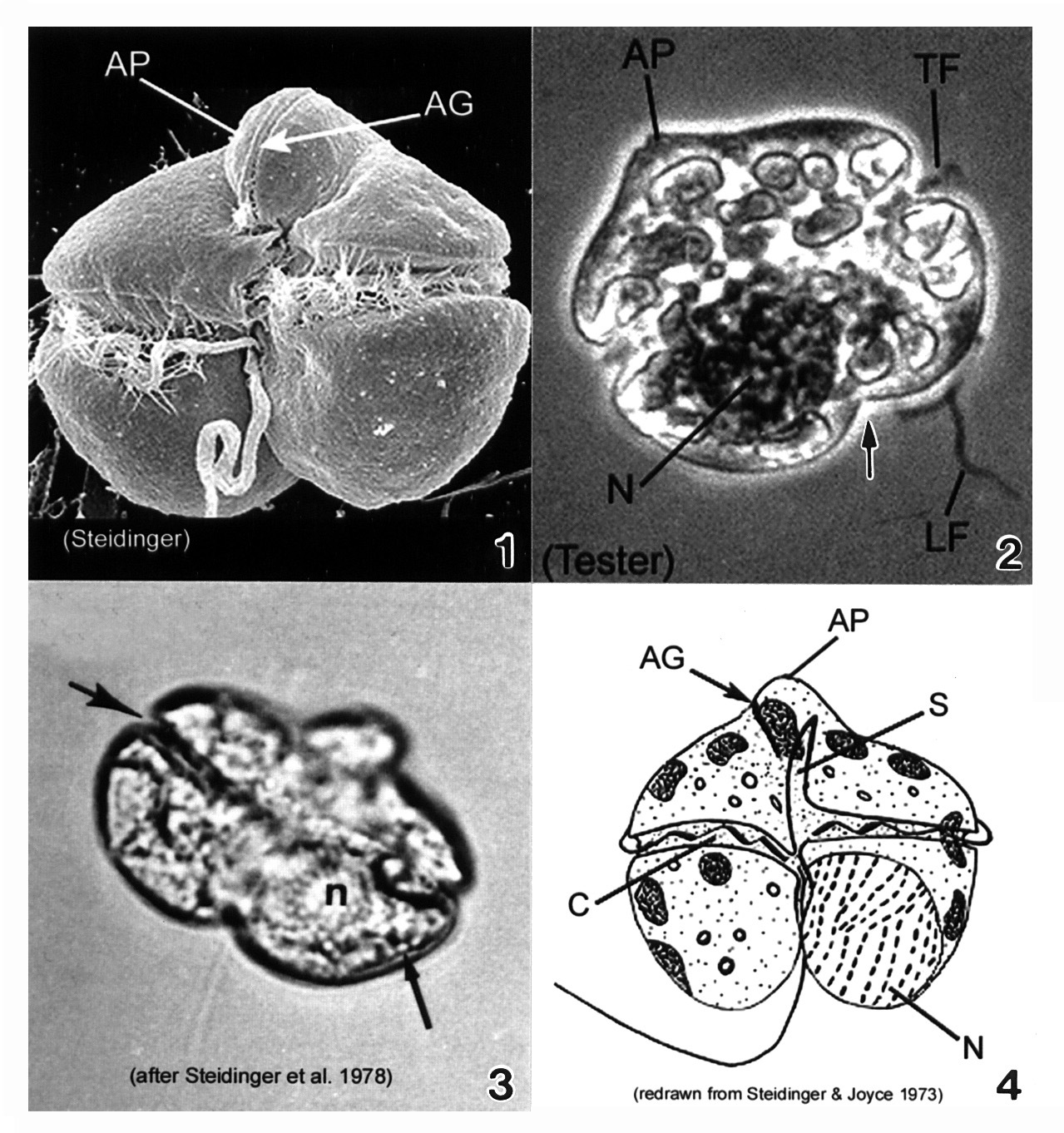
Gymnodinium
Gymnodinium is a genus of dinoflagellates, a type of marine and freshwater plankton. It is one of the few naked dinoflagellates, or species lacking armor known as cellulosic plates. Since 2000, the species which had been considered to be part of Gymnodinium have been divided into several genera, based on the nature of the apical groove and partial LSU rDNA sequence data. Amphidinium was redefined later. Gymnodinium belong to red dinoflagellates that, in concentration, can cause red tides. The red tides produced by some Gymnodinium, such as Gymnodinium catenatum, are toxic and pose risks to mar

Pfiesteria
Pfiesteria is a genus of heterotrophic dinoflagellates that has been associated with harmful algal blooms and fish kills. Pfiesteria complex organisms (PCOs) were claimed to be responsible for large fish kills in the 1980s and 1990s on the coast of North Carolina and in tributaries of the Chesapeake Bay. In reaction to the toxic outbreaks, six states along the US east coast have initiated a monitoring program to allow for rapid response in the case of new outbreaks and to better understand the factors involved in Pfiesteria toxicity and outbreaks. New molecular detection methods have revealed
Oxyrrhis
Oxyrrhis is a genus of heterotrophic dinoflagellate, the only genus in the family Oxyrrhinaceae. It inhabits a range of marine environments worldwide and is important in the food web dynamics of these ecosystems. It has the potential to be considered a model organism for the study of other protists. Oxyrrhis is an early-branching lineage and has long been described in literature as a monospecific genus, containing only Oxyrrhis marina. Some recent molecular phylogenetic studies argue that Oxyrrhis comprises O. marina and O. maritima as distinct species, while other publications state that the
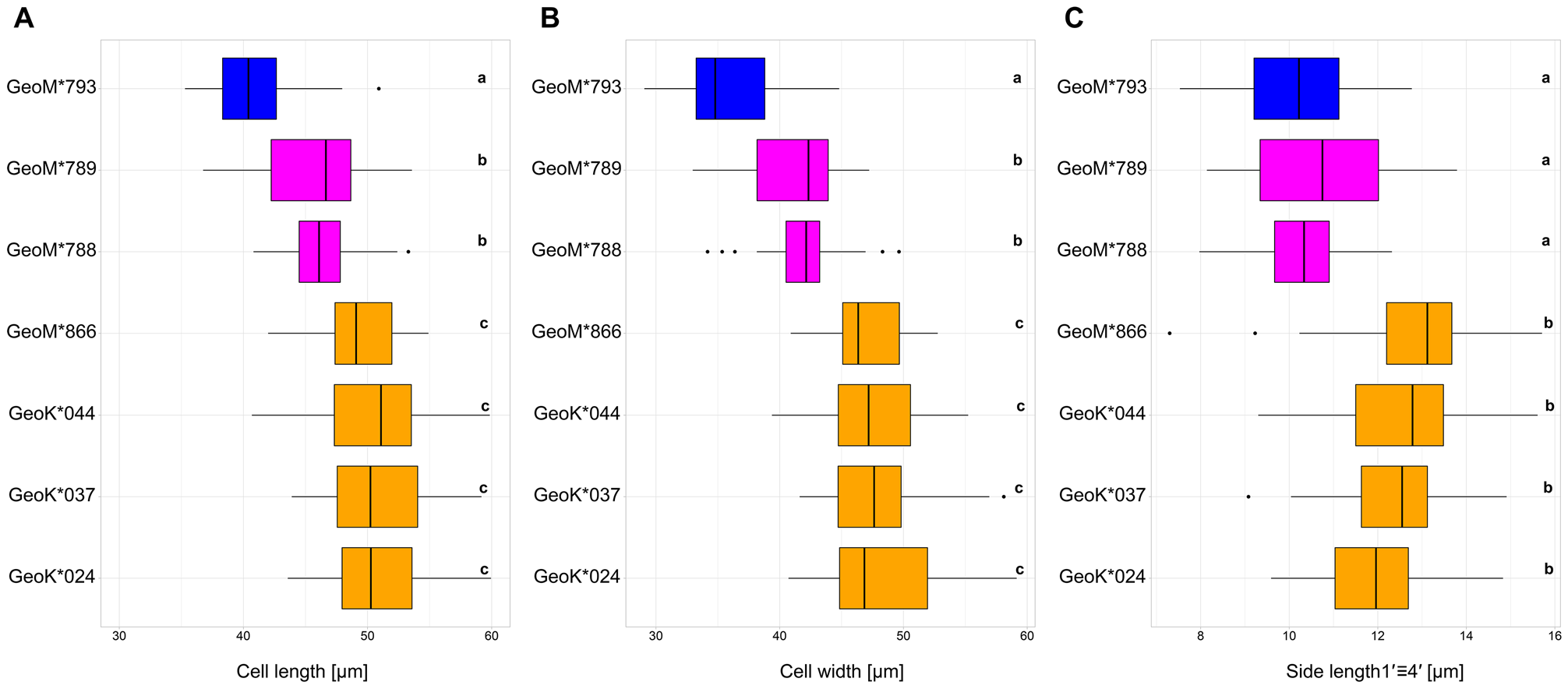
Peridinium
Peridinium is a genus of motile, marine and freshwater dinoflagellates. Their morphology is considered typical of the armoured dinoflagellates, and their form is commonly used in diagrams of a dinoflagellate's structure. Peridinium can range from 30 to 70 μm in diameter, and has very thick thecal plates.

Ostreopsis
Ostreopsis is a genus of free-living dinoflagellates found in marine environments. Some species are benthic; the planktonic species in the genus are known for the toxic algal blooms that they sometimes cause, threatening human and animal health.
Karenia
genus of algae

Gonyaulax
thumb | 220x124px | right | Gonyaulax spinifera
Gonyaulax is a genus of dinoflagellates with the type species Gonyaulax spinifera (Claparède et Lachmann) Diesing. Gonyaulax belongs to red dinoflagellates and commonly causes red tides. It can produce yesotoxins: for example, strains of Gonyaulax spinifera from New Zealand are yessotoxin producers.
Oodinium
<!--
2025-04-18: This article has no copyright issues: The article that supposedly had its copyright infringed is based on some version of this article! It clearly says: "Copyright: Wikipedia" after its last paragraph. It also has an image copyrighted by the artist, but that images is not present in this article. Tags removed.
Alexandrium
genus of protists

Dinophysis
Dinophysis is a genus of dinoflagellates common in tropical, temperate, coastal and oceanic waters. It was first described in 1839 by Christian Gottfried Ehrenberg.

Ornithocercus
Ornithocercus is a genus of planktonic dinoflagellate that is known for its complex morphology that features considerable lists growing from its thecal plates, giving an attractive appearance. Discovered in 1883, this genus has a small number of species currently categorized but is widespread in tropical and sub-tropical oceans. The genus is marked by exosymbiotic bacteria gardens under its lists, the inter-organismal dynamics of which are a current field of research. As they reside only in warm water, the genus has been used as a proxy for climate change and has potential to be an indicator s
Erythropsidinium
Erythropsidinium (formerly Erythropsis) is a genus of dinoflagellates (a type of unicellular eukaryote) of the family Warnowiaceae.

Coolia
Coolia is a marine dinoflagellate genus in the family Ostreopsidaceae. It was first described by Meunier in 1919. There are currently seven identified species distributed globally in tropical and temperate coastal waters. Coolia is a benthic or epiphytic type dinoflagellate: it can be found adhered to sediment or other organisms but it is not limited to these substrates. It can also be found in a freely motile form in the water column. The life cycle of Coolia involves an asexual stage where the cell divides by binary fission and a sexual stage where cysts are produced. Some of the species, fo

Gyrodinium
Gyrodinium is a genus of dinoflagellates belonging to the order Gymnodiniales within class Dinophyceae.
Heterocapsa
Heterocapsa is a genus of dinoflagellates belonging to the family Heterocapsaceae. It is an unicellular photosynthetic dinoflagellate with thecal plates arranged as Po, cp, 5', 3a, 7'', 6c, 5s, 5, 2' and extracellular, three-dimensional triradiate body scales. The genus is often found in worldwide algal blooms, causing harmful algal blooms (HABs) that devastate the environment or agriculture. Its mixotroph properties grants an advantage to its cosmopolitan distribution, being able to switch to phagotrophy, when light penetration is low.

Amphidinium
Amphidinium is a genus of dinoflagellates. The type for the genus is Amphidinium operculatum Claparède & Lachmann. The genus includes the species Amphidinium carterae which is used as a model organism.