Category
page 1Diurideae genera
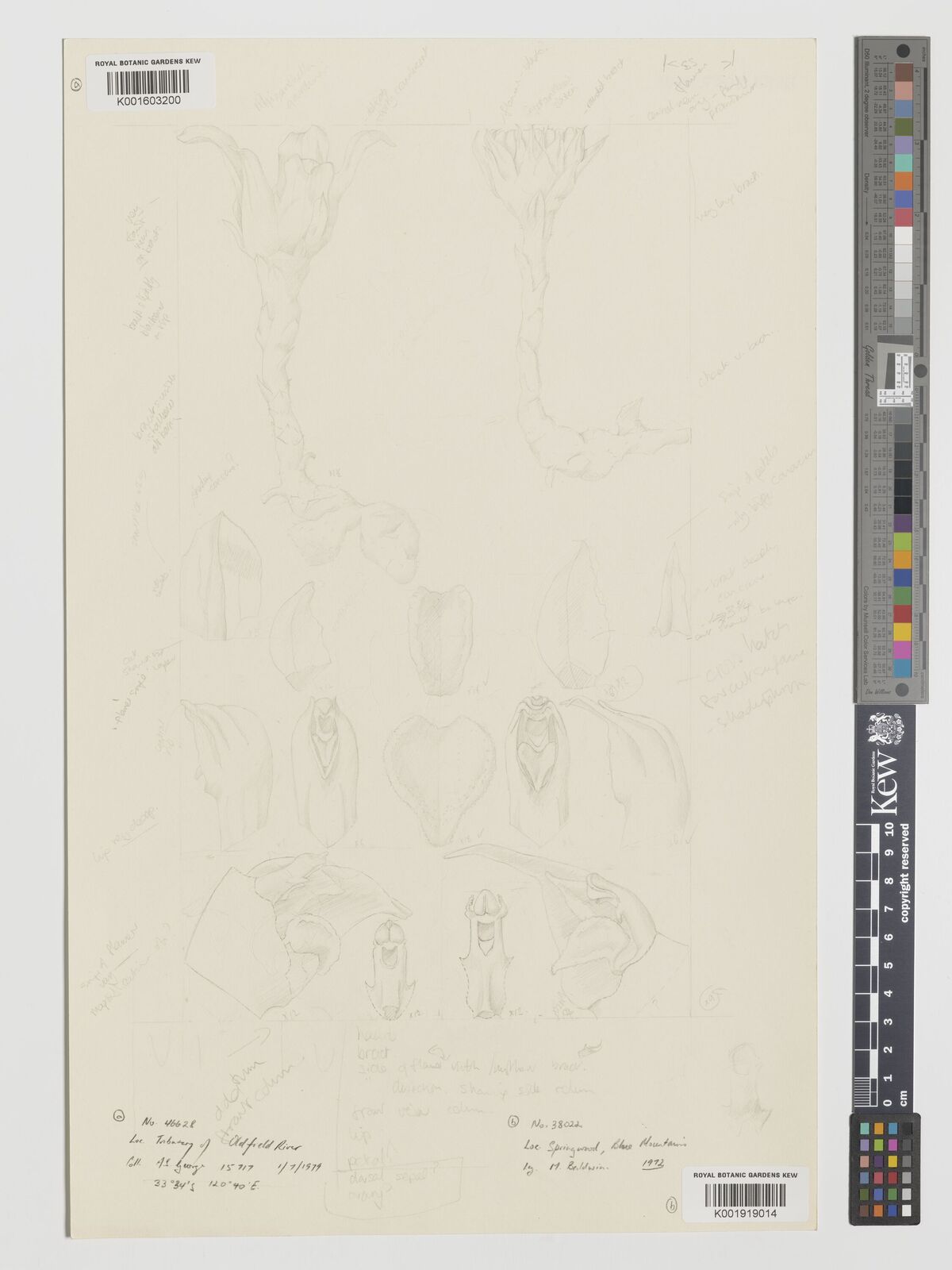
Rhizanthella
Rhizanthella, commonly known as underground orchids, is a genus of flowering plants in the orchid family, Orchidaceae and is endemic to Australia. All are leafless, living underground in symbiosis with mycorrhizal fungi. The inflorescence is a head of flowers held at, or just above the ground but mostly covered by soil or leaf litter and little is known about the mechanism of pollination.
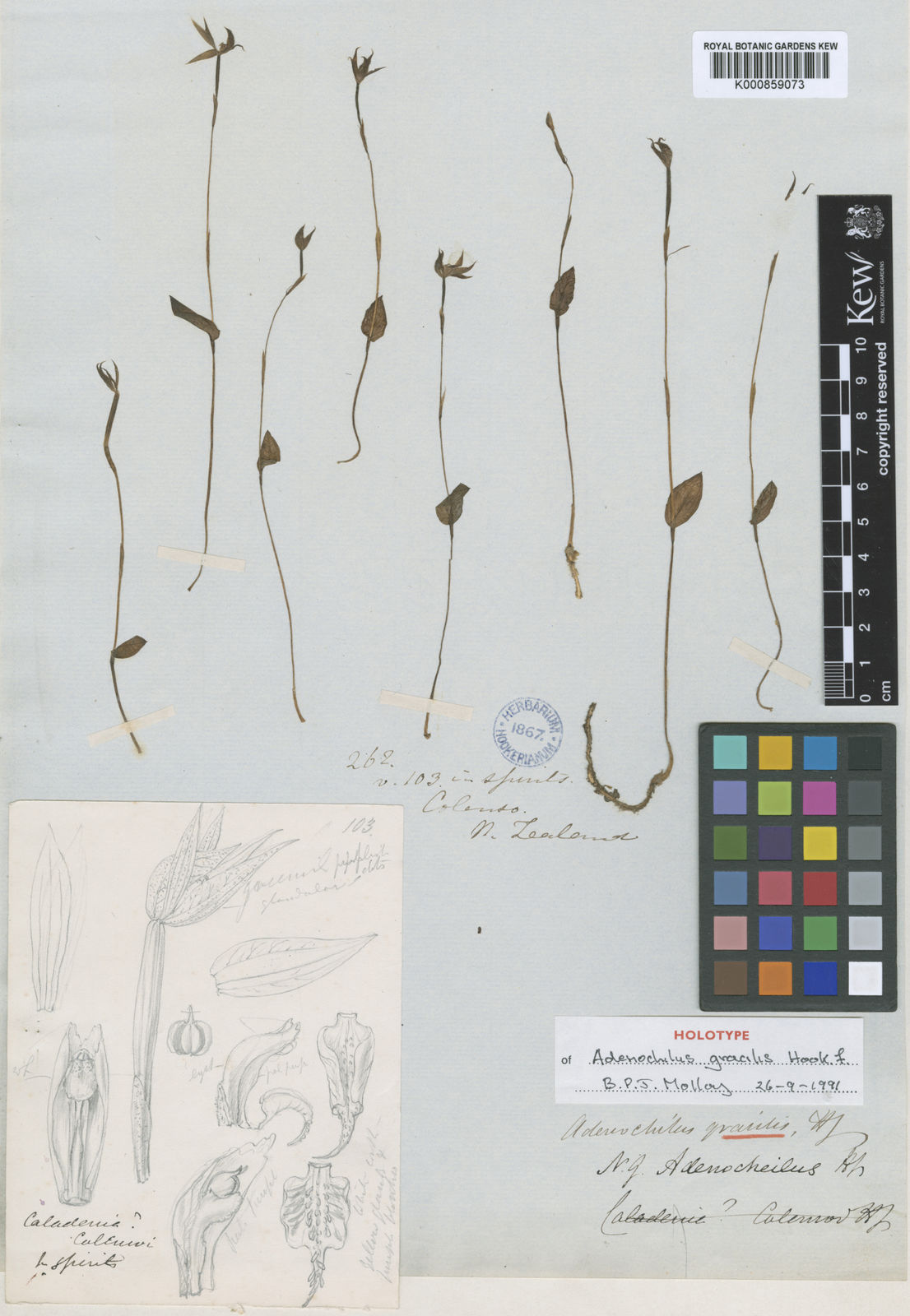
Adenochilus
Adenochilus, commonly known as gnome orchids is a genus of two species of flowering plants in the orchid family Orchidaceae, one endemic to New Zealand and the other to Australia. Both species have a long, horizontal, underground rhizome with a single leaf on the flowering stem and a single resupinate flower with its dorsal sepal forming a hood over the labellum and column.
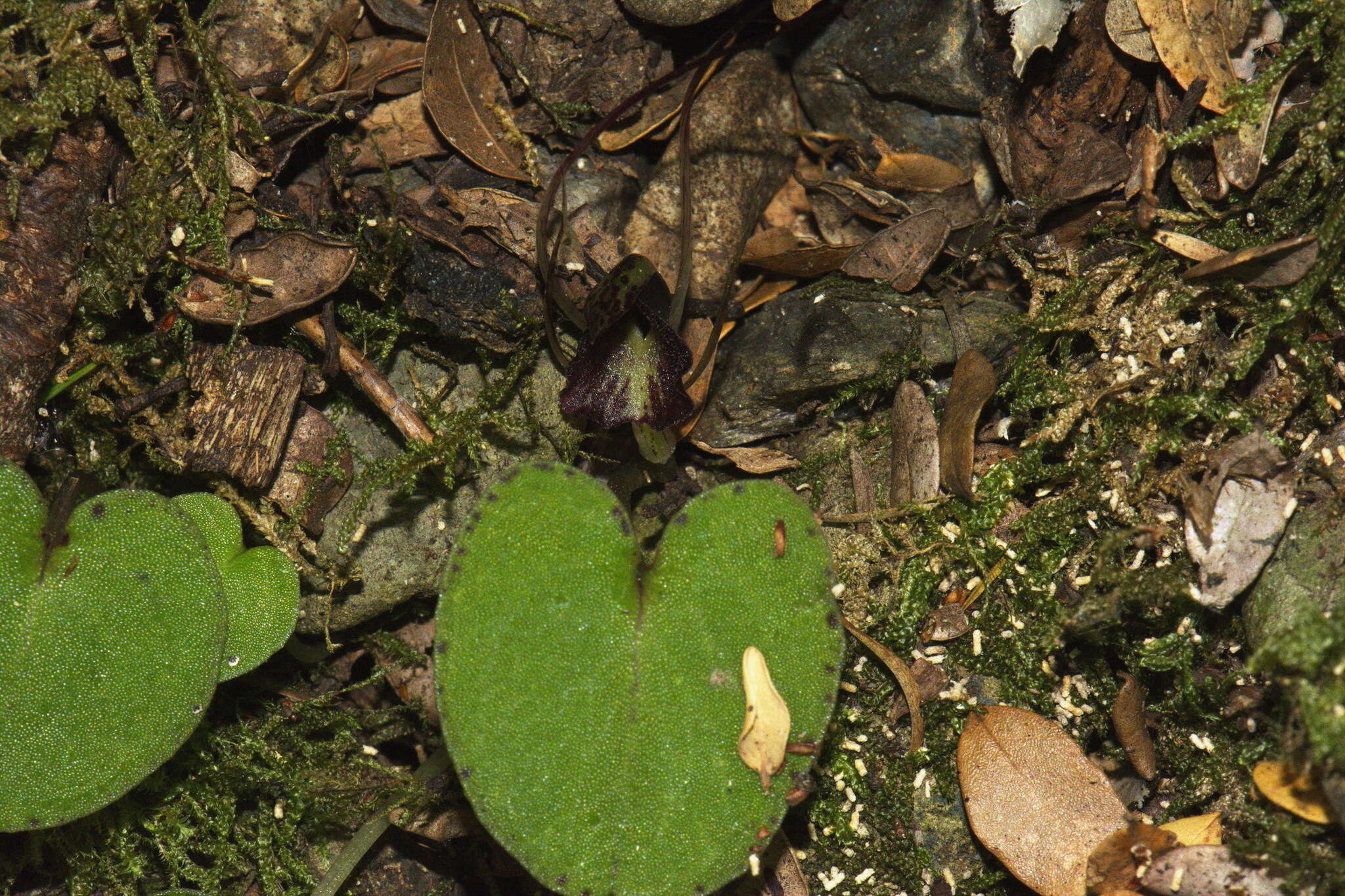
Corybas
genus of mostly terrestrial orchids
.jpg)
Diuris
Diuris, commonly known as donkey orchids, bee orchids, nanny goat orchids or pansy orchids, is a genus of more than sixty species of flowering plants in the orchid family, Orchidaceae and is endemic to Australia, apart from one species endemic to Timor. The name "Diuris" refers to the hanging sepals but the common name "donkey orchid", derives from the ear-like petals common to all species. Many have mainly yellow flowers with darker markings and are thought to mimic nectar-producing flowers which open at the same time.

Caladenia
Caladenia, commonly known as spider orchids, is a genus of 350 species of plants in the orchid family, Orchidaceae. Spider orchids are terrestrial herbs with a single hairy leaf and a hairy stem. The labellum is fringed or toothed in most species and there are small projections called calli on the labellum. The flowers have adaptations to attract particular species of insects for pollination. The genus is divided into three groups on the basis of flower shape, broadly, spider orchids, zebra orchids and cowslip orchids, although other common names are often used. Although they occur in other co
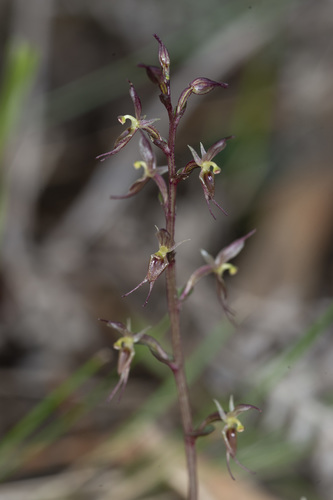
Acianthus
Acianthus, commonly known as mosquito orchids, is a genus of about twelve species of plants in the orchid family, Orchidaceae. Mosquito orchids are terrestrial herbs with a single, heart-shaped, usually ground-hugging leaf and one to many small, green, pinkish or purplish flowers on a fleshy stalk. They are found in New Caledonia, Australia and New Zealand.

Tongue orchids
Cryptostylis, commonly known as tongue orchids, is a genus of flowering plants from the orchid family. Tongue orchids are terrestrial herbs with one to a few stalked leaves at the base of the flowering stem, or leafless. One to a few dull coloured flowers are borne on an erect flowering stem. The most conspicuous part of the flower is the labellum, compared to the much reduced sepals and petals. At least some species are pollinated by wasps when they attempt to mate with the flower. There are about twenty five species found in South Asia, Southeast Asia and the South Pacific.
.001.jpg)
Chiloglottis
Chiloglottis, commonly known as wasp orchids, ant orchids or bird orchids, is a genus of about 25 species of flowering plants in the orchid family, Orchidaceae and is found in eastern Australia and New Zealand. Wasp orchids are terrestrial herbs which grow in colonies of genetically identical plants. They usually have two leaves at the base of the plant and a single resupinate ("upside-down") flower. The labellum is more or less diamond-shaped and has calli resembling the body of a wingless female wasp.thumb|right|225px|Labelled image of Chiloglottis formicifera
.001.jpg)
Arthrochilus
Arthrochilus, commonly called elbow orchids, is a genus of about fifteen species of flowering plants from the orchid family (Orchidaceae) and is found in Australia and New Guinea. The flowers are pollinated by male thynnid wasps which attempt to mate with the flower and are held in place by hooks while the pollinium is transferred between insect and flower.
Cyrtostylis
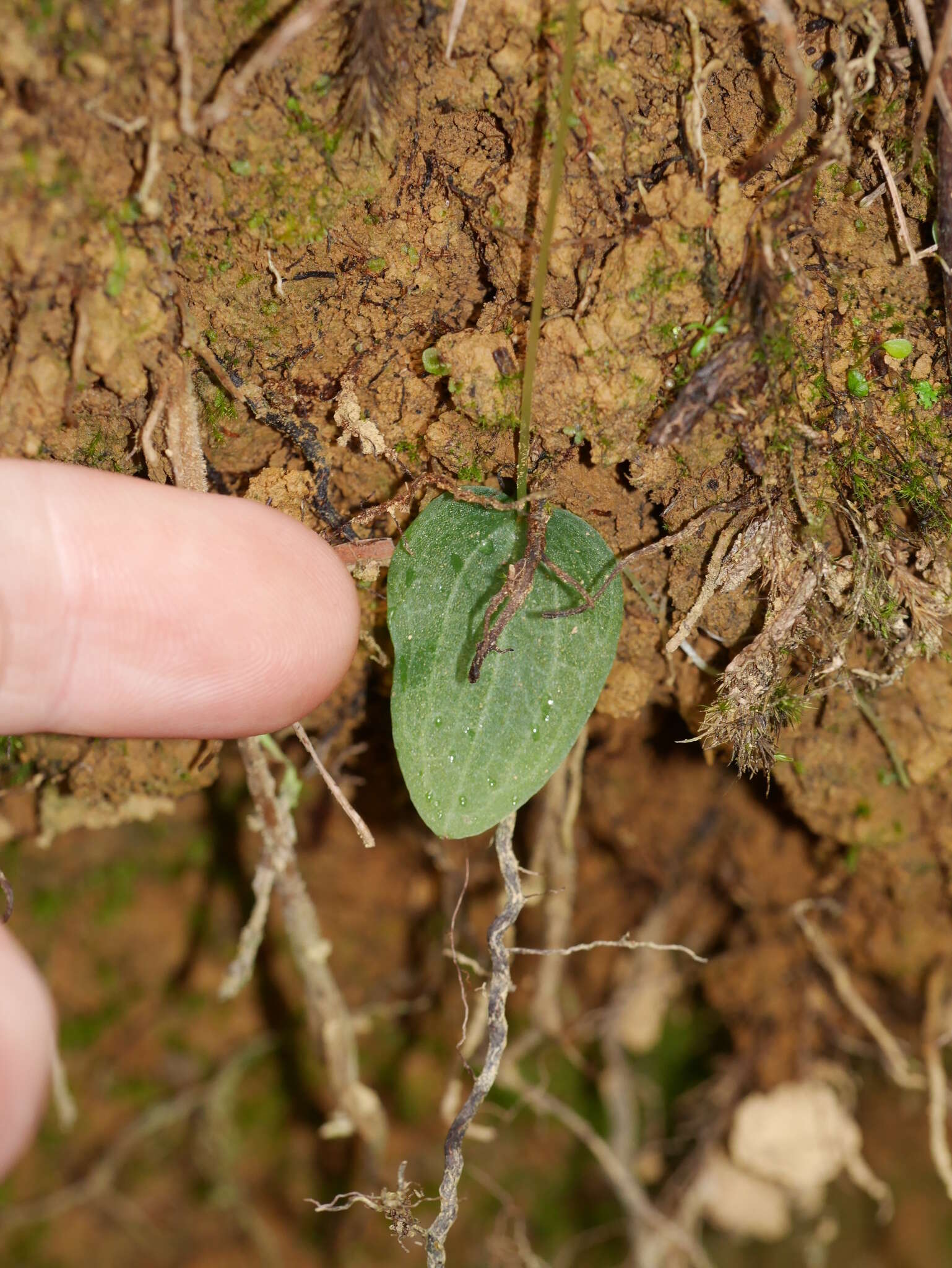
Cyrtostylis, commonly known as gnat orchids, is a genus of five or six species of flowering plants in the orchid family Orchidaceae and is native to Australia and New Zealand. Cyrtostylis orchids often form dense colonies of genetically identical plants. They have a single heart-shaped leaf and a thin flowering stem with pale coloured insect-like flowers. The lateral sepals and petals are similar in size and colour but the labellum is shelf-like and conspicuous with two prominent glands at its base.
.jpg)
Eriochilus
Eriochilus, commonly known as bunny orchids, is a genus of flowering plants in the orchid family, Orchidaceae that is endemic to Australia. Orchids in this genus are distinguished from those in the similar Caladenia by having a glabrous leaf and a densely woolly labellum. Species occur in south-west Western Australia, South Australia, Queensland, New South Wales, the Australian Capital Territory, Victoria, and Tasmania. Their common name alludes to their prominent ear-like lateral sepals.thumb|225px|Labelled image of Eriochilus cucullatus|E. cucullatus

Microtis
genus of plants

Calochilus
Calochilus, commonly known as beard orchids, is a genus of about 30 species of plants in the orchid family, Orchidaceae. Beard orchids are terrestrial herbs with a single leaf at the base of the plant, or no leaves. Their most striking feature is a densely hairy labellum, giving rise to their common name. Beard orchids, unlike some other Australian orchids, do not reproduce using daughter tubers, but self-pollinate when cross-pollination has not occurred. Most species occur in Australia but some are found in New Zealand, New Guinea and New Caledonia.

Lockheed EC-130 Hercules
Drakaea is a genus of 10 species in the plant family Orchidaceae commonly known as hammer orchids. All ten species occur only in the south-west of Western Australia. Hammer orchids are characterised by an insectoid labellum that is attached to a narrow, hinged stem, which holds it aloft. The stem can hinge only backwards, where the broadly winged column carries the pollen and stigma. Each species of hammer orchid is pollinated by a specific species of thynnid wasp. Thynnid wasps are unusual in that the female is flightless and mating occurs when the male carries a female away to a source of fo

Thelymitra
Thelymitra, commonly known as sun orchids, is a genus of more than 100 species of plants in the orchid family, Orchidaceae. Unlike most other orchids, sun orchids lack a highly modified labellum and all three petals are similar in size, shape and colour. The column is, however, highly modified and usually has prominent wings or glands which are helpful in identifying the species. Most sun orchids close their flowers at night, in cloudy or cool weather, giving rise to their common name. The scientific name means "woman's hood" and refers to the hooded column present in most, but not all species
.jpg)
Caleana
Caleana, commonly known as duck orchids, is a genus of flowering plants in the orchid family, Orchidaceae that is found in Australia and New Zealand. The Australian species are found in all states but have not been recorded in the Northern Territory. Duck orchids have a single leaf and one or a few, dull-coloured, inconspicuous flowers. Most species are found in Western Australia but one species (C. major) occurs in eastern Australia and one (C. minor) occurs in eastern Australia and New Zealand. Orchids in this genus as well as the hammer orchids (Drakaea) are pollinated by male thynnid wasps
.jpg)
Prasophyllum
Prasophyllum, commonly known as leek orchids, is a genus of about 140 species of flowering plants in the orchid family, Orchidaceae and is found in Australia and New Zealand. The Australian species are found in all states but have not been recorded in the Northern Territory. The common name arises from their having a hollow, leek- or onion-like leaf. Some species only flower after summer fires and have flowers similar to those of Xanthorrhoea which flower at the same time, suggesting that they employ the same pollinating insects. Leek orchids are similar to those in the genus Genoplesium excep
Megastylis
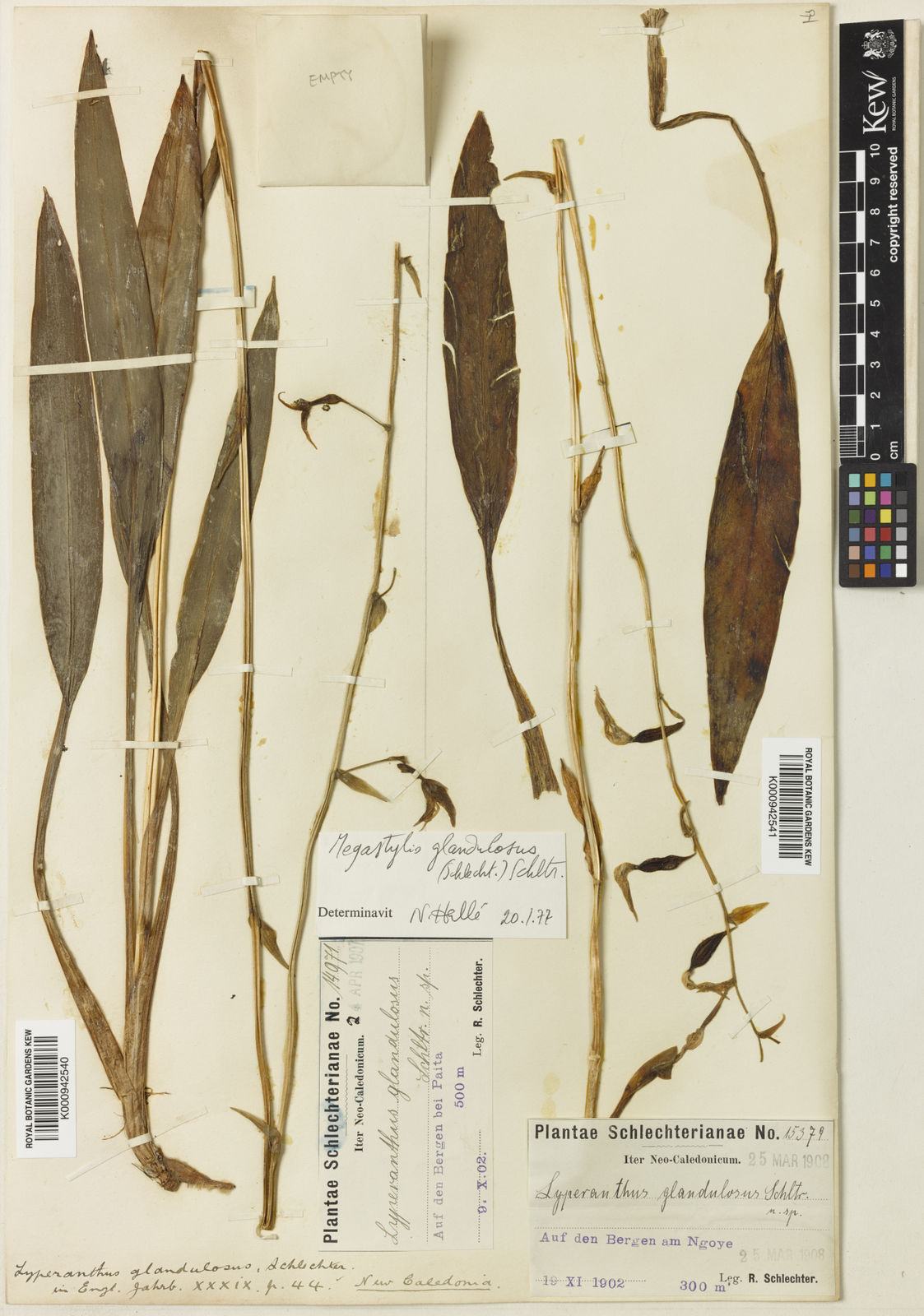
Megastylis is a genus of flowering plants from the orchid family, Orchidaceae. It contains 6 known species, all native to Vanuatu and New Caledonia.
Orthoceras
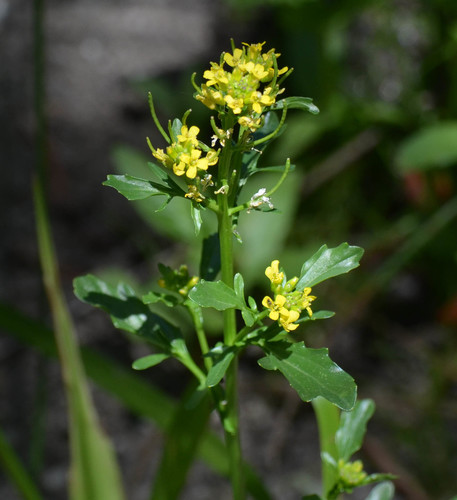
genus of plants
Elythranthera
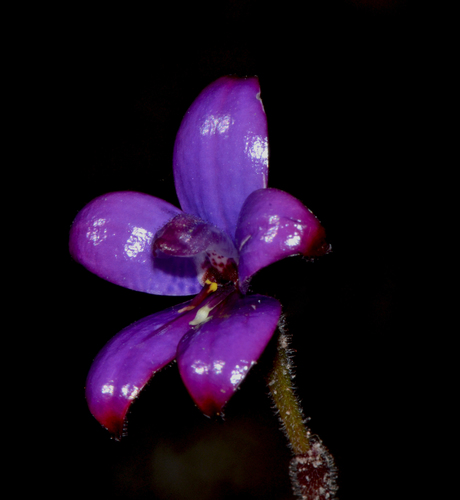
Elythranthera, commonly known as enamel orchids, is a genus of flowering plants in the orchid family, Orchidaceae. It contains two species and a named hybrid, all endemic to the south-west of Western Australia. The genus was first formally described in 1963 by the Australian botanist Alex George who published his description in Western Australian Naturalist.

Genoplesium
Genoplesium commonly known as midge orchids, is a genus of about 50 species of flowering plants in the orchid family, Orchidaceae and is found in Australia, New Zealand and New Caledonia. Midge orchids are terrestrial herbs with a single leaf at the base of the plant. They are similar to orchids in the genus Prasophyllum in that plants without flowers have a hollow, onion-like leaf. The flowers are small but often scented and attractive to their insect pollinators. There is disagreement about which species belong to this genus and some taxonomists suggest that most belong in the genus Corunast

Glossodia
thumb | right |Glossodia major
Glossodia, commonly known as waxlip orchids, is a genus of mostly purple orchids from Australia. The genus was first formally described in 1810 by the prolific Scottish botanist Robert Brown who published his description in Prodromus Florae Novae Hollandiae.

Lyperanthus
Lyperanthus, commonly known as beak orchids, is a genus of flowering plants from the orchid family, Orchidaceae, that is endemic to Australia. There are two species, one in Western Australia and the other in four eastern Australian states, distinguished by their single long, narrow, leathery leaf and dull coloured flowers which have prominent short calli on their labellum. Both form loose colonies which reproduce asexually from their tubers, and sexually using their flowers.
Cyanicula
Cyanicula, commonly known as blue orchids, is a genus of twelve species of plants in the orchid family, Orchidaceae. All are endemic to Australia, eleven are endemic to Western Australia and one species occurs in eastern Australia. While both the common and scientific names refer to "blue", the two subspecies of C. ixioides have yellow or white flowers. They are similar to orchids in the genus Caladenia but differ in their flowers colour and in other important ways.
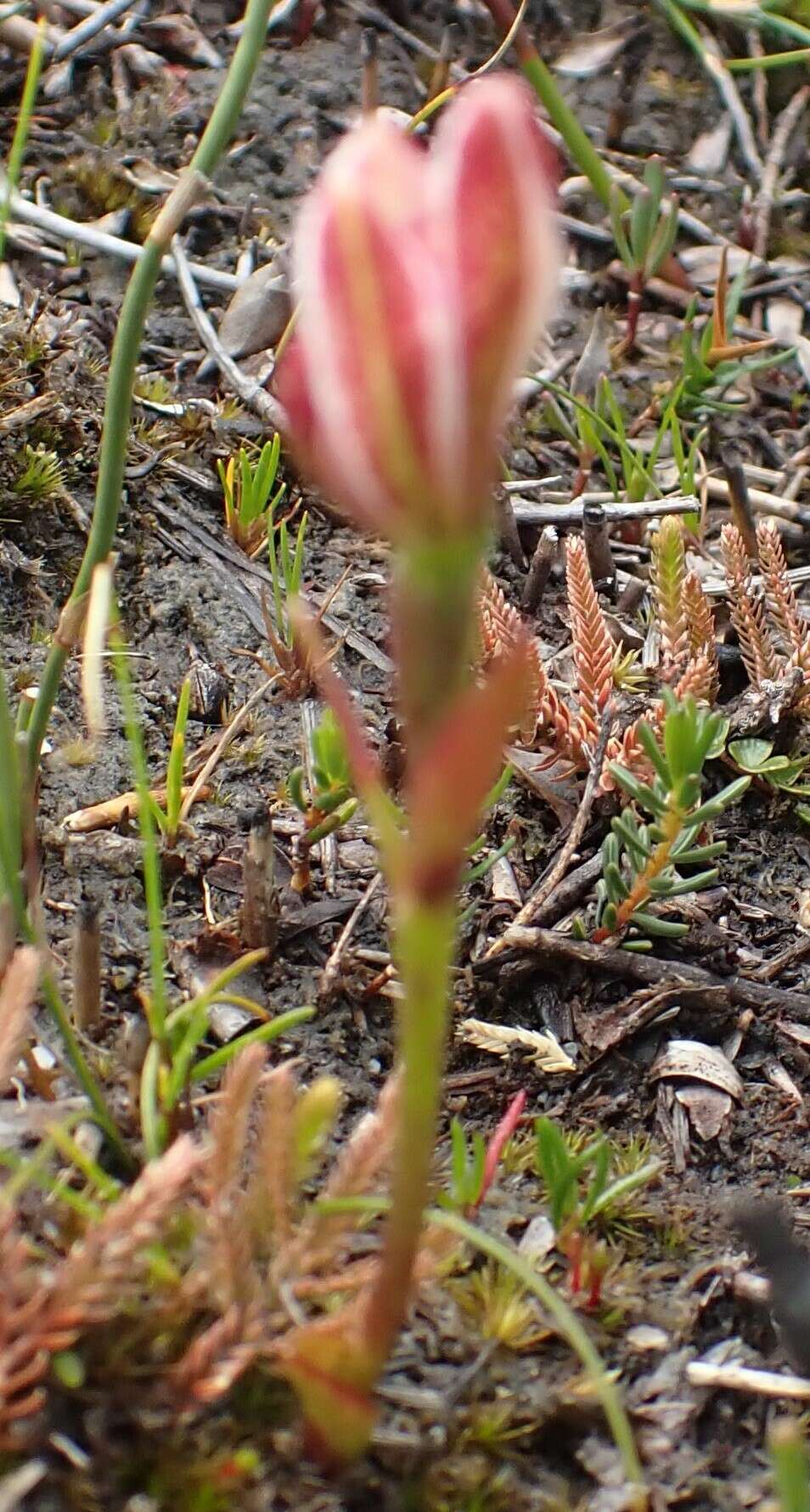
Burnettia
Burnettia cuneata, commonly known as lizard orchid, is the only species of the flowering plant genus Burnettia in the orchid family, Orchidaceae. It is a leafless terrestrial, mycotrophic herb with one or two leaf-like bracts and up to seven flowers that are brownish on the back and pink or white inside. It is endemic to southeastern Australia where it grows in dense thickets in swamps.
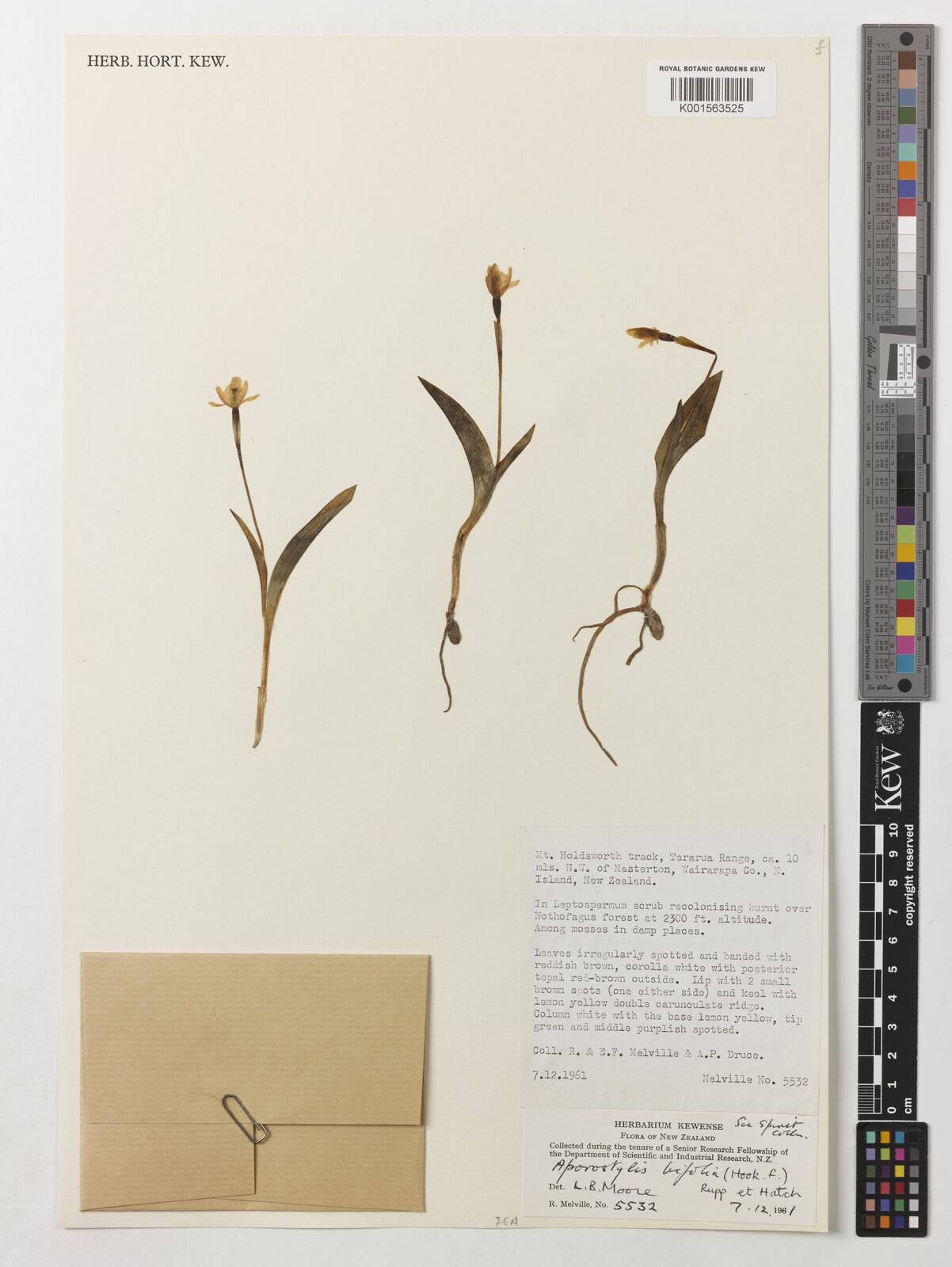
Aporostylis
Aporostylis is a genus of flowering plants from the orchid family, Orchidaceae. At the present time, only one species is known: Aporostylis bifolia, native to New Zealand (including the Chatham Islands and the Antipodes Islands).
File:Aporostylis bifolia.jpg|In Kahurangi National Park on alpine tussock land.
File:Aporostylis bifolia 2.jpg|In Kahurangi National Park on alpine tussock land.
File:Odd-leaved orchid (Aporostylis bifolia).jpg|Near Dunedin, in the Silverpeaks.

Pyrorchis
Pyrorchis, commonly known as beak orchids, is a genus of flowering plants in the orchid family, Orchidaceae and is endemic to Australia. It contains two species which were previously included in the genus Lyperanthus, also known as beak orchids. Both species have fleshy, oval leaves and form colonies which flower profusely after bushfires.

Stigmatodactylus
Stigmatodactylus is a genus of flowering plants from the orchid family, Orchidaceae. It has 28 currently recognized species (as of March 2026), native to China, Taiwan, Japan, the Himalayas, the Philippines, Malaysia, Indonesia, New Guinea, Australia and the Solomon Islands.
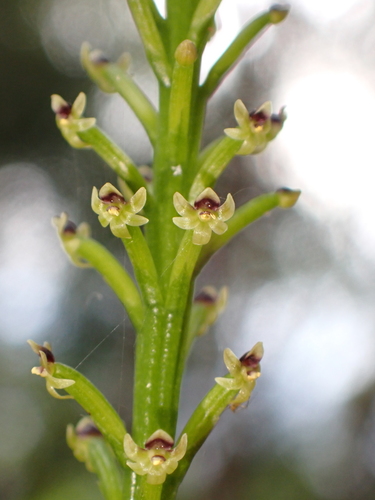
Coilochilus
Coilochilus is a genus of terrestrial orchids containing only one species, Coilochilus neocaledonicum, endemic to New Caledonia. This monotypic genus was described by German botanist Rudolf Schlechter in 1906 and is now placed in the subtribe Cryptostylidinae.
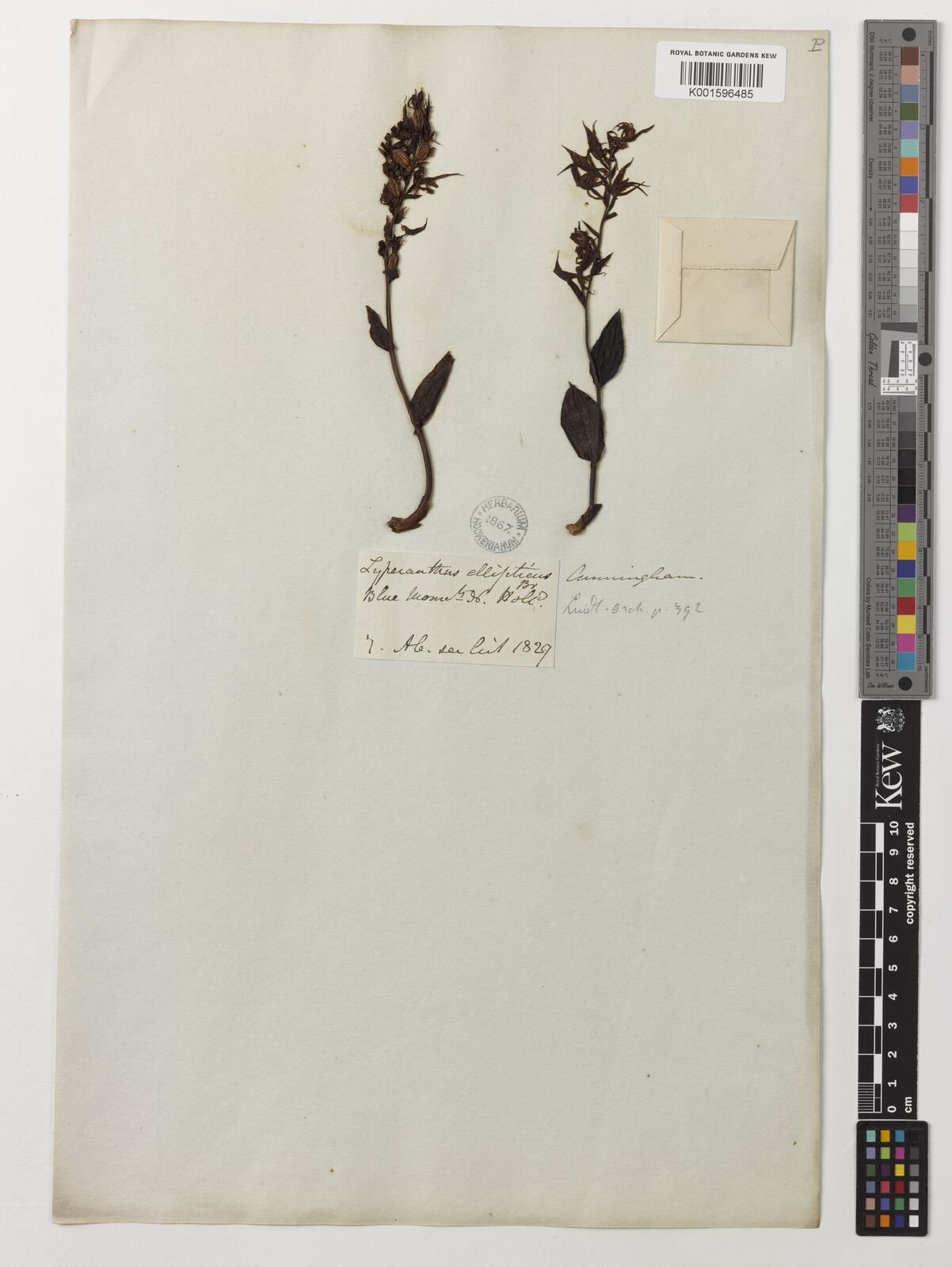
Rimacola
Rimacola elliptica, commonly known as the green rock orchid or green beaks, is the only species of plant in the orchid genus Rimacola and is endemic to New South Wales. It is an evergreen species which grows in clumps in sandstone cracks and has bright green leaves and in late spring, produces arching flower stems with up to eighteen dull greenish flowers with reddish or brown markings. It only grows near Sydney, mainly in the Blue Mountains and near Fitzroy Falls.
Pheladenia
Pheladenia deformis, commonly known as blue fairy orchid or blue beard is the only species of the flowering plant genus Pheladenia in the orchid family, Orchidaceae and is endemic to Australia. It was originally named as Caladenia deformis and has since had several name changes. Plants have a single, narrow, hairy leaf and usually blue flowers with relatively short, broad sepals and petals and an unusual labellum.thumb|225px|Pheladenia deformis labellum detail
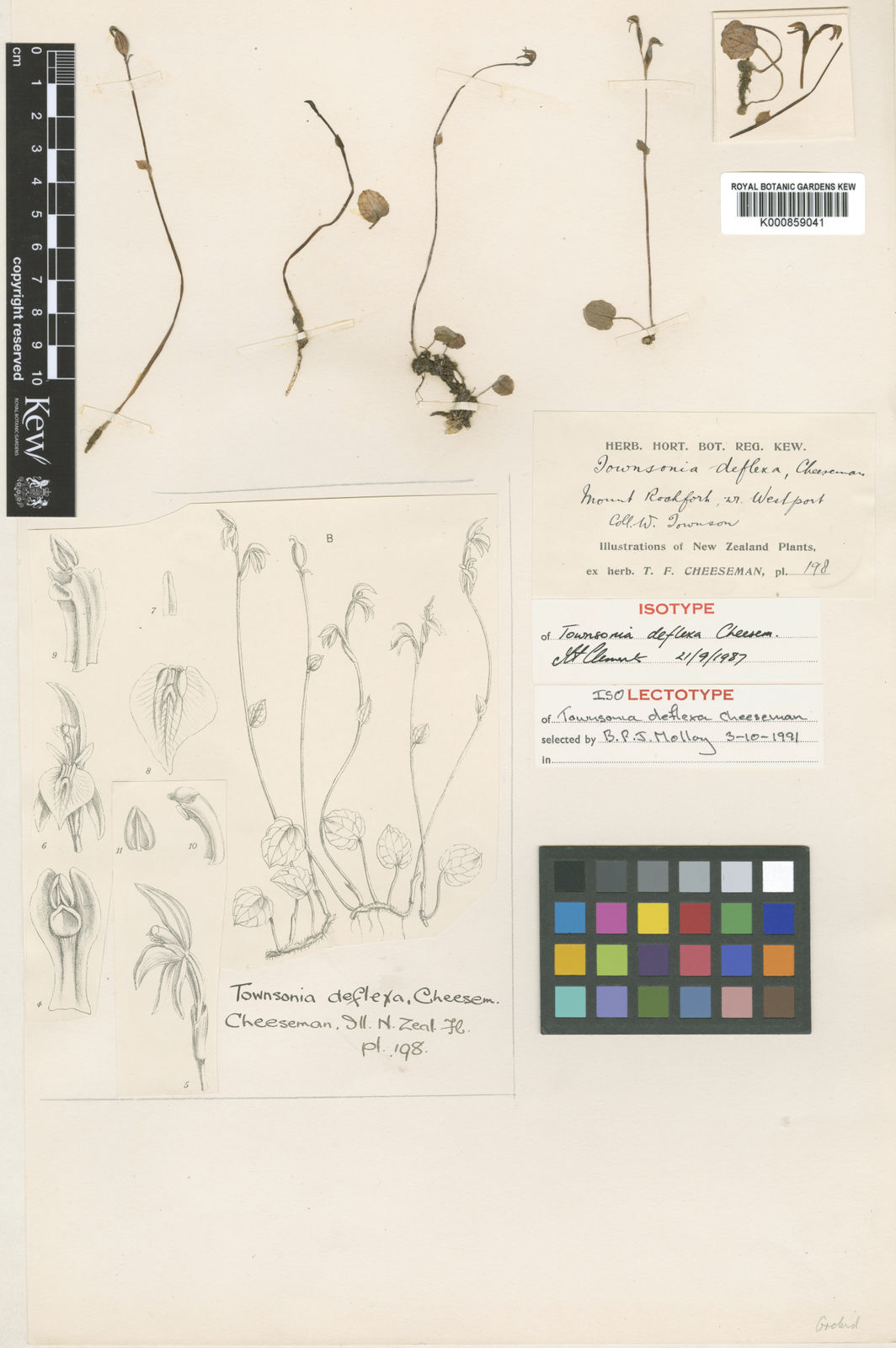
Townsonia
Townsonia, commonly called myrtle beech orchids is a genus of two species of flowering plants from the orchid family, Orchidaceae. They form small clusters of plants with their tubers connected, each tuber with one or two leaves. The flowers are inconspicuous.
Spiculaea
Spiculaea is a genus of plants defined by a single species, Spiculaea ciliata, commonly known as elbow orchid, and allied to the family Orchidaceae. Endemic to the south-west of Western Australia, the species is unusual in a number of respects; it grows in shallow soil on granite rock outcrops, grows and flowers in the hottest months of the year and has a unique method of using thynnid wasps as pollinators.

Leporella
Leporella fimbriata, commonly known as hare orchid or fringed hare orchid, is the only species in the flowering plant genus Leporella in the orchid family, Orchidaceae and is endemic to the southern Australia mainland. It is related to orchids in the genus Caladenia but has an unusual labellum and does not have hairy leaves. Its pollination mechanism is also unusual.
Praecoxanthus
Praecoxanthus aphyllus, commonly known as leafless orchid, is the only species of the flowering plant genus Praecoxanthus in the orchid family, Orchidaceae and is endemic to the south-west of Western Australia. Plants in flower lack a true leaf, although those plants that are not flowering do possess a green leaf. This species is one of the first orchids to flower each year and its creamy white, fragrant flower easily distinguishes it from other species.

Waireia
Waireia is a genus of flowering plants belonging to the family Orchidaceae. The only species is Waireia stenopetala.
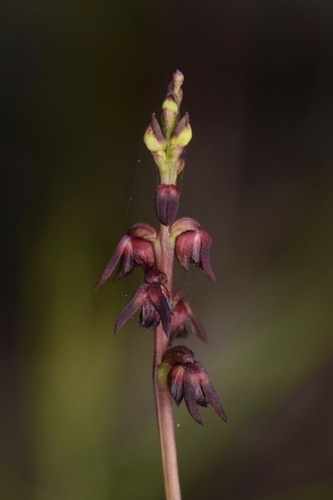
Corunastylis
Corunastylis is a historically recognized genus of about 50 species of orchids, native to Australia and New Zealand, now included in the genera Genoplesium and Prasophyllum.