Category
page 1Dynamical systems

dynamical system
mathematical model which describes the time dependence of a point in a geometrical space

hysteresis
thumb|right|Electric displacement field of a ferroelectric material as the [[electric field is first decreased, then increased. The curves form a hysteresis loop.]]
Hysteresis is the dependence of the state of a system on its history. For example, a magnet may have more than one possible magnetic moment in a given magnetic field, depending on how the field changed in the past. Such a system is called hysteretic. Plots of a single component of the moment often form a loop or hysteresis curve, where there are different values of one variable depending on the direction of change of another variab
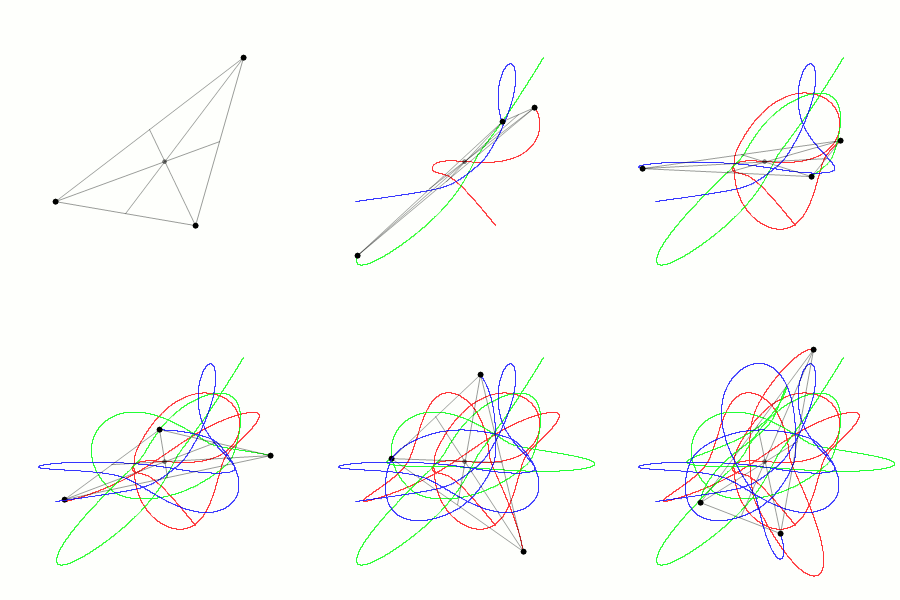
three-body problem
classical mechanics problem of three massive point particles interacting via Newtonian gravity; special case of the 𝑛‐body problem for 𝑛=3
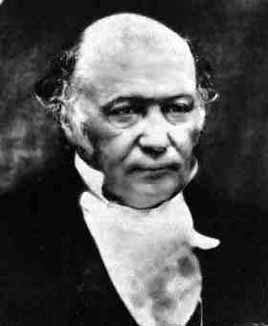
Hamiltonian mechanics
formulation of classical mechanics in terms of phase space and Hamiltonian function

two-body problem
to determine the motion of two point particles that interact only with each other

nonlinear system
system in which the change of the output is not proportional to the change of the input
perturbation
complex motion of a massive astronomical body

metastability
250px|thumb|A metastable state of weaker bond (1), a transitional "saddle" configuration (2) and a stable state of stronger bond (3).
analytical mechanics
formalism of mechanics based on the least action principle
cellular automaton
discrete model studied in computability theory, mathematics, physics, complexity science, theoretical biology and microstructure modeling
D'Alembert's principle
principle
phase space
abstract space whose coordinates are the dynamic variables of the studied system
Lorenz system
System of ordinary differential equations first studied by Edward Lorenz
pendulum
idealized concept of a pendulum
dissipation
In thermodynamics, dissipation is the result of an irreversible process that affects a thermodynamic system. In a dissipative process, energy (internal, bulk flow kinetic, or system potential) transforms from an initial form to a final form, where the capacity of the final form to do thermodynamic work is less than that of the initial form. For example, transfer of energy as heat is dissipative because it is a transfer of energy other than by thermodynamic work or by transfer of matter, and spreads previously concentrated energy. Following the second law of thermodynamics, in conduction and ra
equilibrium point
constant solution to a differential equation
generalized coordinate
parameters that describe the configuration of the system relative to some reference configuration
fractal dimension
mathematical quantity
double pendulum
pendulum with another pendulum attached to its end
Feigenbaum constants
mathematical constants
virtual work
in analytical mechanics, the work of a force on a particle along a virtual displacement
linear system
mathematical model of a system based on the use of a linear operator
system identification
method of identifying or measuring the mathematical model of a system from measurements of the system inputs and outputs; uses statistical methods to build mathematical models of dynamical systems from measured data
dynamical systems theory
area of mathematics used to describe the behavior of complex dynamical systems, usually by employing differential equations or difference equations
Lyapunov stability
property of a dynamical system where solutions near an equilibrium point remain so
Van der Pol oscillator
non-conservative oscillator with non-linear damping

linearization
In mathematics, linearization (British English: linearisation) is finding the linear approximation to a function at a given point. The linear approximation of a function is the first order Taylor expansion around the point of interest. In the study of dynamical systems, linearization is a method for assessing the local stability of an equilibrium point of a system of nonlinear differential equations or discrete dynamical systems. This method is used in fields such as engineering, physics, economics, and ecology.
limit cycle
closed trajectory in a 2d phase space of a dynamical system such that that another trajectory spirals into it as time approaches ±∞
Virtual displacement
Displacement in analytical mechanics
Hénon map
chaotic dynamical system introduced by Michel Hénon
deterministic system
mathematical or physical system whose future states are not affected by random chance
Lyapunov exponent
the rate of separation of infinitesimally close trajectories
function iteration
mathematical operation of composing a function with itself repeatedly
autonomous system
mathematical equations
Lyapunov time
characteristic timescale on which a dynamical system is chaotic
phase portrait
geometric representation
Euler's disk
scientific educational toy
state space
the set of values that a process can take in a dynamical system
integrable system
property of certain dynamical systems

self-exciting oscillation
thumb|300px|Schematic representation of a self-oscillation as a positive feedback loop. The oscillator V produces a feedback signal B. The controller at R uses this signal to modulate the external power S that acts on the oscillator. If the power is modulated in phase with the oscillator's velocity, a negative damping is established and the oscillation grows until limited by nonlinearities.
Poincaré map
type of map used in mathematics, particularly dynamical systems
step response
time behavior
hybrid system
dynamical system that exhibits both continuous and discrete dynamic behavior
structural stability
concept in mathematics
conserved quantity
(of a dynamical system) function of the dependent variables that is a constant (in other words, conserved) along each trajectory of the system
Floquet theory
branch of ordinary differential equations

rotation number
invariant of homeomorphisms of the circle
Parametric oscillator
harmonic oscillator whose parameters oscillate in time
bouncing ball dynamics
mathematical description of the behavior of bouncing balls
Hilbert's sixteenth problem
On topology of algebraic curves and surfaces
Multibody system
dynamical billiards
dynamical system abstract an ideal game of billiards, with elastic collisions off boundaries
Linear dynamical system
Type of mathematical system

discrete time and continuous time
frameworks for modeling variables that evolve over time
Illumination problem
mathematical problem
time evolution
change of state over time, especially in physics
causal system
system where the output depends only on past and current inputs
complex dynamics
branch of mathematics about iteration of complex-valued functions
flow
mathematical formalization of the motion of particles in a fluid
De Bruijn graph
node-link graph representing overlaps between sequences of symbols