Category
page 1Ecology

ecology
Ecology () is the natural science of the relationships among living organisms and their environment. Ecology considers organisms at the individual, population, community, ecosystem, and biosphere levels. Ecology overlaps with the closely related sciences of biogeography, evolutionary biology, genetics, ethology, and natural history.

river delta
landform that is formed at the mouth of a river

parasitism
thumb|upright=1.35|A fish parasite, the isopod [[Cymothoa exigua, replacing the tongue of a Lithognathus]]

symbiosis
thumb|upright=1.5|In a cleaning symbiosis, the [[clownfish feeds on small invertebrates, that otherwise have potential to harm the sea anemone, and the fecal matter from the clownfish provides nutrients to the sea anemone. The clownfish is protected from predators by the anemone's stinging cells, to which the clownfish is immune. The relationship is therefore classified as mutualistic.]]
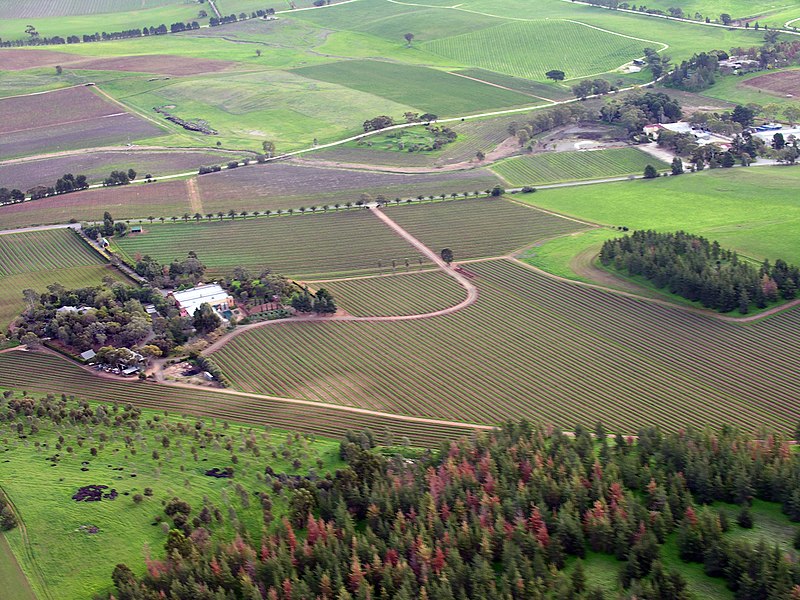
rural area
geographic area that is located outside towns and cities
%20with%20its%20prey.jpg)
predation
thumb|upright=1.5|Solitary predator: a polar bear feeds on a [[bearded seal it has killed.]]
thumb|upright=1.5|Social predators: [[meat ants cooperate to feed on a cicada far larger than themselves.]]
.JPG)
habitat
thumb|This coral reef in the [[Phoenix Islands Protected Area provides habitat for numerous marine species.]]
thumb|Few creatures make the ice shelf|ice shelves of [[Antarctica their habitat, but water beneath the ice can provide habitat for multiple species. Animals such as penguins have adapted to live in very cold conditions.]]
thumb| Ibex in an alpine habitat

nutrient
A nutrient is a substance used by an organism to survive, grow and reproduce. The requirement for dietary nutrient intake applies to animals, plants, fungi and protists. Nutrients can be incorporated into cells for metabolic purposes or excreted by cells to create non-cellular structures such as hair, scales, feathers, or exoskeletons. Some nutrients can be metabolically converted into smaller molecules in the process of releasing energy such as for carbohydrates, lipids, proteins and fermentation products (ethanol or vinegar) leading to end-products of water and carbon dioxide. All organisms
.jpg)
carrion
thumb|A wedge-tailed eagle and carrion ([[roadkill kangaroo) in the Pilbara region of Western Australia.]]
thumb|Zoarcidae|Zoarcid fish feeding on the carrion of a mobulid ray.
.jpg)
speciation
Speciation is the evolutionary process by which populations evolve to become distinct species. The biologist Orator F. Cook coined the term in 1906 for cladogenesis, the splitting of lineages, as opposed to anagenesis, phyletic evolution within lineages. Charles Darwin was the first to describe the role of natural selection in speciation in his 1859 book On the Origin of Species. He also identified sexual selection as a likely mechanism, but found it problematic.
.jpg)
extremophile
right|thumb|300px|The bright colors of Grand Prismatic Spring in [[Yellowstone National Park are produced by thermophiles, a type of extremophile.]]

scavenger
thumb|upright=1.2|White-backed vulture (Gyps africanus), [[lappet-faced vultures (Torgos tracheliotos) and marabou storks (Leptoptilos crumenifer) feeding on hyena carrion]]
thumb|upright=1.2|A crab-eating raccoon (Procyon cancrivorus) scavenging in trash for food

sociobiology
Sociobiology is a field of biology that aims to explain social behavior in terms of evolution. It draws from disciplines including psychology, ethology, anthropology, evolution, zoology, archaeology, and population genetics. Within the study of human societies, sociobiology is closely related to evolutionary anthropology, human behavioral ecology, evolutionary psychology, and sociology.

biocoenosis
thumb|
%20(6464681311).jpg)
resource
thumb|right|200px|Many types of resources are transported with the international shipping system.
Resources are all the materials available in our environment which are technologically accessible, economically feasible and culturally sustainable and help to satisfy needs and wants. There are many types of resources, which can broadly be classified according various parameters, such as their availability as renewable or non-renewable resources or national and international resources. An item may become a resource with technology. The benefits of resource utilization may include increased wealt
gene pool
set of all genes in a population

subarctic climate
subtype of the Köppen classification, further subdivided as Dfc, Dwc, Dsc, Dfd, Dwd and Dsd.

phenology
Phenology is the study of periodic events in biological life cycles and how these are influenced by seasonal and interannual variations in climate, as well as habitat factors (such as elevation).

biological interaction
effect that a pair of organisms (intraspecific or interspecific) living together in an ecosystem have on each other
green manure
crop specifically produced to be incorporated into the soil while still green
saprobiont
Saprobionts are organisms that digest their food externally and then absorb the products. This process is called saprotrophic nutrition. Fungi are examples of saprobiontic organisms, which are a type of decomposer.

aposematism
thumb|upright=1.5 |The bright colours of this granular poison frog signal a warning to [[predators of its toxicity.]]
thumb|upright=1.5 |The honey badger's [[reverse countershading makes it conspicuous, honestly signalling its ability to defend itself through its aggressive temperament and its sharp teeth and claws.]]
ecological pyramid
graphical representation designed to show the biomass or biomass productivity at each trophic level in a given ecosystem

ecotone
thumb|Reed beds are a common form of lakeside ecotone. The beds tend to accumulate organic matter which is then colonised by trees, forcing the reeds further into the lake.
An ecotone is a transitional area between two plant communities, where these meet and integrate. Examples include areas between grassland and forest, estuary and lagoon, and freshwater and sea water. An ecotone may be narrow or wide, and it may be local (the zone between a field and forest) or regional (the transition between forest and grassland ecosystems). An ecotone may appear on the ground as a gradual blending of the
allopatric speciation
type of speciation caused by geographic isolation between populations
trophic level
position of an organism in a food chain
founder effect
loss of genetic variation that occurs when a new population is established by a very small number of individuals
reedbed
vegetational formation dominated by tall graminoids in wetlands

ecotype
Ecotypes, or ecospecies, are organisms which belong to the same species but possess different phenotypical features as a result of environmental factors such as elevation, climate and predation. Ecotypes can be seen in wide geographical distributions and may eventually lead to speciation.
population ecology
study of the dynamics of species populations and how these populations interact with the environment
seed dispersal
movement or transport of seeds away from the parent plant

putrefaction
Putrefaction is the fifth stage of death, following pallor mortis, livor mortis, algor mortis, and rigor mortis. This process references the breaking down of a body of an animal post-mortem. In broad terms, it can be viewed as the decomposition of proteins, and the eventual breakdown of the cohesiveness between tissues, and the liquefaction of most organs. This is caused by the decomposition of organic matter by bacterial or fungal digestion, which causes the release of gases that infiltrate the body's tissues, and leads to the deterioration of the tissues and organs.
The approximate time it
secondary metabolite
organic compound that is not directly involved in the normal growth, development, or reproduction of an organism
primary production
synthesis of organic compounds from atmospheric or aqueous carbon dioxide

over exploitation
thumb|300px|right|Atlantic cod stocks were severely overexploited in the 1970s and 1980s, leading to their abrupt collapse in 1992.
plant litter
dead plant material that has fallen to the ground
Lazarus taxon
taxon that disappears for one or more periods from the fossil record, only to appear again later;likewise in conservation biology and ecology, it can refer to species or populations that were thought to be extinct, and are rediscovered
oxygen cycle
biogeochemical cycle of oxygen within its four main reservoirs: the atmosphere, the biosphere, the hydrosphere, and the lithosphere
sympatric speciation
process through which new species evolve from a single ancestral species while inhabiting the same geographic region
political ecology
study of political, economic and social factors about environmental issues
natural landscape
original landscape formed by nature
democratic confederalism
political ideology and government structure
balance of nature
ecological theory
Raunkiær plant life-form
types of plant form as defined by Christen Raunkiær
plant life-form
type (class) of plant
natural region
region distinguished by its common natural features of geography, geology, and climate
nature-based solutions
sustainable management and use of nature for tackling socio-environmental challenges
ecosophy
Ecosophy or ecophilosophy (a portmanteau of ecological philosophy) is a philosophy of ecological harmony or equilibrium. The term was coined by the French post-structuralist philosopher Félix Guattari and the Norwegian philosopher Arne Næss, father of deep ecology.
Portal:Ecology
Wikimedia portal

sclerophyll
thumb|right|260px|Chaparral vegetation in [[Southern California]]
thumb|260px|The hard leaves of a Banksia integrifolia (notice the short internodes)
migration
displacement of a human or animal population
Sulfate-reducing bacteria
microorganisms which "breathe" sulfates
parapatric speciation
speciation within a population where subpopulations are reproductively isolated
bioclimatology
Bioclimatology is the interdisciplinary field of science that studies the interactions between the biosphere and the Earth's atmosphere on time scales of the order of seasons or longer (in contrast to biometeorology).

myrmecophily
thumb |Myrmecophilous aphids being tended by ants
diaspore
element allowing the dissemination of a plant species

sympatry
thumb|Sympatric pitcher plants, [[Nepenthes jamban (left) and Nepenthes lingulata (right) in Sumatran upper montane forest]]
In biology, two closely related species or populations are considered sympatric when they exist in the same geographic area and thus frequently encounter each other. An initially interbreeding population that splits into two or more distinct species sharing a common range exemplifies sympatric speciation. Such speciation may be a product of reproductive isolation — which prevents hybrid offspring from being viable or able to reproduce, thereby reducing gene flow&nbs

myco-heterotrophy
thumb|230px|Monotropa uniflora, an obligate myco-heterotroph known to parasitize fungi belonging to the [[Russulaceae.]]
cultural materialism
anthropological research orientation first introduced by Marvin Harris in 1968
genetic pollution
controversial term for uncontrolled dispersal of contaminated altered genes from genetically engineered organisms to natural organisms