Category
page 1Economic bubbles

2007–2008 financial crisis
global financial crisis triggered by bursting of the United States housing bubble and the devaluation of housing-related securities

Wall Street crash of 1929
major American stock market crash

financial crisis
situation in which financial assets suddenly lose a large part of their nominal value

usury
thumb|Of Usury, from Sebastian Brant|Brant's Stultifera Navis (Ship of Fools), 1494; [[woodcut attributed to Albrecht Dürer]]
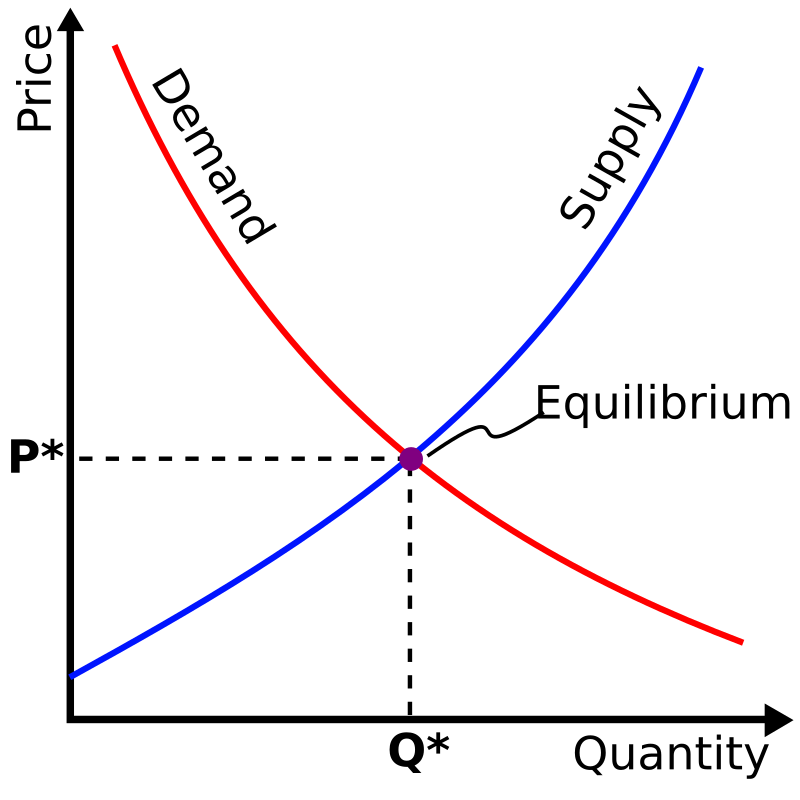
economic bubble
economic phenomenon of very high prices driven by speculation
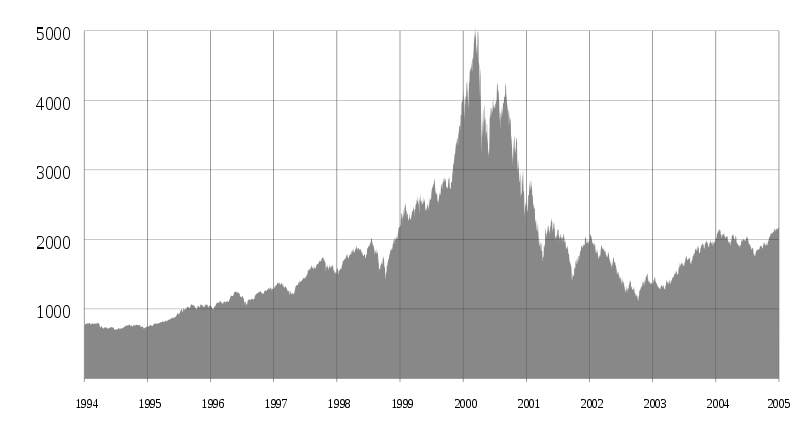
dot-com bubble
historic speculative bubble covering roughly 1997–2000

tulip mania
17th-century economic bubble in the Netherlands
North American video game crash of 1983
1983 video gaming economic recession
South Sea Company
British joint-stock company founded in 1711
Mississippi Company
monopoly in French colonies in North America and the West Indies
Japanese asset price bubble
economic bubble in Japan from 1986 to 1991 in which real estate and stock market prices were greatly inflated, collapsing in early 1992
AI winter
period of reduced funding and interest in AI
reflation
Reflation is used to describe a return of prices to a previous rate of inflation. One usage describes an act of stimulating the economy by increasing the money supply or by reducing taxes, seeking to bring the economy (specifically the price level) back up to the long-term trend, following a dip in the business cycle. It is the opposite of disinflation, which seeks to return the economy back down to the long-term trend.
Silver Thursday
event resulting in a drop in silver prices
Railway Mania
speculative frenzy in the UK in the 1840s about railways
AI bubble
ongoing theorised stock market bubble
cryptocurrency bubble
speculative bubble of cryptocurrency assets
carbon bubble
hypothesized bubble in the valuation of companies dependent on fossil-fuel-based energy production
biflation
Biflation (sometimes mixflation, indeflation, or compartflation) is a state of the economy, in which the processes of inflation and deflation occur simultaneously in different parts of the economy. The term was first coined in 2003 by F. Osborne Brown, a senior financial analyst at Phoenix Investment Group, and has later been widely used in the media. During the biflation, there is a simultaneous rise in prices (inflation) for commodities bought out of the basic income (earnings), and a parallel fall in prices (deflation) for goods bought mainly on credit. Biflation may be seen in the CPI comp
canal Mania
period in the United Kingdom

Extraordinary Popular Delusions and the Madness of Crowds
1841 collection of historic anecdotes about human follies by Charles Mackay
Agflation
Agflation (or agrarian inflation) is an economic phenomenon of an advanced increase in the price for food and for industrial agricultural crops when compared with the general rise in prices or with the rise in prices in the non-agricultural sector. The term was increasingly used in the analytical reports, for example, by the investment banks Merrill Lynch in early 2007 and Goldman Sachs in early 2008. They used the term to denote a sharp rise in prices for agricultural products, or, more precisely, a rapid increase in food prices against the background of a decrease in its reserves, a relative
2000s energy crisis
sixfold rise in oil prices, peaking in 2008
stock market bubble
type of economic bubble taking place in stock markets when market participants drive stock prices above their value in relation to some system of stock valuation.
Swedish banking rescue
early 1990's economic crisis in Sweden
asset price inflation
Rise in the value of financial and capital assets
Chinese stock bubble of 2007
2007 dip in global stock markets
Nifty Fifty
colloquial term for the strong earning blue chip stocks on the New York Stock Exchange in the 1970s
Beanie Baby
American brand of stuffed toys