Category
page 1Economic geology

diamond
thumb|upright=1.25|Main diamond producing countries

coal
Coal is a combustible black or brownish-black sedimentary rock, formed as layers called coal seams. Coal is mostly carbon with variable amounts of other elements, chiefly hydrogen, sulfur, oxygen, and nitrogen. It is a fossil fuel, formed when plants decay into peat which is converted into coal by the heat and pressure of deep burial over millions of years. Vast deposits formed from wetlands called coal forests that covered much of the tropics during the late Carboniferous and early Permian.

ore
thumb|Iron ore ([[banded iron formation)]]
thumb|Manganese ore – [[psilomelane (size: 6.7 × 5.8 × 5.1 cm)]]
thumb|Lead ore – [[galena and anglesite (size: 4.8 × 4.0 × 3.0 cm)]]
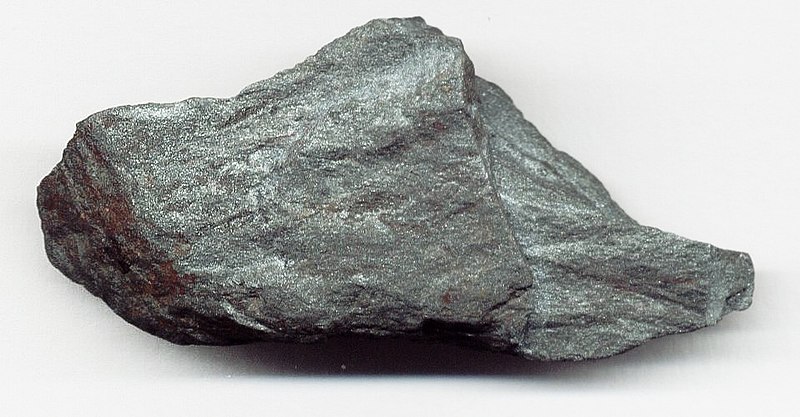
iron ore
ore rich in iron (element Fe)

kimberlite
thumb|False-color scanning electron microscope image of kimberlite from South Africa. [[Olivine crystals (green) are in a fine-grained matrix made up of clay minerals and carbonates (presented in blue, purple and buff colors).]]

salt evaporation pond
shallow artificial pond designed to extract salts from sea water or other brines
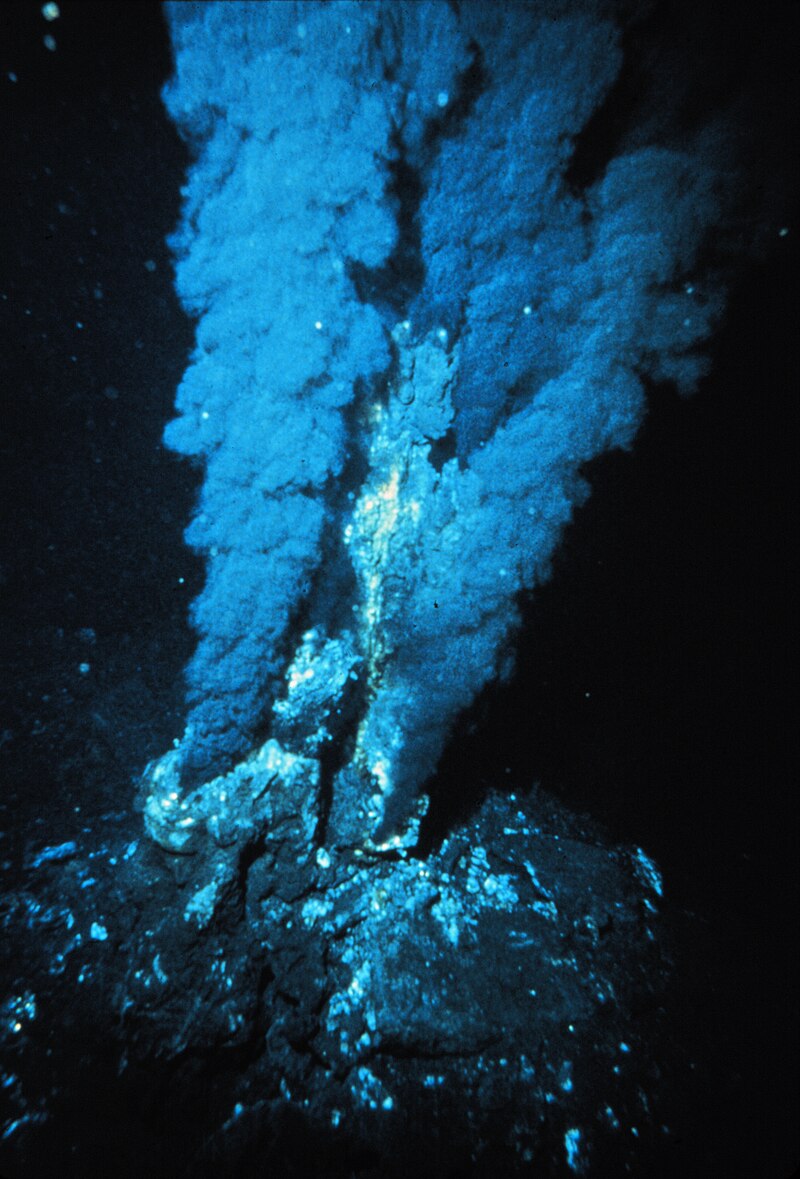
hydrothermal vent
fissure in a planet's surface from which geothermally heated water issues
platinum group
six noble, precious metallic elements clustered together in the periodic table: ruthenium, rhodium, palladium, osmium, iridium, and platinum

phosphorite
thumb|Peloidal phosphorite, Phosphoria Formation, Simplot Mine, Idaho. 4.6 cm wide.
thumb|Fossiliferous peloidal phosphorite, (4.7 cm across), Yunnan, [[China. ]]
Phosphorite, phosphate rock or rock phosphate is a non-detrital sedimentary rock that contains high amounts of phosphate minerals. The phosphate content of phosphorite (or grade of phosphate rock) varies greatly, from 4% to 20% phosphorus pentoxide (P2O5). Marketed phosphate rock is enriched ("beneficiated") to at least 28%, often more than 30% P2O5. This occurs through washing, screening, deliming, magnetic separation or flotation.

diapir
thumb|400px|Diapirs in a subduction|subducting plate boundary
vein
sheetlike body within a rock
bog iron
form of iron ore
gravity anomaly
difference between the observed acceleration of a planet's gravity and a value predicted from a model
Sudbury Basin
second largest verified astrobleme on earth, remain of an Paleoproterozoic Era impact
economic geology
branch of geology concerning the scientific study of the formation, location, and use of marketable geologic materials including fuels, metals, minerals, and water.
.jpg)
greisen
thumb|upright=1.35|Granite (light) with sheeted veins of greisen (dark) at Cligga Head, Cornwall
Greisen is a highly altered granitic rock or pegmatite, usually composed predominantly of quartz and micas (mostly muscovite). Greisen is formed by self-generated alteration of a granite and is a class of moderate- to high-temperature magmatic-hydrothermal alteration related to the late-stage release of volatiles dissolved in a magma during the solidification of that magma.
banded iron formation
distinctive layered units of iron-rich sedimentary rock that are almost always of Precambrian age
gold mining
process of extracting gold from the ground
petroleum geology
study of the origin, occurrence, movement, accumulation, and exploration of hydrocarbon fuels
salt dome
structural dome formed of salt or halite

eluvium
thumb|
well logging
measuring of physical parameters of the formations crossed by a borehole

lamproite
thumb|right|Sample of lamproite
Lamproite is an ultrapotassic mantle-derived volcanic or subvolcanic rock. It has low CaO, Al2O3, Na2O, high K2O/Al2O3, a relatively high MgO content and extreme enrichment in incompatible elements.
placer deposit
accumulation of valuable minerals formed by gravity separation during sedimentary processes

prospecting
thumb|Prospector and burro, western Colorado, USA,
thumb|upright|Schoolchildren learn to pan for gold, Denver, 1972.
thumb|Rich specimen from a 2009 gold discovery by a prospector in southeastern Yukon Territory. The gold, deposited along a fracture, appears rusty-orange in this photo.
exploration geophysics
applied branch of geophysics and economic geology
bioleaching
REDIRECT Biohydrometallurgy
%20(27890565095).jpg)
Gossan
thumb|Azurite-[[malachite on gossan from Arizona]]
thumb|Malachite on gossan from Australia
Gossan (eiserner hut or eisenhut) is intensely oxidized, weathered or decomposed rock, usually the upper and exposed part of an ore deposit or mineral vein. In the classic gossan or iron cap all that remains is iron oxides and quartz, often in the form of boxworks (which are quartz-lined cavities retaining the shape of the dissolved ore minerals). In other cases, quartz and iron oxides, limonite, goethite, and jarosite, exist as pseudomorphs, replacing the pyrite and primary ore minerals. Frequently, g
Bushveld igneous complex
mountain range
Pilbara craton
old and stable part of the continental lithosphere located in Pilbara, Western Australia
uranium ore
economically recoverable concentrations of uranium within the Earth's crust
industrial mineral
geological materials mined for commercial value in industry
Black sand
Black-colored rock and mineral particles

Taconite
Taconite () is a variety of banded iron formation, an iron-bearing (over 15% iron) sedimentary rock, in which the iron minerals are interlayered with quartz, chert, or carbonate. The name taconyte was coined in the 19th century by Horace Vaughn Winchell – son of Newton Horace Winchell, the Minnesota state geologist – during their pioneering investigations of the Precambrian Biwabik Iron Formation of northeastern Minnesota within the Mesabi Range. He believed the sedimentary rock sequence hosting the iron-formation was correlative with the Taconic orogeny of New England and referred to the unfa

stockwork
thumb|Sample of gold ore from the Red Lake Mine consisting of a stockwork of gold filled veinlets (sample width: 6.6 cm)
In geology, a stockwork is a complex system of structurally controlled or randomly oriented veins. Stockworks are common in many ore deposit types and in greisens. They are also referred to as stringer zones.
metallogeny
Metallogeny is the study of the genesis and regional-to-global distribution of mineral deposits, with emphasis on their relationship in space and time to regional petrologic and tectonic features of the Earth's crust.
The term metallogeny (métallogénie) was created by Louis de Launay, a professor at the Ecole des Mines de Paris, in his 1913 book.

supergene process
near-surface enrichment of minerals
rock burst
spontaneous, violent fracture of rock that can occur in deep mines
Yilgarn Craton
craton tectonic superprovince in Western Australia
Mesabi Range
mining region in Minnesota, United States
East European craton
core of the Baltica proto-plate and consists of the Fennoscandia, Volgo-Uralia and Sarmatia crustal segments
violarite
Violarite (Fe2+Ni23+S4) is a supergene sulfide mineral associated with the weathering and oxidation of primary pentlandite nickel sulfide ore minerals.
layered intrusion
large sill-like body of igneous rock
Great Dyke
mountain range in Zimbabwe
Petroleum seep
place where natural hydrocarbons escape
in situ leach mining
mining through artificially dissolving minerals in a borehole
boxwork
thumb|Boxwork in Wind Cave, South Dakota
In geology, boxwork is defined as a honeycomb-like structure that can form in some fractured or jointed sedimentary rocks. If the fractures in the host rock are mineralized, they can become more resistant to weathering than the surrounding rock, and subsequent erosion can produce boxwork structures. In mining geology, boxwork is a set of (typically) quartz-lined cavities, retaining the shape of the dissolved ore minerals, in gossans. In classical geology or mineralogy these mineral casts would not be called boxwork, but would instead be called pseudomor
mineralization
in geology, process resulting in the formation of minerals
American Association of Petroleum Geologists
voluntary association
vitrinite
Vitrinite is one of the primary components of coals and most sedimentary kerogens. Vitrinite is a type of maceral, meaning organic components of coal analogous to the "minerals" of rocks. Vitrinite has a shiny appearance resembling glass (vitreous). It is derived from the cell-wall material or woody tissue of the plants from which coal was formed. Chemically, it is composed of polymers, cellulose and lignin and forms diagenetically by the thermal alteration .
Slave Craton
Archaean craton in the north-western Canadian Shield, in Northwest Territories and Nunavut
Biohydrometallurgy
Biohydrometallurgy is a technique in the world of metallurgy that utilizes biological agents (bacteria) to recover metals. It is a subset or specialized form of hydrometallurgy, which refers to the use of aqueous solutions for metal extraction through a series of chemical reactions. Bioleaching is closely related to biohydrometallurgy. It focuses on extraction or liberation of metals from their ores through the use of living organisms.
placer mining
technique of mining stream bed deposits for minerals
mining geology
exploration for, discovery of, and removal of valuable natural resources from the Earth
Powder River basin
geologic structural basin in the western US
drill cuttings
fragments of rock resulting from drilling
Society of Exploration Geophysicists
nonprofit geoscience organization
Volcanogenic massive sulfide ore deposit
metal deposit in Volcanic Irruption
Iberian Pyrite Belt
geographical area
Rockall Trough
bathymetric feature northwest of Scotland and Ireland between European continental shelf and Rockall Bank