Category
page 1Elastomers

polyurethane
class=skin-invert-image|thumb|right|Polyurethane synthesis: the urethane groups −NH−(C=O)−O− link the molecular units, resulting in a polymer consisting of an alternating chain of two monomers.
thumb|A kitchen sponge made of polyurethane foam
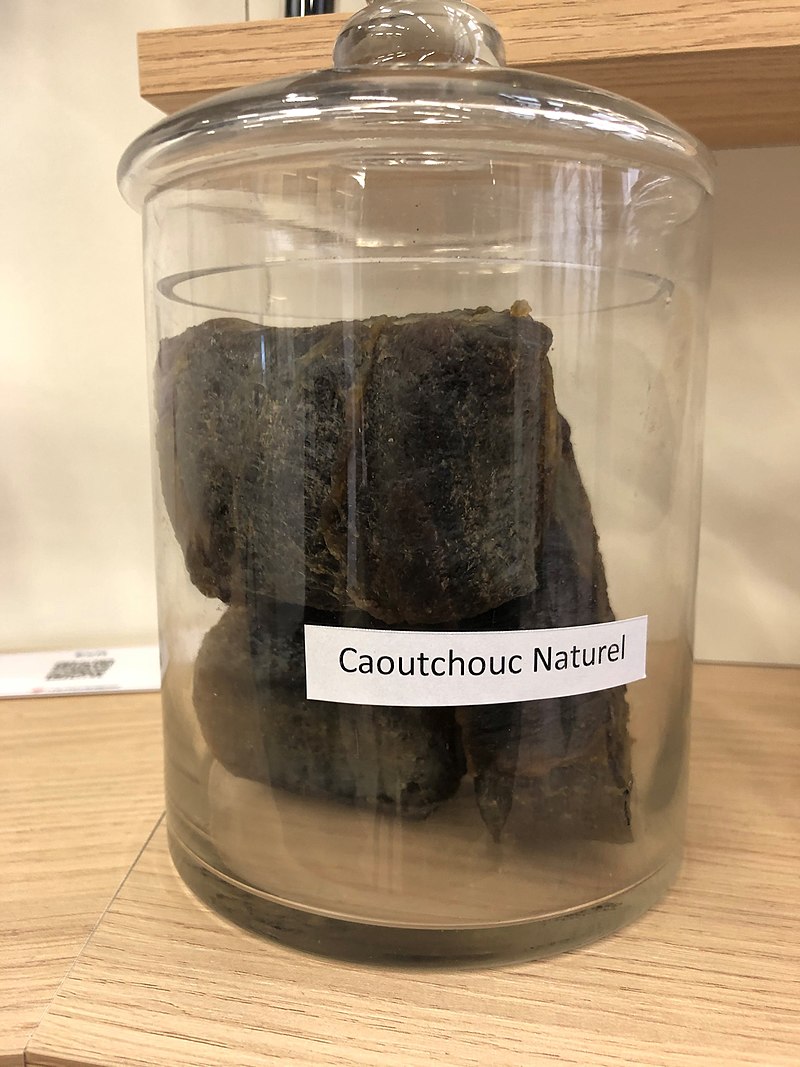
natural rubber
polymers of the organic compound isoprene, with minor impurities of other organic compounds; refined from latex harvested from rubber trees
.jpg)
spandex
thumb|Elastic material used in the fabrics of a summer cycling kit|cycling attire comprising a jersey, [[bib shorts and gloves]]

elastomer
thumb|upright|(A) is an unstressed polymer; (B) is the same polymer under stress. When the stress is removed, it will return to the A configuration. (The dots represent cross-links)

neoprene
Neoprene (also polychloroprene) is a family of synthetic rubbers that are produced by polymerization of chloroprene. Neoprene exhibits good chemical stability and maintains flexibility over a wide temperature range. Neoprene is sold either as solid rubber or in latex form and is used in a wide variety of commercial applications, such as laptop sleeves, orthopaedic braces (wrist, knee, etc.), electrical insulation, medical gloves, liquid and sheet-applied elastomeric membranes or flashings, and automotive fan belts.

carbon black
chemical substance

chloroprene
Chloroprene (IUPAC name 2-chlorobuta-1,3-diene) is a chemical compound with the molecular formula . Chloroprene is a colorless volatile liquid, almost exclusively used as a monomer for the production of the polymer polychloroprene, better known as neoprene, a type of synthetic rubber.
synthetic rubber
any artificial elastomer

elastin
thumb|200x200px|Thick elastic fibers consisting of bundles of elastin in the human lung
Elastin is a protein encoded by the ELN gene in humans and several other animals. Elastin is a key component in the extracellular matrix of gnathostomes (jawed vertebrates). It is highly elastic and present in connective tissue of the body to resume its shape after stretching or contracting. Elastin helps skin return to its original position whence poked or pinched. Elastin is also in important load-bearing tissue of vertebrates and used in places where storage of mechanical energy is required.
ethylene-vinyl acetate
copolymer
nitrile rubber
family of polymer

polybutadiene
thumb|About 70% of polybutadiene is used in tire manufacturing.

styrene-butadiene
Styrene-butadiene or styrene-butadiene rubber (SBR) describe families of synthetic rubbers derived from styrene and butadiene (the version developed by Goodyear is called Neolite). These materials have good abrasion resistance and good aging stability when protected by additives. In 2012, more than 5.4 million tonnes of SBR were processed worldwide. About 50% of car tires are made from various types of SBR. The styrene/butadiene ratio influences the properties of the polymer: with high styrene content, the rubbers are harder and less rubbery. SBR is not to be confused with the thermoplastic el

Manilkara bidentata
species of plant
EPDM rubber
type of synthetic rubber
acrylate polymer
group of polymers prepared from (possibly substituted) acrylate monomers
butyl rubber
synthetic rubber; a copolymer of isobutylene with isoprene
silicone rubber
elastomer consisting of a silicone
resilin
thumb|Beating of the maxillipeds of the crayfish Pacifastacus leniusculus captured at a frame rate of 1000 Hz
FKM
FKM is a family of fluorocarbon-based fluoroelastomer materials defined by ASTM International standard D1418 and ISO standard 1629. It is commonly called fluorine rubber or fluoro-rubber. FKM is an abbreviation of Fluorkautschukmaterial (i.e. fluorine rubber material). All FKMs contain vinylidene fluoride as the common monomer, to which different other monomers are added for specific types and functionalities, fitting the desired application.
Hypalon
Hypalon is a chlorosulfonated polyethylene (CSPE) synthetic rubber (CSM) noted for its resistance to chemicals, temperature extremes, and ultraviolet light. It was a product of DuPont Performance Elastomers, a subsidiary of DuPont. Hypalon as it is now known in the marine industry today is a remarketed version of the old Hypalon using an additional layer of neoprene (cr) so the new chemical formulation is csm/cr.
fluoroelastomer
A fluoroelastomer is a fluorocarbon-based synthetic rubber. Fluoroelastomers generally have wide chemical resistance.
Thiokol
organic polysulfide polymers
ozone cracking
cracks in many different elastomers due to ozone attack
polysilane
thumb|General repeating unit of polysilanes, where the R's are the same or different organic groups.
Polysilanes are organosilicon compounds with the formula (R2Si)n. They are relatives of traditional organic polymers but their backbones are composed of silicon atoms. They exhibit distinctive optical and electrical properties. They are mainly used as precursors to silicon carbide. The simplest polysilane would be (SiH2)n, which is mainly of theoretical, not practical interest.