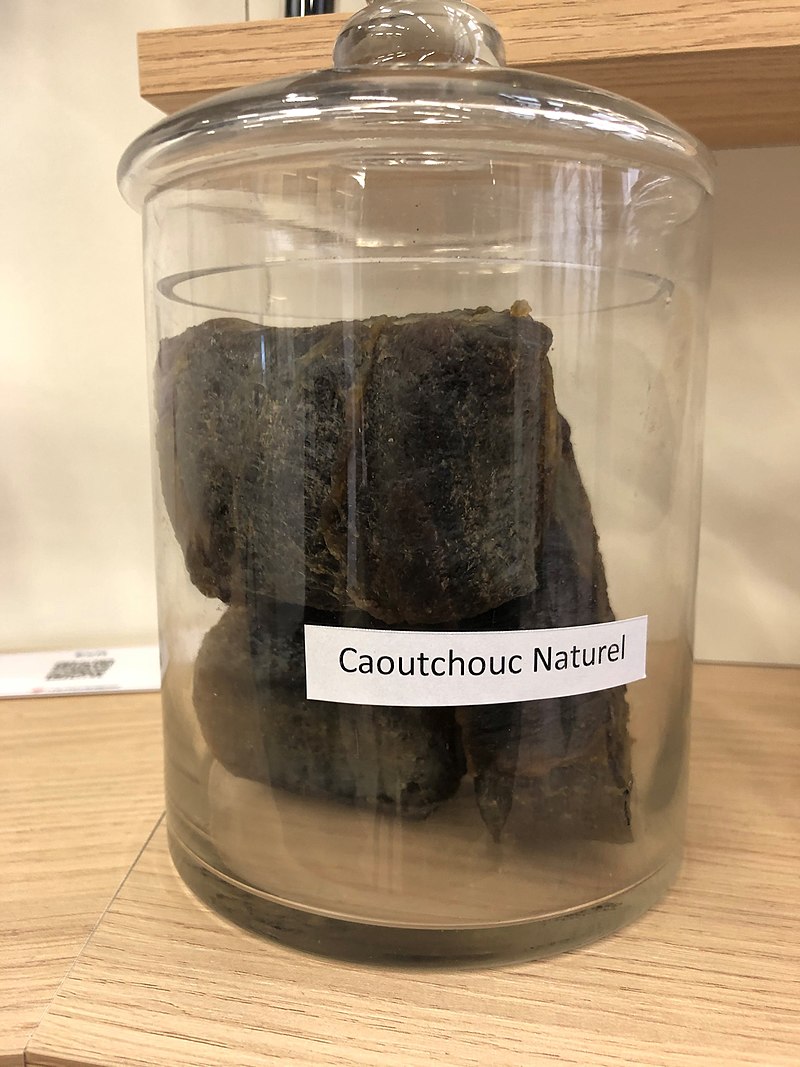
File:Caoutchouc_naturel.jpg · Wikimedia Commons · See Wikimedia Commons
natural rubber
Sign in to saveAlso known as India rubber, caoutchouc, rubber, NR, India-rubber, gum elastic, latex rubber, para rubber
polymers of the organic compound isoprene, with minor impurities of other organic compounds; refined from latex harvested from rubber trees
Wikidata facts
Show 6 more facts
- described by source
- Encyclopædia Britannica 11th edition
- different from
- rubber
- opposite of
- synthetic rubber
- Commons category
- Natural rubber
- natural product of taxon
- rubber plant
- water footprint
- 13748
via Wikidata · CC0
~35 min read
Encyclopedic overview
Pieces of natural vulcanized rubber at Hutchinson's Research and Innovation Center in France Latex being collected from a tapped rubber tree, Cameroon Rubber tree plantation in Thailand Molecular structure of isoprene.
Rubber, also called India rubber, latex, Amazonian rubber, caucho, or caoutchouc, as initially produced, consists of polymers of the organic compound isoprene, with minor impurities of other organic compounds.
Excerpted from Wikipedia’s “natural rubber” article, available under the CC BY-SA 4.0 licence.