Category
page 1Embedded systems

mobile phone
portable device to make telephone calls using a radio link

Lua
Lua is a lightweight, high-level, multi-paradigm programming language designed mainly for embedded use in applications. Lua is cross-platform software, since the interpreter of compiled bytecode is written in ANSI C, and Lua has a relatively simple C application programming interface (API) to embed it into applications.

automated teller machine
thumb|An old Nixdorf Computer|Nixdorf ATM in Germany ()
thumb|right|Smaller indoor ATMs dispense money inside convenience stores and other busy areas, such as this off-premises [[Wincor Nixdorf mono-function ICA ATM in Sweden.]]
An automated teller machine (ATM) is an electronic telecommunications device that enables customers of financial institutions to perform financial transactions, such as cash withdrawals, deposits, funds transfers, balance or account information inquiries, at any time and without the need for direct interaction with bank staff.
assembly language
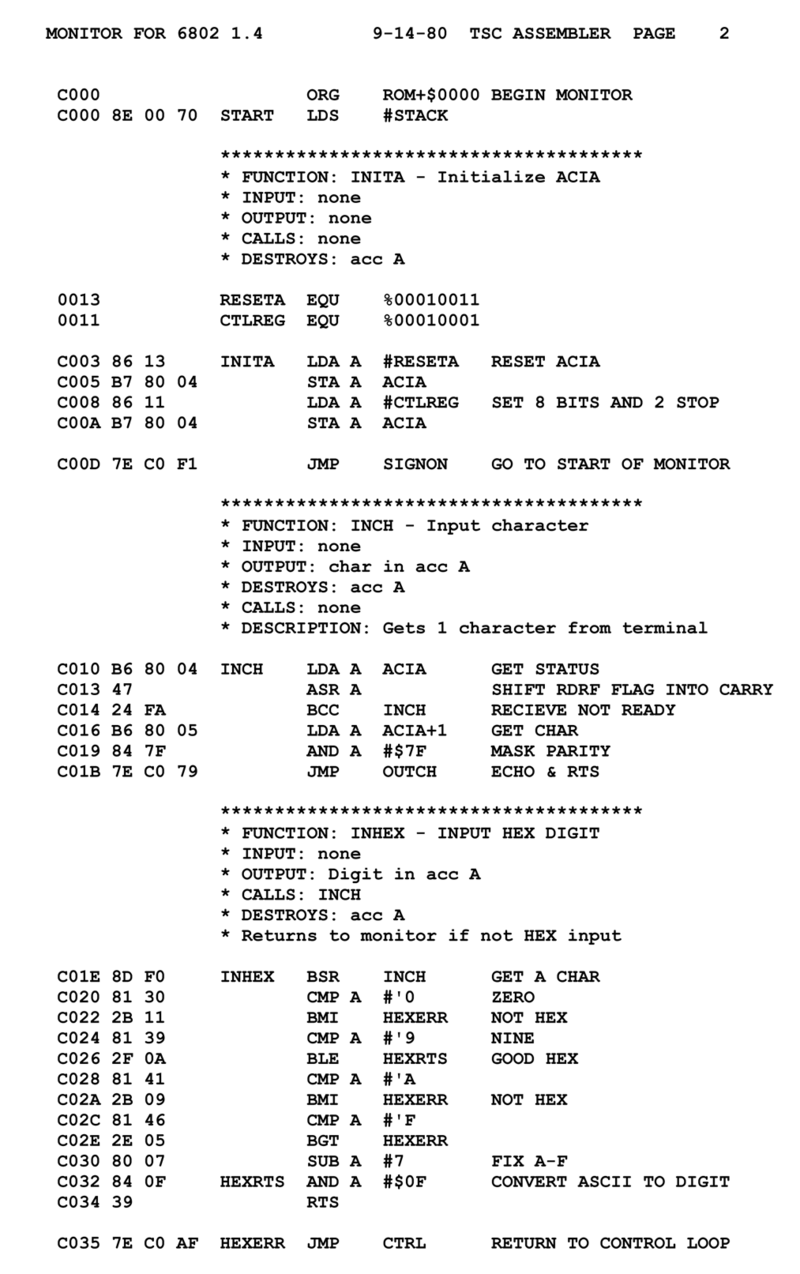
any low-level programming language in which there is a very strong correspondence between the instructions in the language and the architecture's machine code instructions

debit card
payment card connected directly to a cardholder’s bank account

mechatronics
Mechatronics engineering, also called mechatronics, is the synergistic integration of mechanical, electrical, and computer systems employing mechanical engineering, electrical engineering, electronic engineering and computer science and engineering, and includes a combination of robotics, computer science, telecommunications, systems, control, automation and product engineering.
embedded system
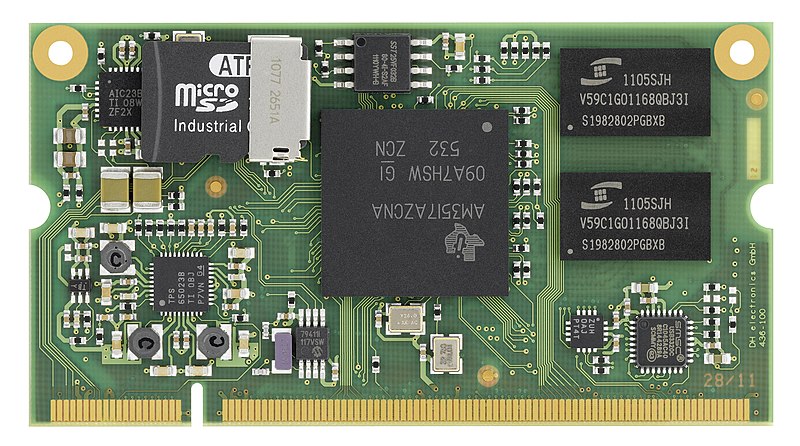
computer system with a dedicated function within a larger mechanical or electrical system

artificial pacemaker
A pacemaker, also known as an artificial cardiac pacemaker, is an implanted medical device that generates electrical pulses delivered by electrodes to one or more of the chambers of the heart. Each pulse causes the targeted chamber(s) to contract and pump blood, thus regulating the function of the electrical conduction system of the heart.

Venus Express
ESA spacecraft which orbited Venus
barcode reader
electronic device that can read and output printed barcodes to a computer
Lego Mindstorms
hardware and software platform by Lego
LGM-30 Minuteman
1961 intercontinental ballistic missile family by Boeing
Zig
programming language
watchdog timer
electronic timer used to detect and recover from computer malfunctions

Joint Test Action Group
JTAG (named after the Joint Test Action Group which codified it) is an industry standard for verifying designs of and testing printed circuit boards after manufacture.
interactive kiosk
computer terminal that provides access to information, communication, commerce etc.
logic analyzer
electronic test instrument that measures multiple signals from a circuit
flexible-fuel vehicle
vehicle with an internal combustion engine designed to run on more than one fuel

OSGi
OSGi is an open specification and open source project under the Eclipse Foundation.
MISRA C
software development standard for the C programming language
embedded software
software written to control machines or devices that are not typically thought of as computers
priority inversion
undesirable computing scheduling scenario
Ground Based Strategic Deterrent
type of Intercontinental ballistic missile
Intel HEX
file format for conveying binary information

PC/104
thumb|right|upright=1.5|A PCI-104 single-board computer
Lego Mindstorms EV3
third generation robotics kit in Lego's Mindstorms line

SIMATIC
SIMATIC is a series of programmable logic controller and automation systems, developed by Siemens. Introduced in 1958, the series has gone through four major generations, the latest being the SIMATIC S7 generation. The series is intended for industrial automation and production.
SREC
file format
In-circuit emulator
debugging for embedded systems

Shaheen-III
The Shaheen-III ( ; lit. Falcon), is a land-based medium-range ballistic missile (MRBM) operated by the Pakistan Army, which first test-fired the weapon on 9 March 2015.
VIA EPIA
thumb|VIA EPIA-N800 (pico-ITX) and VIA EPIA-M800 (mini-ITX)
VIA EPIA (VIA Embedded Platform Innovative Architecture) is a series of mini-ITX, em-ITX, nano-ITX, pico-ITX and pico-ITXe motherboards with integrated VIA processors. They are small and consume less power than computers of comparable capabilities.
computer-on-module
thumb|Raspberry Pi Compute Module 3+, a computer-on-module, which offers a quad-core CPU, 1GB RAM, and up to 32GB of EMMC|flash storage in the compact [[SO-DIMM form factor used for RAM modules on laptops.]]
A computer-on-module (COM) is a type of single-board computer (SBC), a subtype of an embedded computer system. An extension of the concept of system on chip (SoC) and system in package (SiP), COM lies between a full-up computer and a microcontroller in nature. It is very similar to a system on module (SOM).
Jetronic
Jetronic is a trade name of a manifold injection technology for automotive petrol engines, developed and marketed by Robert Bosch GmbH from the 1960s onwards. Bosch licensed the concept to many automobile manufacturers. There are numerous variations of the technology offering technological development and refinement, all but the Mono-Jetronic produced 1988-1995) being
multi-point injection systems.
Hardware-in-the-loop simulation
technique used in the development and test of complex real-time embedded systems
front end processor
Small computer to which a large mainframe computer delegates input/output or telecommunications functions
Embedded C++
programming language
lwIP
lwIP (lightweight IP) is a widely used open-source TCP/IP stack designed for embedded systems. lwIP was originally developed by Adam Dunkels in 2001 at the Swedish Institute of Computer Science and is now developed and maintained by a worldwide network of developers.
IAR Systems
company
Unified Diagnostic Services
vehicle communication standard used for vehicle diagnostics
Board support package
software needed to operate motherboards
nesC
nesC (pronounced "NES-see") is a component-based, event-driven programming language used to build applications for the TinyOS platform. TinyOS is an operating environment designed to run on embedded devices used in distributed wireless sensor networks. nesC is built as an extension to the C programming language with components "wired" together to run applications on TinyOS. The name nesC is an abbreviation of "network embedded systems C".
PBASIC
PBASIC is a microcontroller-based version of BASIC created by Parallax, Inc. in 1992.
Dynamic simulation
computer modeling of time-varying behavior of a dynamical system
Motronic
thumb|right|Bosch monopoint
uIP
software
MPLAB
MPLAB is a proprietary freeware integrated development environment for the development of embedded applications on PIC and dsPIC microcontrollers, and is developed by Microchip Technology.
system on module
board-level circuit that integrates a system function in a single module
Otis Boykin
American inventor and engineer (1920-1982)
bit banging
using software instead of dedicated hardware to process and make use of signals
Open Programming Language
programming language
Système d'aide à la conduite, à l'exploitation et à la maintenance
Train protection system for rapid transit railways
CEN/XFS
CEN/XFS or XFS (extensions for financial services) provides a client-server architecture for financial applications on the Microsoft Windows platform, especially peripheral devices such as EFTPOS terminals and ATMs which are unique to the financial industry. It is an international standard promoted by the European Committee for Standardization (known by the acronym CEN, hence CEN/XFS). The standard is based on the WOSA Extensions for Financial Services or WOSA/XFS developed by Microsoft.
heartbeat
periodic signal generated by hardware or software to indicate normal operation or to synchronize other parts of a computer system
Coremark
CoreMark is a benchmark that measures the performance of central processing units (CPU) used in embedded systems. It was developed in 2009 by Shay Gal-On at EEMBC and is intended to become an industry standard, replacing the Dhrystone benchmark. The code is written in C and contains implementations of the following algorithms: list processing (find and sort), matrix manipulation (common matrix operations), state machine (determine if an input stream contains valid numbers), and CRC. The code is under the Apache License 2.0 and is free of cost to use, but ownership is retained by the Consortium
Embedded C
C language extensions for embedded systems
Anti-hijack system
electronic system fitted to motor vehicles to deter criminals from hijacking them