Category
page 1English folklore
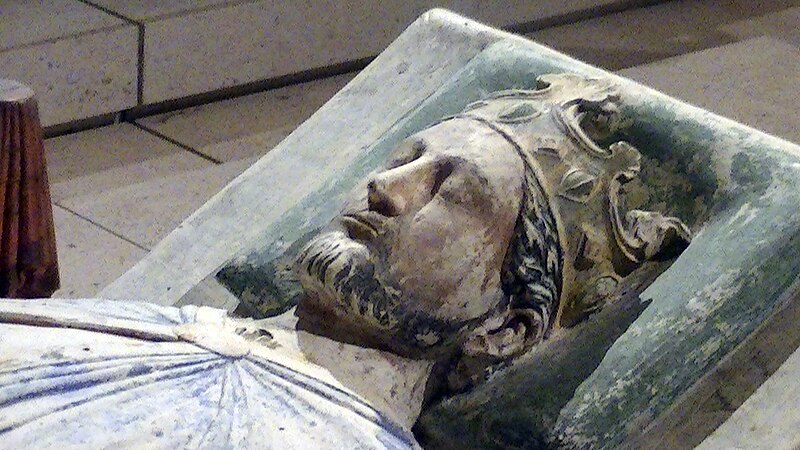
Richard I of England
King of England from 1189 to 1199 (1157–1199)

King Arthur
legendary British leader of the late 5th and early 6th centuries
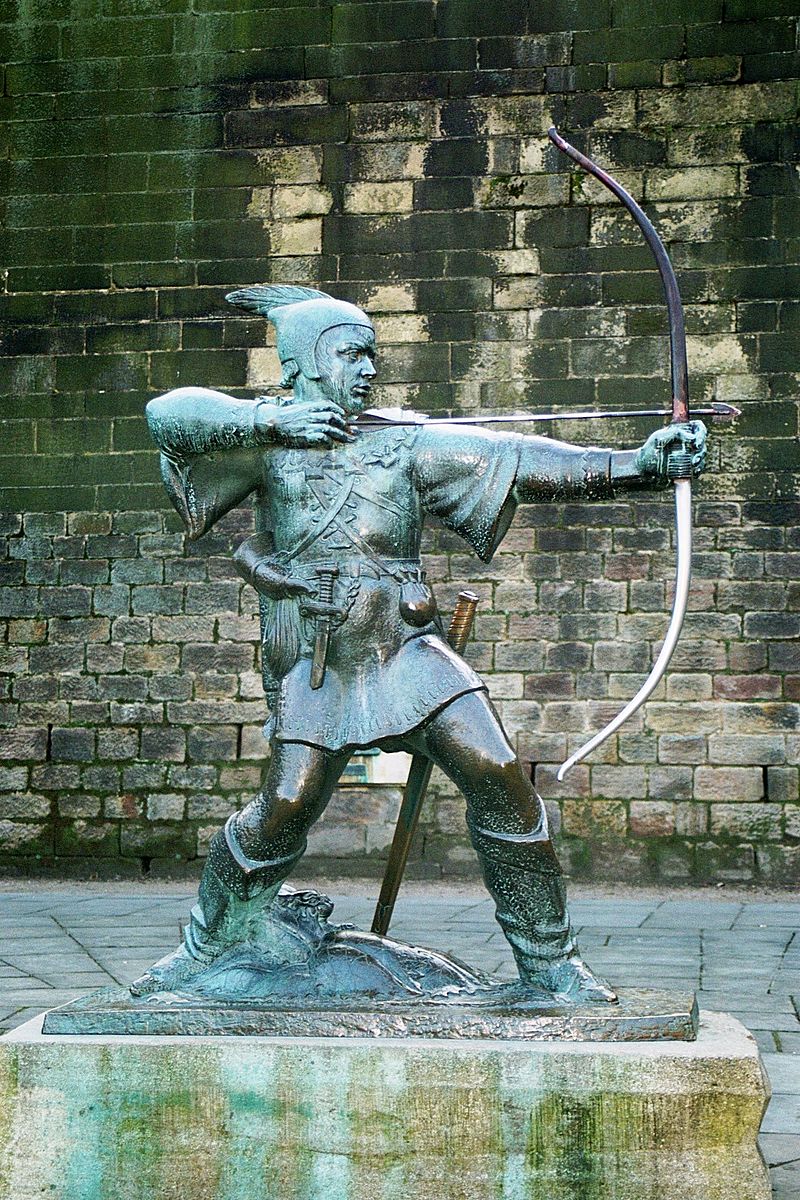
Robin Hood
heroic outlaw in English folklore, a highly skilled archer and swordsman
%2C%20Walking%20the%20Plank%2C%20from%20the%20Pirates%20of%20the%20Spanish%20Main%20series%20(N19)%20for%20Allen%20%26%20Ginter%20Cigarettes%20MET%20DP835032.jpg)
Blackbeard
Edward Teach (or Thatch; – 22 November 1718), better known as Blackbeard, was an English pirate who operated around the West Indies and the eastern coast of Britain's North American colonies. Little is known about his early life, but he may have been a sailor on privateering ships during Queen Anne's War before he settled on the Bahamian island of New Providence, a base for Captain Benjamin Hornigold, whose crew Teach joined around 1716. Hornigold placed him in command of a sloop that he had captured, and the two engaged in numerous acts of piracy. Their numbers were boosted by the addition to

Merlin
Merlin () is a mythical figure prominently featured in the legend of King Arthur and best known as a prophet and a magician, along with several other main roles. The familiar depiction of Merlin, based on an amalgamation of historical and legendary figures, was introduced by the 12th-century Catholic cleric Geoffrey of Monmouth and then built on by the French poet Robert de Boron and prose successors in the 13th century. Geoffrey's account presented Merlin as a prophet and royal advisor to Arthur's father, Uther Pendragon.

The Three Little Pigs
fairy tale
.jpg)
Yule
Yule (, ) is a winter festival and time of the year historically observed by heathen Germanic peoples that was later merged with the festival of Christmas during the process of Christianisation. The oldest accounts describe two Yule-months around the winter solstice in early, and sometimes explicitly heathen, Germanic calendars.

John Franklin
British naval officer and explorer (1786–1847)
John Rackham
English pirate (1682-1720)
Henry Every
English captain and pirate

Vortigern
thumb|Vortigern and Rowena by William Harvey

Goldilocks and the Three Bears
fairy tale

Dunstan
Dunstan ( – 19 May 988) was an English bishop and Benedictine monk. He was successively Abbot of Glastonbury Abbey, Bishop of Worcester, Bishop of London and Archbishop of Canterbury, later canonised. His work restored monastic life in England and reformed the English Church. His 11th-century biographer Osbern, himself an artist and scribe, states that Dunstan was skilled in "making a picture and forming letters", as were other clergy of his age who reached senior rank.
fairy ring
natural trace of the circular growth front of mushroom mycelium
Neck
water sprite from European mythology
Green Man
sculpture or other representation of a face surrounded by or made from leaves
Matter of Britain
body of Medieval literature associated with Great Britain and Brittany, and the legendary kings and heroes associated with it, particularly King Arthur
Mare
malicious entity in folklore
London Bridge Is Falling Down
nursery rhyme from England
Spring-heeled Jack
English folklore legendary character
Father Christmas
Folkloric personification of Christmas in several English‐speaking parts of the world
Jack Frost
personification of frost and cold weather
voodoo doll
effigy into which pins are inserted
Dick Turpin
English highwayman (1705–1739)

charivari
thumb|upright=1.4|William Hogarth's engraving "[[Hudibras Encounters the Skimmington" (illustration to Samuel Butler's Hudibras)]]
Charivari (, , , alternatively spelled shivaree or chivaree and also called a skimmington) was a European and North American folk custom designed to shame a member of the community, in which a mock parade was staged through the settlement accompanied by a discordant mock serenade. Since the crowd aimed to make as much noise as possible by beating on pots and pans or anything that came to hand, these parades were often referred to as rough music.
rag doll
doll with a stuffed cloth body and head
Ned Ludd
person from whom, it is popularly claimed, the Luddites took their name
wishing well
well where wishes are thought to be granted
The Crying Boy
mass-produced print of painting by Bruno Amadio
Dream of the Rood
Old English poem from the Vercelli Book

Púca
thumb|Depiction of the Pwca in Wirt Sikes's book British Goblins: Welsh Folk-lore, Fairy Mythology, Legends and Traditions, 1880
Richard Whittington
four times Lord Mayor of London (1354-1423)
Puck
fairy creature from European mythology

triumphal cross
thumb|Hanging rood with no rood screen in Lye Church on the island of [[Gotland in Sweden|alt=]]
thumb|Rood screen and rood in the abbey church of Wechselburg Abbey|Wechselburg in Saxony

Poppet
thumbnail|right|Poppets
In folk magic and witchcraft, a poppet (also known as poppit, moppet, mommet or pippy) is a doll made to represent a person, for casting spells on them, or aiding that person through magic. They are occasionally found lodged in chimneys. These dolls may be fashioned from materials such as carved root, grain, corn shafts, fruit, paper, wax, a potato, clay, branches, or cloth stuffed with herbs, with the intent that any actions performed upon the effigy will be transferred to the subject based on sympathetic magic. Poppets are also used as kitchen witch figures.
thumb|Pop
Gogmagog
giant in Welsh and English mythology
Dick Whittington and His Cat
English folklore concerning the rise of Richard Whittington in 14th-century London
English folklore
examples, orgins, and histories various parts of english folklore.
Merry England
autostereotype of English society
The Twa Sisters
traditional song
Lambton Worm
legend from North East England concerning a knight and a dragon
There was an Old Woman Who Lived in a Shoe
English language nursery rhyme
Oranges and Lemons
folk song
church grim
mythical churchyard-guardian spirit-animal
Jack
archetypal Cornish and English hero and stock character
The King of the Cats
British folk tale
Fairyland
In folklore, Fairyland or Faerie is a fabulous land inhabited by fays or fairies. It may be ruled by a Fairy Queen. In Scottish contexts, it is also known as Elfame.
The Dragon
dragon from the Beowulf poem

Rabbits and hares in the arts
Presence of rabbits and hares in the visual arts
John Middleton
English giant commonly known as the Childe of Hale

New Forest coven
British coven
Jack in the green
folk custom in England
Witege
thumb|Wittich (in red) dishonourably battles two against one with Heime to defeat Alphart.
Witege, Witige or Wittich (; Gotho-) or Vidrik "Vidga" Verlandsson ( + Viðga or Videke + Verlandsson, Vallandsson, or Villandsson) is a character in several Germanic heroic legends, poems about Dietrich von Bern, and later Scandinavian ballads.
Old King Cole
British nursery rhyme
Cormoran
thumb|This woodcut (c. 1820) was used in numerous chapbooks from various publishers in the 19th century.
Cormoran ( or ) is a giant associated with St. Michael's Mount in the folklore of Cornwall. Local tradition credits him with creating the island, in some versions with the aid of his wife Cormelian, and using it as a base to raid cattle from the mainland communities. Cormoran appears in the English fairy tale "Jack the Giant Killer" as the first giant slain by the hero, Jack, and in tales of "Tom the Tinkeard" as a giant too old to present a serious threat.
well dressing
tradition practised in some parts of rural England in which wells, springs and other water sources are decorated with designs created from flower petals
Fairy Ointment
English fairy tale
King John and the Bishop
traditional song
Telling the bees
traditional European custom
Germanic dragon
creature in Germanic mythology and folklore