Category
page 1Enrico Fermi
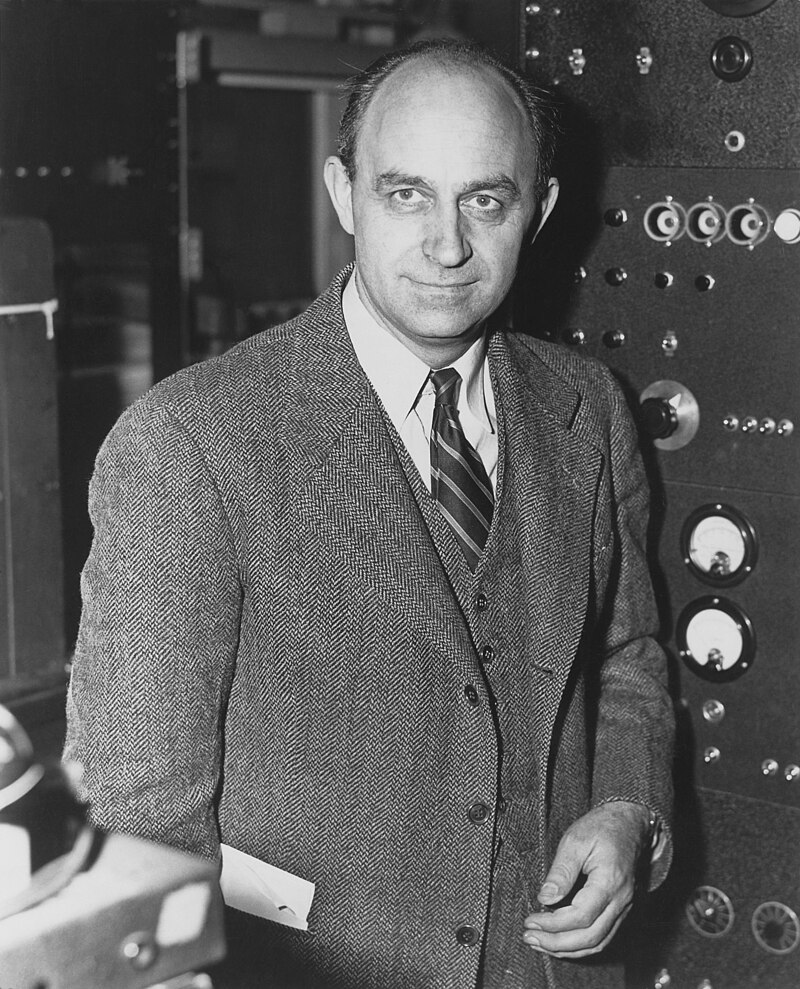
Enrico Fermi
Italian–American physicist (1901–1954)

fermion
thumb|upright=1.6|Fermions form one of the two fundamental classes of subatomic particle, the other being [[bosons. All subatomic particles must be one or the other. A composite particle (hadron) may fall into either class depending on its composition.]]
In particle physics, a fermion is a subatomic particle that follows Fermi–Dirac statistics. Fermions have a half-integer spin (spin , spin , etc.) and obey the Pauli exclusion principle. These particles include all quarks and leptons and all composite particles made of an odd number of these, such as all baryons and many atoms and nuclei. Ferm

Fermi paradox
apparent contradiction between the lack of evidence and high probability estimates for the existence of extraterrestrial civilizations
Chicago Pile-1
world's first nuclear reactor to achieve criticality, part of the Manhattan Project, the Allied effort to create atomic bombs during World War II
Enrico Fermi Award
award conferred by the United States Department of Energy
Via Panisperna boys
group of young Italian scientists
Fermi problem
estimation problem designed to teach dimensional analysis or approximation
Fermi's interaction
mechanism of beta decay proposed in 1933 involving a non-renormalizable four-fermion term in the action
Laura Fermi
Italian-born writer and political activist
FERMIAC
thumb|The FERMIAC, or Monte Carlo trolley, was an analog device invented by [[Enrico Fermi to implement studies of neutron transport.]]
Enrico Fermi Institute
Chicago, Illinois, US
Enrico Fermi Prize
award conferred by the Italian Physical Society
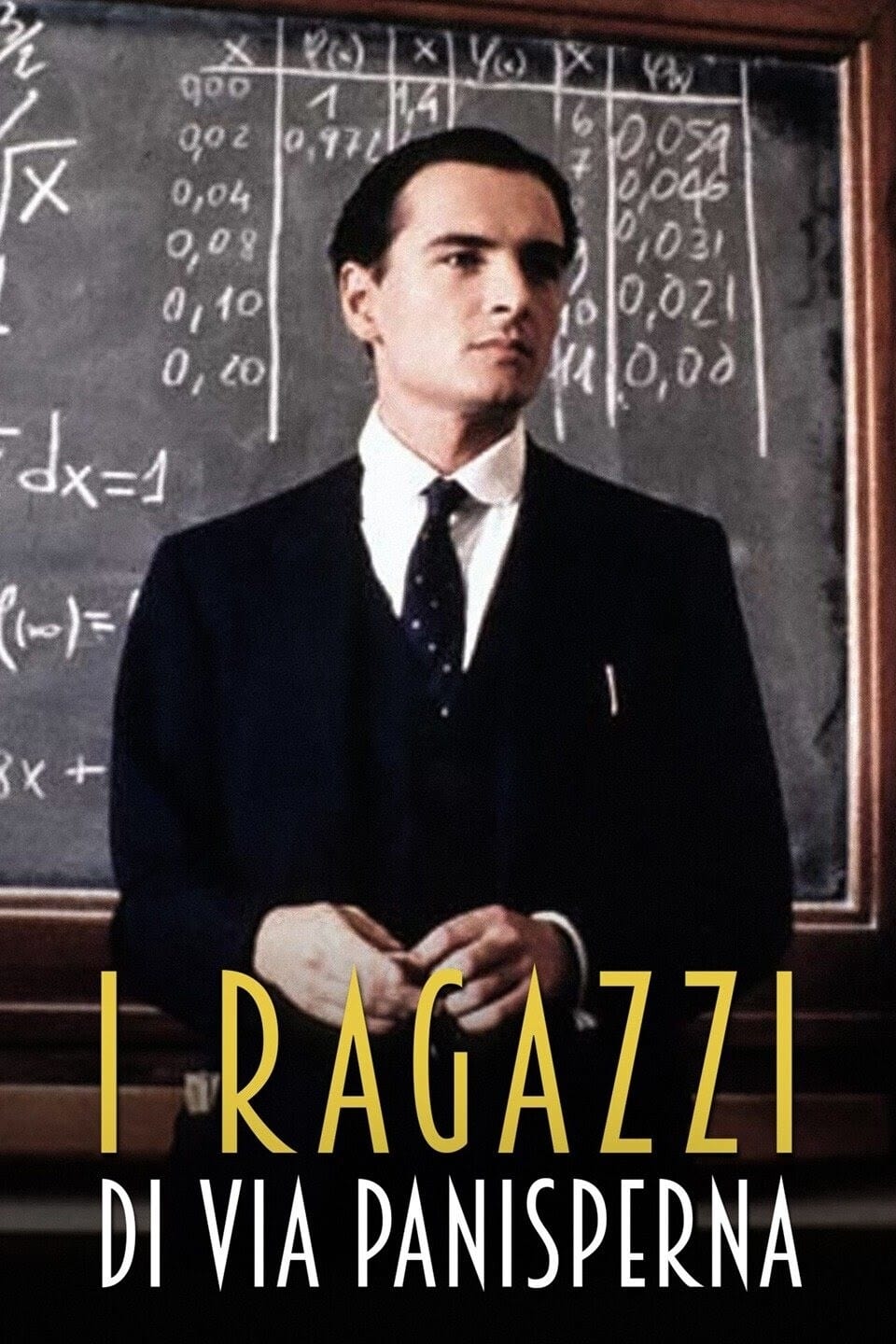
I ragazzi di via Panisperna
1989 film by Gianni Amelio