Category
page 1Eponyms

francium
Francium is a chemical element; it has symbol Fr and atomic number 87. It is extremely radioactive; its most stable isotope, francium-223 (originally called actinium K after the natural decay chain in which it appears), has a half-life of only 22 minutes. It is the second-most electropositive element, behind only caesium, and is the second rarest naturally occurring element (after astatine). Francium's isotopes decay quickly into astatine, radium, and radon. The electronic structure of a francium atom is [Rn] 7s1; thus, the element is classed as an alkali metal.

Occam's razor
philosophical principle used to judge credibility of statements

Oedipus complex
concept of psychoanalytic theory; a child's unconscious sexual desire for the opposite-sex parent and hatred for the same-sex parent
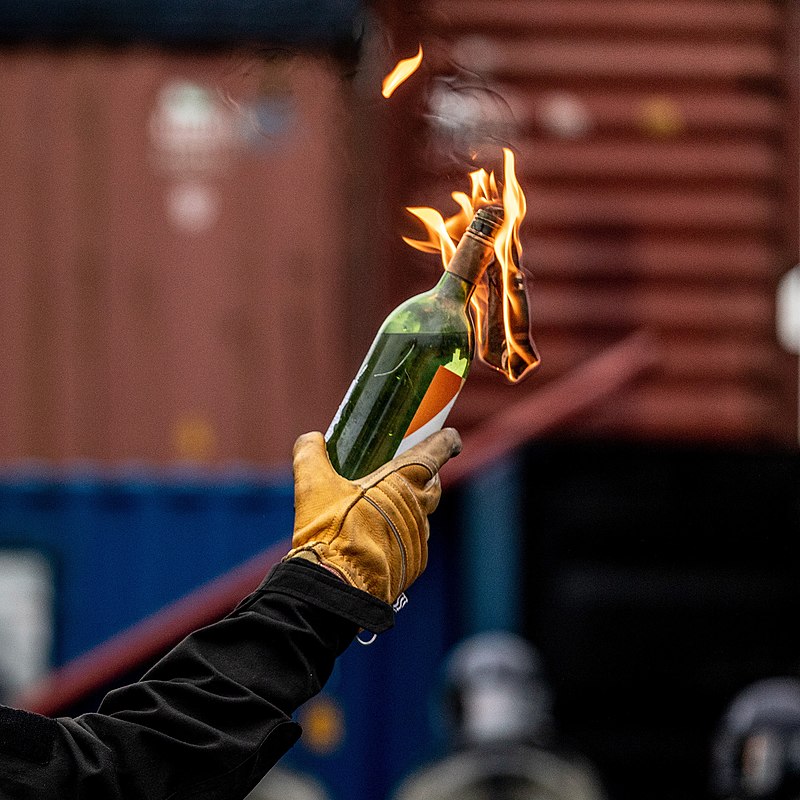
Molotov cocktail
incendiary weapon using flammable liquid in a bottle
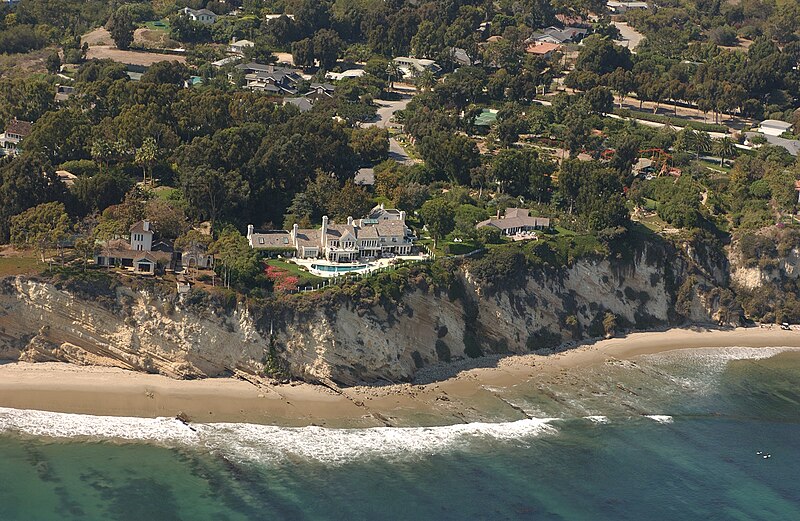
Streisand effect
phenomenon whereby an attempt to hide, remove, or censor a piece of information has the unintended consequence of publicizing the information more widely, usually facilitated by the Internet

eponym
thumb|The mythological Greek hero Orion (mythology)|Orion is the eponym of the constellation Orion, shown here, and thus indirectly of the Orion spacecraft.

Electra complex
generally defined as the girls's desire to possess the father and to compete with her mother for the possession of her parent

Heimlich maneuver
first aid procedure

Overton window
range of ideas tolerated in public discourse

Seljuk
Ruler of Seljuk Turks

Potemkin village
structure built solely to deceive others into thinking that a situation is better than it really is

spoonerism
thumb|An example of spoonerism on a protest placard in London: "Buck Frexit" instead of "Fuck [[Brexit"]]
A spoonerism is an occurrence of speech in which corresponding consonants, vowels, or morphemes are switched (see metathesis) between two words of a phrase. These are named after the Oxford don and priest William Archibald Spooner, who reportedly commonly spoke in this way.
Poe's law
adage of Internet culture that, without a clear indicator of intent, one can’t parody extreme views such that some can’t mistake it for a sincere expression of the parodied views
generic trademark
trademark or brand name that has become the generic name for a class of product or service, sometimes resulting in loss of legal protection
Bortle Dark-Sky Scale
scale of night sky brightness
Napoleon complex
theorized inferiority complex normally attributed to people of short stature

Orwellian
Orwellian is a neologism suggested in the writings by George Orwell. It is an adjective which is used to describe a situation, an idea or a societal condition, usually identified as being destructive to a free and open society. It was first used by the American author Mary McCarthy in 1950. The term denotes draconian control by propaganda, surveillance, disinformation, and denial of truth. It is commonly used in reference to Orwell's 1949 dystopian novel Nineteen Eighty-Four which describes an oppressive fictional totalitarian society where propaganda is used to manipulate the population. Orwe
Thatcher effect
optical illusion technique
Stigler's law of eponymy
law stating that no scientific discovery is named after its original discoverer

wellerism
thumb|upright|Sam Weller, from a watercolor by 'Joseph Clayton Clarke|Kyd'
Wellerisms, named after sayings of Sam Weller in Charles Dickens's novel The Pickwick Papers, make fun of established clichés and proverbs by showing that they are wrong in certain situations, often when taken literally. In this sense, Wellerisms that include proverbs are a type of anti-proverb. Typically a Wellerism consists of three parts: a proverb or saying, a speaker, and an often humorously literal explanation.
Byronic hero
Type of antihero often characterized by isolation and contemplation

Titushky
220px|thumb|alt=Titushky|Titushky at the Cabinet of Ministers of Ukraine, November 24, 2013
The Titushky (plural; ; ; ; ) were mercenary agents in Ukraine who supported the Ukrainian security services during the administration of Viktor Yanukovych, often posing as street hooligans in sports clothing with the purpose of serving as provocateurs at pro-European and anti-Yanukovych political rallies that would incite violence in order to get protestors arrested. Their role grew more prominent in the wake of Euromaidan, where they were involved in numerous clashes and acts of violence during the mo
Karpman drama triangle
social model of human interaction consisting of the three roles of victim, rescuer and persecutor
Scunthorpe problem
problem caused by profanity filters on the Internet
Weinstein effect
2017–2018 trend of sexual misconduct allegations
eponymous chemical reaction
chemical reaction named after its discoverers or developers

smoot
The smoot is a nonstandard, humorous unit of length created as part of an MIT fraternity pledge to Lambda Chi Alpha by Oliver R. Smoot, who in October 1958 lay down repeatedly on the Harvard Bridge between Boston and Cambridge, Massachusetts, so that his fraternity brothers could use his height to measure the length of the bridge.
Bambi effect
Objection against killing of animals perceived as "cute" or otherwise desirable
.jpg)
Disneyfication
In the field of sociology, the term Disneyfication describes the commercial transformation of things (e.g. entertainment) or environments into something simplified, controlled, and 'safe'—reminiscent of the Walt Disney brand (such as its media, theme parks, etc.).
Florence Nightingale effect
trope where a caregiver falls in love with their patient.
Bruceploitation
Bruceploitation (a portmanteau of "Bruce Lee" and "exploitation") is an exploitation film subgenre that emerged after the death of martial arts film star Bruce Lee in 1973, during which time filmmakers from Hong Kong, Taiwan and South Korea cast Bruce Lee look-alike actors ("Lee-alikes") to star in imitation martial arts films, in order to exploit Lee's sudden international popularity. Bruce Lee look-alike characters also commonly appear in other media, including anime, comic books, manga, and video games.
Tocqueville effect
A social phenomenon named after Alexis de Tocqueville
quixotism
thumb|Illustration by Gustave Doré depicting the windmill scene of [[Don Quixote, in which the hero fights with windmills, which he imagines to be giants.]]
malinchism
thumb|upright=1.5|350px|right|Codex Azcatitlan, [[Hernán Cortés and Malinche (far right), early 16th-century indigenous pictorial manuscript of the conquest of Mexico]]
Galliffet trousers
style of trousers
Jheri curl
hairstyle
Boolean
Any kind of logic, function, expression, or theory based on the work of George Boole is considered Boolean.
Papageno effect