Category
page 1Ethnic groups in Poland

Tatars
thumb|upright=1.4|Share of Tatars in regions of Russia, 2010 census

Ukrainians
Ukrainians (, ) are an East Slavic ethnic group native to Ukraine. Their native tongue is Ukrainian, and the majority adhere to Eastern Orthodoxy. At around 46 million worldwide, Ukrainians are the second largest Slavic ethnic group after Russians.
Poles
West Slavic ethnic group
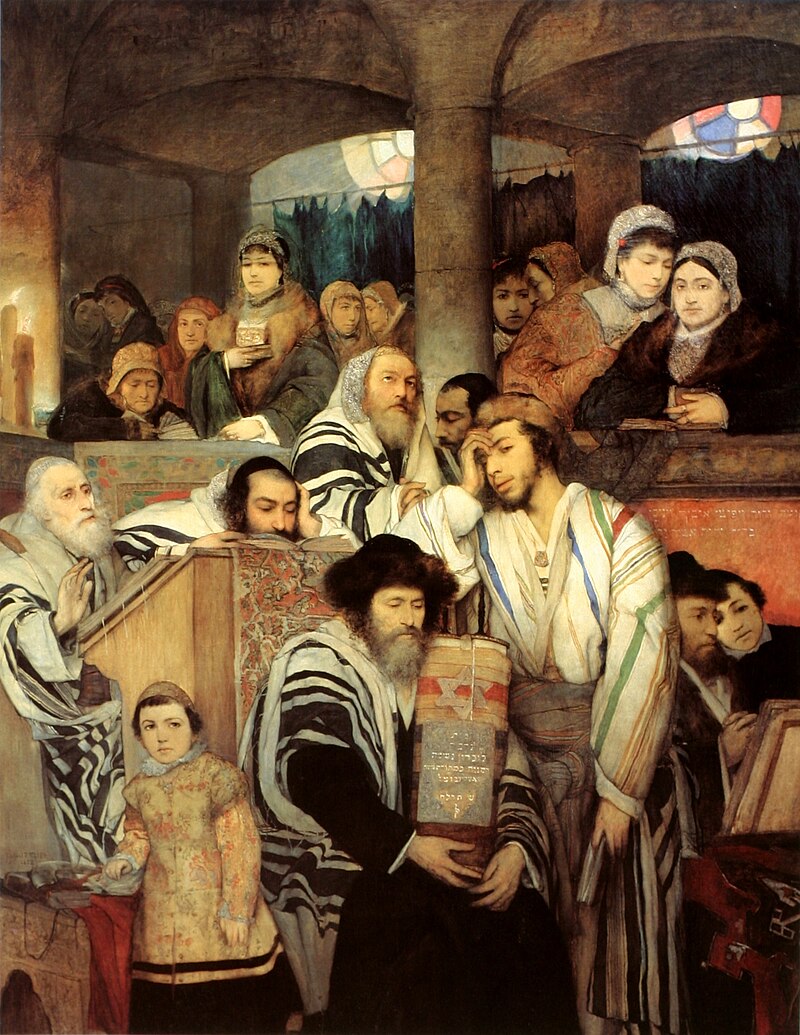
Ashkenazi Jews
Jewish diaspora of Central, Western and Eastern Europe

Sorbs
Sorbs (; ; ; ; ; ; also known as Lusatians, Lusatian Serbs and Wends) are an indigenous West Slavic ethnic group predominantly inhabiting the parts of Lusatia located in the German states of Saxony and Brandenburg. Sorbs traditionally speak the Sorbian languages (also known as "Wendish" and "Lusatian"), which are closely related to Polish (Lechitic languages) and Czech, Slovak. Upper Sorbian and Lower Sorbian are officially recognized minority languages in Germany.
.svg)
Rusyns
Rusyns, also known as Carpatho-Rusyns, Carpatho-Russians, Ruthenians, or Rusnaks, are an East Slavic ethnic group from the Eastern Carpathians in Central and Eastern Europe. They speak Rusyn, an East Slavic language variety, treated variously as either a distinct language or a dialect of the Ukrainian language. As traditional adherents of Eastern Christianity, the majority of Rusyns are Eastern Catholics, though a minority of Rusyns practice Eastern Orthodoxy.

Kashubians
The Kashubians (; ; ), also known as Cassubians or Kashubs, are a Lechitic (West Slavic) indigenous people native to the historical region of Pomerania, including its eastern part called Pomerelia, in north-central Poland. Their settlement area is referred to as Kashubia. They speak the Kashubian language, which is classified as a separate language closely related to Polish.
%20of%20Dast-i%20Qipchaq%22.%20Tabriz%20or%20Qavin%2C%20circa%201550.%20British%20Museum%2C%201948-10-9-056.jpg)
Kipchaks
thumb|A Safavid Iran|Safavid depiction of the [[Padishah (Emperor) of Dast-i Qipchaq ("Steppe of the Kipchaks"). Tabriz or Qavin, circa 1550. British Museum, Padishah (Emperor) of Dast-i Qipchaq, (1550). Possible portrait of Kazakh khan]]
thumb|The Cumania in Eurasia, 1200|alt=The Desht-i Kipchak in Eurasia, 1200

Lipka Tatars
Ethnic group: Tatars settled in the Grand Duchy of Lithuania by Vytautas the Great in the 14th c.

Silesians
thumb|Silesians in the Opole Voivodeship|Opole and [[Silesian Voivodeships of Poland (2021 census)]]
thumb|Silesians in the Opole Voivodeship|Opole and [[Silesian Voivodeships of Poland (2011 and 2021 censuses)]]
thumb|Silesians in Czech Silesia (2021 census)
right|thumb|Woman in Silesian dress from Cieszyn Silesia, 1914
right|thumb|"Ślōnskŏ nacyjŏ bōła, je a bydzie", which means "Silesian Nation was, is, and will be" - Eighth Autonomy March, Katowice, 18 July 2009
%20..jpg)
Lemkos
Lemkos (; ; ; ) are an ethnic group inhabiting the Lemko Region (; ) of Carpathian Rus', an ethnographic region in the Carpathian Mountains and foothills spanning Ukraine, Slovakia, and Poland.

Gorals
thumb|right|A Goral with bagpipes from the region of [[Podhale in Poland]]
The Gorals (; Goral ethnolect: Górole; ; Cieszyn Silesian: Gorole), also anglicized as the Highlanders, are an ethnographic group with historical ties to the Vlachs. The Goral people are primarily found in their traditional area of southern Poland, northern Slovakia – especially Orava, Spiš and Zamagurie, and in the region of Cieszyn Silesia in the Czech Republic, where they are known as the Silesian Gorals. There is also a significant Goral diaspora in the area of Bukovina in western Ukraine and northern Romania, as we

Boykos
The Boykos or Boikos (; ; ; ), or simply Highlanders (; ), are an ethnolinguistic group located in the Carpathian Mountains of Ukraine, Slovakia, Hungary, and Poland. Along with the neighbouring Lemkos and Hutsuls, the Boykos are considered a sub-group of Rusyns and speak a distinct East Slavic dialect. Within Ukraine, the Boykos and other Rusyns are seen as a sub-group of ethnic Ukrainians. Boykos differ from their neighbors in dialect, dress, folk architecture, and customs.

Masovians
thumb|Masovians as Mazowszanie around the mid-Vistula River region
Masovians, also spelled as Mazovians, and historically known as Masurians, is an ethnographic group of Polish people that originates from the region of Masovia, located mostly within borders of the Masovian Voivodeship, Poland. They speak the Masovian dialect of Polish.
Slovincians
Slovincians (), also known as Łeba Kashubians, is a near-extinct ethnic subgroup of the Kashubian people, who originated from the north western Kashubia, located in the Pomeranian Voivodeship, Poland, from the area around the lakes of Łebsko and Gardno. In the aftermath of World War II, Slovincians emigrated en masse to Germany, with the last families emigrating there in the 1980s. They originally spoke the Slovincian language, which went extinct in the early 20th century, as well as Kashubian, Polish, German and Low German.

Masurians
The Masurians or Mazurs (; ; Masurian: Mazurÿ), historically also known as Prussian Masurians (Polish: Mazurzy pruscy), are a Polish ethnic group originating from the region of Masuria, within the modern-day Warmian-Masurian Voivodeship, Poland. They number around 5,000 to 15,000 people. In the 2011 Polish census, 1,376 individuals declared themselves to be Masurian as either a first or a secondary identification. Before World War II and its post-war expulsions, Masurians used to be a more numerous ethnic group found in the southern parts of East Prussia for centuries. Today, most Masurians li
ethnic minorities in Poland
overview about ethnic minorities in Poland

Tutejszy
Tutejszy was a self-identification of Eastern European rural populations, who did not have a clear national identity. The term means "from here", "local" or "natives". Linguistically, the term is closely associated with speakers of the so-called prostaya mova ('simple speech'), an uncodified vernacular based on Belarusian dialects with influences from Polish, Russian, and Lithuanian.
Armenians in Poland
Armenian community in Poland
Vietnamese people in Poland
ethnic group; Poles of Vietnamese ancestry
Belarusian minority in Poland
ethnic group in Poland
Kurpie
thumb|300px|A Kurpie house. Note the thatched roof.
Kurpie () is one of a number of ethnic regions in Poland, noted for its unique traditional customs, such as its own types of traditional costume, traditional dance and distinctive type of architecture and livelihoods. Kurpie is also the name of the people of this culture.
Bambrzy
thumb|170px|right|Girls wearing unmarried women's dresses during a Corpus Christi (feast)|Corpus Christi procession in Jeżyce, a borough of Poznań
Bambers, also known as Poznań Bambergians, are Poles who are partly descended from Germans who moved from the area of Bamberg (Upper Franconia, Germany) to villages surrounding Poznań, Poland. They settled in villages which had been destroyed during the Great Northern War and the subsequent epidemic of plague, including:
1719 in Luboń
1730 in Dębiec, Jeżyce, Winiary and Bonin
1746–1747 in Rataje and Wilda
1750–1753 in Jeżyce and Górczyn
Podlashuks
Podlashuks (Podlachian: Пудляшуки, Pudliashuki; ; ; ) are an East Slavic ethnic group from Podlachia, a historical region in northeastern Poland which includes the Podlaskie and Lublin Voivodeships. Some Podlashuks identify as Belarusian, Ukrainian, or Polish, while others identify as a distinct ethnic group.
Podlachians
Podlachians, also known as Podlachian Masurians, are an ethnographic group of Polish people that inhabit an area of Podlachia in Poland, including Podlaskie and Lublin Voivodeships.
Kociewiacy
The Kocievians (), are an ethnographic group of Polish people indigenous to the ethnocultural region of Kociewie in northern Poland, administratively divided between the voivodeships of Pomerania and Kuyavia–Pomerania. They speak the Kociewian dialect of Polish.

Kuyavians
Kuyavians is an ethnographic group of Polish people, that originate from the region of Kuyavia, located within the Kuyavian-Pomeranian Voivodeship and eastern Greater Poland Voivodeship in Poland. They speak the Kuyavian subdialect of the Greater Poland dialect cluster of Polish language. The group itself been influenced by nearby groups of Pomeranians and Greater Poland people.
Lasovians
thumb|A Lasowiacy cabin from the village of Huta Przedborska, now at the open-air museum in [[Kolbuszowa]]
Greeks in Poland
ethnic group
Russian minority in Poland
ethnic group in Poland
Africans in Poland
racial minority group in Poland
Lithuanian minority in Poland
national minority in Poland
Georgians in Poland
ethnic group
Galician Germans
ethnic German population living in the Kingdom of Galicia and Lodomeria