Category
page 1Ethnonyms

Saracen
right|thumb|Depiction of Saracens (Muslims) by Dutch artist [[Erhard Reuwich, 1486]]
The word "Saracen" ( ) was commonly used in medieval Europe to refer to a person who lived in or near what the ancient Romans knew as Arabia Petraea and Arabia Deserta. Its original meaning in Greek and Latin is not known with certainty. By the early medieval period, it had come to be associated with the Arabian tribes. Following the rise of Islam, which occurred in Arabia, the word's definition evolved to refer not only to Arabs, but to Muslims taken generally as well. It eventually became the standard adject

Israelites
thumb|Map of the territorial allotment of the Twelve Tribes of Israel before Dan moved next to Naphtali due to conflict with the [[Philistines, based on the Book of Joshua]]
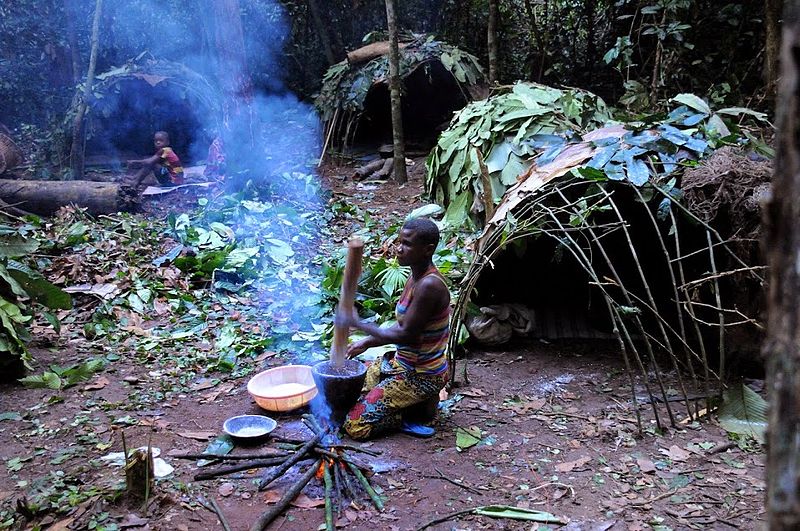
pygmy peoples
ethnic groups whose average height is unusually short

Creole
ethnic groups formed from mixed cultural and linguistic ancestry
ethnonym
An ethnonym () is a name applied to a given ethnic group. Ethnonyms can be divided into two categories: exonyms (whose name of the ethnic group has been created by another group of people) and autonyms, or endonyms (whose name is created and used by the ethnic group itself).

Volksdeutsche
In Nazi German terminology, '''' () were "people whose language and culture had German origins but who did not hold German citizenship." The term is the nominalised plural of volksdeutsch, with denoting a singular female, and , a singular male. The words Volk and völkisch'' conveyed the meanings of "folk".
Tharu people
Ethnic group indigenous to the Terai region of southern Nepal and northern India

desi
Desi ( or or ; Hindustani: देसी , , ), also Deshi (Bengali: দেশী), is a loose term used to describe the peoples, cultures, and products of the Indian subcontinent and their diaspora, derived from Sanskrit (), meaning 'land' or 'country'. Desi traces its origin to the people from the South Asian republics of India, Pakistan, and Bangladesh, and may also sometimes be extended to include peoples, cultures and products of Bhutan, Maldives, Nepal, Afghanistan, and Sri Lanka.
endonym and exonym
linguistic terms

Byzantine Greeks

Ishmaelites
The Ishmaelites (; ) were a collection of various Arab tribes, tribal confederations and small kingdoms described in Abrahamic tradition as being descended from and named after Ishmael.
person of color
persons with bodily characteristics, mainly skin color, that differ from Eurocentric standards; term used in the United States to refer to people whose historical homeland is not Europe
Pardo Brazilians
ethnic category in Brazil
names of the Greeks
ethnonyms for the Greeks

Walhaz
200px|thumb|Brass replica of the Tjurkö bracteates|Tjurkö bracteate showing the word ᚹᚨᛚᚺᚨᚲᚢᚱᚾᛖ walhakurne ('Roman grain', i.e. gold coin)
200px|thumb|Map of Walhaz-derived exonym variants for Romance speakers
'*Walhaz''''' is a reconstructed Proto-Germanic word meaning 'foreigner', or more specifically 'Roman', 'Romance-speaker' or '(romanised) Celt', and survives in the English words of 'Wales/Welsh' and 'Cornwall'. The term was used by the ancient Germanic peoples to describe inhabitants of the former Roman Empire, who were largely romanised and spoke Latin languages ( in Old Norse). The ad
Reichsdeutsche
''' (, literally translated ) is an archaic term for those ethnic Germans who resided within the German state that was founded in 1871. In contemporary usage, it referred to German citizens, the word signifying people from the German ', i.e., Imperial Germany or '''', which was the official name of Germany between 1871 and 1949.
Afghan
historic term for a member of the Pashtuns

Pinoy
alt=A gathering of Filipinos holding a sign that identifies them as "Pinoy" |thumb|A gathering of Filipinos holding a sign with the word "Pinoy", 2016

Shqiptar
Shqiptar (; ; plural: Shqiptarë/-t, Shqyptarë/-t) is an Albanian ethnonym (endonym), by which Albanians call themselves. They call their country (). It has gradually replaced the Old Albanian endonym Arbënesh/Arbëresh after the Middle Ages in the western Balkans.
Bošnjani
Bošnjani (; , ; ), meaning Bosnians, is the name originating from the Middle Ages, used for the inhabitants of Bosnia. The name is used and can be found in Bosnian written monuments from that period, appearing in Venetian sources as earliest as 12th century, according to investigation of the relations between Bosnia and Venetia by historian Marko Šunjić, and other documents until at least early 16th century and the Ottoman conquest and power stabilization.

Italo-Normans
right|200px|thumb|Palazzo dei Normanni, the palace of the Norman kings in [[Palermo.]]
right|200px|thumb|Bronze lion attributed to an Italo-Norman artist (Metropolitan Museum of Art).
.jpg)
Mzungu
thumb|Russian traveller in Africa.
' (), also known as muzungu, mlungu, musungu or musongo''''', is a Bantu word that means "wanderer" originally pertaining to the first European explorers to the East African region whom the local ethnic groups thought were traveling aimlessly with no goals to settle, conquer or trade, like restless spirits – the initial explorers who unbeknownst to the local tribes, were tasked with mapping the area, travel and trade routes, key landmarks like the source of the river Nile as well as documenting dominant kingdoms and forging some alliances that were then later
Sangley
Sangley (English plural: Sangleys; Spanish plural: Sangleyes) and Mestizo de Sangley (Sangley mestizo, mestisong Sangley, chino mestizo or Chinese mestizo) are archaic terms used in the Philippines during the Spanish colonial era to describe respectively a person of pure overseas Chinese ancestry as well as a person of mixed Chinese and native Filipino or Spanish ancestry. The Sangley Chinese were ancestors to both modern Chinese Filipinos and modern Filipino mestizo descendants of the Mestizos de Sangley, also known as Chinese mestizos, which are mixed descendants of Sangley Chinese and nativ
names of the Romani people
etymology of terms for interrelated nomadic European ethnic minority
name of Romania
Timeline of where Romania came from
Mestiço
thumb|right|Mestiço man with gun and sword under a fruiting papaya tree, Albert Eckhout, mid-seventeenth century [[Dutch Brazil]]
Mestiço is a Portuguese term that refers to persons of mixed race, as people from European and Indigenous non-European ancestry.
Cornovii
thumb|right|upright|Location of the Caithness Cornovii
The Cornovii is the name by which two, or three, tribes were known in Roman Britain. One tribe was in the area centred on present-day Shropshire, one was in Caithness in northernmost Scotland, and there was probably one in Cornwall. The name has appeared in ancient sources in various forms, such as Cornavii, Cornabii, and Curnavii.
brown people
racial classification
Caucahue
Caucahue is an ethnonym used by the Chono, the Huilliche and Spanish of Chiloé for a group of canoe-faring people that inhabited the archipelagoes south of the Gulf of Penas. The term is one of the various ethnonyms recorded by the Spanish in the 18th century in the fjords and channels of Patagonia. The Caucahue spoke a different language from the Chono. Archaeologist Ricardo Alvarez posits that the Caucahue and other groups appeared relatively late in colonial records because this was the time when contact became more common. Alvarez also posits the Caucahue disappeared from the historical re
Murzyn
'''''''''' () is a common Polish word for a Black person of Sub-Saharan African descent, cognate with the English word "Moor". Since the 21st century, some Black people residing in Poland consider it offensive.
demonyms for the United States
how people from the United States of America are known
Jew
word derived from the Hebrew-language word "Yehudi"
Toubab
thumb | 220x124px | right | A tourist depicted amongst other kinds of peopleToubab (alternatively Toubabou or Toubob) is a West African name for a person of European descent ("whites"). Used most frequently in The Gambia, Senegal, Guinea, and Mali, and also in Ivory Coast. The word can also be applied to any perceived traveler, usually only those with a different phenotype, up to foreign-raised locals (thus with a different accent) or visiting expatriates.
Jewish ethnonym
name used to describe ethnic Jews