Category
page 1Eucestoda

Taenia solium
species of Cestoda

Taenia saginata
species of Cestoda

Echinococcus granulosus
species of worm

Echinococcus multilocularis
species of worm
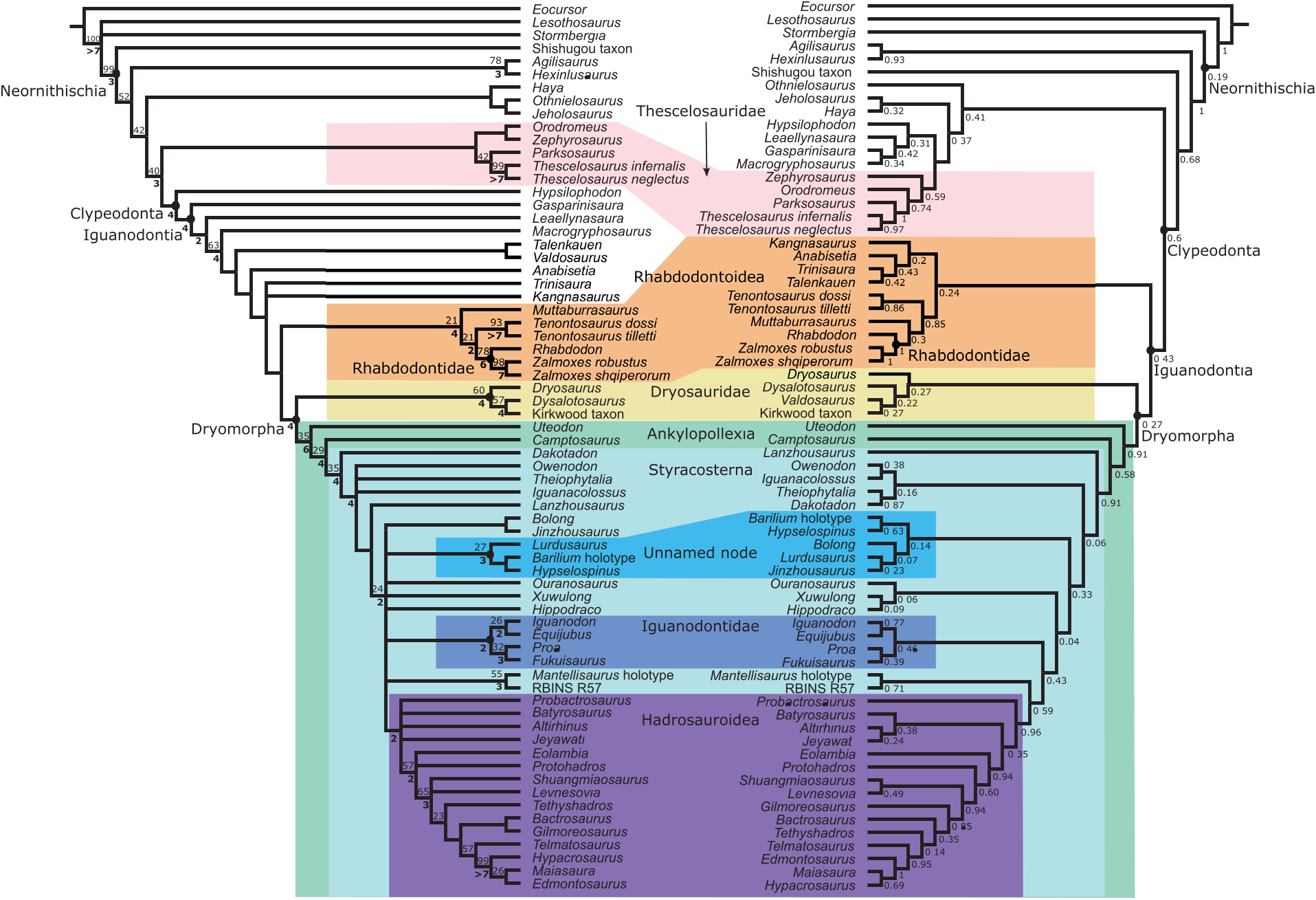
Taenia
genus of tapeworm

Echinococcus
thumb|400px|right|schematic representation of the life cycle of Echinococcus
thumb|General description of the egg and oncosphere of Echinococcus spp.

Cyclophyllidea
Cyclophyllidea (the cyclophyllid cestodes) is an order of Cestoda (tapeworm). It is the largest and most diverse order of Cestoda (tapeworm), encompassing species that infect all classes of terrestrial tetrapods including humans and domesticated animals, and includes species with some of the most severe health impact on wildlife, livestock, and humans.

Taeniidae
The Taeniidae are a family of tapeworms. It is the largest family representing the order Cyclophyllidea. It includes many species of medical and veterinary importance, as Taenia solium (pork tapeworm), Taenia saginata (beef tapeworm), and Echinococcus granulosus. The Taeniidae are parasites of mammals and many are infectious to humans.

Eucestoda
Eucestoda is the larger of the two subclasses of flatworms in the class Cestoda (the other subclass being Cestodaria) whose members are commonly known as tapeworms. Larvae have six posterior hooks on the scolex (head), in contrast to the ten-hooked Cestodaria. All tapeworms are endoparasites of vertebrates, living in the digestive tract or related ducts. Examples are the pork tapeworm (Taenia solium) with a human definitive host, and pigs as the secondary host, and Moniezia expansa, the definitive hosts of which are ruminants.

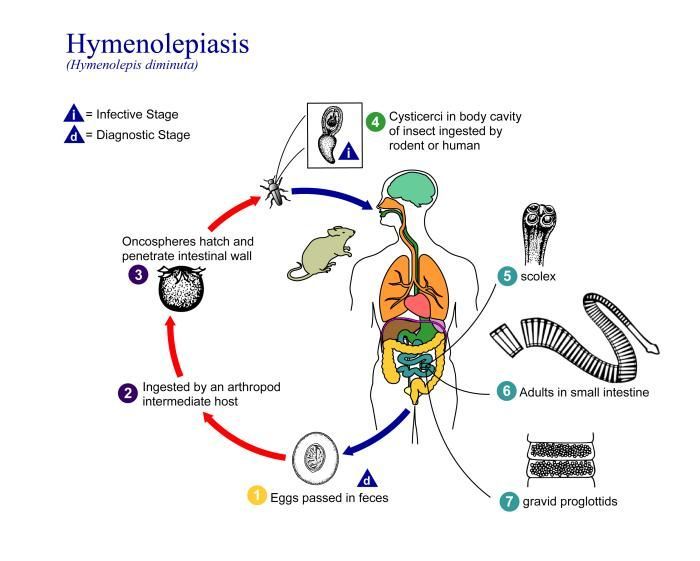
Hymenolepis nana
species of worm

Diphyllobothrium
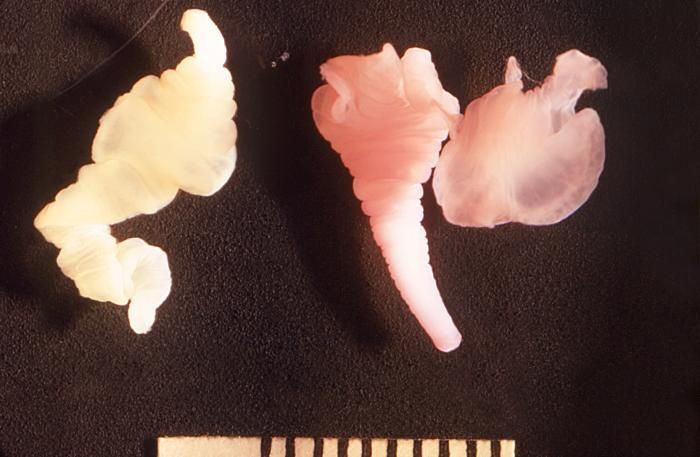
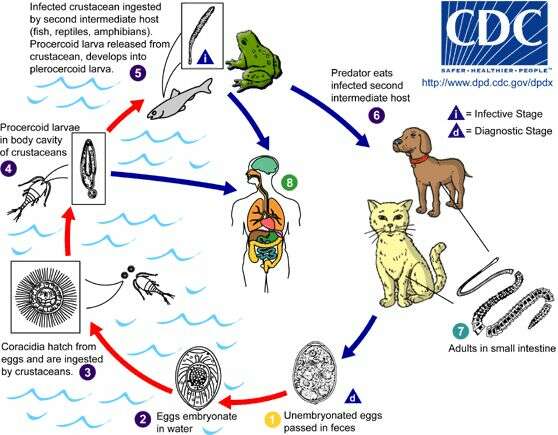
Diphyllobothrium is a genus of tapeworms which can cause diphyllobothriasis in humans through consumption of raw or undercooked fish. The principal species causing diphyllobothriasis is Diphyllobothrium latum, commonly known as the broad or fish tapeworm, or broad fish tapeworm. D. latum is a pseudophyllid cestode that infects fish and mammals. D. latum is native to Scandinavia, western Russia, and the Baltics, though it is now also present in North America, especially the Pacific Northwest. In Far East Russia, D. klebanovskii, having Pacific salmon as its second intermediate ho
Tetraphyllidea
Tetraphyllidea is a large tapeworm order that contains some 60 genera and about 800 described species. Tetraphyllideans are remarkable for their scolex morphologies, which are the most varied and morphologically complex amongst all tapeworm orders.

Ligula intestinalis
species of worm
Anoplocephalidae
The Anoplocephalidae are a family of tapeworms containing the genera Bertiella, Anoplocephala, Paranoplocephala, Moniezia, and others.
Hymenolepididae
__NOTOC__

Taenia multiceps
species of worm

Taenia taeniaeformis
species of worm

Taenia pisiformis
endoparasitic tapeworm
Diphyllobothriidae
Diphyllobothriidae is a family of Cestoda (tapeworms). Members of this family are gut parasites of vertebrates. In most species the definitive hosts are marine or aquatic mammals such as cetaceans and pinnipeds, the first intermediate host usually being a crustacean and the second intermediate a fish. The genus Diphyllobothrium is found as an adult in mammals and fish-eating birds, including the domestic cat. The genus Spirometra tends to have a land-dwelling or semi-aquatic vertebrate as its second intermediate host, with the adults usually occurring in felines.

Hymenolepis diminuta
species of tapeworm

Pseudophyllidea
thumb|Pseudophyllid
Pseudophyllid cestodes (former order pseudophyllidea) are tapeworms with multiple "segments" (proglottids) and two bothria or "sucking grooves" as adults. Proglottids are identifiably pseudophyllid as the genital pore and uterine pore are located on the mid-ventral surface, and the ovary is bilobed ("dumbbell-shaped").
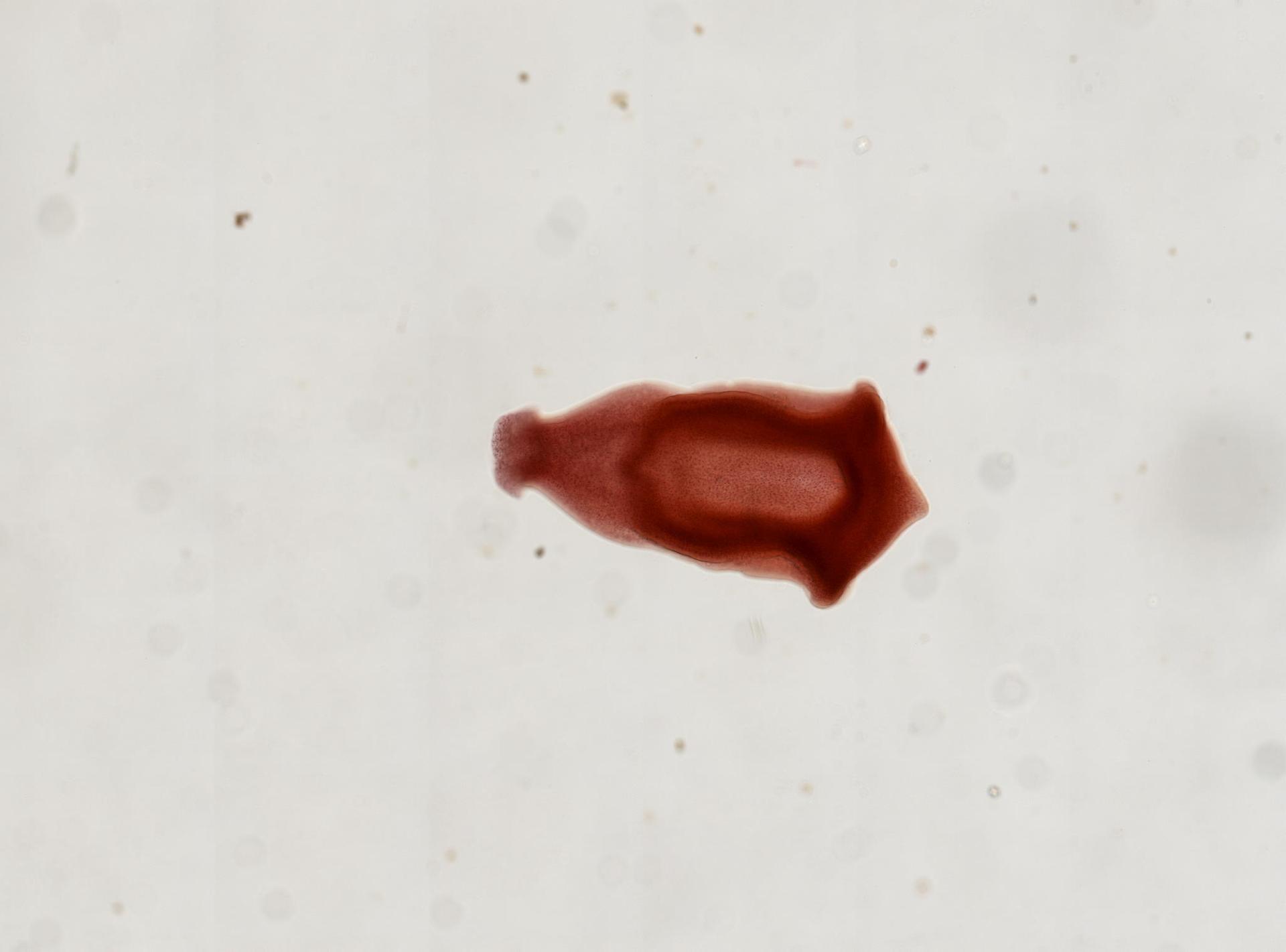
Caryophyllidea
The Caryophyllideans are a group of tapeworms that infect fish and annelids (segmented worms) with a simple scolex or "head." Worms in this order only have one proglottid, which is believed to be the primitive condition for tapeworms. They are generally less than 10 centimetres long. Caryophillideans represent a unique type of tapeworm, such that they possess a monzoic, unsegmented, body, with only a single set of reproductive organs.

Hymenolepis
genus of worms
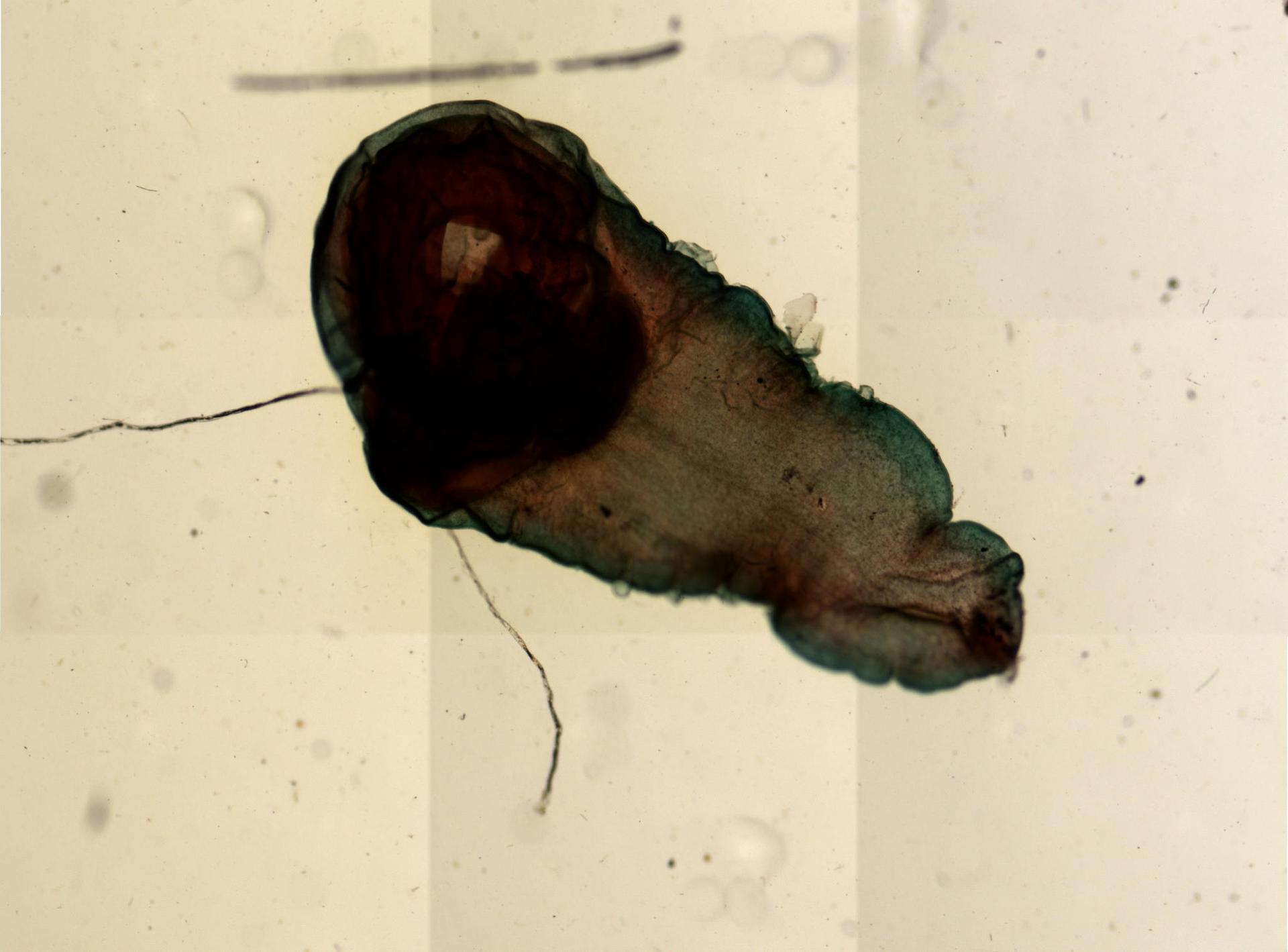
Trypanorhyncha
Trypanorhyncha is an order of cestodes, a type of flatworm.
Diphyllobothriidea
Diphyllobothriidea is an order of Cestoda (tapeworms). Members of this order are gut parasites of vertebrates. They infect mammals as their definitive hosts and use either copepods (a group of small crustaceans found in the sea and nearly every freshwater habitat, e.g. Spirometra) or both copepods and fish as in the broadfish tapeworm as intermediate hosts.
Davaineidae
Davaineidae is the name of a family of tapeworms that includes helminth parasites of vertebrates. Of the 14 genera recorded under this family, Raillietina is the best understood and most extensively studied. Members of the family are characterized by the presence of a crown (rostellum) at the tip of the scolex, and the rostellum is made up of mattock- or hammer-shaped hooks. The rostellum is surrounded by suckers which are armed with spines. These tapeworms are most commonly found in birds, and in few cases, mammals, which are the definitive hosts. Intermediate hosts are small insects such as

Moniezia expansa
species of worm

Raillietina
Raillietina is a genus of tapeworms that includes helminth parasites of vertebrates, mostly of birds. The genus was named in 1920 in honour of a French veterinarian and helminthologist, Louis-Joseph Alcide Railliet. Of the 37 species recorded under the genus, Raillietina demerariensis, R. asiatica, and R. formsana are the only species reported from humans, while the rest are found in birds. R. echinobothrida, R. tetragona, and R. cesticillus are the most important species in terms of prevalence and pathogenicity among wild and domestic birds.
Echinococcus vogeli
species of worm

Anoplocephala perfoliata
species of worm
Echinococcus shiquicus
species of worm
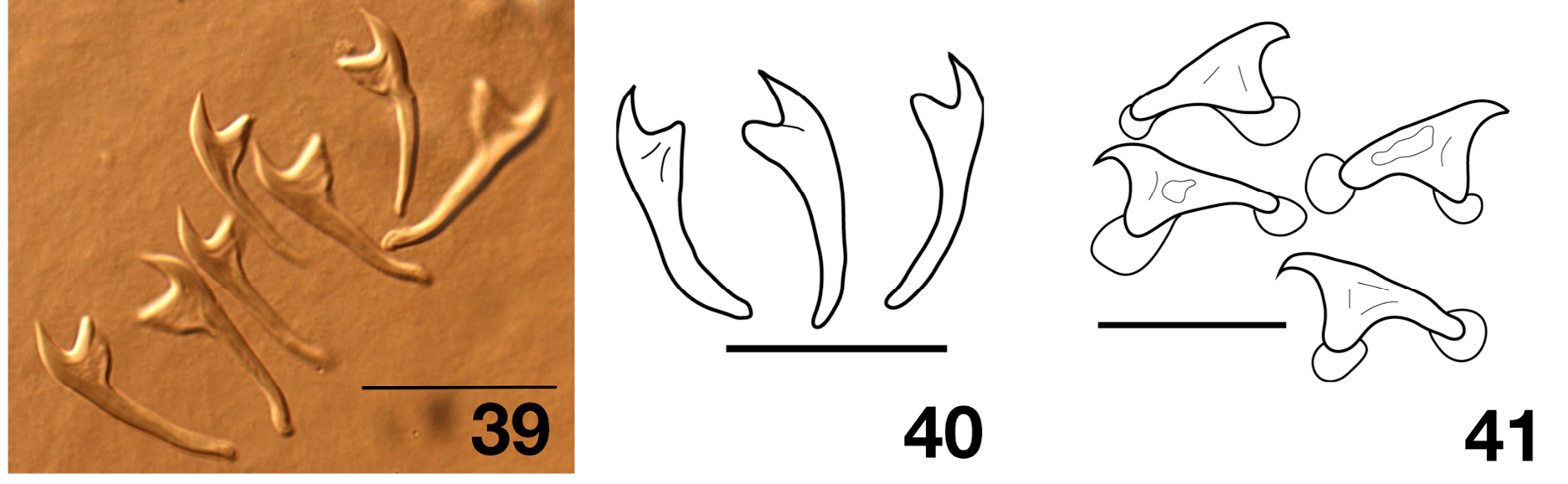
Dilepididae
Dilepididae is a family of flatworms belonging to the order Cyclophyllidea.
Phyllobothriidae
Phyllobothriidae is a family of flatworms belonging to the order Phyllobothriidea.
Onchobothriidae
Onchobothriidae is a family of flatworms belonging to the order Onchoproteocephalidea.
Spirometra erinaceieuropaei
species of worm

Taenia crassiceps
species of Cestoda

Diphyllobothrium mansonoides
species of worm

Litobothrium amsichensis
species of worm
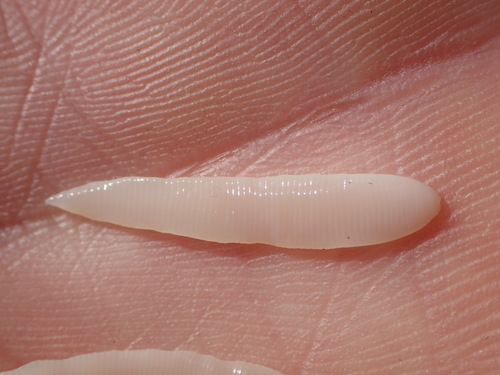
Schistocephalus
Schistocephalus is a genus of tapeworm of fish, fish-eating birds and rodents.
Tetrabothriidae
Tetrabothriidea is an order of helminths in the class Cestoda. It consists of only one family, Tetrabothriidae. Their hosts are mainly seabirds, the rest being cetaceans and pinnipeds.
Dipylidiidae
REDIRECT Cyclophyllidea

Schistocephalus solidus
species of worm

Raillietina cesticillus
species of worm
Ligula
genus of flatworms

Calliobothrium
Calliobothrium is a genus of cestodes in the order Tetraphyllidea.
Most, or possibly all, of the known species are parasites found within the intestines of members of the shark family Triakidae. It is known that in some instances at least two different species of Calliobothrium can parasitise the same species of shark.
Anoplocephala
Anoplocephala is a genus of tapeworms in the family Anoplocephalidae named in 1848 by Émile Blanchard. The type species is Anoplocephala perfoliata, which was originally described as Taenia perfoliata. Anoplocephala is a cestode, belonging to the Cestoda class, meaning that it is a Flatworm parasite. They can be found in fifty-six percent of the wild rhino population in Assam, India.

Dipylidium
thumb|250px|Dipylidium life cycle

Spirometra
Spirometra is a genus of pseudophyllid cestodes that reproduce in canines and felines, but can also cause pathology in humans if infected. As an adult, this tapeworm lives in the small intestine of its definitive host and produces eggs that pass with the animal's feces. When the eggs reach water, the eggs hatch into coracidia which are eaten by copepods. The copepods are eaten by a second intermediate host to continue the life cycle. Humans can become infected if they accidentally eat frog legs or fish with the plerocercoid stage encysted in the muscle. In humans, an infection of Spirometra is

Proteocephalidae
Proteocephalidae is a diverse family tapeworms with nearly 300 recognized species in 66 genera and 13 subfamilies, whose species are found in every continent. They are mainly parasites of siluriforms and other freshwater fishes, but also parasitize reptiles and amphibians. A typical proteocephalid life cycles include planktonic crustaceans, and small fish as intermediate hosts.
Mesocestoididae
Mesocestoididae is a family of Cestoda (tapeworms) in the order Cyclophyllidea. Members of this family are gut parasites of small mammals and occasionally birds.
Taenia asiatica
species of Cestoda
Prosobothrium
Prosobothrium is a genus of flatworms belonging to the monotypic family Prosobothriidae.
Cladotaenia
Cladotaenia is a genus of flatworms belonging to the family Taeniidae.

Moniezia
Moniezia a genus of tapeworms that are parasitic in mammals, including sheep, goat and cattle. It comprises four known species such as M. expansa, M. benedeni, M. autumnalis and M. baeri. M. expansa is the most well known species within the genus because of its high prevalence. Members of the genus are among the largest cestodes reaching up to 10 m in length. They inhabit the small intestine of mammalian host. Their life cycle is indirect requiring intermediate host, which are oribatid mites. They are characterized by the presence of interproglottid glands.

Cittotaenia
Cittotaenia is a genus of tapeworms belonging to the family Anoplocephalidae.
Echinobothriidae
Echinobothriidae is a family of flatworms belonging to the order Diphyllidea.
Onchoproteocephalidea
Onchoproteocephalidea is an order of flatworms belonging to the class Cestoda.

Taenia hydatigena
species of Cestoda

Marsupiobothrium gobelinus
species of worm