Category
page 1Euclidean geometry
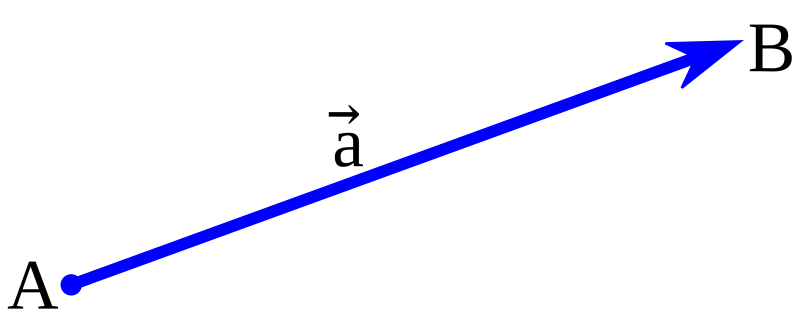
Euclidean vector
geometric object that has magnitude (or length) and direction

Elements
mathematical treatise by Euclid

Euclidean geometry
mathematical system attributed to Euclid

rotation
right|thumb|A sphere rotating (spinning) about an axis
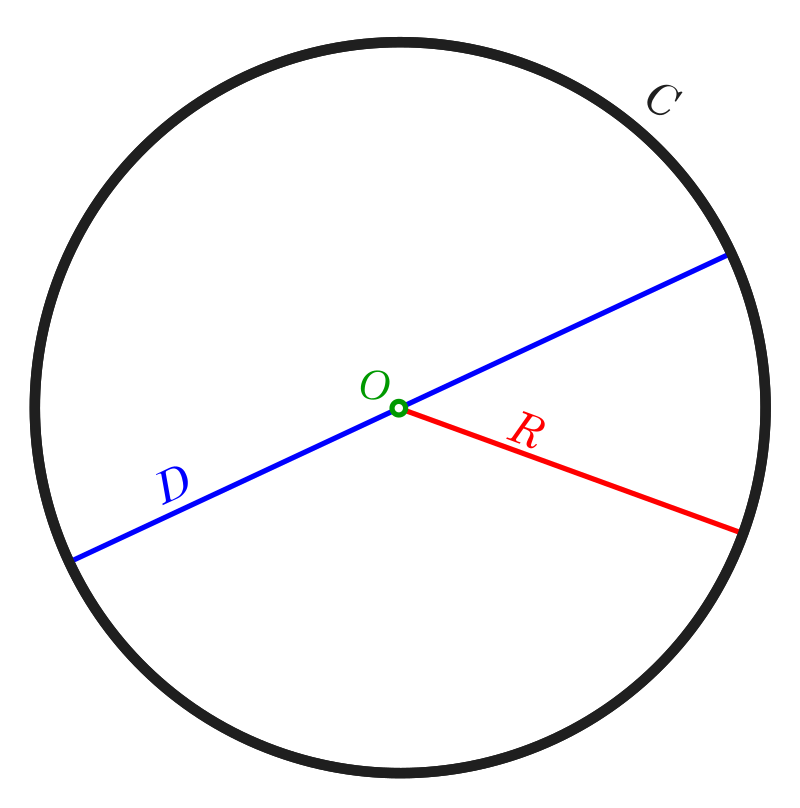
disk
plane figure, bounded by circle

Euclidean space
generalization of Euclidean geometry to higher-dimensional vector spaces

congruence
when two figures or objects in geometry have the same shape and size, or if one has the same shape and size as the mirror image of the other

similarity
idea in geometry

vertex
special kind of point that describes the corners or intersections of geometric shapes

triangulation
thumb|Estimating the height of a mountain using triangulation
crystal system
class of space groups, lattices, point groups, or crystals
relative direction
information contained in the relative position of one point of space with respect to another, disregarding distance
intercept theorem
theorem on ratios of line segments formed when 2 intersecting lines are cut by a pair of parallels

hyperplane
thumb|Two intersecting planes: Two-dimensional planes are the hyperplanes in three-dimensional space.
Apollonius' theorem
theorem
method of exhaustion
primitive way of calculating area
parallelogram law
mathematical theorem
orthogonal projection
form of parallel projection in which all the projection lines are orthogonal to the projection plane
radio navigation
navigation using radio signals
plane curve
curve in a plane that may be either a Euclidean plane, an affine plane or a projective plane
Varignon's theorem
theorem that the midpoints of the sides of an arbitrary quadrilateral form a parallelogram
Casey’s theorem
theorem
half-space
portion of a Euclidean space bisected by a hyperplane
distance from a point to a line
geometry problem
Steiner–Lehmus theorem
theorem that a triangle with two angle bisectors of equal lengths is isosceles
isosceles triangle theorem
theorem
De Gua's theorem
theorem
orientation
description of the rotation of an item relative to defined coordinate axes of the space it occupies

sangaku
thumb|A sangaku dedicated to Konnoh Hachimangu (Shibuya, Tokyo) in 1859.
On the Sphere and Cylinder
work by Archimedes, calculating via the method of exhaustion the surface area of a sphere and the volume of a ball
root system
geometric arrangements of points, foundational to Lie theory
star domain
property of point sets in Euclidean spaces

Measurement of a Circle
treatise by Archimedes about the area and circumference of a circle

On Spirals
treatise by Archimedes about the Archimedean spiral
Euler's quadrilateral theorem
Jung's theorem
theorem relating the diameter of a point set to the minimum radius of an enclosing ball

orthant
thumb|In two dimensions, there are four orthants (called quadrants)
British flag theorem
on distances from opposite corners to a point inside a rectangle
multilateration
navigation based on the measurement of the distances to two stations at known locations
Cauchy's theorem
theorem in geometry
dissection problem
the problem of partitioning a given shape into pieces that can be rearranged to form a second given shape
Carlyle circle
circle in a coordinate plane associated with a quadratic equation
Book of Lemmas
mathematical treatise attributed to Archimedes
line–line intersection
intersection of a line and a line can be the empty set, a point, or a line
distance between two parallel lines
minimum distance between any two points of the two lines
homothetic center
point from which at least two geometrically similar figures can be seen as a dilation/contraction of one another
Finsler–Hadwiger theorem
describes a third square derived from any two squares that share a vertex
Rodrigues' rotation formula
vector formula for a rotation in space, given its axis
van Schooten's theorem
property of equilateral triangles
distance from a point to a plane
length in solid geometry
triangle group
Group realized geometrically by reflections across the sides of a triangle
Commandino's theorem
geometric theorem related to tetrahedra
Equal incircles theorem
on rays from a point to a line, with equal inscribed circles between adjacent rays
Droz-Farny line theorem
theorem in Euclidean geometry
Euclidean subspace
affine subspace of an Euclidean space
eyeball theorem
statement in elementary geometry
Constant chord theorem
an invariant cord in one of two intersecting circles based on any point in the other

Euclid's Optics
book by Euclides
expansion
operation on a polytope where facets are separated and moved radially apart, and new facets are formed at separated elements
square lattice
type of lattice in a two-dimensional Euclidean space