Category
page 1Euglenozoa genera

Euglena
Euglena is a genus of single-celled, flagellate eukaryotes. It is the best-known and most widely studied member of the class Euglenoidea, a diverse group containing some 54 genera and at least 200 species. Species of Euglena are found in fresh water and salt water. They are often abundant in quiet inland waters where they may bloom in numbers sufficient to color the surface of ponds and ditches green (E. viridis) or red (E. sanguinea).

Trypanosoma
Trypanosoma is a genus of kinetoplastids (class Trypanosomatidae), a monophyletic group of unicellular parasitic flagellate protozoa. Trypanosoma is part of the phylum Euglenozoa. The name is derived from the Ancient Greek trypano- (borer) and soma (body) because of their corkscrew-like motion. Most trypanosomes are heteroxenous (requiring more than one obligatory host to complete life cycle) and most are transmitted via a vector. The majority of species are transmitted by blood-feeding invertebrates, but there are different mechanisms among the varying species. Trypanosoma equiperdum is sprea

Leishmania
Leishmania () is a genus of parasitic protozoans, single-celled eukaryotic organisms of the trypanosomatid group that are responsible for the disease leishmaniasis. The parasites are transmitted by sandflies of the genus Phlebotomus in the Old World, and of the genus Lutzomyia in the New World. There are 53 species and about 20 of them are responsible for human infections. They are transmitted by around 100 species of sandflies. The primary hosts are vertebrates. They commonly infect hyraxes, canids, rodents, and humans.
Phacus
Phacus is a genus of unicellular euglenoids, of the phylum Euglenozoa (also known as Euglenophyta), characterized by its flat, leaf-shaped structure, and rigid cytoskeleton known as a pellicle. These eukaryotes are mostly green in colour, and have a single flagellum that extends the length of their body. They are morphologically very flat, rigid, leaf-shaped, and contain many small discoid chloroplasts.

Bodo
genus of protists

Trachelomonas
Trachelomonas is a genus of swimming, free-living euglenoids characterized by the presence of a shell-like covering called a lorica. Details of lorica structure determine the classification of distinct species in the genus. The lorica can exist in spherical, elliptical, cylindrical, and pyriform (pear-shaped) forms. The lorica surface can be smooth, punctuate or striate and range from hyaline, to yellow, or brown. These colors are due to the accumulation of ferric hydroxide and manganic oxide deposited with the mucilage and minerals that comprise the lorica. In Trachelomonas, the presence of a
Crithidia
Crithidia is a genus of trypanosomatid Euglenozoa. They are parasites that exclusively parasitise arthropods, mainly insects. They pass from host to host as cysts in infective faeces and typically, the parasites develop in the digestive tracts of insects and interact with the intestinal epithelium using their flagellum. They display very low host-specificity and a single parasite can infect a large range of invertebrate hosts. At different points in its life-cycle, it passes through amastigote, promastigote, and epimastigote phases; the last is particularly characteristic, and similar stages i

Colacium
Colacium is a genus of algae belonging to the family Euglenaceae. It has two phases: a motile phase and a sessile phase, where it is found attached to other freshwater organisms.
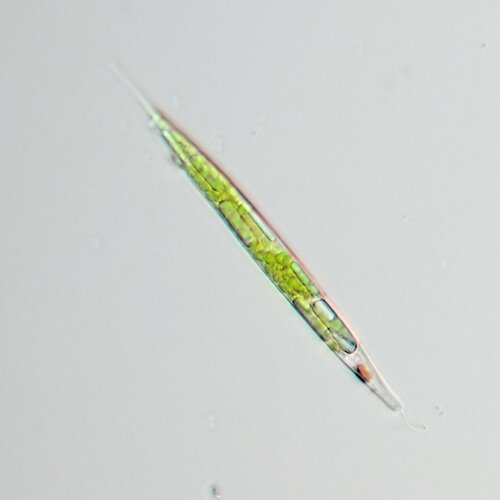
Lepocinclis
thumb|
Phytomonas
Phytomonas is a genus of trypanosomatids that infect plant species. Initially described using existing genera in the family Trypanosomatidae, such as Trypanosoma or Leishmania, the nomenclature of Phytomonas was proposed in 1909 in light of their distinct hosts and morphology. When the term was originally coined, no strict criterion was followed, and the term was adopted by the scientific community to describe flagellate protozoa in plants as a matter of convenience. Members of the taxon are globally distributed and have been discovered in members of over 24 plant families. Of these 24, the tw
Leptomonas
Leptomonas is a genus of parasitic flagellate protist belonging to family Trypanosomatidae and subfamily Leishmaniinae sensu Maslov & Lukeš 2012. It is a monoxenous parasite of mainly Hemiptera, Diptera, and Siphonaptera insects.

Entosiphon
Entosiphon is a genus of euglenids. It was described by Friedrich Stein in 1878.

Peranema
Peranema is a genus of free-living phagotrophic euglenids (Euglenida; Euglenozoa; Excavata). There are more than 20 nominal species, varying in size between 8 and 200 micrometers. Peranema cells are gliding flagellates found in freshwater lakes, ponds and ditches, and are often abundant at the bottom of stagnant pools rich in decaying organic material. Although they belong to the class Euglenoidea, and are morphologically similar to the green Euglena, Peranema have no chloroplasts, and do not conduct autotrophy. Instead, they capture live prey, such as yeast, bacteria and other flagellates, co
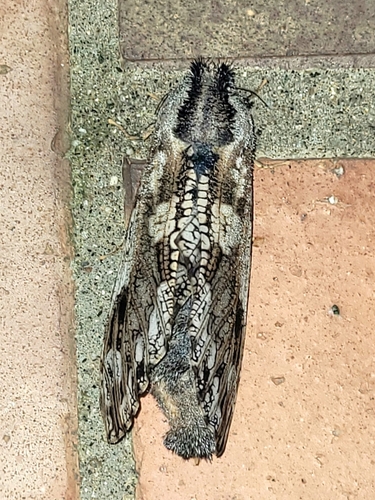
Cryptobia
Cryptobia is a genus of kinetoplastids. Several species are known for being fish pathogens. They can be found in other animals, as well. The name Trypanoplasma is occasionally used for some of these.

Diplonema
Diplonema is a genus of free-living organisms in the Euglenozoa. They are distinguished from Rhynchopus in Class Diplonemea by the absence of a fully flagellate dispersive stage.
Anisonema
Anisonema (, meaning "unequal flagella") is a genus of colorless phagotrophic euglenid flagellates that occur in marine, brackish, and freshwater habitats around the world. Cells of Anisonema have two unequally sized flagella: a thinner anterior flagellum which flails around in front of the cell, and a thicker and longer posterior flagellum that trails behind, both emerging from the anterior region of a ventral groove in the cell. The cells glide on their posterior flagellum and can quickly reverse the direction of their movement. Like other euglenids, it has a relatively rigid protein pellicl
Urceolus
Urceolus (, 'pitcher') is a genus of heterotrophic flagellates belonging to the Euglenozoa, a phylum of single-celled eukaryotes or protists. Described by Russian biologist Konstantin Mereschkowsky in 1877, its type species is Urceolus alenizini. Species of this genus are characterized by deformable flask-shaped cells that exhibit at least one flagellum that is active at the tip, arising from a neck-like structure that also hosts the feeding apparatus. They are found in a variety of water body sediments across the globe. According to evolutionary studies, Urceolus belongs to a group of Eugleno