Category
page 1European folklore

werewolf
In folklore, a werewolf (), or occasionally lycanthrope (from Ancient Greek ), is an individual who can shapeshift into a wolf or therianthropic hybrid wolf–humanlike creature, either voluntarily or involuntarily due to a curse or other affliction. In modern fiction, especially film, transformations are often depicted as triggered by the full moon and transmitted by a bite or scratch from another werewolf. Early sources for belief in this ability or affliction, called lycanthropy, are Petronius (27–66) and Gervase of Tilbury (1150–1228).

will o' the wisp
thumb|upright=1.35|The Will o' the Wisp and the Snake by Hermann Hendrich (1854–1931)

human tower (castell)
A castell (; literally "castle") is a human pyramid built traditionally at festivals in southern Catalonia (Spain), now also found in the rest of Catalonia, and in the Balearic Islands.
Wandering Jew
European Christian legendary figure of a Jew who taunted Jesus and was cursed to immortally walk the Earth until the Second Coming

changeling
thumb|upright=1.2|Der Wechselbalg by Henry Fuseli, 1781
fairy ring
natural trace of the circular growth front of mushroom mycelium
Nart saga
North Caucasus epic poem
sheela na gig
sculpture motif
The Scorpion and the Frog
fable that vicious people often hurt others despite their self-interest
Stone Soup
European folk story

Ankou
thumb|Ankou in La Roche-Maurice, Finistère
Eglė the Queen of Serpents
mythological serpent from Lithuanian folklore
wishing well
well where wishes are thought to be granted
Red Jews
in German legends, a Jewish nation that would invade Europe during the tribulations leading to the end of the world
Hand of Glory
dried and pickled hand of a man who has been hanged

baltistics
Baltistics, also referred to as Baltic studies, is a multidisciplinary study of the language and culture (history, literature, folklore and mythology) of the Baltic nations. Baltistics by its subject splits into Lithuanistics, Latvistics, Prussistics, etc. Special attention is paid to the language studies, especially to the reconstruction of the Proto-Baltic language, which some linguists have argued is the same as the Proto-Balto-Slavic language, while others (V. Toporov, V. Ivanov, V. Mažiulis etc.) have believed that the Proto-Slavic language has formed out of from the Proto-Baltic peripher
Festivity of ‘la Mare de Déu de la Salut’ of Algemesí
traditional festival in Algemesí, Spain
Devil's Bridge
bridge built by or named after the devil
processional giant
traditional figure, used to parade during processions
European folklore
folklore of the Western world

Alp
nightmare creature originating in German folklore
Strong Hans
literary work
English folklore
examples, orgins, and histories various parts of english folklore.
Osculum infame
Witch's supposed ritual greeting upon meeting with the Devil
Griselda
character from European folklore
Venusberg
Mythological Mountain of Venus
Kitchen witch
witch doll
Elucidarium
thumb|A German chapbook version printed in 1559. The title page shows a [[compass rose with the names of twelve winds.]]
Elucidarium (also Elucidarius, so called because it "elucidates the obscurity of various things") is an encyclopedic work or summa about medieval Christian theology and folk belief, originally written in the late 11th century by Honorius Augustodunensis, influenced by Anselm of Canterbury and John Scotus Eriugena. It was probably complete by 1098, as the latest work by Anselm that finds mention is Cur deus homo. This suggests that it is the earliest work by Honorius, written
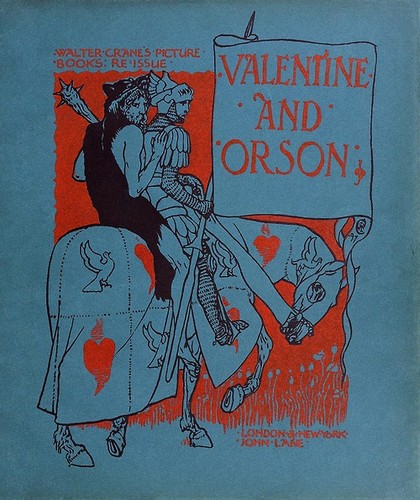
Valentine and Orson
medieval romance attached to the Carolingian circle
Elegast
thumb|250px|Old publication of Karel ende Van Elegast.
Elegast (elf spirit) is the hero and noble robber in the poem Karel ende Elegast, an early Middle Dutch epic poem that has been translated into English as Charlemagne and Elbegast. In the poem, he possibly represents the King of the Elves. He appears as a knight on a black horse, an outcast vassal of Charlemagne living in the forest. The original Dutch poem uses the name Elegast, while translated versions of the poem commonly use the name Elbegast in German and English, or Alegast in the Scandinavian ballad.
Gayant
thumb|Carriers below the giant couple in front of the town hall
thumb|Gayant and Marie Cagenon
thumb|Family of Gayant of Douai (1780) by [[Louis Joseph Watteau in Musée de la Chartreuse de Douai.]]
thumb|Gayants in 1910.
International Society for Ethnology and Folklore
learned society
Årsgång
' (pronounced [ˈoːʂgɔŋ]) is an archaic form of Swedish divination. It is sometimes translated as the year walk or yearly round'.
Holly King
speculative archetype of modern studies of folklore and mythology which has been popularized in some Neopagan religions
Shooting an apple off one's child's head