Category
page 1Eurotiomycetes
Eurotiomycetes
Eurotiomycetes is a large class of ascomycetes with cleistothecial ascocarps within the subphylum Pezizomycotina, currently containing around 3810 species according to the Catalogue of Life. It is the third largest lichenized class, with more than 1200 lichen species that are mostly bitunicate in the formation of asci. It contains most of the fungi previously known morphologically as "Plectomycetes".
Mycocaliciales
The Mycocaliciales are an order of ascomycetous fungi within the subclass Mycocaliciomycetidae and within the class Eurotiomycetes (subphylum Pezizomycotina).
Coryneliales
The Coryneliales are an order of ascomycetous fungi within the monotypic subclass Coryneliomycetidae in the class Eurotiomycetes and within the subdivision Pezizomycotina. Species in this order are found almost exclusively in the tropics, primarily as a pathogen on the gymnosperm Podocarpus, although it has been found on other plants like the Southern Hemisphere beech Nothofagus, and Drimys.

Chaenothecopsis
Chaenothecopsis is a genus of about 40 species of pin lichens in the family Mycocaliciaceae.

Mycocaliciaceae
The Mycocaliciaceae are a family of fungi in the order Mycocaliciales, comprising seven genera and approximately 90 species. Originally proposed in 1970 by Alexander Schmidt, the family is characterised by immersed thalli, stalked brown or black ascomata (fruiting bodies), and small cylindrical asci that release without forming a . Molecular phylogenetic studies have placed Mycocaliciaceae within the class Eurotiomycetes and led to the inclusion of taxa formerly classified in the Sphinctrinaceae. The family has a fossil record dating back at least 50 million years, with several specimens disco
Coryneliaceae
Coryneliaceae is a family of fungi in the order Coryneliales. The family is mostly made up of pathogenic fungi with a global distribution. This family was traditionally classified by morphological means, but recent DNA sequencing has resulted in revisions to the family.
Eurotiomycetidae
Eurotiomycetidae is a subclass of the Eurotiomycetes.
Chaetothyriomycetidae
Chaetothyriomycetidae is a subclass of ascomycete within the class Eurotiomycetes. Many species in Chaetothyriomycetidae are lichens.
Fonsecaea
Fonsecaea is a genus of fungi in the family Herpotrichiellaceae. The type species, Fonsecaea pedrosoi, is associated with the disease chromoblastomycosis.
list of Aspergillus species
Wikimedia list article
Sphinctrinaceae
The Sphinctrinaceae are a family of fungi in the order Mycocaliciales.

Caliciopsis pinea
species of fungus

Chaenothecopsis viridialba
species of fungus

Stenocybe
Stenocybe is a genus of fungi in the family Mycocaliciaceae. It has 14 species.
Monascaceae
Monascaceae is a former family of fungi in the subclass Eurotiomycetidae.
Sphinctrina
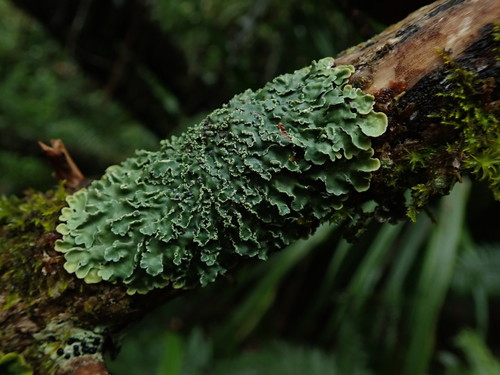
Sphinctrina is a genus of lichenicolous fungi, usually not lichenized, in the family Sphinctrinaceae. Its species are most commonly parasitic on lichens of the genus Pertusaria.

Sclerococcum
Sclerococcum is a genus of lichenicolous fungi in the family Dactylosporaceae.

Chaenothecopsis vainioana
species of fungus

Celothelium
Celothelium is a genus of lichen-forming fungi in the family Celotheliaceae. These lichens typically have a thin, crust-like thallus that often grows beneath the surface of tree bark or rocks in tropical rainforests and coastal areas. Celothelium species are characterised by small, black, shiny reproductive structures (perithecia), and thread-like spores. The genus has had an uncertain taxonomic history since its original description in 1860, but recent genetic studies have placed it in its own distinct group within the fungal class Eurotiomycetes. Celothelium species have been found in variou
Eremascus
Eremascus is the sole genus in the fungal family Eremascaceae. The genus was circumscribed by Eduard Eidam in 1883, while the family was circumscribed by Adolf Engler and E. Gilg in 1924. Eremascus is thought to be a basal fungus, from which ascomycetous yeasts formed. Taxa have a widespread distribution, and grow saprobically, especially on substrates with low water content.

Phaeocalicium polyporaeum
species of fungus
Mycocalicium
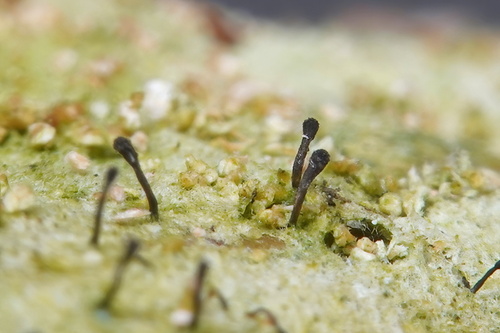
Mycocalicium is a genus of fungi in the family Mycocaliciaceae. The genus was circumscribed by Finnish lichenologist Edvard August Vainio in 1890.

Phaeocalicium
Phaeocalicium is a genus of fungi in the family Mycocaliciaceae. The genus was circumscribed in 1970 by German lichenologist Alexander Schmidt, with Phaeocalicium praecedens assigned as the type species.
Amauroascus
Amauroascus is a genus of fungi in the family Onygenaceae. The genus was described by German mycologist Joseph Schröter in 1893, with Amauroascus verrucosus as the type species.
Phialophora gregata
species of fungus
Sarcopyrenia
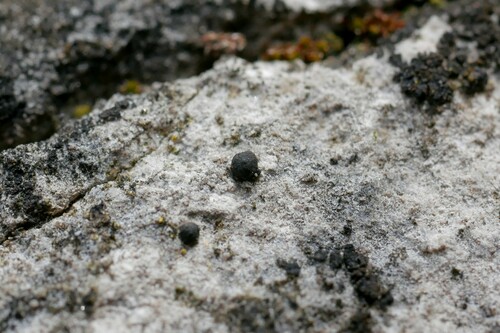
Sarcopyrenia is a genus of lichenicolous (lichen-dwelling) fungi. It has 11 species. It is the only genus in Sarcopyreniaceae, a family in the order Verrucariales. Sarcopyreniaceae is one of the few families composed entirely of lichenicolous fungi. These tiny fungi produce small, black, flask-shaped fruiting bodies (perithecia) typically less than half a millimetre across, containing extremely narrow, thread-like ascospores. While they initially grow on crustose lichens, their fruiting bodies often outlast their hosts and end up sitting on bare rock, making their exact relationship with liche
Arachnomyces
Arachnomyces is a genus of cleistothecial ascomycete fungi described in 1902, of which the anamorph (asexual) stage is the genus Onychocola. Although morphologically similar to members of other families, the fungus now belongs to its own monotypic family Arachnomycetaceae, which is the only family in the monotypic order Arachnomycetales.
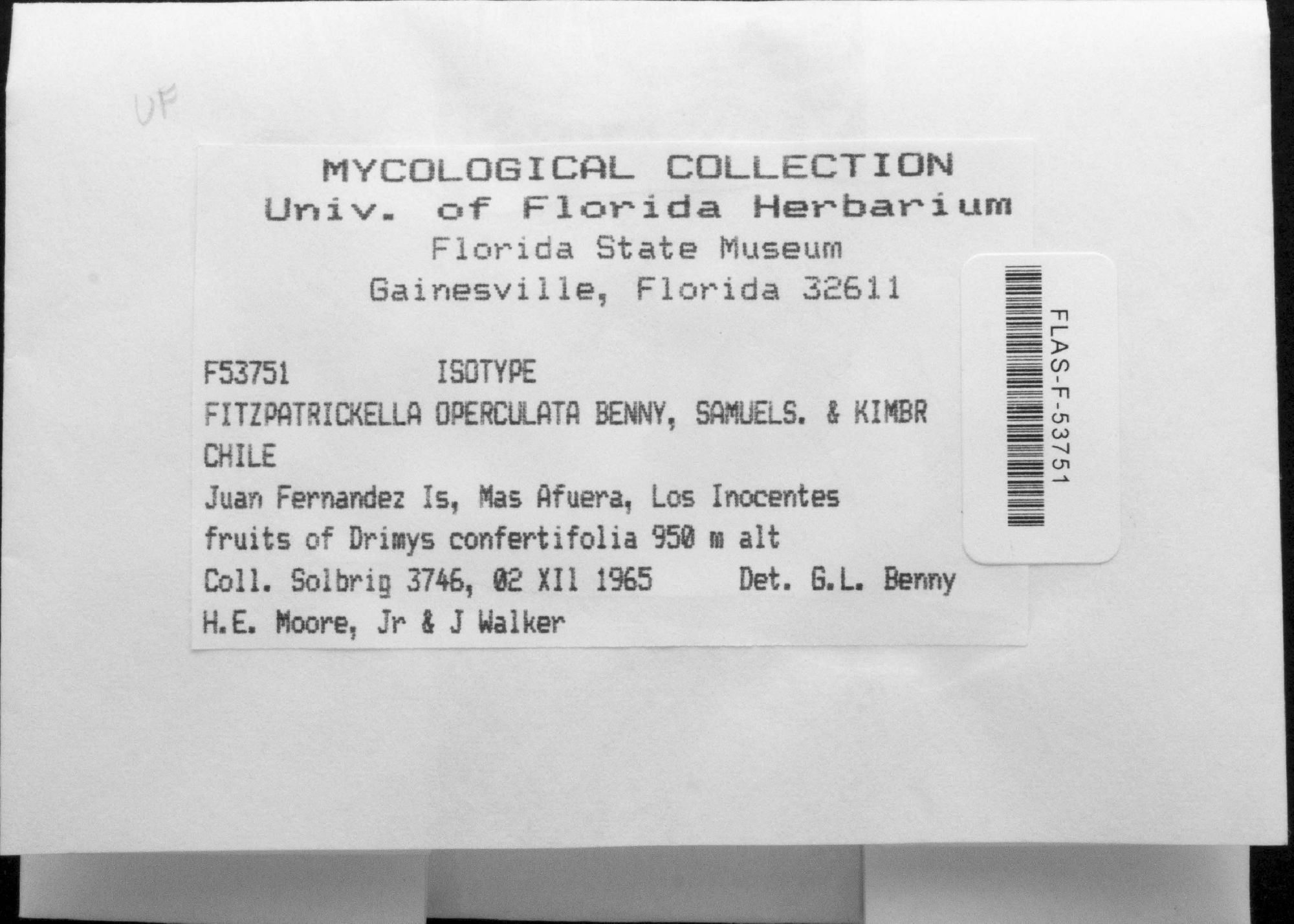
Fitzpatrickella operculata
species of fungus

Microtheliopsis
Microtheliopsis is a genus of lichen-forming fungi in the family Microtheliopsidaceae. It comprises four species of foliicolous (leaf-dwelling) crustose lichens.
Celotheliaceae
Celotheliaceae is a family of fungi in the monotypic order Phaeomoniellales. It contains 27 species of crustose lichens with thalli that are more or less immersed in tree bark.
Phaeomoniella
Phaeomoniella is a genus of hyphomycete fungi in the family Celotheliaceae. The genus was circumscribed by Pedro Crous and Walter Gams in 2000 to contain the type species, P. chlamydospora, the causal agent of Petro grapevine decline, a disesase in the esca disease complex. Phaeomoniella is similar to Phaeoacremonium, differing in cultural characteristics, and in the morphology of the conidiophores and conidia.
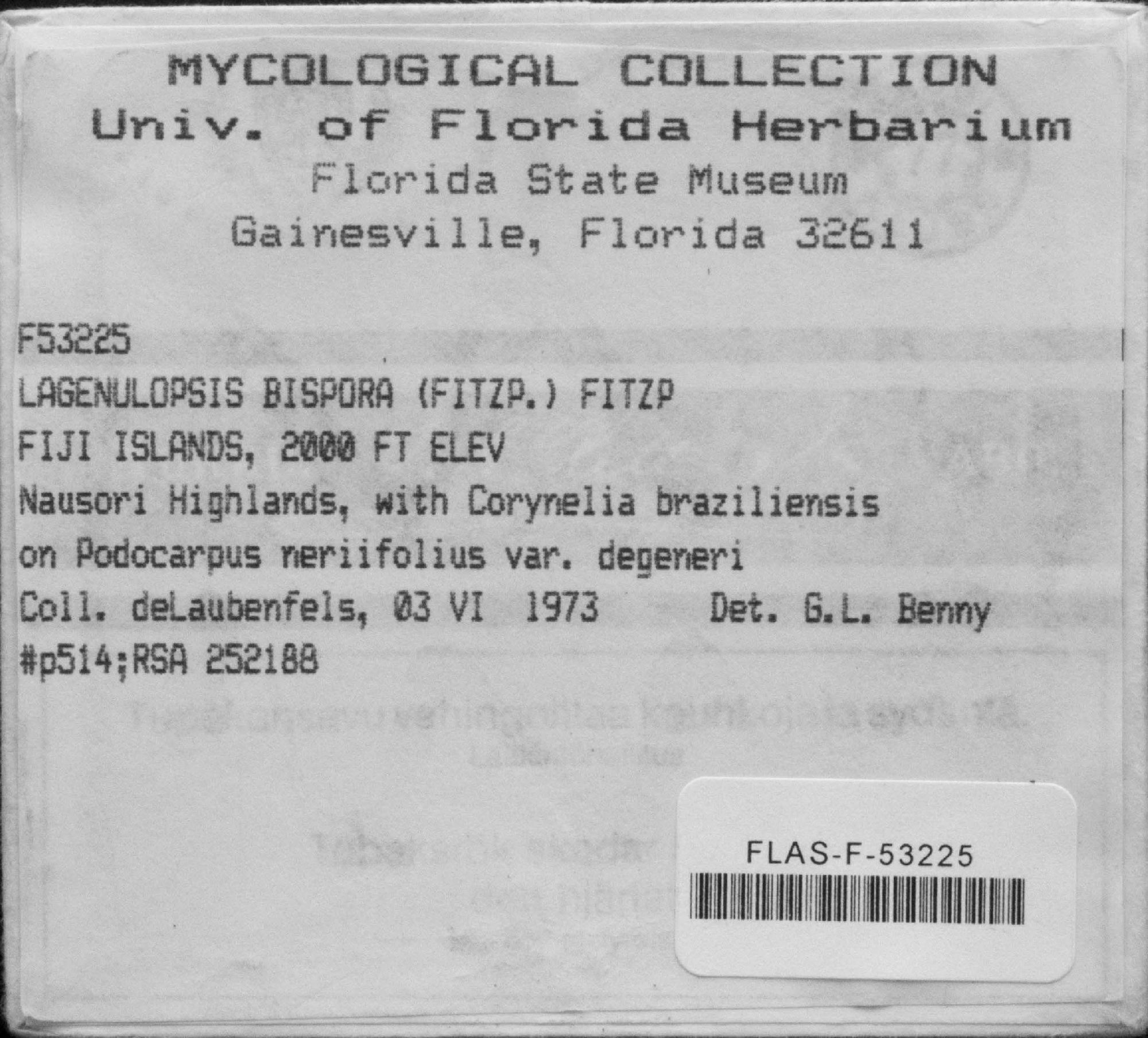
Lagenulopsis bispora
species of fungus