Category
page 1Exercise physiology
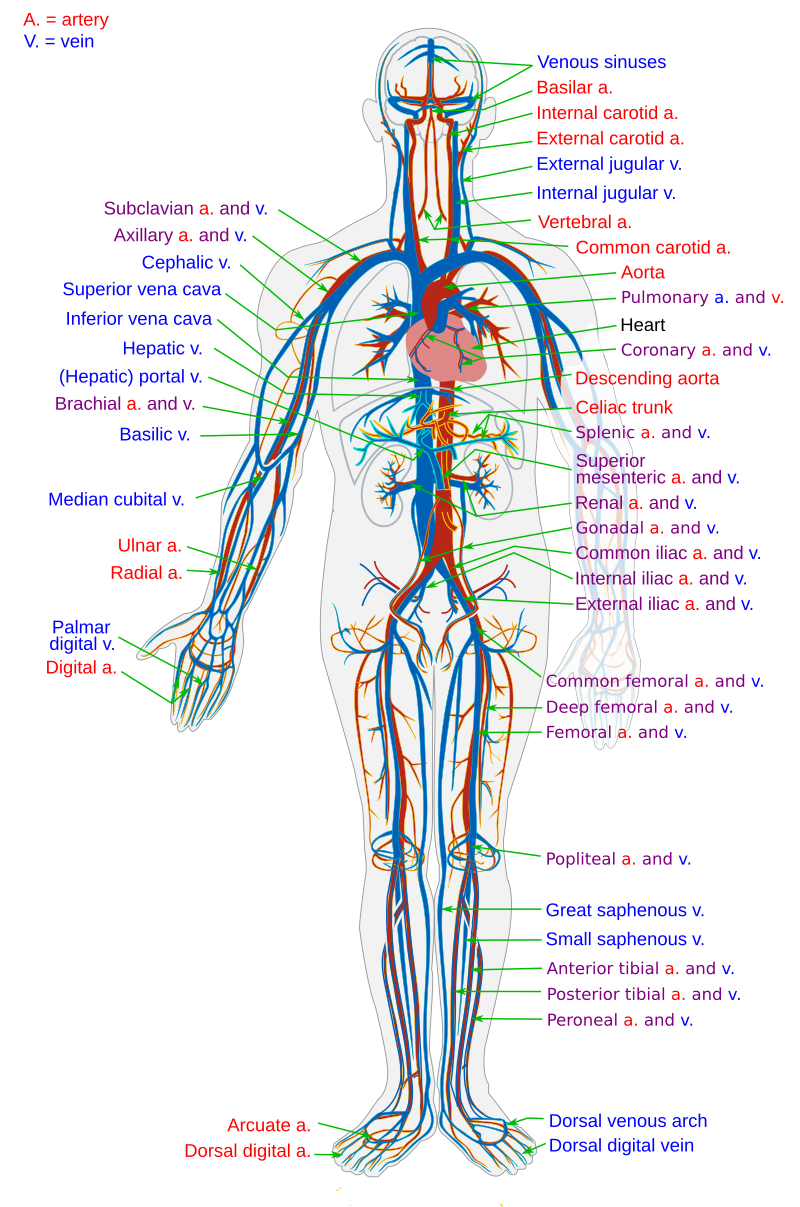
circulatory system
three independent systems that work together: cardiovascular, pulmonary and systemic
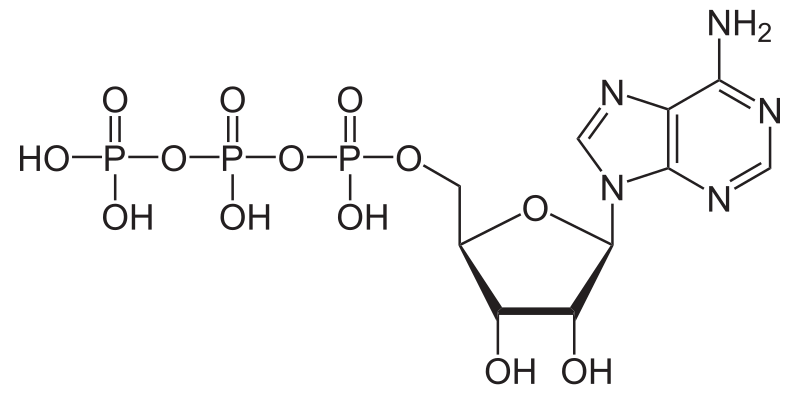
adenosine triphosphate
the energy-carrying molecule in living cells

fatigue
Fatigue is a state of being without energy for a prolonged period of time. Fatigue is used in two contexts: in the medical sense, and in the sense of normal tiredness.

DL-lactic acid
group of stereoisomers

glycogen
thumb|upright=1.25|Schematic two-dimensional cross-sectional view of glycogen: A core protein of glycogenin is surrounded by branches of [[glucose units. The entire globular granule may contain around 30,000 glucose units.]] thumb|A view of the atomic structure of a single branched strand of [[glucose units in a glycogen molecule.]]

tricarboxylic acid cycle
metabolic pathway

pyruvic acid
simplest of the alpha-keto acids

anabolic steroid
steroidal androgen that is structurally related and has similar effects to testosterone

hypertrophy
Hypertrophy is an increase in the size of individual cells. In multicellular organisms, growth is typically achieved through a combination of this cellular enlargement and hyperplasia, which is an increase in the number of cells. While distinct processes, they often occur concurrently. Hypertrophy can lead to a relative increase in the volume of a tissue or organ, and contributes to the overall growth of an organism. In organisms characterized by eutely, where the total number of somatic cells is fixed upon reaching maturity, post-embryonic growth is achieved almost exclusively through hypertr

kinesiology
upright=1.15|thumb|A series of images that represent research (left) and practice (right) in the field of academic kinesiology
muscle contraction
process in which force is generated within muscle tissue, resulting in a change in muscle geometry. Force generation involves a chemo-mechanical energy conversion step that is carried out by the actin/myosin complex activity
basal metabolism
biological metric
aerobic exercise
physical exercise of low to high intensity that depends primarily on the aerobic energy-generating process
delayed onset muscle soreness
pain in muscles after exercise

hemodynamics
Hemodynamics or haemodynamics are the dynamics of blood flow. The circulatory system is controlled by homeostatic mechanisms of autoregulation, just as hydraulic circuits are controlled by control systems. The hemodynamic response continuously monitors and adjusts to conditions in the body and its environment. Hemodynamics explains the physical laws that govern the flow of blood in the blood vessels.
anaerobic exercise
physical exercise intense enough to cause lactate formation
exercise physiology
study devoted to understanding the acute and chronic responses to physical activity
burpee
full body exercise based on squat thrusts, providing cardio and strength training
muscle hypertrophy
enlargement or overgrowth of a muscle organ
isometric exercise
Static contraction exercise

exertion
thumb|Man lifting
overtraining
Overtraining occurs when a person exceeds their body's ability to recover from strenuous exercise. Overtraining can be described as a point at which a person may have a decrease in performance or plateau as a result of failure to perform at a certain level or training-load consistently; a load which exceeds their recovery capacity. People who are overtrained cease making progress, and can even begin to lose strength and fitness. Overtraining is also known as chronic fatigue, burnout, and overstress in athletes.
altitude training
athletes practicing at high altitude

metabolic equivalent
physiological measure expressing the energy cost of physical activities
human torso
anatomy term for the human body minus the limbs

supercompensation
thumb|400px|Heterochronism of supercompensation: Different parameters require different amounts of time to recover after strain. Tendons and [[bone tissue require considerably longer to adapt than muscle tissue.]]In sports science theory, supercompensation refers to the post-training period during which the trained parameter has a higher performance capacity than it did prior to the training period.
ventricular hypertrophy
thickening of the walls of a ventricle (lower chamber) of the heart
Excess post-exercise oxygen consumption
Increased rate of oxygen intake following strenuous activity
neurobiological effects of physical exercise
neural, cognitive, and behavioral effects of physical exercise
grip strength
force applied by the hand
myokine
A myokine is one of several hundred cytokines or other small proteins (~5–20 kDa) and proteoglycan peptides that are produced and released by skeletal muscle cells (muscle fibers) in response to muscular contractions. They have autocrine, paracrine and/or endocrine effects; their systemic effects occur at picomolar concentrations.
hysterical strength
display of extreme strength by humans and some animals, usually occurring when in life-and-death situations
ATP hydrolysis
catabolism of ATP into ADP
4-hydroxytestosterone
4-Hydroxytestosterone (4-OHT), also known as 4,17β-dihydroxyandrost-4-en-3-one, is a synthetic anabolic-androgenic steroid (AAS) and a derivative of testosterone that was never marketed. It was first patented by G.D. Searle & Company in 1955 and is testosterone with a hydroxy group at the four position. 4-OHT has moderate anabolic, mild androgenic, and anti-aromatase properties and is similar to the steroid clostebol (4-chlorotestosterone).
muscle fatigue
loss of ability of a muscle to generate force
indirect calorimetry
measurement of the heat from living organisms through indirect means
Metabolic window
concept in strength training
exercise-induced bronchoconstriction
medical condition
isotonic contraction
muscle contraction that maintains constant tension as the muscle changes length
cardiovascular fitness
ability of the heart and lungs to supply oxygen-rich blood to the working muscle tissues and the ability of the muscles to use oxygen to produce energy for movement
exercise intolerance
medical condition
Training masks
facial mask that limits the intake of air during breathing
Wingate test
anaerobic exercise test
anaerobic threshold
oxygen consumption level above which aerobic energy production is supplemented by anaerobic mechanisms during exercise
Physical literacy
ability to move with competence in physical activities