Category
page 1Exocrine system

nipple
The nipple is a raised region of tissue on the surface of the breast from which, in lactating females, milk from the mammary gland leaves the body through the lactiferous ducts to nurse an infant. The milk can flow through the nipple passively, or it can be ejected by smooth muscle contractions that occur along with the ductal system. The nipple is surrounded by the areola, which is often a darker colour than the surrounding skin.

prostate
The prostate is an accessory gland of the male reproductive system and a muscle-driven mechanical switch between urination and ejaculation. It is found in all male mammals. It differs between species anatomically, chemically, and physiologically. Anatomically, the prostate is found below the bladder, with the urethra passing through it. It is described in gross anatomy as consisting of lobes and in microanatomy by zone. It is surrounded by an elastic, fibromuscular capsule and contains glandular and connective tissue.
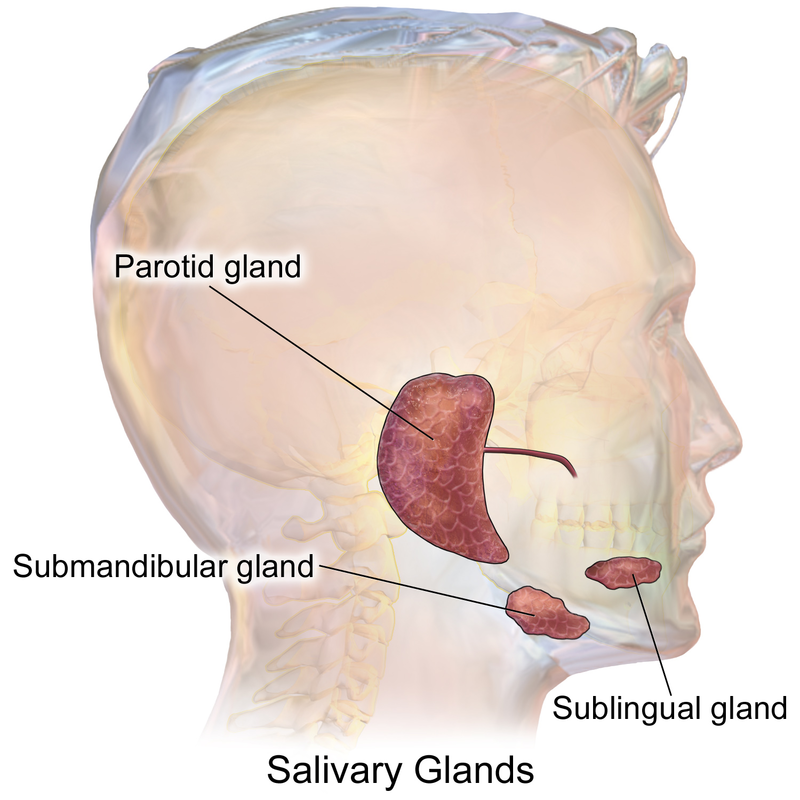
salivary gland
glands that produces saliva

mucus
thumb|Mucous cells of the stomach lining secrete mucus (pink) into the lumen
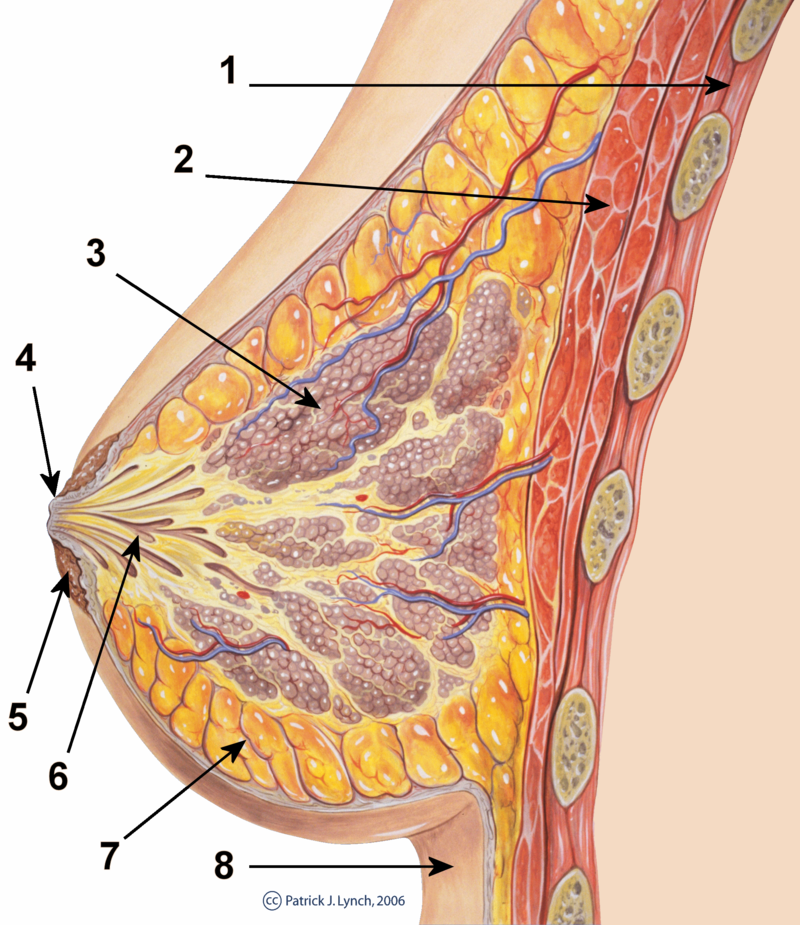
mammary gland
exocrine gland in humans and other mammals

bulbourethral gland
small exocrine gland in the reproductive system of many male mammals

seminal vesicula
pair of simple tubular glands posteroinferior to the urinary bladder of male mammals

Bartholin's gland
two glands located slightly posterior and to the left and right of the opening of the vagina

smegma
Smegma (from Ancient Greek ) is a cheesy substance composed of shed skin cells, skin oils, and moisture that occurs in male and female mammalian genitalia. In males, smegma collects under the foreskin; in females, it collects around the clitoris and in the folds of the labia minora.

udder
thumb|250px|Udder of a Cattle|cow
An udder is an organ formed of two or four mammary glands on the females of dairy animals and ruminants such as cattle, goats, and sheep. An udder is equivalent to the breast in primates and other mammals. The udder is a single mass hanging beneath the animal, consisting of pairs of mammary glands with protruding teats. In cattle, camels and deer, there are normally two pairs, in sheep and goats, there is one pair, and in some animals, there are many pairs. In animals with udders, the mammary glands develop on the milk line near the groin. Mammary glands that

exocrine gland
gland that produces and secretes substances onto an epithelial surface by a duct
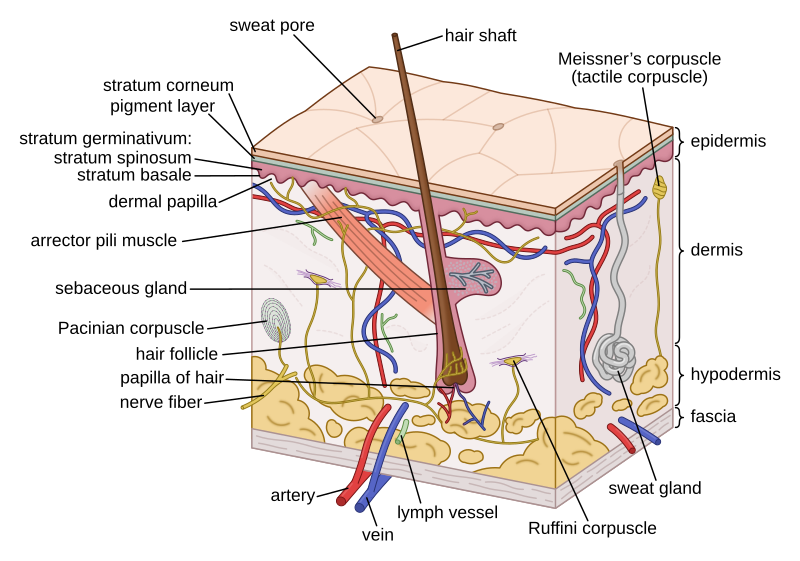
sweat gland
small tubular structures of the skin that produce sweat; a type of exocrine gland, which are glands that produce and secrete substances onto an epithelial surface by way of a duct

lactation
Lactation describes the secretion of milk from the mammary glands in addition to the period of time that a parent lactates to feed her young. The process can occur with all sexually mature female mammals, although it may predate mammals. The process of feeding milk in all female creatures is called nursing, and in humans it is also called breastfeeding. Newborn infants often produce some milk from their own breast tissue, known colloquially as witch's milk.
Skene's gland
glands located on the anterior wall of the vagina
lacrimal gland
paired, almond-shaped exocrine gland, one for each eye, that secretes the aqueous layer of the tear film
areolar glands
sebaceous glands in the areola surrounding the nipple

holocrine
thumb|right|400px|Holocrine secretion

merocrine
thumb|right|400px|Merocrine secretion
thumb|Paneth cells, located at the base of the crypts of the small intestinal mucosa, and displaying merocrine secretion of bright red cytoplasmic granules. [[H&E stain.]]
Merocrine (or eccrine) is a term used to classify exocrine glands and their secretions in the study of histology. A cell is classified as merocrine if the secretions of that cell are excreted via exocytosis from secretory cells into an epithelial-walled duct or ducts and then onto a bodily surface or into the lumen.
Nipple bleb
fluid filled blister on the nipple

apocrine
Apocrine () is a term used to classify the mode of secretion of exocrine glands. In apocrine secretion, secretory cells accumulate material at their apical ends, often forming blebs or "snouts", and this material then buds off from the cells, forming extracellular vesicles. The secretory cells therefore lose part of their cytoplasm in the process of secretion.
serous gland
Gland that secretes serous fluid
preorbital gland
paired exocrine gland in many hoofed animals