Category
page 1Extant Carboniferous first appearances

moss
Mosses are small, non-vascular flowerless plants in the taxonomic division Bryophyta (, ) sensu stricto. Bryophyta (sensu lato, Schimp. 1879) may also refer to the parent group bryophytes, which comprise liverworts, mosses, and hornworts. Mosses typically form dense green clumps or mats, often in damp or shady locations. The individual plants are usually composed of simple leaves that are generally only one cell thick, attached to a stem that may be branched or unbranched and has only a limited role in conducting water and nutrients. Although some species have conducting tissues, these are gen

Chimaeriformes
Chimaeras are cartilaginous fish in the order Chimaeriformes (), known informally as ghost sharks, rat fish (not to be confused with rattails), spookfish, or rabbit fish; the last two names are also applied, respectively, to the ray-finned fish groups of Opisthoproctidae and Siganidae.

Scaphopoda
class of elephant tusk shell molluscs

Notostraca
The order Notostraca, containing the single family Triopsidae, is a group of crustaceans known as tadpole shrimp or shield shrimp. The two genera, Triops and Lepidurus, are considered living fossils, with similar forms having existed since the end of the Devonian, around 360 million years ago. They have a broad, flat carapace, which conceals the head and bears a single pair of compound eyes. The abdomen is long, appears to be segmented and bears numerous pairs of flattened legs. The telson is flanked by a pair of long, thin caudal rami. Phenotypic plasticity within taxa makes species-level ide

Cumacea
Cumacea is an order of small marine crustaceans of the superorder Peracarida, occasionally called hooded shrimp or comma shrimp. Their unique appearance and uniform body plan makes them easy to distinguish from other crustaceans. They live in soft-bottoms such as mud and sand, mostly in the marine environment. There are more than 1,500 species of cumaceans formally described. The species diversity of Cumacea increases with depth.
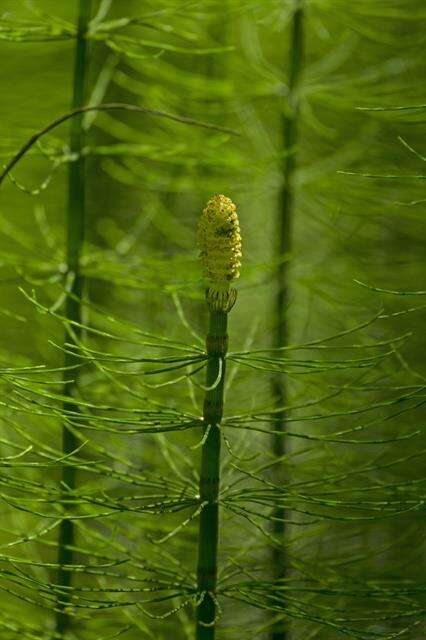
Equisetales
Equisetales is an order of subclass Equisetidae with only one living family, Equisetaceae, containing the genus Equisetum (horsetails), as well as a variety of extinct groups, including the tree-like Calamitaceae.
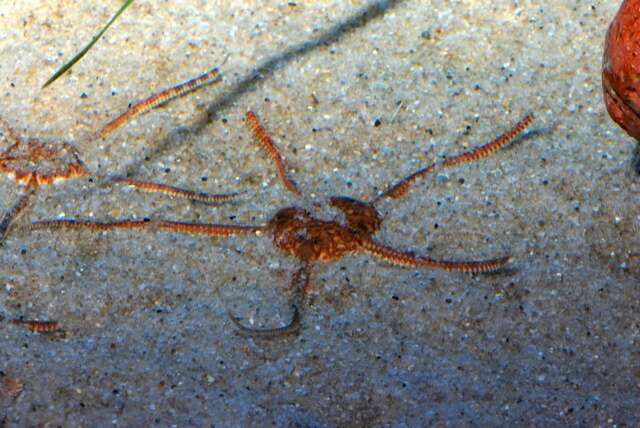
Ophiuridae
Ophiuridae are a large family of brittle stars of the suborder Ophiurina.
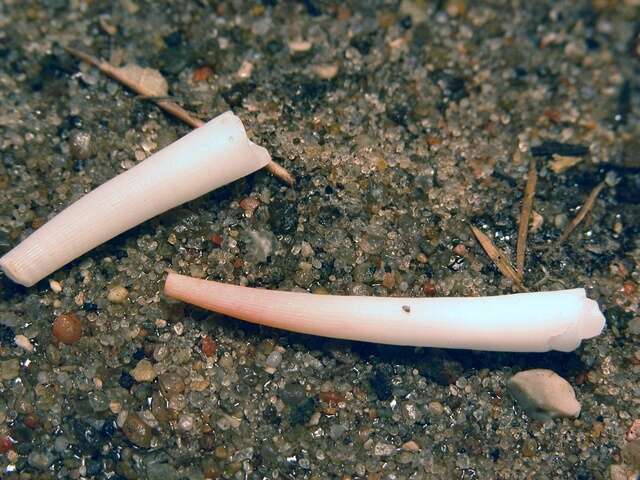
Dentaliida
Dentaliida is one of the two orders of scaphopod mollusks, commonly known as elephant's tusk shells. The order Dentaliida contains most of the larger scaphopods, and is distinguished from the other order (the Gadilidae) by the shape of its shell (the dentaliid shell tapers uniformly from anterior to posterior; the gadilid one has an anterior shell opening slightly smaller than the shell's widest point), the shape of the foot (the dentaliid foot is boat-shaped with a central trough; the gadilid foot is star-shaped), and the arrangement of some of their internal organs.
Odonatoptera
The Odonatoptera are a superorder (sometimes treated as an order) of ancient winged insects, placed in the probably paraphyletic group Palaeoptera. The dragonflies and damselflies (which are placed in the subgroup Odonata) are the only living members of this group, which was far more diverse in the late Paleozoic and contained gigantic species, including the griffinflies (colloquially called "giant dragonflies", although they were not dragonflies in the strict sense) of the order Meganisoptera (formerly Protodonata). The oldest members of Odonatoptera are known from the latest part of the Serp
Spelaeogriphacea
Spelaeogriphacea is an order of crustaceans that grow to no more than . Little is known about the ecology of the order.

Amusium
Amusium is a genus of scallops, marine bivalve molluscs belonging to the family Pectinidae. Previously, the genus contained several extant genera, but as of 2025 most species, such as A. balloti, A. fenestratum, and A. japonicum, were moved to the genera Dentamusium, Euvola, Parvamussium, Pecten, Propeamussium, and Ylistrum; subgenera were elevated to create some genera.