Category
page 1Extant Early Jurassic first appearances

Lepidoptera
Lepidoptera ( ) or lepidopterans are an order of winged insects which include butterflies and moths. About 180,000 species of the Lepidoptera have been described, representing 10% of the total described species of living organisms, making it the second largest insect order (behind Coleoptera) with 126 families and 46 superfamilies, and one of the most widespread and widely recognizable insect orders in the world.

Anisoptera
A dragonfly is a flying insect belonging to the infraorder Anisoptera below the order Odonata. About 3,000 extant species of dragonflies are known. Most are tropical, with fewer species in temperate regions. Loss of wetland habitat threatens dragonfly populations around the world. Adult dragonflies are characterised by a pair of large, multifaceted, compound eyes, two pairs of strong, transparent wings, sometimes with coloured patches, and an elongated body. Many dragonflies have brilliant iridescent or metallic colours produced by structural coloration, making them conspicuous in flight. An a

Caridea
The Caridea, commonly known as caridean shrimp or true shrimp (from Ancient Greek καρίς, καρίδος (karís, karídos, "shrimp"), are an infraorder of shrimp within the order Decapoda. This infraorder contains all species of true shrimp. They are found widely around the world in both fresh and salt water. Many other animals with similar names – such as the mud shrimp of Axiidea and the boxer shrimp of Stenopodidea – are not true shrimp, but many have evolved features similar to true shrimp.

Caecilian
Caecilians (; ) are a group of limbless, worm-shaped or snake-shaped amphibians, with either small eyes or no eyes, comprising the order Gymnophiona. They mostly live hidden in soil or in streambeds, making them some of the least familiar amphibians. Modern caecilians live in the tropics of South and Central America, Africa, and southern Asia. Caecilians feed on small subterranean creatures, such as earthworms. The body is noodle-like and often dark in colour, and the skull is bullet-shaped and strongly built. Caecilian heads have several unique adaptations, such as fused skull and jaw bones,

Raphidioptera
Snakeflies are a group of predatory insects comprising the order Raphidioptera, from Ancient Greek ῥαφίς (rhaphís), meaning "needle", and πτερόν (pterón), meaning "wing", with two extant families: Raphidiidae and Inocelliidae, consisting of roughly 260 species. In the past, the group had a much wider distribution than it does now; snakeflies are found in temperate regions worldwide but are absent from the tropics and the Southern Hemisphere. Recognizable representatives of the group first appeared during the Early Jurassic. They are a relict group, having reached their apex of diversity during

Orectolobiformes
order of fishes

Cryptodira
thumb|Skull of a cryptodiran turtle from the family Emydidae
thumb|Dorsal view of skull and [[cervical vertebrae of a cryptodiran turtle from the family Emydidae. Not all cervical vertebrae are featured due to the dissection cut.]]
Heterodontus
genus of fishes

Mantispidae
Mantispidae (), commonly known as mantidflies, mantispids, mantid lacewings, mantisflies or mantis-flies, is a family of small to moderate-sized insects in the order Neuroptera. There are many genera with around 400 species worldwide, especially in the tropics and subtropics. Only five species of Mantispa occur in Europe. They are named after their raptorial forelimbs similar to those of mantises, a case of convergent evolution.

Balanus
Balanus is a genus of barnacles in the family Balanidae of the subphylum Crustacea.
right|thumb|240px|Fossil shells of Balanus from Pliocene

Neosuchia
Neosuchia is a clade within Mesoeucrocodylia that includes all modern extant crocodilians and their closest fossil relatives. It is defined as the most inclusive clade containing all crocodylomorphs more closely related to Crocodylus niloticus (the Nile Crocodile) than to Notosuchus terrestris. Members of Neosuchia generally share a crocodilian-like bodyform adapted to freshwater aquatic life, as opposed to the terrestrial habits of more basal crocodylomorph groups. The earliest neosuchian is suggested to be the Early Jurassic Calsoyasuchus, which lived during the Sinemurian and Pliensbachian

Sphenodontidae
Sphenodontidae is a family within the reptile group Rhynchocephalia, comprising taxa most closely related to the living tuatara (Sphenodon punctatus). Historically the taxa included within Sphenodontidae have varied greatly between analyses, and the group has lacked a formal definition. Cynosphenodon from the Jurassic of Mexico has consistently been recovered as a close relative of the tuatara in most analyses, with the clade containing the two and other very close relatives of the tuatara often called Sphenodontinae.

Epiprocta
Epiprocta, also called Epiproctophora, is one of the two extant suborders of the Odonata, which contains living dragonflies (Anisoptera), as well as Epiophlebioptera, which has a single known living genus Epiophlebia. Crown group Epiprocta first appeared during the Early Jurassic. It was proposed in 1992 by Heinrich Lohmann to accommodate the inclusion of the Anisozygoptera. The latter has been shown to be not a natural suborder, but rather a paraphyletic collection of lineages, so it has been combined with the previous suborder Anisoptera, the well-known dragonflies, into the Epiprocta. The o
Diadematoida
The Diadematoida are an order of sea urchins. They are distinguished from other sea urchins by the fact that their spines are hollow, or at best have an open mesh at the core, and by the presence of 10 buccal plates around the mouth. Their tests can be either solid or flexible.

Mesoeucrocodylia
Mesoeucrocodylia is the clade that includes Eusuchia and crocodyliforms formerly placed in the paraphyletic group Mesosuchia. The group appeared during the Early Jurassic, and continues to the present day.
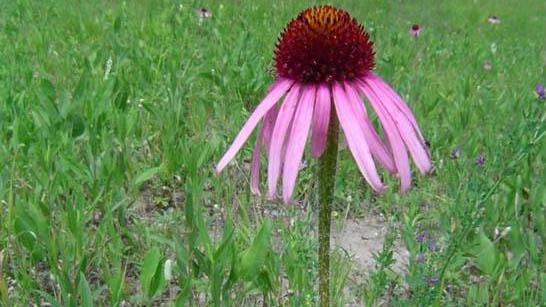
Echinacea
superorder of echinoderms
Holectypoida
The Holectypoida are an order of sea urchins related to the sand dollars. The order consists of just two living genera, but was once more diverse.
Metasuchia
Metasuchia is a major clade within the superorder Crocodylomorpha. It is split into two main groups, Notosuchia and Neosuchia. Notosuchia is an extinct group that contains primarily small-bodied Cretaceous taxa with heterodont dentition. Neosuchia includes the extant crocodylians and basal taxa, such as peirosaurids and pholidosaurids. It is phylogenetically defined by Sereno et al. (2001) as a clade containing Notosuchus terrestris, Crocodylus niloticus, and all descendants of their common ancestor.
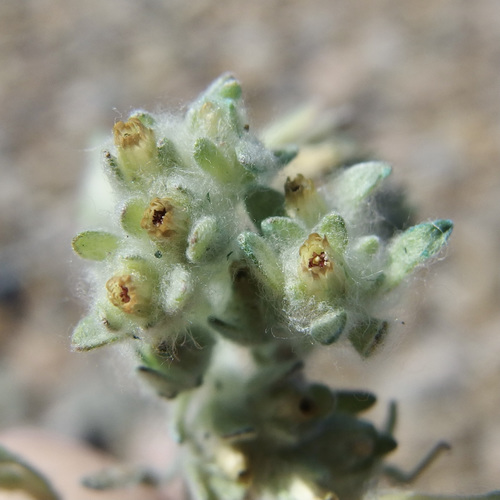
Glomerula
thumb|Glomerula piloseta, longitudinal section of the tube
Gnathostomata
superorder of sea urchins