Category
page 4Extant Eocene first appearances
Lissotestella
Lissotestella is a genus of minute sea snails or micromolluscs, marine gastropod molluscs, unassigned in the superfamily Seguenzioidea. First described by A. W. B. Powell in 1946, the genus is endemic to the waters surrounding New Zealand.
Pangalliformes
Pangalliformes is the scientific name of a provisional clade of birds within the group Galloanserae. It is defined as all birds more closely related to chickens than to ducks, and includes all modern chickens, turkeys, pheasants, and megapodes, as well as extinct species that do not fall within the crown group Galliformes.
Pseudolarix
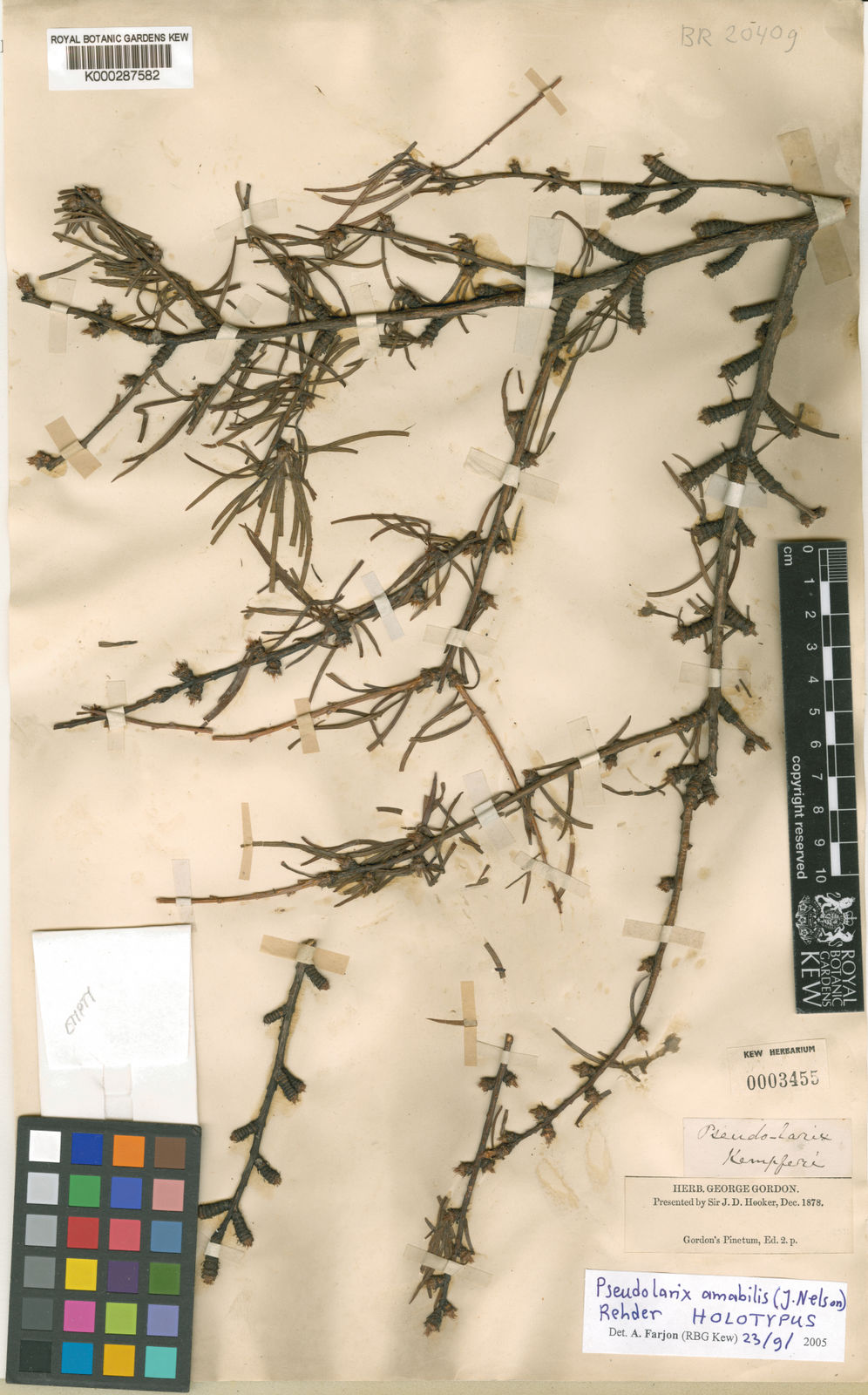
Pseudolarix is a genus of coniferous trees in the pine family Pinaceae containing three species, the extant Pseudolarix amabilis and the extinct species Pseudolarix japonica and Pseudolarix wehrii. Pseudolarix species are commonly known as golden larch, but are not true larches (Larix) being more closely related to Keteleeria, Abies and Cedrus. P. amabilis is native to eastern China, occurring in small areas in the mountains of southern Anhui, Zhejiang, Fujian, Jiangxi, Hunan, Hubei and eastern Sichuan, at altitudes of . P. wehrii is described from fossils dating to the Early Eocene (Ypresian)

Smittinidae
The Smittinidae is a family within the bryozoan order Cheilostomatida. Colonies are encrusting on shells and rocks or upright bilaminar branches or sheets. The zooids generally have at least one adventitious avicularia on their frontal wall near the orifice. The frontal wall is usually covered with small pores and numerous larger pores along the margin. The ovicell, which broods the larvae internally, is double-layered with numerous pores in the outer layer, and sits quite prominently on the frontal wall of the next zooid.
Adeonidae
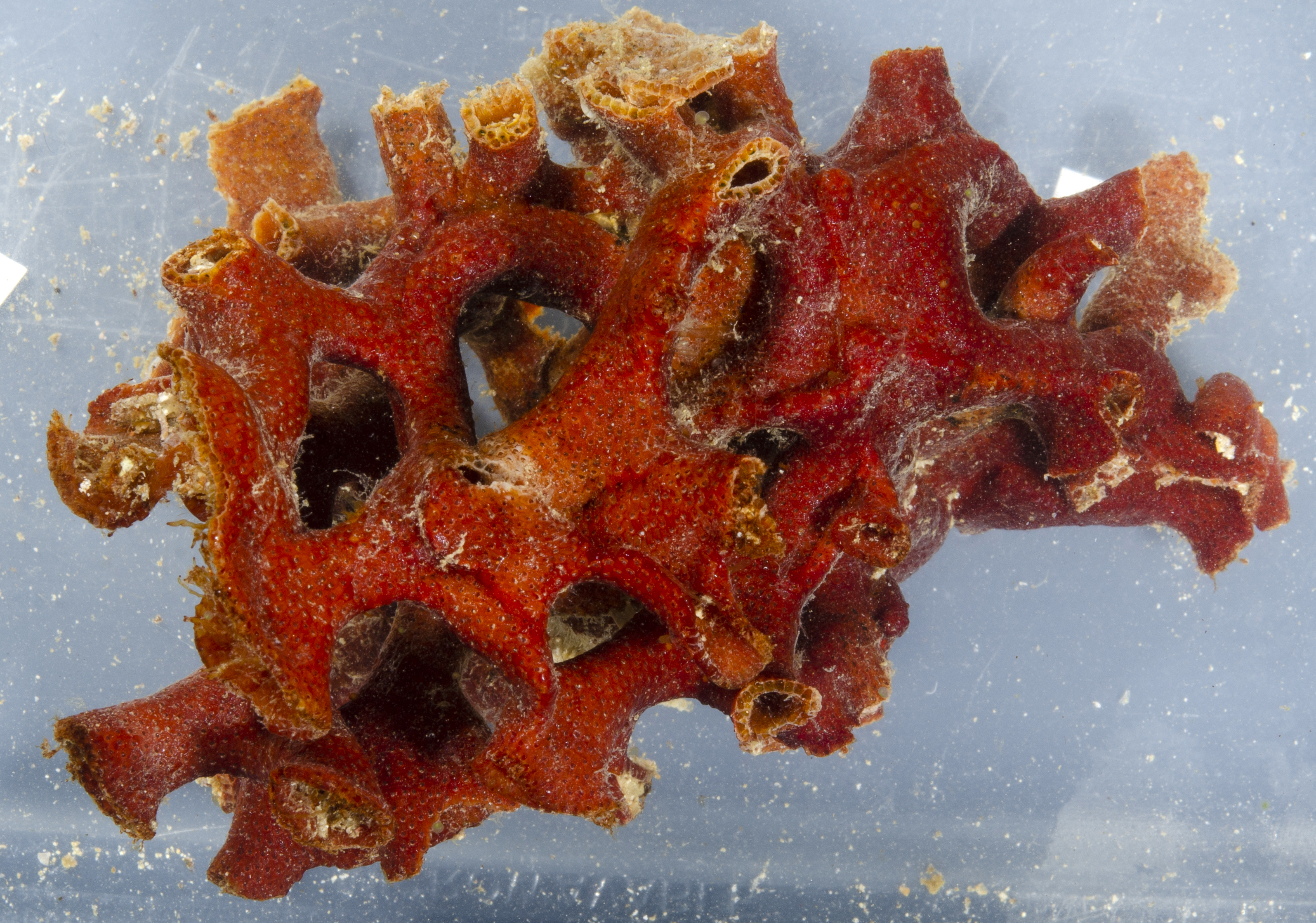
The Adeonidae is a family within the bryozoan order Cheilostomatida. Colonies are often upright bilaminar branches or sheets, perforated by large holes in some species (e.g. Adeona cellulosa). The zooids generally have one or more adventitious avicularia on their frontal wall. Instead of ovicells the adeonids often possess enlarged polymorphs which brood the larvae internally.
Stomachetosellidae
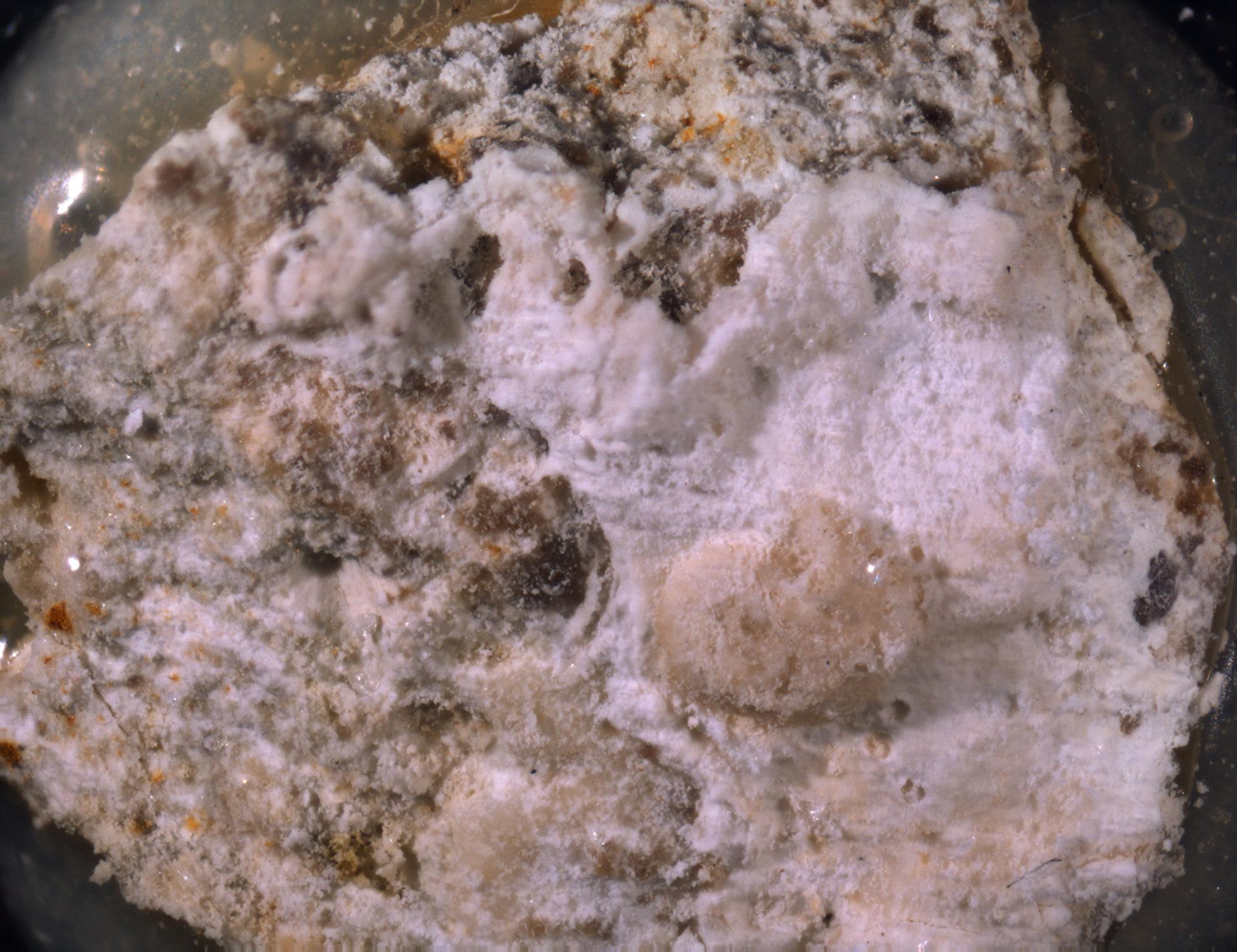
The Stomachetosellidae is a family within the bryozoan order Cheilostomatida. Colonies are encrusting on shells and rocks or upright bilaminar branches or sheets. The zooids generally have at least one adventitious avicularia on their frontal wall near the orifice. The frontal wall is usually covered with small pores and numerous larger pores along the margin. The ovicell, which broods the larvae internally, is double-layered with numerous pores in the outer layer, and sits quite prominently on the frontal wall of the next zooid.
Ursoidea
Ursoidea is a superfamily of arctoid carnivoran mammals that includes the families Subparictidae, Amphicynodontidae, and Ursidae. The last family includes the extant lineages of bears, as well as the extinct Hemicyoninae and Ursavinae.
Equoidea
Equoidea is a superfamily of hippomorph perissodactyls containing the Equidae, Palaeotheriidae, and other basal equoids of unclear affinities, of which members of the genus Equus are the only extant species. The earliest fossil record of the Equoidea proves unclear, but they possibly could have originated during the late Paleocene in Europe or Asia. Definite fossil records of equoids are recorded by the earliest Eocene, in which the earliest equids in North America and basal equoids of unclear affinities in Europe both appeared. Palaeotheres are thought to have originated later in the early Eo
Bitectiporidae
The Bitectiporidae is a family within the bryozoan order Cheilostomatida. Colonies are encrusting on shells and rocks or upright bilaminar branches or sheets. The zooids generally have at least one adventitious avicularia on their frontal wall near the orifice. The frontal wall is usually covered with small pores and numerous larger pores along the margin. The ovicell, which broods the larvae internally, is double-layered with numerous pores in the outer layer, and sits quite prominently on the frontal wall of the next zooid.
Peculator
genus of molluscs
Cladonychiidae
The Cladonychiidae are a small family of harvestman with about 33 described species, within the suborder Laniatores.
Amphistegina
Amphistegina is a genus of foraminiferal protists included in the Rotaliida with a stratigraphic range extending from the Eocene to recent and a cosmopolitan distribution. The test is an asymmetrically biconvex trochospiral that may be bi-involute or partially evolute on the spiral side. Chambers are numerous, broad. and low, strongly curved back at the periphery to form chamber prolongations. The umbilical side is stellate, like that of Asterigerina, and has a distinct umbilical plug. The wall is calcareous, optically radial; the surface finely perforate and smooth overall. The periphery angu
Rhodolith
thumb|upright=1.3|
Dalatias
Dalatias is a genus of kitefin sharks that have lived since the Middle Eocene. The genus contains one extant and two extinct species: D. licha (the type species), D. turkmenicus and D. orientalis. Because D. turkmenicus was described on the basis of a single tooth crown, D. licha was considered as the only valid species within the genus until Malyshkina et al. (2023) described a third species, D. orientalis, from the Middle Miocene Duho Formation in Pohang, South Korea.
Danaphos
Danaphos is an oceanic ray-finned fish genus which belongs in the family Sternoptychidae. A common name is bottlelights.
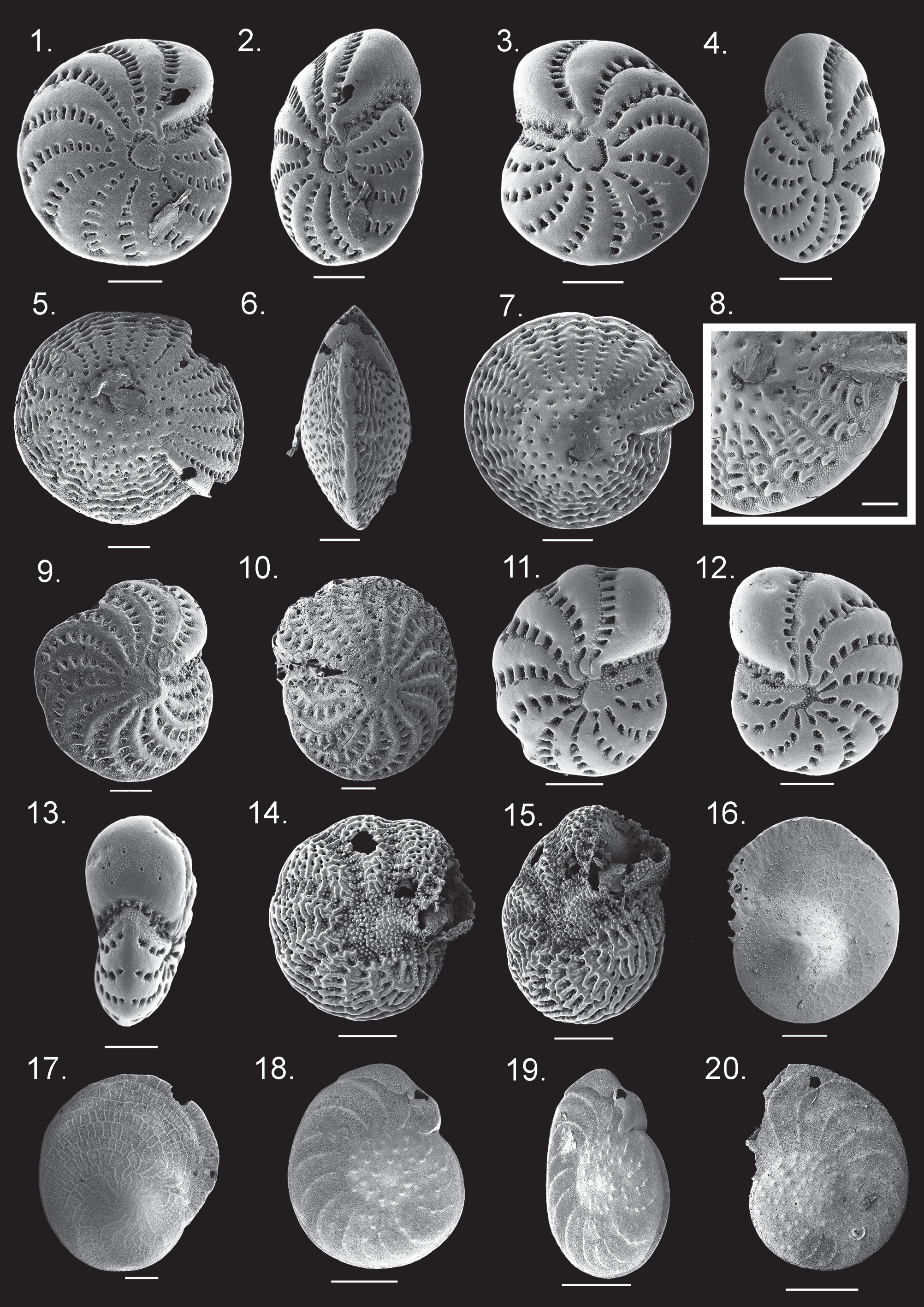
Elphidium
Elphidium is an abundant genus of foraminifera. Species can be found from coastal regions out to the continental slope, and in all temperature ranges. Like other forams, fossils from different species are used to date rocks. The taxonomy of the species within this genus is disputed due to the high variability of some species.
Rosalina
genus of foraminifers