Category
page 3Extant Eocene first appearances

Patella
genus of molluscs

Apogon
Apogon is a large genus of fish in the family Apogonidae, the cardinalfishes. They are among the most common fish on coral reefs. Over 200 species have been classified in genus Apogon as members of several subgenera. Some of these subgenera, such as Ostorhinchus, have been elevated to genus status, leaving just over 50 species in the genus.

Alectis
Alectis is a genus of fish in the family Carangidae containing three extant species, all of which are large marine fishes. They are commonly known as threadfish, diamond trevallies or pompanos, although they have no close affiliation with the true pompano genus.

Solenostomus
Solenostomus, also known as the ghost pipefishes, false pipefishes or tubemouth fishes, is a genus of fishes in the order Syngnathiformes. Solenostomus is the only genus in the family Solenostomidae, and includes six currently recognized species. Ghost pipefishes are related to pipefishes and seahorses. They are found in tropical waters of the Indo-Pacific.

Negaprion
Negaprion is a genus of requiem sharks in the family Carcharhinidae. It contains the two extant species of lemon sharks: the lemon shark (N. brevirostris) of the Americas, and the sicklefin lemon shark (N. acutidens) of the Indo-Pacific. Both species are large, slow-moving, bulky sharks inhabiting shallow coastal waters, and can be identified by their short, blunt snouts, two dorsal fins of nearly equal size, and uniform yellowish brown or gray coloration.

Centropomus
Centropomus is a genus of predominantly marine fish comprising the family Centropomidae. The type species is Centropomus undecimalis, the common snook. Commonly known as snooks or róbalos, the Centropomus species are native to tropical and subtropical waters of the western Atlantic and eastern Pacific Oceans.
Scombrops
The gnomefishes form a small family, Scombropidae, consisting of three extant species of marine ray-finned fish in the genus Scombrops. They have two dorsal fins and are notable for scales covering the soft parts of the dorsal and anal fins. The eyes are large. The gnomefish, S. boops, lives in deep rocky areas, down to 400 m. It can grow to 150 cm total length and 16 kg weight.
%20(41879839450).jpg)
Platax
Platax is a genus of Indo-Pacific, reef-associated fish belonging to the family Ephippidae. There are currently five known extant species generally accepted to belong to the genus. They are one of the fish taxa commonly known as "batfish".
Sciurini
Sciurini () is a tribe that includes about forty species of squirrels, mostly from the Americas. It includes five living genera—the American dwarf squirrels, Microsciurus; the Bornean Rheithrosciurus; the widespread American and Eurasian tree squirrels of the genus Sciurus, which includes some of the best known squirrel species; the Central American Syntheosciurus; and the American pine squirrels, Tamiasciurus. Like other arboreal squirrels, they are sometimes referred to as tree squirrels.

Ostracoberyx
Ostracoberyx is a genus of shellskin alfonsinos, the only recognized genus in the family Ostracoberycidae. This is a genus of deep-water fishes native to the Indian and western Pacific oceans.

Kuhliidae
The flagtails (' or ' in the Hawaiian language) are a family (Kuhliidae) of centrarchiform ray-finned fish of the Indo-Pacific area. The family consists of 13 species in one genus, Kuhlia. Most are euryhaline and often found in brackish water, but the genus also includes species restricted to marine or fresh water.

Morone
Morone is a genus of temperate basses native to the Atlantic coast of North America and the freshwater systems of the midwestern and eastern United States. Fossil evidence also suggests they inhabited Europe during the Paleogene and Neogene.
Tridacnidae
Tridacninae, common name the giant clams, is a taxonomic subfamily of very large saltwater clams, marine bivalve molluscs in the family Cardiidae, the cockles.
Bathyclupeidae
Bathyclupeidae is a family of acropomatiform ray-finned fish, called deep sea herrings. They are marine fishes found in tropical waters of the Atlantic Ocean, Gulf of Mexico, Indian Ocean and Pacific Ocean. They grow up to about 20 cm long.

Diaphus
thumb|right| Headlight fish (D. effulgens)
Inocelliidae
Inocelliidae is a small family of snakeflies containing 8 genera of which one is known only from fossils. They are commonly known as inocelliid snakeflies. The largest known species is Fibla carpenteri known from fossils found in baltic amber.
Anseranatidae
Anseranatidae, the magpie-geese, is a biological family of waterbirds. The only living species, the magpie goose, is a resident breeder in northern Australia and in southern New Guinea.

Scarabaeinae
The scarab beetle subfamily Scarabaeinae consists of species collectively called true dung beetles (there are also dung beetles in other subfamilies and families). Most of the beetles of this subfamily feed exclusively on dung. However, some may feed on decomposing matter including carrion, decaying fruits and fungi. Dung beetles can be placed into three structural guilds based on their method of dung processing namely rollers (telecoprids), dwellers (endocoprids) and tunnelers (paracoprids). Dung removal and burial by dung beetles result in ecological benefits such as soil aeration and fertil
.jpg)
Sparisoma
Sparisoma is a genus of parrotfishes native to warmer parts of the Atlantic. FishBase recognizes 15 species in this genus, including S. rocha described from Trindade Island in 2010 and S. choati described from the East Atlantic in 2012. They are the most important grazers of algae in the Caribbean Sea, especially since sea urchins, especially Diadema, the other prominent consumers of algae, have been reduced in many places by a recent epidemic.
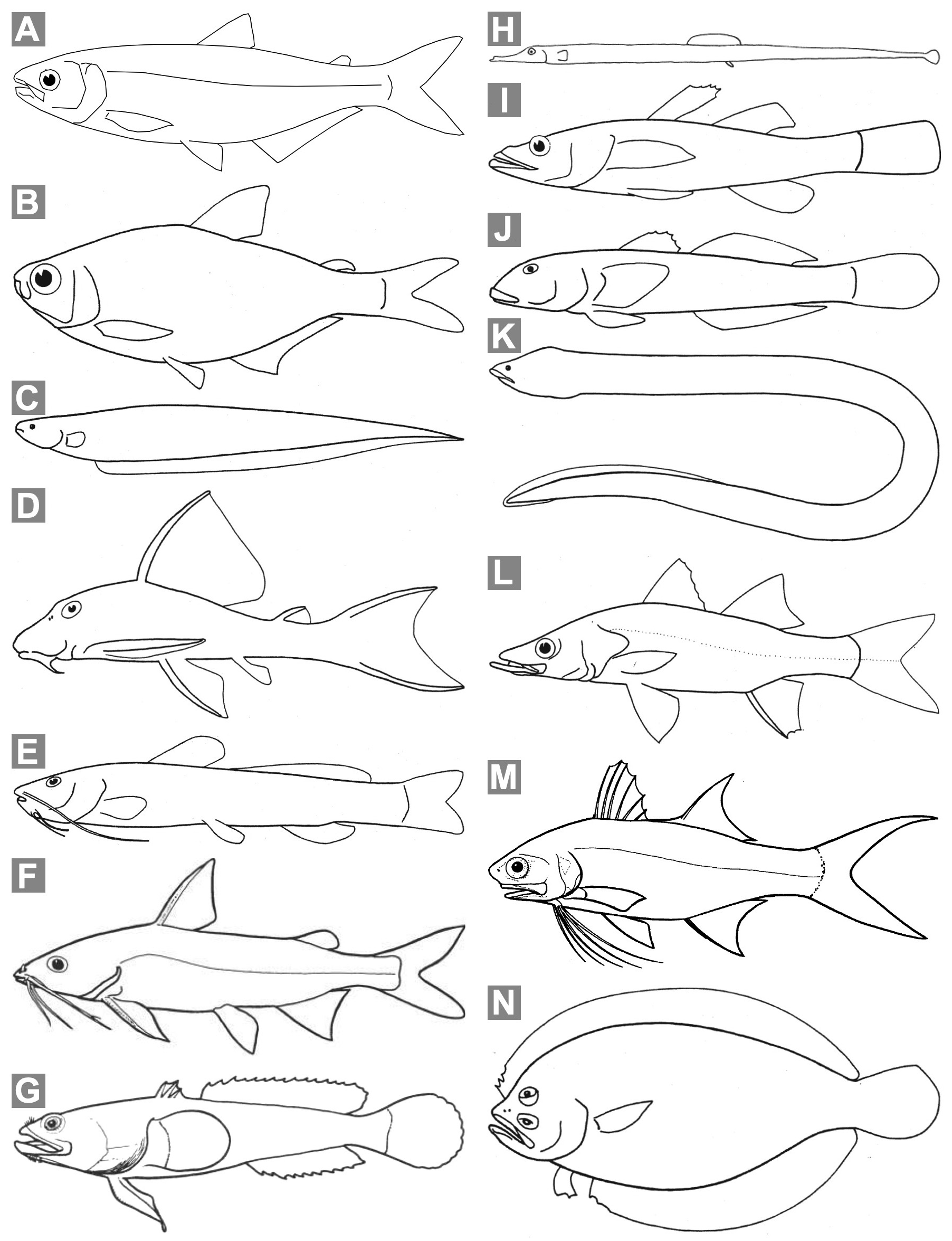
Centropomidae
REDIRECT Centropomus
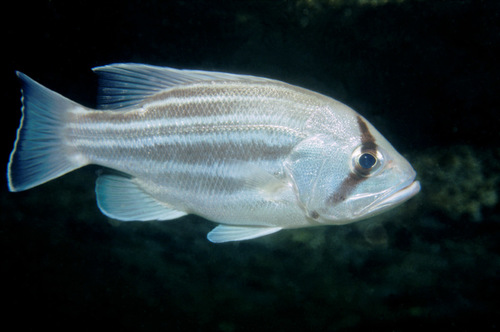
Glaucosoma
Glaucosoma, the pearl perches, are ray-finned fishes native to the Indian Ocean waters around Australia and the western Pacific Ocean. This genus is currently the only one assigned to the family Glaucosomatidae.
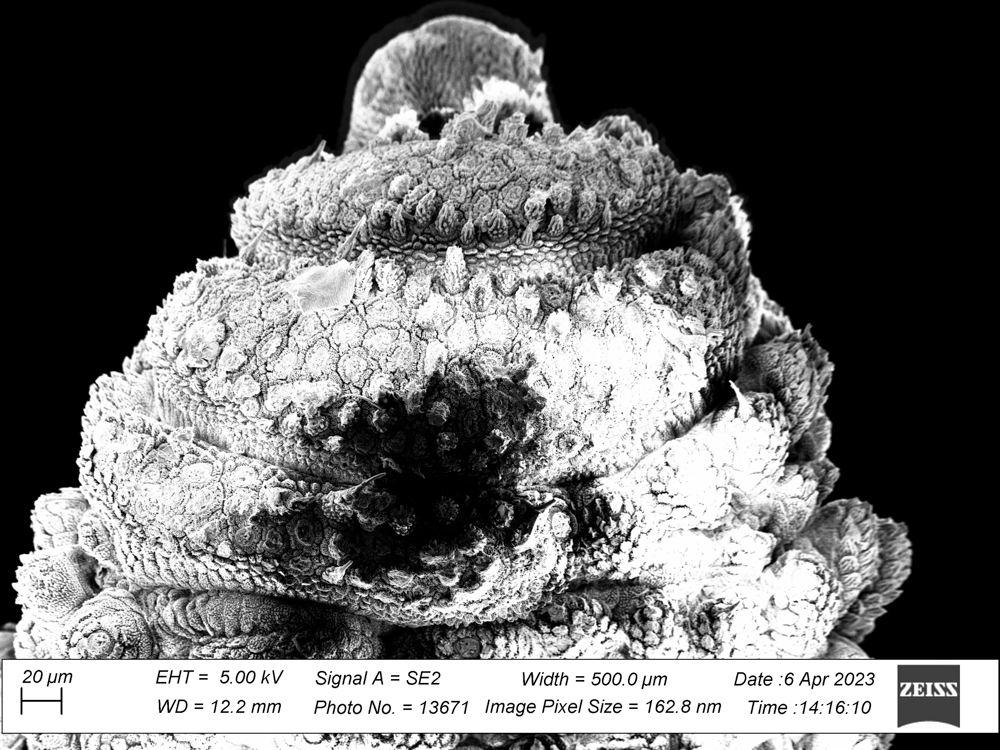
Peripatidae
Peripatidae or Equatorial Velvet Worms is a family of velvet worms. This family includes more than 90 described species distributed among 13 genera, but some authorities deem only 80 of these species to be valid. The oldest putative representatives of the family herald from Burmese amber dated to the mid-Cretaceous, around 100 million years ago, with representatives from Dominican and Baltic amber attesting to a broader distribution in the Palaeogene / Neogene; molecular variability suggests that the family's crown group may have arisen in the early Mesozoic.

Trichiurus
Trichiurus is a genus of cutlassfishes belonging to the family Trichiuridae.
Euphractinae
Euphractinae is an armadillo subfamily in the family Chlamyphoridae.
Camelini
Camelini is a tribe of camelids including all camelids more closely related to modern camels (Camelus) than to Lamini (which contains llamas, alpacas, vicuñas, and guanacos), from which camelines split approximately 17 million years ago. The tribe originated in North America, with the genus Paracamelus migrating over the Bering Land Bridge into Eurasia during the Late Miocene, around 6 million years ago, becoming ancestral to Camelus. The last member of Camelini in North America was Camelops, which became extinct as part of the Quaternary extinction event at the end of the Late Pleistocene, ar

Tenebrio
Tenebrio is a genus of darkling beetles. Adults are long and can live for 1–2 years. The larvae are minor pests, but they are also widely reared and sold as pet food.
Pelodytidae
Pelodytidae, also known as the parsley frogs, or rarely, mud divers, is a family of frogs. It contains a single extant genus, Pelodytes, and three genera only known from fossils. The extant species are found in southwestern Europe and the Caucasus.
%20augustus%20skull%20compared%20to%20a%20Protapirus%20simplex%20skull%20(cropped).jpg)
Tapiroidea
Tapiroidea is a superfamily of perissodactyls which includes the modern tapirs and their extinct relatives. Taxonomically, they are placed in suborder Ceratomorpha along with the rhino superfamily, Rhinocerotoidea. The first members of Tapiroidea appeared during the Early Eocene, 55 million years ago, and were present in North America and Asia during the Eocene. Tapiridae first appeared during the early Oligocene in Europe, and are thought to have originated from the tapiroid family Helaletidae.
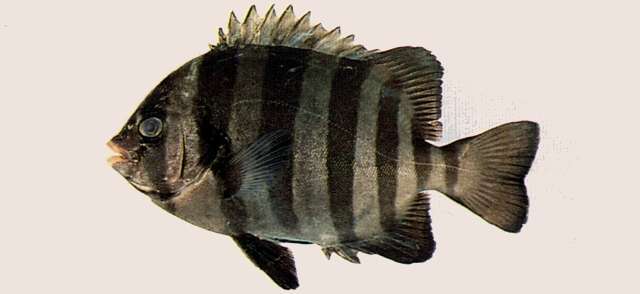
Oplegnathus
Oplegnathus is currently the sole recognized genus in the knifejaw family (Oplegnathidae) of marine centrarchiform ray-finned fishes. The largest, the Cape knifejaw, can reach a maximum length around 90 cm (35 in). Knifejaws have teeth fused into a parrot-like beak in adulthood. They feed on barnacles and mollusks, and are fished commercially. They are native to the Indian and Pacific Oceans.
Bipedidae
Bipedidae is a family of amphisbaenians that includes the extant genus Bipes represented by three species from Baja California and the southern coast of Mexico and the extinct genus Anniealexandria represented by one species that lived in what is now Wyoming during the earliest Eocene around 55 million years ago. Phylogenetic analysis indicates that Bipedidae is most closely related to the family Blanidae, which includes the living genus Blanus.
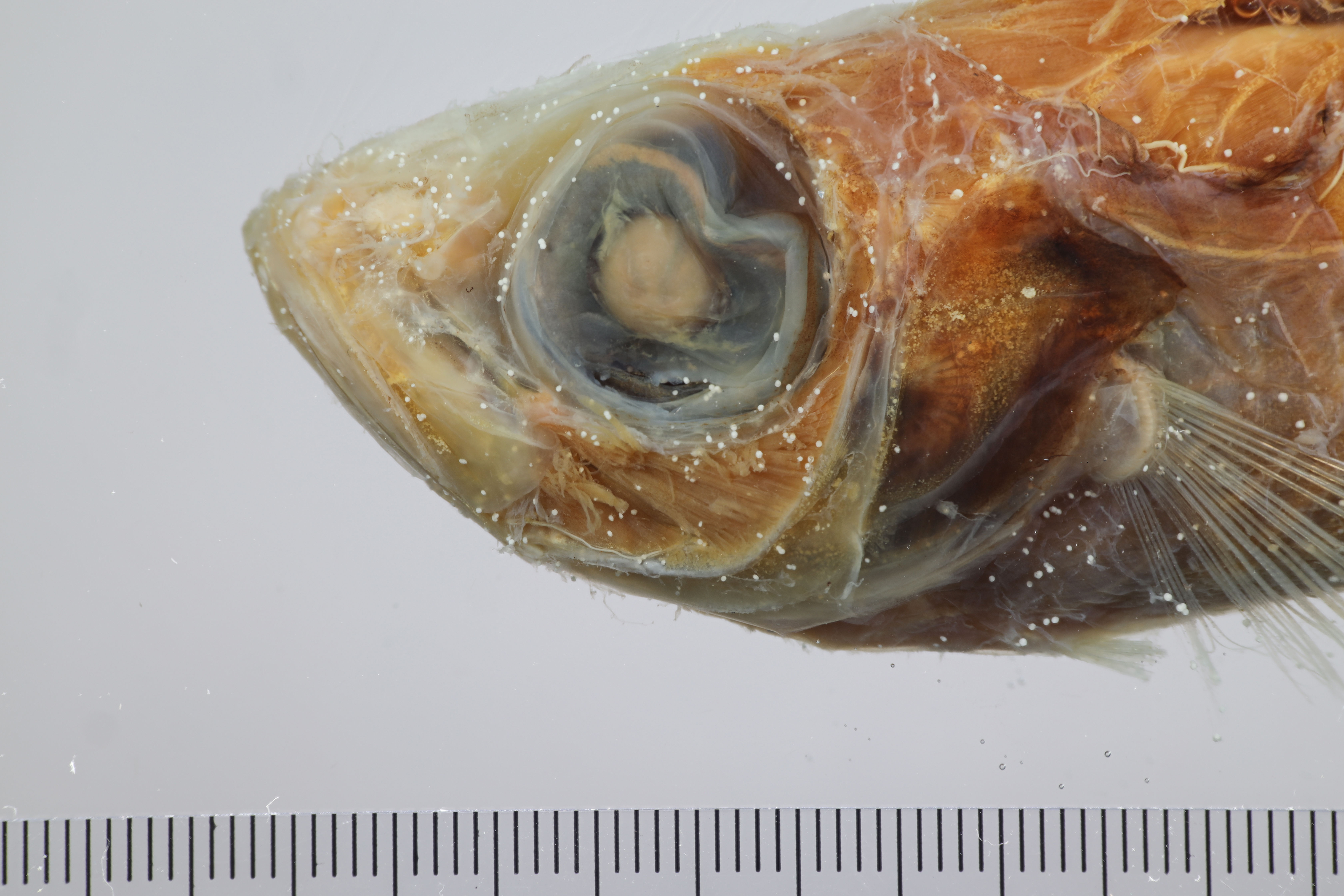
Bathyclupea
Bathyclupea is a genus of ray-finned fishes belonging to a small family Bathyclupeidae.
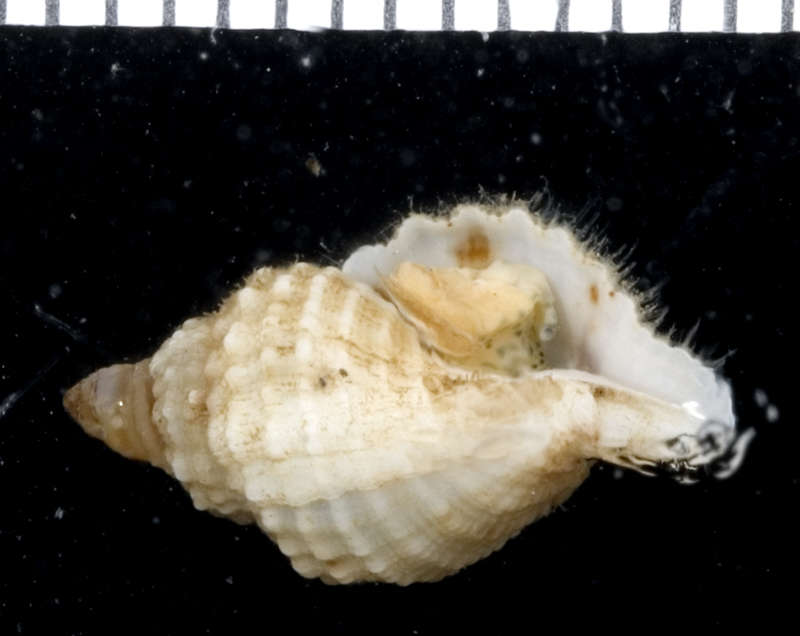
Cymatium
genus of molluscs
Cheiragonidae
Cheiragonidae is a small family of crabs, sometimes called helmet crabs, placed in its own superfamily, Cheriagonoidea. It comprises three extant species, Erimacrus isenbeckii, Telmessus acutidens and Telmessus cheiragonus; there are no yet evidences of Cheiragonidae in the fossil record. Many of these crabs were formerly treated as members of the Atelecyclidae.
Natica
Natica is a genus of small to medium-sized predatory sea snails, marine gastropods in the subfamily Naticinae of the family Naticidae, the moon snails. The genus was erected by Giovanni Antonio Scopoli in 1777.
Eurylaimides
Eurylaimides (Old World suboscines) is a clade of passerine birds that are distributed in tropical regions around the Indian Ocean and a single American species, the sapayoa. This group is divided into five families and three superfamilies. The families listed here are those recognised by the International Ornithologists' Union (IOC).
Sapayooidea
Sapayoidae: broad-billed sapayoa
Eurylaimoidea
Eurylaimidae: typical broadbills
Calyptomenidae: African and green broadbills
Pittoidea
Pittidae: pittas
Philepittidae: asities

Croton alabamensis
species of plant

Bolma
Bolma is a genus of medium to large sea snails with a calcareous operculum, marine gastropod molluscs in the family Turbinidae, the turban snails.
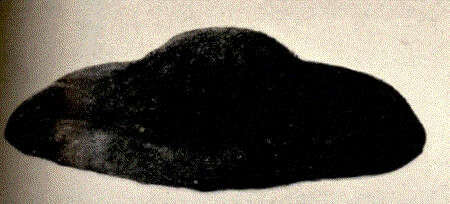
Clypeaster
Clypeaster, common name "cake urchins" or "sea biscuits", is a genus of echinoderms belonging to the family Clypeasteridae.

Atlanta
genus of molluscs

Tomistominae
Tomistominae is a subfamily of crocodylians that includes one living species, the false gharial. Many more extinct species are known, extending the range of the subfamily back to the Eocene epoch. In contrast to the false gharial, which is a freshwater species that lives only in southeast Asia, extinct tomistomines had a global distribution and lived in estuaries and along coastlines.
Cetorhinidae
Cetorhinidae is a family of filter feeding mackerel sharks, whose members are commonly known as basking sharks. It includes the extant basking shark, Cetorhinus, as well as two extinct genera, Caucasochasma and Keasius.
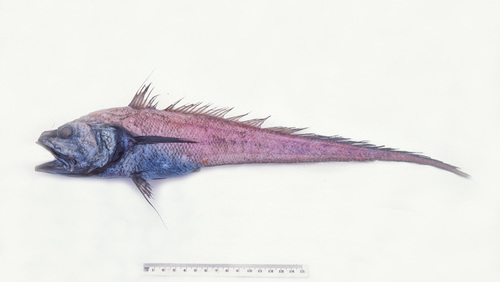
Bathygadus
Bathygadus is a genus of rattails of the family Bathygadidae.

Juliidae
Juliidae, common name the bivalved gastropods, is a family of small sea snails, marine gastropod mollusks or micromollusks in the superfamily Oxynooidea, an opisthobranch group.
Pseudozioidea
Pseudozioidea is a superfamily of crabs, formerly treated in the Eriphioidea, Carpilioidea, Xanthoidea, Pilumnoidea and Goneplacoidea. A number of fossils from the Eocene onwards are known from the family Pseudoziidae. Eleven genera are recognised in three families:
Christmaplacidae Naruse & Ng, 2014
Christmaplax Naruse & Ng, 2014
Harryplax Mendoza & Ng, 2017
Pilumnoididae Guinot & Macpherson, 1987
Pilumnoides Lucas, 1844
Setozius Ng & Ahyong, 2013
Planopilumnidae Serène, 1984
Flindersoplax Davie, 1989
Haemocinus Ng, 2003
Planopilumnus Balss, 1933
Platychelonion Crosnier & Guinot, 1969
Rathbun

Vinciguerria
Vinciguerria is a genus of lightfishes, family Phosichthyidae. It is named for Dr. Decio Vinciguerra (1856–1934), an Italian ichthyologist.
Mantoididae
Mantoididae is a family of mantises which contains Neotropical species of praying mantises from tropical North and South America. The family was formerly represented by the sole genus Mantoida, until the genus Paramantoida was described in 2014 and Vespamantoida in 2019. The family differs from the closely related Chaeteessidae in having an apical claw on the fore tibiae which are also less curved. Males have ocelli and a cylindrical body shape, unlike the dorsoventrally flattened Chaeteessidae. The cerci are also shorter.
Dairoidea
Dairoidea is a superfamily of crabs, comprising two families which each contain a single genus: Dairidae (the living fossil Daira ) and Dacryopilumnidae (Dacryopilumnus) .
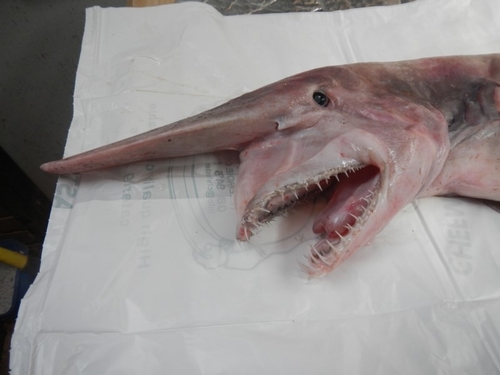
Mitsukurina
Mitsukurina is a genus of mackerel shark in the family Mitsukurinidae. It contains one extant species, the goblin shark (M. owstoni) and more extinct species. The genus was described by American ichthyologist David Starr Jordan in 1898 and named in honour of Kakichi Mitsukuri.

Schizoporellidae
The Schizoporellidae is a family within the bryozoan order Cheilostomatida. Colonies are encrusting on shells and rocks or upright bilaminar branches or sheets. The zooidal orifice has a narrow V-shaped sinus.
Valenciennellus
Valenciennellus is a genus of marine hatchetfishes. They are commonly known as constellationfishes.
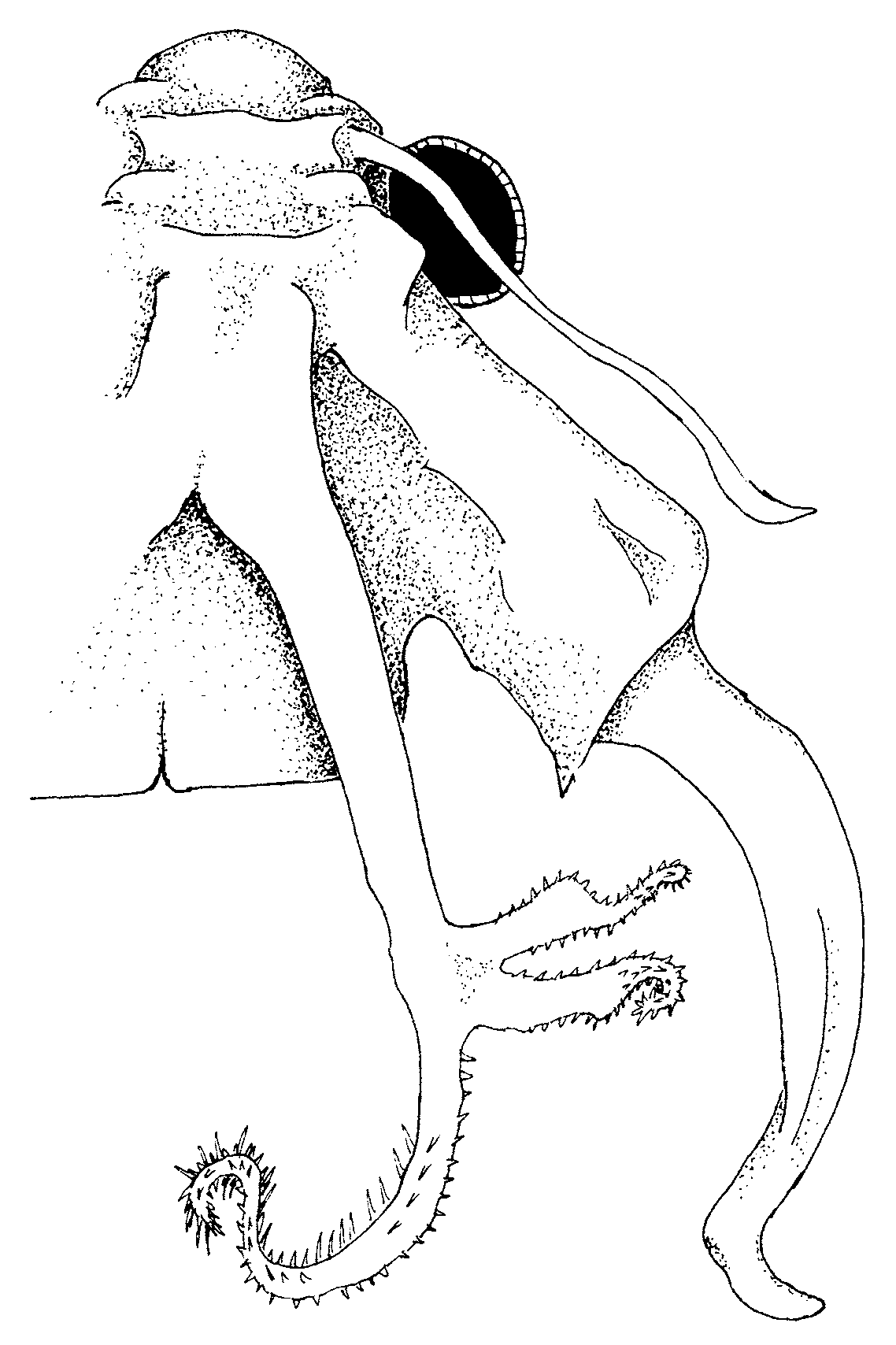
Branchipodidae
Branchipodidae is a family of fairy shrimp, one of eight in the order Anostraca. It contains 35 extant species in five extant genera:
Branchipodopsis G. O. Sars, 1898
Branchipus Schaeffer, 1766
Metabranchipus Masi, 1925
Pumilibranchipus Hamer & Brendonck, 1995
Rhinobranchipus Brendonck, 1995

Saccogaster
Saccogaster is a genus of viviparous brotulas. They are found in the western Atlantic and Indo-Pacific.

Hemipristis
Hemipristis (from , 'half' and 'saw') is a genus of weasel sharks, family Hemigaleidae. It contains one extant species, the snaggletooth shark (H. elongata) and several extinct species.
Dipodoidea
Dipodoidea is a superfamily of rodents, also known as dipodoids, found across the Northern Hemisphere. This superfamily includes over 50 species among the 16 genera in 3 families. They include the jerboas (family Dipodidae), jumping mice (family Zapodidae), and birch mice (family Sminthidae). Different species are found in grassland, deserts, and forests. They are all capable of saltation (jumping while in a bipedal stance), a feature that is most highly evolved in the desert-dwelling jerboas.
Brachionichthys
Brachionichythys is a genus of marine ray-finned fish belonging to the family Brachionichthyidae, the handfishes. These fishes are confined to the southeastern Indian Ocean and southwestern Pacific Ocean off Australia.
Arachnopusiidae
The Arachnopusiidae is a family within the bryozoan order Cheilostomatida.
Coelopleurus
Coelopleurus is an extant genus of echinoids with fossil records dating back to the Eocene, with remains found in Europe and North America.
Cuspidaria
genus of molluscs

Celleporidae
Celleporidae is a family of bryozoans – colonial, aquatic, invertebrates – in the order Cheilostomatida. Structurally, they are defined by densely packed zooids (individual animals which make up the colony). The zooids usually have irregular direction, and are defined by morphological characteristics. Masses of the dead animals can form shallow sediments. Members of the family are recorded from every ocean, even around Antarctica, where they are represented primarily by the genus Osthimosia. Fossils of the family exist as old as from 235 million years ago, during the Triassic period.

Semicassis
Semicassis is a genus of medium-sized predatory sea snails, marine gastropod molluscs in the subfamily Cassinae within the family Cassidae, the helmet snails and bonnet snails.